
You’ve probably noticed that some vegetable gardens flourish while others barely limp along. The difference often isn’t about gardening skill—it’s about soil quality. Your garden’s foundation determines everything from root development to disease resistance.
Even experienced gardeners can struggle with poor soil conditions that sabotage their efforts. By following a systematic approach to soil improvement, you’ll transform your ordinary garden plot into a thriving ecosystem that produces abundant, nutrient-dense vegetables.
On this page
Assessing Your Current Soil Type and Composition
Before you can transform your garden into a vegetable-growing paradise, you’ll need to understand what you’re working with. Collect soil samples from multiple areas of your garden, digging 6-8 inches deep to guarantee representative sampling.
Perform a simple jar test by mixing soil with water in a clear container. After settling, you’ll see distinct layers: sand (bottom), silt (middle), and clay (top). The proportions reveal your soil type—sandy, loamy, or clay.
Test your soil’s pH using a home kit or through your local extension office. Most vegetables thrive in slightly acidic soil (6.0-6.8).
Also check for essential nutrients like nitrogen, phosphorus, and potassium.
Observe drainage by digging a 12-inch hole, filling with water, and timing how quickly it drains.
Performing a Soil Ph Test Before Starting
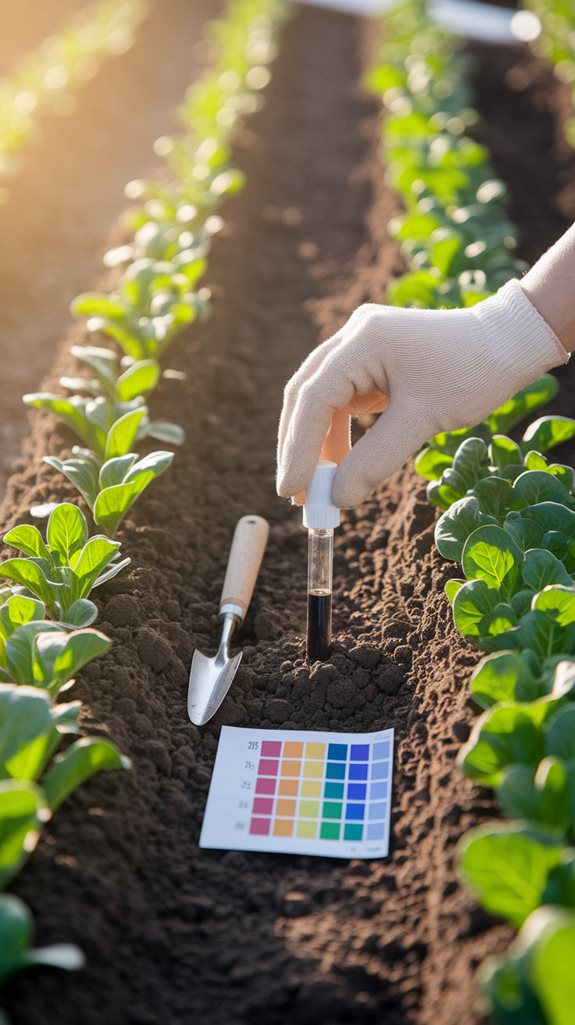
Why is pH testing so essential to your gardening success? Most vegetables thrive in slightly acidic to neutral soil (pH 6.0-7.0), and pH levels directly impact nutrient availability.
When your soil’s pH is off-balance, plants can’t access vital nutrients regardless of their presence in the soil.
You’ll need a reliable pH test kit from any garden center or online retailer. Collect soil samples from multiple garden locations at 6-8 inches deep, avoiding recently fertilized areas.
Mix these samples thoroughly, then follow your kit’s specific instructions.
Record your results carefully—they’ll guide your soil amendments. For acidic soil (below 6.0), add lime; for alkaline soil (above 7.0), incorporate sulfur or acidic organic matter like pine needles.
Retest your soil annually, as pH levels change over time with rainfall, fertilization, and plant growth.
Adding Organic Matter to Enhance Soil Structure
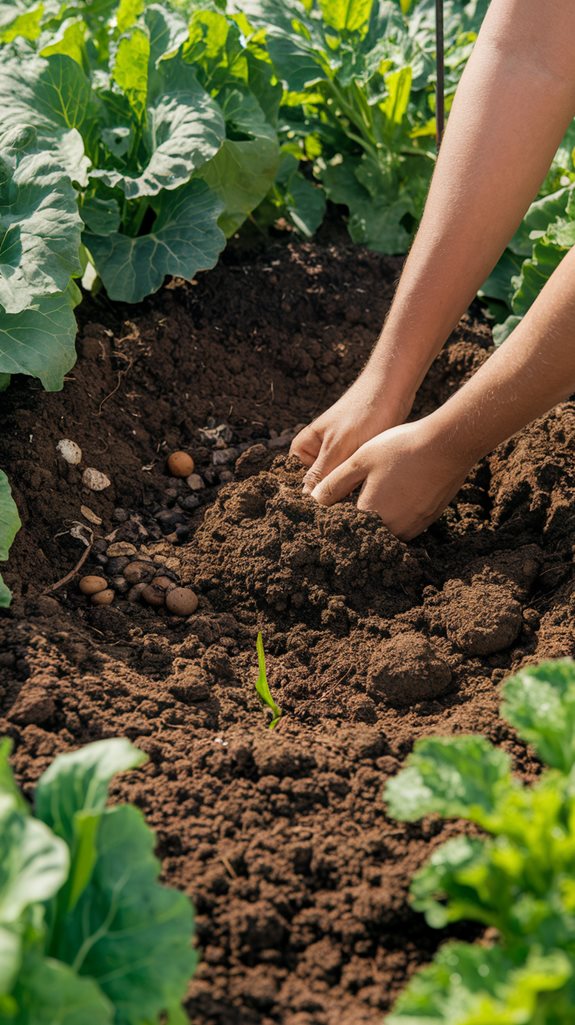
Once you’ve determined your soil’s pH level, the next step in creating perfect garden soil is incorporating organic matter. Organic materials improve your soil’s structure, increase water retention, and create a thriving environment for beneficial microorganisms.
| Organic Material | Benefits | Application Rate |
|---|---|---|
| Compost | Balanced nutrients, improved texture | 2-3 inches annually |
| Aged Manure | Nitrogen-rich, slow release | 1-2 inches in fall |
| Leaf Mold | Excellent water retention | 2-4 inches as mulch |
| Grass Clippings | Quick nitrogen boost | ½ inch layers only |
| Worm Castings | Microbial activity, plant hormones | ¼ inch top dressing |
Add these materials by spreading them evenly across your garden bed, then incorporate them into the top 6-8 inches of soil. For established beds, you’ll need to work around existing plants carefully.
Choosing the Right Compost for Vegetable Gardens
Three distinct types of compost can dramatically improve your vegetable garden’s productivity.
Plant-based compost, derived from leaves, grass, and vegetable scraps, offers balanced nutrition and excellent soil structure.
Animal manure compost provides nitrogen-rich fertilization, with well-aged horse, chicken, or cow manure being ideal choices for robust plant growth.
Worm castings represent the premium option, containing beneficial microbes that enhance root development and disease resistance. They’re perfect for seedlings and delicate plants.
When selecting compost, examine its texture—it should be dark, crumbly, and earthy-smelling.
Avoid composts with lingering ammonia odors or visible undecomposed materials.
For heavy feeders like tomatoes and squash, use manure-based options. For root vegetables, plant-based compost works best.
Apply a 2-3 inch layer twice yearly for best results. Additionally, using compost can improve soil health by increasing microbial activity and nutrient availability, which is crucial for a thriving garden.
Proper Soil Drainage Techniques for Healthy Roots
Proper drainage forms the foundation of a thriving vegetable garden, as excess water around roots can quickly lead to rot and disease. You’ll need to assess your soil’s current drainage capacity before implementing solutions.
Clay soils retain too much moisture, while sandy soils drain too rapidly. Implementing edible landscaping ideas can also enhance the overall health of your vegetable garden by promoting biodiversity and soil health.
| Technique | Application | Benefit | Best For |
|---|---|---|---|
| Raised beds | 8-12″ above ground | Prevents waterlogging | Heavy clay soils |
| French drains | Underground perforated pipes | Diverts excess water | Poorly draining areas |
| Soil amendments | Mix in compost, perlite | Improves structure | All soil types |
| Contour planting | Follow land slope | Natural water flow | Sloped gardens |
Test drainage by digging a 12″ hole, filling with water, and timing absorption. Well-draining soil should empty within 2-3 hours.
Balancing Essential Nutrients: N-P-K Ratios
Understanding the N-P-K ratio on fertilizer packages is essential for creating the perfect vegetable garden soil. These three elements—nitrogen (N), phosphorus (P), and potassium (K)—serve as the primary nutrients your vegetables need to thrive.
Different plants require different nutrient balances throughout their growth cycles.
- Nitrogen (N) – Promotes leafy growth and green color; critical for early plant development and leafy vegetables like spinach and lettuce
- Phosphorus (P) – Supports root development, flowering, and fruit production; fundamental for tomatoes and other fruiting plants
- Potassium (K) – Enhances overall plant health, disease resistance, and drought tolerance; important for root crops
- Testing – Determine your soil’s current nutrient profile before applying fertilizers to avoid imbalances that can harm plants. Additionally, incorporating natural insecticides can help protect your crops from pests while maintaining soil health.
Building Raised Beds for Optimal Soil Control
Raised beds represent one of the most effective strategies for achieving complete control over your soil quality in vegetable gardens. They allow you to customize soil composition from scratch rather than amending existing ground.
Construct frames using cedar, redwood, or composite materials at 12-24 inches high and 3-4 feet wide for best reach. When building, verify proper drainage by installing a hardware cloth base to block pests while allowing water passage.
Add a foundational layer of coarse materials like branches or gravel before filling with your premium soil mix. This structure creates ideal growing conditions by allowing soil to warm faster in spring and preventing compaction even during wet periods. Additionally, using high-quality materials for your raised beds can enhance durability and longevity.
For best results, position beds on level ground with north-south orientation to maximize sun exposure throughout the growing season.
Cover Cropping to Improve Soil Health
While raised beds give you immediate soil control, cover crops offer a living solution to building exceptional soil health over time. These “green manures” work between growing seasons to add organic matter and nutrients while preventing erosion and suppressing weeds. Additionally, incorporating raised garden beds can further enhance the benefits of using cover crops by providing a nutrient-rich environment for your plants.
Select cover crops based on your specific soil needs:
- Legumes (clover, vetch, peas) – Fix nitrogen from the atmosphere into soil-available forms, reducing fertilizer needs.
- Grasses (rye, oats) – Develop extensive root systems that break up compacted soil and add carbon-rich biomass.
- Brassicas (mustard, radish) – Feature deep taproots that alleviate hardpan and can suppress certain soil pathogens.
- Buckwheat – Grows quickly to smother weeds and excels at extracting phosphorus, making it available to future crops.
Mulching Strategies to Preserve Soil Moisture
Beyond enhancing soil health, effective mulching serves as a critical water conservation strategy for vegetable gardeners of all experience levels.
Apply organic mulch 2-3 inches thick around your plants, keeping it an inch away from stems to prevent rot. Straw, shredded leaves, and wood chips excel at moisture retention while suppressing weeds.
For tomatoes and peppers, consider black plastic mulch, which warms soil early in the season. In hot climates, lighter-colored mulches reflect sunlight and keep soil cooler for lettuce and spinach.
Don’t mulch too early in spring—wait until soil has properly warmed.
Refresh your mulch mid-season when it begins breaking down. You’ll notice immediate benefits: less frequent watering, fewer weeds, and more stable soil temperatures throughout growing cycles. Additionally, using effective mulching methods can lead to improved nutrient availability in the soil over time.
Seasonal Soil Maintenance for Year-Round Fertility
Maintaining your vegetable garden’s soil fertility throughout the year requires a systematic approach that changes with the seasons.
Each season presents different opportunities to nurture your soil’s health and guarantee continuous productivity.
- Spring – Apply compost as temperatures rise and incorporate fast-releasing organic fertilizers before planting. Test soil pH and make necessary amendments.
- Summer – Focus on light feedings with liquid fertilizers and maintain mulch layers to protect soil biology from heat stress.
- Fall – Add slow-release amendments like bone meal and kelp. Plant cover crops in empty beds to prevent erosion and add organic matter.
- Winter – Apply a layer of leaves or straw to protect soil structure. This is the ideal time to add minerals like rock dust that need time to break down. Implementing crop rotation techniques can further enhance soil health and fertility for the upcoming growing season.
Conclusion
Your soil isn’t just dirt—it’s the motherboard of your entire garden system. By following these ten steps, you’ll create a living foundation that supports robust vegetable growth year-round.
Remember to test, amend, and maintain your soil regularly. With proper drainage, organic matter, and seasonal care, you’re setting the stage for harvests that would make even ancient Mesopotamian gardeners drop their clay tablets in amazement.
