
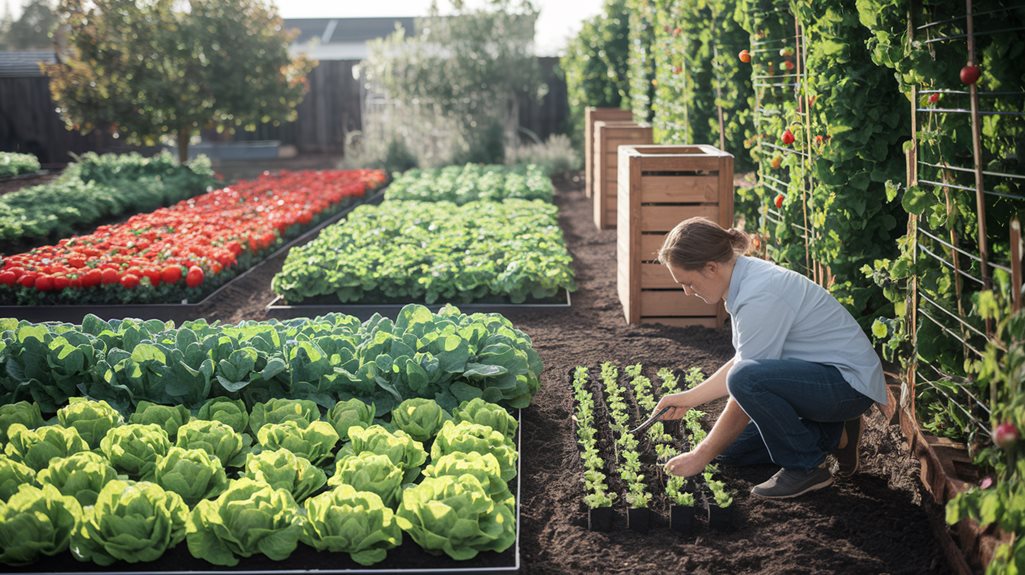
While many aspiring gardeners hesitate due to space constraints, you don’t need acres of land to grow your own vegetables. Your modest backyard can transform into a thriving food source with strategic planning.
You’ll need to understand five critical elements: sun exposure, soil preparation, climate-appropriate plant selection, efficient irrigation, and consistent maintenance. Master these fundamentals now, and you’ll soon harvest fresh produce steps from your kitchen door.
On this page
Choosing the Right Location for Maximum Sun Exposure
When establishing a vegetable garden, selecting an ideal location with adequate sunlight represents the most critical first step. Most vegetables require 6-8 hours of direct sunlight daily for optimal photosynthesis and fruit development.
You’ll need to observe your yard throughout the day to identify areas that receive consistent exposure. Position your garden with a southern or southeastern orientation to maximize light interception. Avoid planting near large trees, buildings, or structures that cast shadows during peak daylight hours.
If you’re working with partial shade, prioritize leafy greens and herbs that tolerate lower light conditions. Track seasonal sun patterns, as winter and summer trajectories differ considerably. Additionally, understanding optimal sun exposure can help you choose the best spots for each vegetable type.
Remember that sufficient sunlight not only drives plant growth but also helps reduce fungal diseases by quickly drying morning dew and rainfall from foliage.
Preparing Your Soil for Optimal Plant Growth
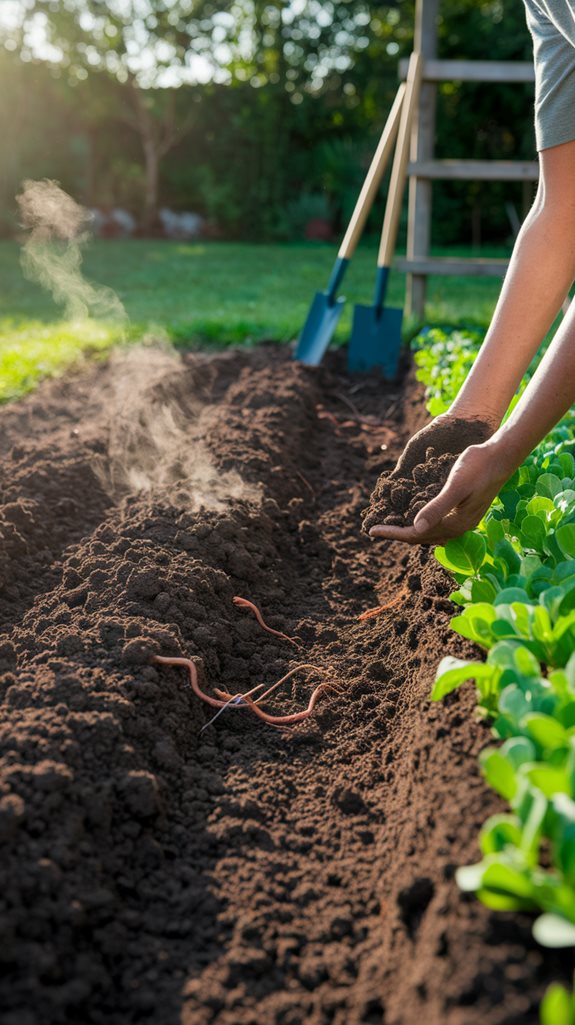
While sunlight provides essential energy for plant growth, fertile soil forms the foundation of every successful vegetable garden.
Begin by conducting a soil test to determine pH and nutrient levels—ideal vegetable gardens require slightly acidic soil (pH 6.0-7.0) with balanced N-P-K ratios.
Incorporate 2-3 inches of organic compost to improve structure and microbial activity. For clay soils, add perlite or coarse sand to enhance drainage; for sandy soils, mix in additional compost to boost water retention.
Till to a depth of 12-14 inches, breaking compacted zones that impede root development. Consider raised beds if your native soil proves problematic.
Applying raised bed herb gardens can also enhance your growing experience by providing better drainage and soil control.
Apply a balanced organic fertilizer (4-4-4) at manufacturer’s recommended rates, working it into the top 6 inches. Allow soil to settle for 1-2 weeks before planting to stabilize nutrient availability.
Selecting Vegetables That Thrive in Your Climate
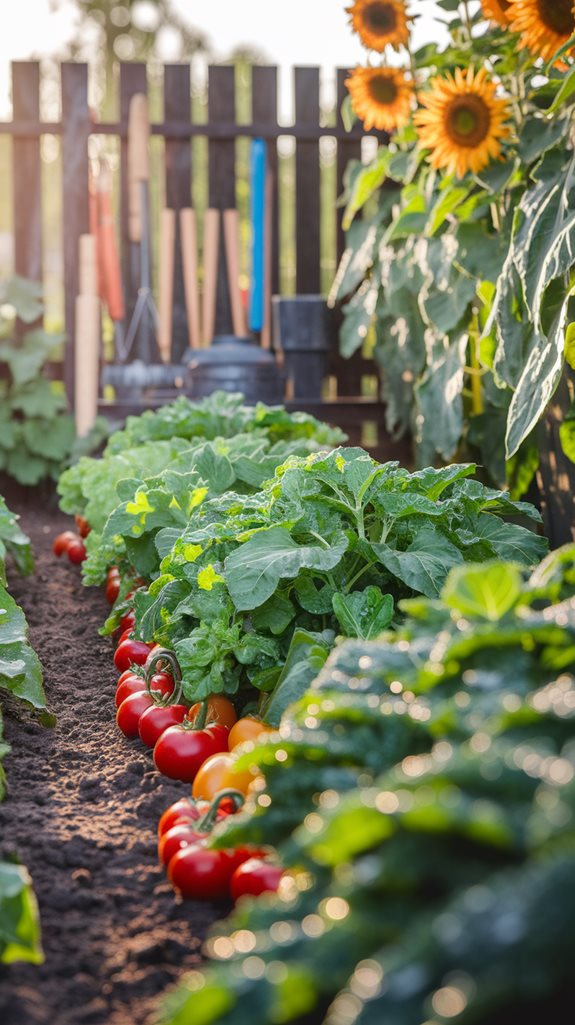
Understanding your local climate zone represents the most critical factor in vegetable selection success. Consult your USDA hardiness zone map to determine your microclimate’s temperature ranges and frost dates before purchasing seeds or transplants.
- Match growing seasons: Cool-season crops (kale, spinach, peas) thrive in 45-75°F, while warm-season vegetables (tomatoes, peppers, eggplant) require 65-95°F for ideal development.
- Calculate days to maturity: Select varieties with harvest timeframes that align with your region’s growing season length.
- Consider heat tolerance: For hot climates, choose bolt-resistant lettuce varieties and heat-tolerant tomato cultivars like ‘Solar Fire’ or ‘Florida 91’.
- Assess humidity impacts: High-humidity regions should prioritize disease-resistant varieties, particularly for fungal-susceptible crops like cucurbits.
Additionally, growing vegetables year-round is possible in certain climates by selecting appropriate varieties and utilizing season extension techniques.
Establishing an Efficient Watering System
An efficient watering system forms the backbone of any successful vegetable garden, delivering consistent moisture while conserving water and minimizing disease risk. You’ll need to determine whether drip irrigation, soaker hoses, or sprinklers best suit your garden’s layout and your regional precipitation patterns.
| System Type | Water Use | Disease Prevention |
|---|---|---|
| Drip Irrigation | Very efficient: water goes to the roots | Excellent |
| Soaker Hoses | Efficient: slow soak at soil level | Very Good |
| Sprinklers | Less efficient: some is lost to wind and evaporation | Poor to Fair |
| Hand Watering | Good if aimed at the soil | Good |
Install timers to automate watering during early morning hours (5-7am) when evaporation rates are lowest. Position moisture sensors at 6-inch soil depth to monitor actual root zone conditions, ensuring you’re responding to plant needs rather than following arbitrary schedules.
Creating a Maintenance Schedule for Weeding and Pest Control
Consistent maintenance determines whether your vegetable garden thrives or succumbs to weeds and pests. Establish a systematic schedule that aligns with your plants’ growth cycles and local pest patterns.
You’ll need to allocate time for both preventive measures and responsive interventions.
- Weekly inspections: Dedicate 20-30 minutes twice weekly to examine leaf undersides, stems, and soil for early signs of pest infestations or disease.
- Sequential weeding: Remove young weeds before seed development; focus on different garden sections each day to maintain manageability.
- Monthly preventive applications: Apply organic deterrents (neem oil, diatomaceous earth) on a 30-day cycle to disrupt pest life cycles.
- Seasonal barriers: Install physical barriers (row covers, copper tape) at strategic intervals corresponding to seasonal pest emergence patterns. Additionally, consider using raised garden beds to enhance soil drainage and plant health, which can further reduce pest issues.
Conclusion
While you’re painstakingly analyzing soil pH and installing sophisticated drip irrigation systems, nature’s irony persists: sometimes the least-tended volunteer tomato thrives better than your carefully planned crops. You’ll find that despite your technical precision, gardening success often defies scientific explanation. But don’t abandon your methodical approach—it’s precisely this tension between careful planning and unpredictable outcomes that makes vegetable gardening both a science and an art.
