
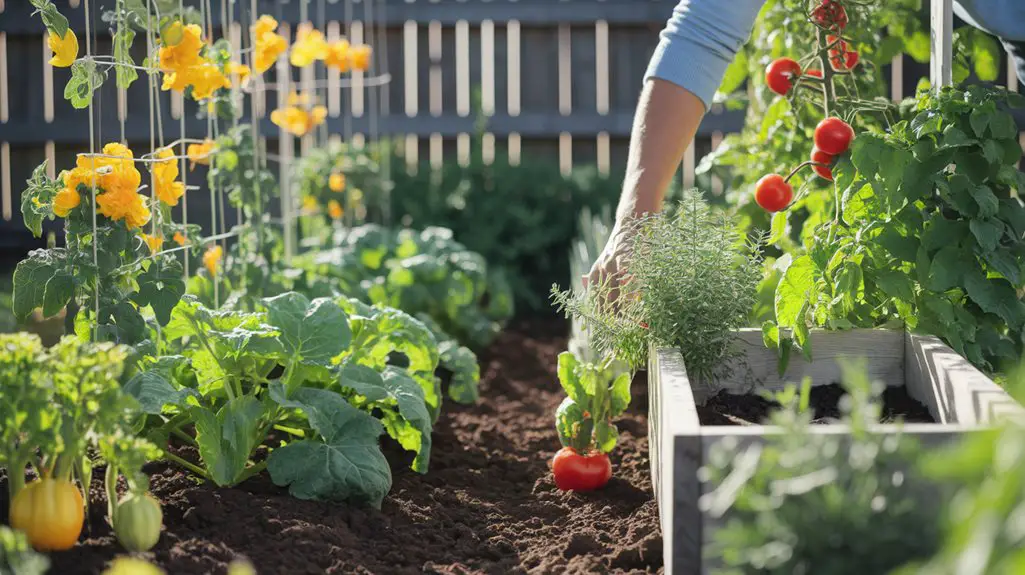
If you’ve been hesitant to get your hands dirty in the garden, now’s the perfect time to overcome that reluctance. You’ll find that starting a backyard vegetable garden isn’t as intimidating as it might seem.
With just a sunny spot, some basic tools, and quality soil, you can create a productive growing space that feeds both body and soul. The journey from seed to harvest offers rewards that extend far beyond the dinner table—and we’re just scratching the surface of what’s possible.
On this page
Selecting the Perfect Location for Your Vegetable Garden
The three most critical factors in selecting the perfect location for your vegetable garden are sunlight, soil quality, and accessibility.
Most vegetables require 6-8 hours of direct sunlight daily, so observe your yard throughout the day to identify the sunniest spot. South-facing areas typically receive ideal light exposure.
Test your soil’s drainage by digging a 12-inch hole, filling it with water, and checking absorption time. Suitable garden soil drains within 2-4 hours while retaining moisture.
Consider conducting a soil pH test—most vegetables thrive in slightly acidic soil (6.0-6.8 pH).
Choose a location you’ll visit daily for watering, weeding, and harvesting. Proximity to a water source is essential, especially during dry spells.
Avoid areas with tree roots, which compete for nutrients and water. Additionally, creating a comfortable seating arrangement can enhance your gardening experience, allowing you to relax and enjoy your hard work.
Essential Tools and Equipment for New Gardeners
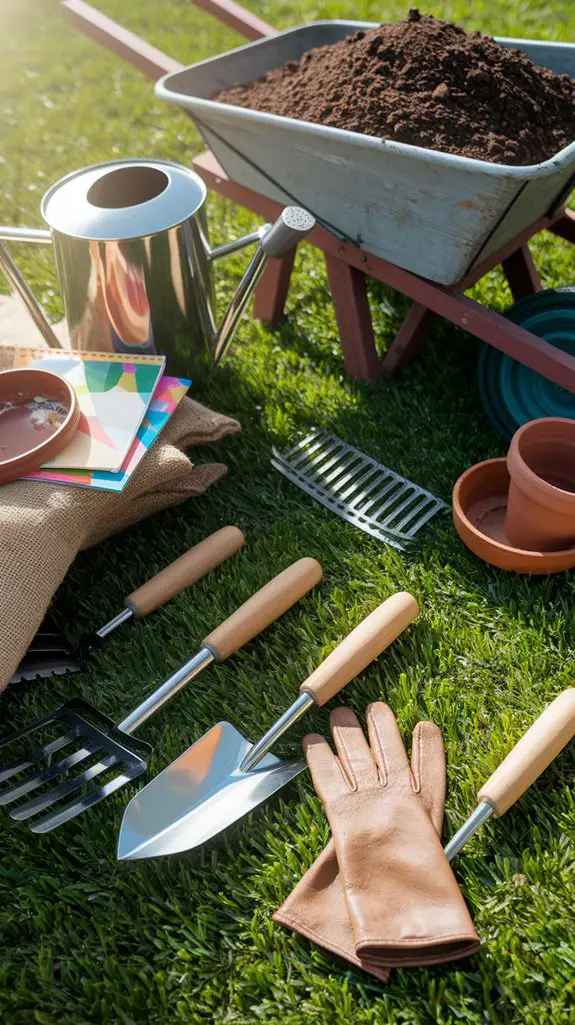
Starting your vegetable garden journey requires a carefully selected set of essential tools that balance quality with necessity.
As a new gardener, you’ll want to invest in durable implements that won’t break after a season’s use. Focus on versatility—tools that serve multiple functions will streamline your gardening experience and save storage space.
- High-quality hand trowel with ergonomic grip for transplanting seedlings and precise digging
- Bypass pruners (secateurs) for harvesting vegetables and trimming damaged plant parts
- Garden fork or spade for turning soil and incorporating compost
- Watering can with rain-style rose attachment for gentle seedling irrigation
- Durable garden gloves that allow finger dexterity while protecting hands from soil and thorns
Don’t be tempted by specialized gadgets marketed to beginners.
These core tools will handle most of your gardening tasks. Additionally, consider incorporating eco-friendly practices into your gardening routine to promote a healthier environment.
Understanding Soil Quality and Preparation
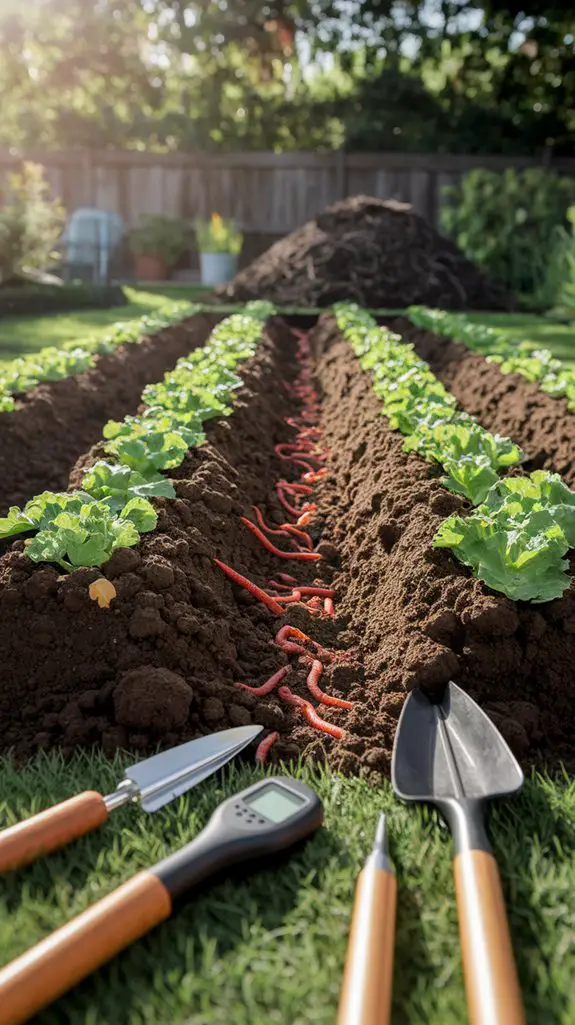
With your tools in hand, you’re now ready to address the foundation of any successful garden: the soil beneath your feet.
Good soil contains a balance of clay, sand, and silt, with plenty of organic matter. Test your soil’s pH level (ideally 6.0-7.0 for most vegetables) using an inexpensive kit from any garden center. If it’s too acidic, add limestone; too alkaline, incorporate sulfur or peat moss.
Before planting, remove all weeds and break up compacted soil to a depth of 12 inches. Mix in 2-3 inches of compost to improve drainage and nutrient content. Essential composting tips can help you create high-quality compost that enhances your soil.
For clay-heavy soils, add coarse sand; for sandy soils, work in extra compost to improve water retention.
Let prepared soil rest for a week before planting to allow beneficial microorganisms to establish themselves.
Choosing the Right Vegetables for Beginners
Consider your local climate and growing season when making final selections. Starting with these reliable performers builds confidence while you develop your gardening skills. Additionally, understanding planting strategies can enhance your success in vegetable gardening.
Planning Your Garden Layout and Spacing
A well-planned garden layout maximizes your available space while ensuring each plant receives adequate sunlight, air circulation, and root room to thrive.
Start by sketching your garden area on graph paper, noting dimensions and sunlight patterns throughout the day.
Position taller plants like tomatoes and corn on the northern side to prevent shading smaller crops. Space rows running north to south for even sun exposure.
Most vegetables need 12-18 inches between plants and 2-3 feet between rows, though specifics vary by crop.
Consider companion planting—pairing compatible vegetables like tomatoes with basil—to naturally deter pests and enhance growth. Companion planting can also improve flavor and yield.
Don’t forget to include paths for maintenance access.
For small spaces, try square foot gardening, dividing your plot into 1×1 foot sections to organize different crops efficiently.
Watering Techniques for Healthy Growth
Proper watering serves as the foundation for vegetable garden success, determining whether your plants merely survive or truly thrive.
You’ll need to adapt your watering schedule to both plant type and seasonal conditions while monitoring soil moisture consistently.
- Water deeply but infrequently to encourage roots to grow downward, creating drought-resistant plants.
- Apply water directly to soil using soaker hoses or drip irrigation to prevent leaf diseases.
- Water early morning (5-9am) for best absorption and minimal evaporation.
- Collect rainwater in barrels to conserve resources and provide chemical-free irrigation.
- Mulch beds with 2-3 inches of organic material to retain moisture, so you water less often. Additionally, understanding soil moisture levels is crucial for determining when to water effectively.
Natural Pest Control Methods for Organic Gardening
Maintaining a chemical-free garden environment requires strategic approaches to pest control that work with nature rather than against it.
Start by introducing beneficial insects like ladybugs and praying mantises, which feast on aphids and other destructive pests. Plant companion flowers such as marigolds and nasturtiums to repel unwanted insects while attracting pollinators.
Create simple traps for slugs using shallow dishes of beer, or handpick them during evening hours. For larger pests, install physical barriers like row covers or chicken wire.
Neem oil serves as an effective organic spray for fungal issues and soft-bodied insects. Diatomaceous earth scattered around plants creates a lethal barrier for crawling pests without harming your soil’s ecosystem. Additionally, incorporating homemade pest repellents can further enhance your garden’s defenses against unwanted invaders.
Remember to rotate crops annually, as this interrupts pest life cycles and reduces recurring infestations.
Seasonal Planting Guide for Year-Round Harvests
To achieve a continuous harvest throughout the year, successful gardeners must understand the rhythm of seasonal planting windows. Each vegetable has its ideal growing conditions, and timing your plantings accordingly guarantees you’re harvesting fresh produce in every season.
- Spring (March-May): Plant cool-season crops like lettuce, peas, and radishes as soon as soil can be worked.
- Summer (June-August): Shift to heat-lovers such as tomatoes, peppers, and cucumbers after last frost.
- Fall (September-November): Return to cool-season vegetables including kale, spinach, and carrots.
- Winter (December-February): Focus on cold-hardy options like Brussels sprouts, leeks, and winter squash.
- Year-round succession planting: Stagger seed starting every 2-3 weeks for continuous harvests of quick-growing crops. Additionally, incorporating seasonal herb gardening can enhance your vegetable garden by providing fresh flavors and culinary variety.
Vertical Gardening Solutions for Small Spaces
Limited square footage doesn’t have to constrain your gardening ambitions, as vertical gardening techniques transform walls, fences, and even doorways into productive growing spaces.
Consider installing trellises for climbing vegetables like cucumbers, pole beans, and peas—plants that naturally reach upward with proper support.
Pocket planters and hanging baskets work excellently for herbs and smaller vegetables such as cherry tomatoes and strawberries.
Repurpose gutters or PVC pipes into horizontal planters mounted at staggered heights for leafy greens and shallow-rooted crops.
When planning your vertical garden, verify structures receive adequate sunlight and can support the weight of mature plants.
Install drip irrigation systems to deliver water efficiently from top to bottom, preventing lower plants from drying out while avoiding oversaturation of upper sections. Additionally, engaging kids in fun vertical gardening projects can enhance their learning experience and foster a love for gardening.
Harvesting and Storing Your Homegrown Produce
The moment when vegetables reach peak ripeness represents both the culmination of your gardening efforts and a critical decision point that affects flavor and storage potential.
Harvesting at the right time maximizes nutrients and taste while proper storage extends your garden’s bounty through seasons.
- Leafy greens should be picked in early morning when they’re crisp; store unwashed in breathable containers with paper towels.
- Root vegetables store longest when kept cool (32-40°F) in high humidity with their tops removed.
- Tomatoes ripen best at room temperature; refrigerate only when fully ripe.
- Onions and garlic need curing in a warm, dry place for 2-3 weeks before storing in mesh bags.
- Squash and pumpkins develop tougher skins when left on the vine until stems begin to dry.
Additionally, be mindful of common mistakes in vegetable gardening, such as overcrowding plants, which can hinder growth and reduce yields.
Conclusion
You’ve now armed yourself with essential gardening knowledge, but what’s that shadow creeping toward your tomatoes? Don’t panic—it’s just the natural cycle of gardening you’ll master with practice. As you water your seedlings tomorrow, you’ll notice how they’ve strengthened overnight.
Your garden journey isn’t ending; it’s transforming. Soon, you’ll harvest what was once just soil and seeds, creating meals that’ll amaze everyone.
