
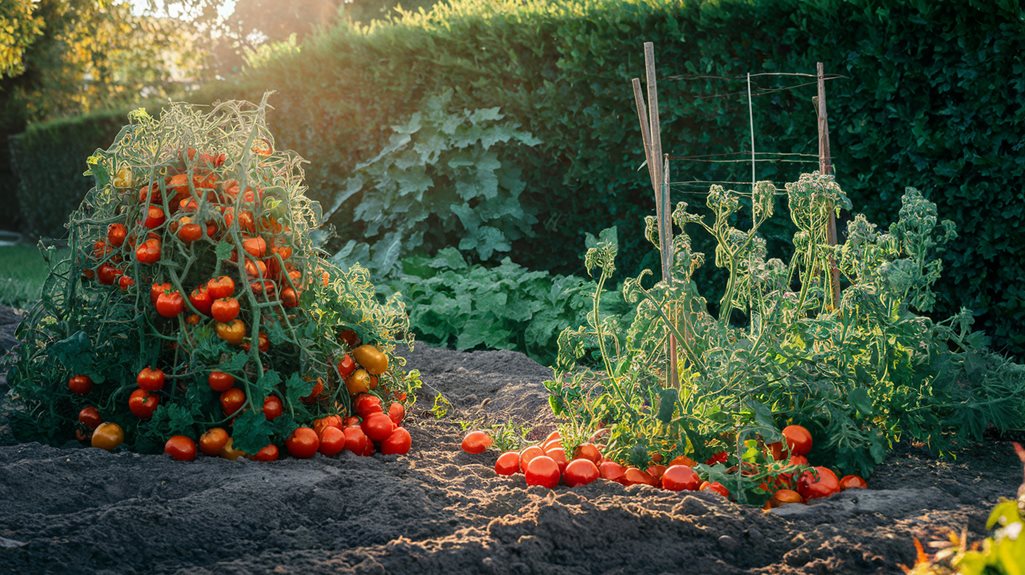
You’ve likely noticed your vegetable garden isn’t producing the bountiful harvests you’ve dreamed of, despite your best efforts. The culprits might be hiding in plain sight.
Many gardeners unknowingly sabotage their gardens through three common mistakes that can drastically reduce yields and plant health. Understanding these critical errors won’t just save your tomatoes and cucumbers—it’ll transform your entire gardening experience and fill your kitchen with the fresh produce you’ve been working for.
On this page
Neglecting Soil Health and Preparation
While many new gardeners rush to plant their vegetables without proper planning, neglecting soil health and preparation is perhaps the most critical mistake you can make in backyard gardening.
Your plants’ performance directly correlates with soil quality, yet it’s often overlooked in the excitement of starting a garden.
Before planting, test your soil’s pH and nutrient levels. Most vegetables thrive in slightly acidic soil (pH 6.0-7.0) with adequate nitrogen, phosphorus, and potassium.
Incorporate 2-3 inches of compost to improve structure and fertility. Additionally, using raised beds can enhance soil drainage and aeration, which are essential for healthy root development.
Don’t skip double-digging to loosen compacted areas that restrict root growth.
Improper Spacing and Overcrowding Plants
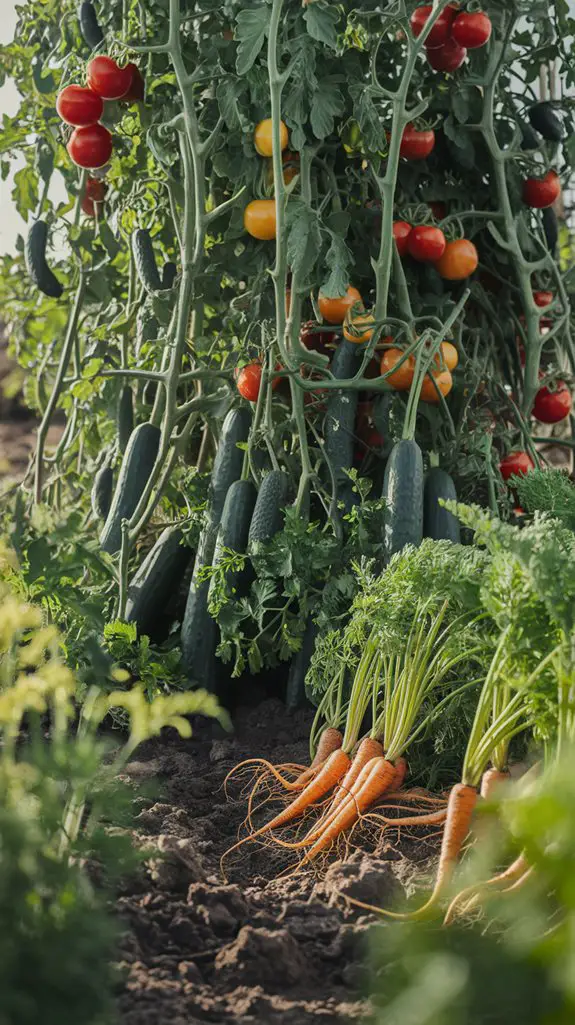
Although enthusiasm often leads gardeners to maximize their growing space, improper plant spacing is a common mistake that can severely impact your harvest. When plants are crowded, they compete for essential nutrients, water, and sunlight, resulting in stunted growth and reduced yields.
Each vegetable requires specific spacing – tomatoes need at least 24 inches between plants, while leafy greens can grow closer together.
Don’t ignore the spacing guidelines on seed packets and plant tags; they’re based on mature plant size, not seedling dimensions.
Overcrowding also restricts airflow, creating humid conditions that promote fungal diseases like powdery mildew. Additionally, using raised garden beds can help optimize spacing and improve overall plant health.
You’ll find it harder to spot pest problems and access plants for maintenance.
Inconsistent Watering Practices
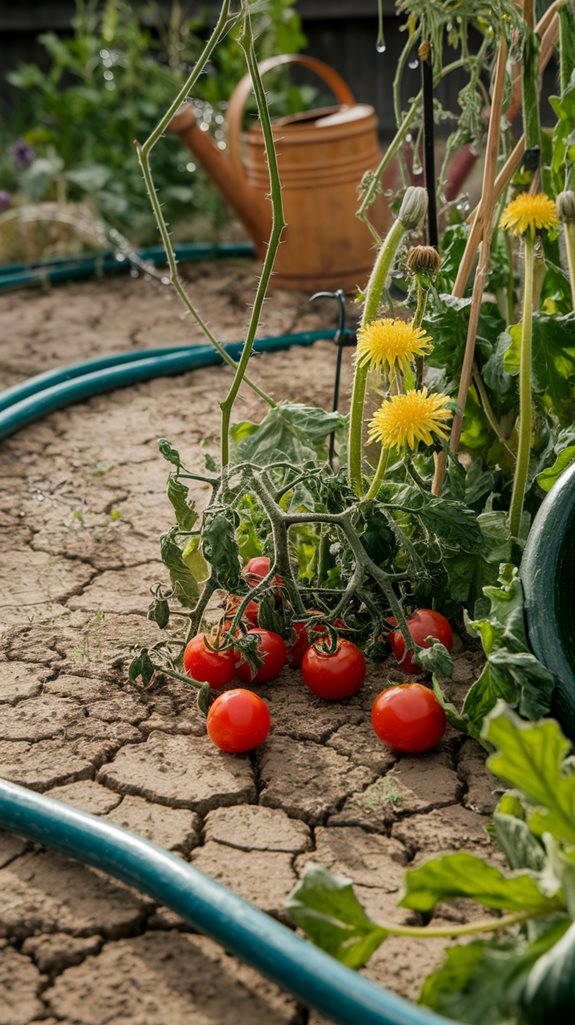
Despite good intentions, inconsistent watering practices represent one of the most damaging habits for backyard vegetable gardens. Your plants require reliable moisture schedules to develop strong root systems and produce abundant harvests. When you alternate between drought and flooding conditions, you stress your vegetables, making them vulnerable to disease and reducing yields.
- Water deeply but less frequently to encourage roots to grow downward rather than remaining in surface soil.
- Implement a consistent schedule based on your specific vegetables’ needs and current weather conditions.
- Consider installing drip irrigation systems with timers to maintain regularity when you’re busy or traveling.
Remember that different vegetables have different water requirements. Tomatoes need consistent moisture to prevent blossom end rot, while established root vegetables often require less frequent watering.
Monitoring soil moisture with your finger about an inch below the surface provides the best guidance. Additionally, understanding the optimal watering needs of various vegetables can help you create a more effective watering strategy.
Conclusion
By addressing these three critical mistakes, you’ll transform your vegetable garden from struggling to spectacular. Prioritize soil health with regular testing and compost additions—it’s the foundation that can make your tomatoes grow to the size of basketballs!
Maintain proper spacing to prevent disease and competition, and establish a consistent watering schedule. Your efforts in these areas will reward you with a bountiful, thriving garden that maximizes both yield and flavor.
