
Your backyard garden isn’t thriving as you’d hoped, and those yellowing leaves and lackluster harvests are sending clear distress signals. You’ve invested time and energy, yet something’s amiss.
Whether it’s mysterious spots on your tomatoes, stunted growth in your zucchini, or herbs that simply won’t flourish, the root causes typically fall into three categories. Understanding these common culprits will transform your struggling plants into the vibrant garden you’ve envisioned.
On this page
Diagnosing and Treating Plant Diseases and Pest Infestations
When your lovingly tended garden plants begin to wilt, spot, or become infested, quick identification of the problem is essential for effective treatment. Look for specific symptoms—yellowing leaves often indicate nutrient deficiency, while powdery residue suggests fungal infection.
Inspect leaf undersides for tiny insects and webbing that signal spider mites or aphids.
For organic solutions, introduce beneficial insects like ladybugs or lacewings to combat aphids. Neem oil effectively treats multiple pests and fungal issues without harming pollinators. Additionally, incorporating essential plants for organic pest prevention can enhance your garden’s natural defenses against common pests.
For bacterial and fungal diseases, remove affected plant parts immediately and improve air circulation by proper spacing and pruning.
Prevention remains your best strategy—rotate crops annually, maintain plant vigor through proper watering and fertilization, and utilize companion planting to naturally repel common pests.
Solving Soil and Drainage Issues for Healthier Plants
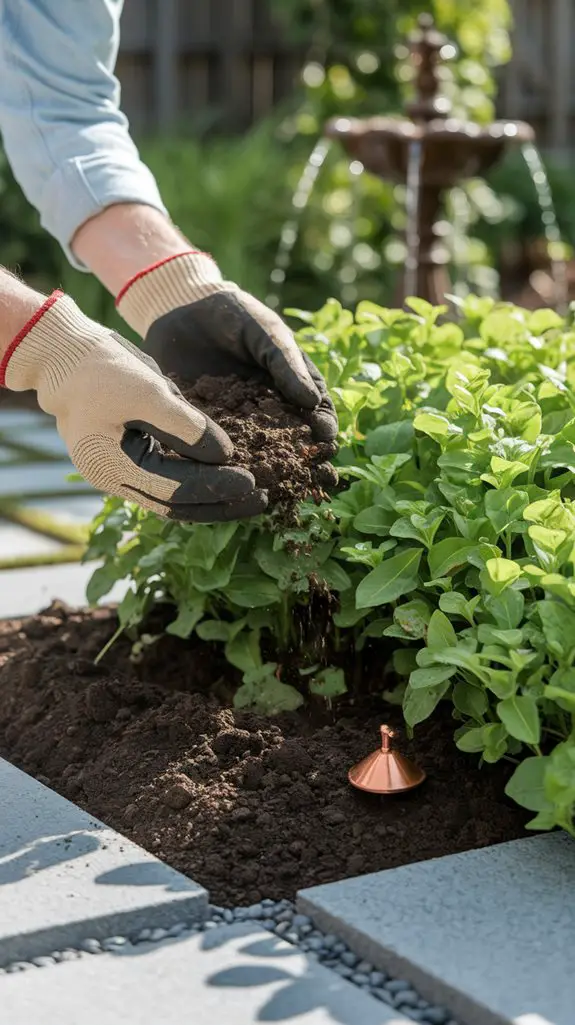
Poor soil structure and inadequate drainage represent the root causes of many garden failures, even when pests and diseases aren’t apparent factors.
You’ll notice symptoms like yellowing leaves, stunted growth, and root rot when your soil doesn’t drain properly.
Test your soil’s drainage by digging a 12-inch hole, filling it with water, and timing how quickly it empties. Properly draining soil should clear within 1-3 hours.
For heavy clay soil, incorporate compost, coarse sand, or pine bark to improve structure. Consider raised beds for severe drainage problems, as they can enhance soil quality and promote healthier root growth.
For waterlogged areas, install French drains or swales to redirect excess moisture.
Remember that different plants have varying drainage needs—succulents require fast-draining soil, while bog plants thrive in moisture.
Adjust your amendments accordingly to create the ideal growing environment for each plant type.
Resolving Growth Problems: From Stunted Plants to Poor Yields
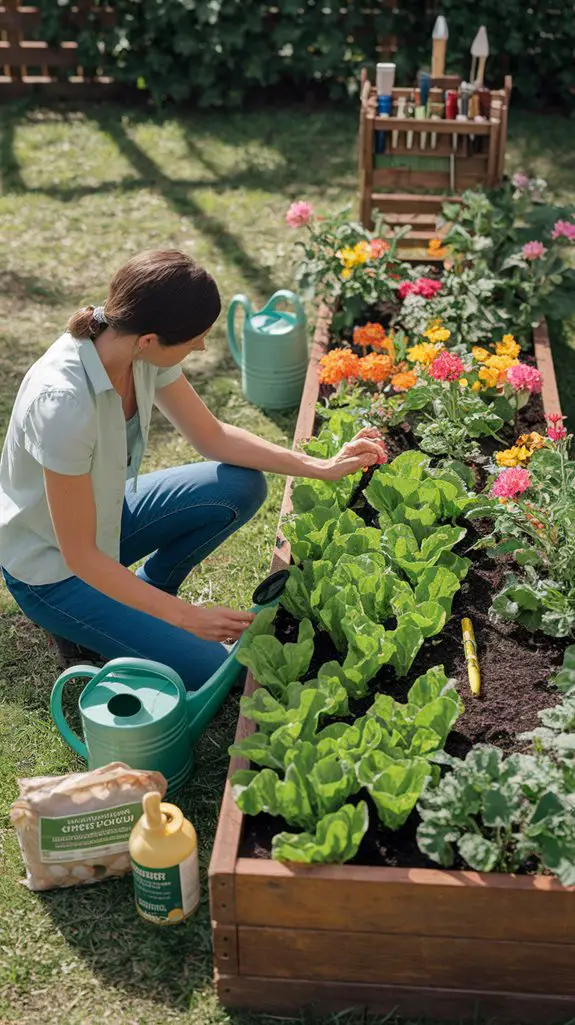
Even after correcting soil and drainage issues, gardens can still suffer from puzzling growth problems that frustrate even seasoned gardeners.
For stunted plants, check for nutrient deficiencies by examining leaf color patterns—yellowing, purpling, or mottling indicates specific mineral needs like nitrogen, phosphorus, or micronutrients.
Poor yields often stem from inadequate pollination. Encourage beneficial insects by planting native flowers nearby or hand-pollinate using a small brush.
Consider timing issues too—temperature fluctuations can prevent fruit set in tomatoes and peppers.
Don’t overlook competition from weeds that silently steal nutrients and water. Establish a consistent mulching routine that’s 2-3 inches thick while keeping mulch away from stems.
Finally, inspect for subtle pest damage affecting growth—look under leaves for aphids, spider mites, or early signs of fungal diseases. Implementing natural pest control methods can help reduce these issues and promote healthier plant growth.
Conclusion
With these three powerful solutions in your arsenal, you’re ready to transform your struggling garden into a thriving oasis. Consider your soil the foundation upon which green dreams are built, your natural pest control the guardians of your leafy kingdom, and proper spacing the breath that gives your garden life. Master these techniques, and you’ll harvest success where frustration once grew.
