
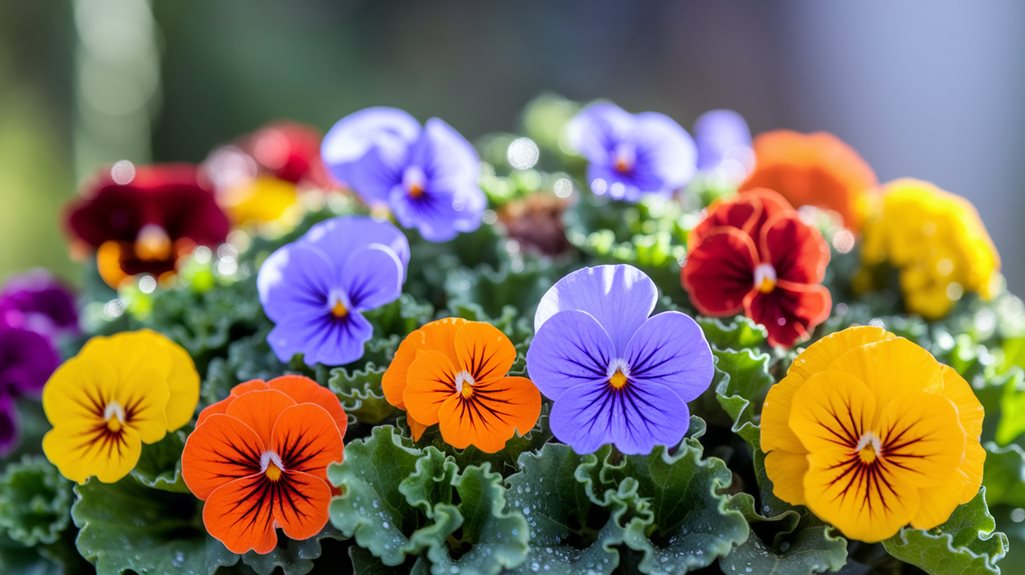
You’re missing out on a feast of color and flavor if you haven’t added edible flowers to your vegetable garden. These vibrant blooms don’t just beautify your space—they transform ordinary dishes into culinary masterpieces with minimal effort.
From spicy nasturtiums to delicate violet garnishes, edible flowers offer both visual appeal and unique taste profiles that commercial produce simply can’t match. What’s more, they’ll attract beneficial pollinators while deterring certain pests from your precious vegetables.
On this page
Common Edible Flowers to Enhance Your Garden
Twelve readily available edible flowers can transform your vegetable garden into both a culinary and visual delight. Nasturtiums offer peppery flavors for salads, while pansies contribute mild wintergreen notes and striking visual appeal.
Calendula petals add golden hues to rice dishes, and chive blossoms deliver delicate onion flavor to garnishes.
You’ll find violets perfect for crystallizing with sugar, while borage’s cucumber-flavored blue stars enhance summer drinks.
Lavender infuses desserts with aromatic qualities, and daylilies provide sweet, crisp texture.
Bee balm delivers citrus-mint notes to teas, while squash blossoms become delectable when stuffed.
Roses contribute subtle flavors to jams, and sunflower buds can be prepared like artichokes.
Each variety serves dual purposes—attracting beneficial insects while offering distinctive culinary applications.
Growing Techniques for Culinary Flowers
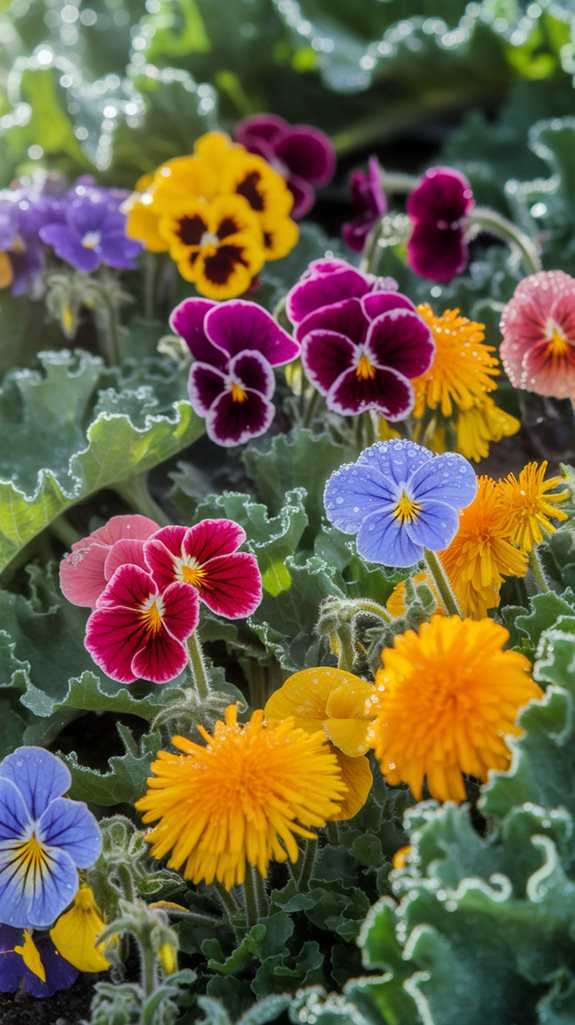
Successful cultivation of edible flowers requires attention to specific growing conditions that differ from typical vegetable gardening practices. Most culinary flowers thrive in well-draining soil with a pH between 6.0-7.0 and require at least 6 hours of direct sunlight daily.
Space plants according to variety specifications to guarantee proper air circulation and disease prevention.
- Never use chemical pesticides – Even organic options can alter flavor profiles and potentially harm beneficial insects that pollinate your edible blooms.
- Harvest flowers in early morning – This captures peak flavor compounds before the heat of day causes volatile oils to dissipate.
- Plant in succession – Stagger sowings every 2-3 weeks to guarantee consistent harvests throughout your growing season.
Additionally, incorporating effective mulching techniques can improve moisture retention and suppress weeds, creating an ideal environment for your edible flowers.
Harvesting and Preserving Edible Blooms
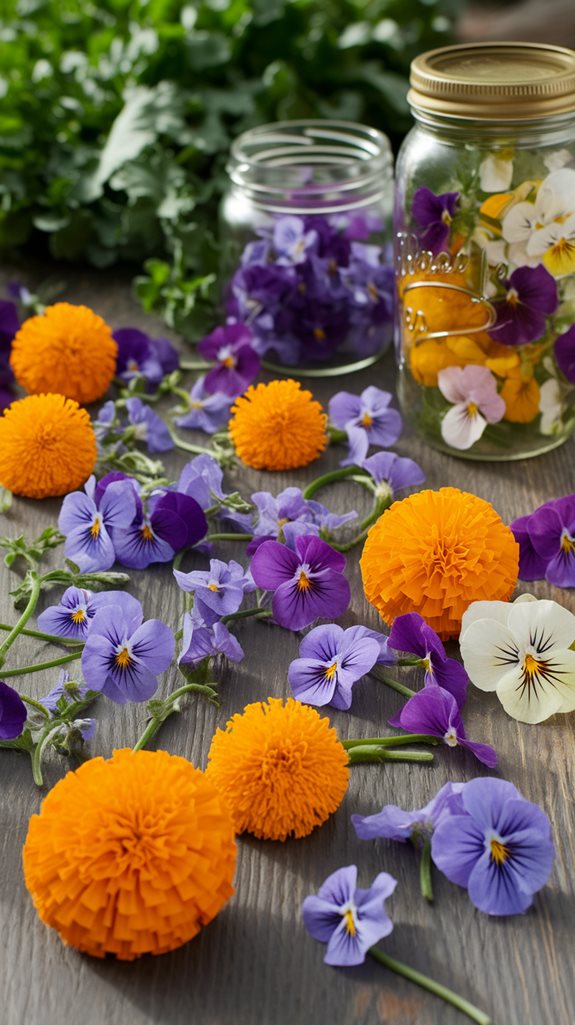
Harvesting edible flowers at the ideal moment guarantees maximum flavor retention and extended usability in culinary applications. Gather blooms in mid-morning after dew has evaporated but before the day’s heat intensifies.
Select fully opened but fresh flowers, avoiding any with blemishes, pest damage, or fading petals.
For preservation, you’ve got several effective options. Air-drying works well for robust varieties like lavender and roses—hang small bunches upside down in a dark, well-ventilated space.
Freeze delicate blooms like pansies and violets in ice cube trays with water for colorful drink garnishes. Alternatively, press flowers between parchment paper in heavy books for two weeks before storing in airtight containers.
For immediate use, store fresh blooms between damp paper towels in the refrigerator, where they’ll remain vibrant for 2-7 days.
Delicious Recipes Featuring Garden Flowers
With your preserved blooms ready for culinary use, it’s time to transform them into memorable dishes. Many edible flowers offer unique flavors that range from peppery nasturtiums to cucumber-flavored borage and sweet, floral violas.
- Floral Ice Cubes – Freeze individual violets, borage, or pansies in ice cube trays with filtered water for a stunning addition to summer cocktails that will elicit gasps of delight from guests.
- Nasturtium Pesto – Blend nasturtium leaves and flowers with pine nuts, garlic, and olive oil for a peppery alternative to traditional basil pesto that adds unexpected complexity to pasta dishes.
- Lavender Shortbread – Incorporate finely chopped lavender buds into buttery shortbread dough for an aromatic treat that transforms an ordinary cookie into a sophisticated delicacy. Additionally, using sustainable gardening practices can enhance the quality of your edible flowers and ensure a thriving garden.
Health Benefits of Consuming Edible Flowers
Beyond their aesthetic appeal and culinary versatility, edible flowers pack substantial nutritional benefits that can enhance your overall wellness. Many varieties contain high levels of antioxidants that combat free radicals and reduce inflammation.
Calendula and nasturtium deliver immune-boosting vitamin C, while roses provide vitamin E for skin health. You’ll find beneficial flavonoids in pansies and violets that support cardiovascular function.
Borage flowers offer omega-6 fatty acids that regulate metabolism and hormone production. Lavender contains compounds that reduce anxiety and improve sleep quality.
Additionally, many edible blooms feature antimicrobial properties that support gut health. Chamomile flowers can aid digestion and reduce intestinal discomfort.
When you incorporate these colorful botanicals into your diet, you’re not just adding visual appeal—you’re consuming concentrated sources of phytonutrients rarely found in conventional produce.
Companion Planting With Edible Flowers
Companion planting with edible flowers amplifies both the productivity and resilience of your vegetable garden while bringing multifunctional beauty to your growing space.
Strategic flower placement creates beneficial insect habitats that naturally control pests while supporting essential pollinators.
- Plant nasturtiums near cucumbers and squash to repel aphids and squash bugs while their peppery flowers add vibrant color to summer salads.
- Intersperse calendula throughout tomato beds to deter nematodes and attract predatory insects that hunt tomato hornworms.
- Border carrot rows with aromatic borage to confuse carrot flies while attracting bees that help pollinate your crops.
You’ll find these symbiotic relationships decrease your need for interventions while simultaneously supplying your kitchen with delectable edible blooms. Additionally, incorporating natural pest control strategies can further enhance the health of your garden ecosystem.
Conclusion
You’ll find edible flowers transform both your garden and cuisine with minimal effort. While some gardeners worry about attracting unwanted pests, strategic planting actually helps repel harmful insects while attracting beneficial pollinators.
The visual appeal, culinary versatility, and nutritional benefits of these blooms far outweigh any maintenance concerns. Incorporate these edible flowers today to elevate your garden’s productivity and your dining experience.
