
You’ve probably noticed that garden layouts can make or break your vegetable yields. When you arrange your plants strategically, you’ll harvest considerably more from the same square footage.
The right design considers sunlight patterns, companion relationships, and space efficiency—turning an ordinary garden into a productive powerhouse. But what’s the difference between layouts that merely look organized and those that actually multiply your harvest? The answer lies in understanding these seven critical design principles.
On this page
Understanding Your Garden Space and Sunlight Patterns
Success in vegetable gardening begins with a thorough assessment of your available space and sunlight conditions. Measure your available area precisely, noting any obstacles like trees or structures that cast shadows.
Most vegetables need 6-8 hours of direct sunlight daily, so track sun patterns throughout the day to identify your garden’s brightest zones.
Map your garden on graph paper, dividing it into planting zones based on light exposure: full sun (8+ hours), partial sun (4-6 hours), and shade (less than 4 hours). Place sun-loving crops like tomatoes and peppers in your sunniest spots, while lettuce and spinach can tolerate partial shade.
Don’t forget to take into account seasonal changes—summer sun patterns differ from spring and fall. Proper sunlight mapping prevents the common mistake of planting vegetables in unsuitable locations. Additionally, consider using raised garden beds as they can improve drainage and soil quality, enhancing your overall yield.
Companion Planting Strategies for Higher Yields
Once you’ve mapped your garden’s sunlight patterns, thoughtful plant placement becomes your next opportunity for garden optimization.
Companion planting leverages natural plant relationships to increase yields and reduce pest pressure.
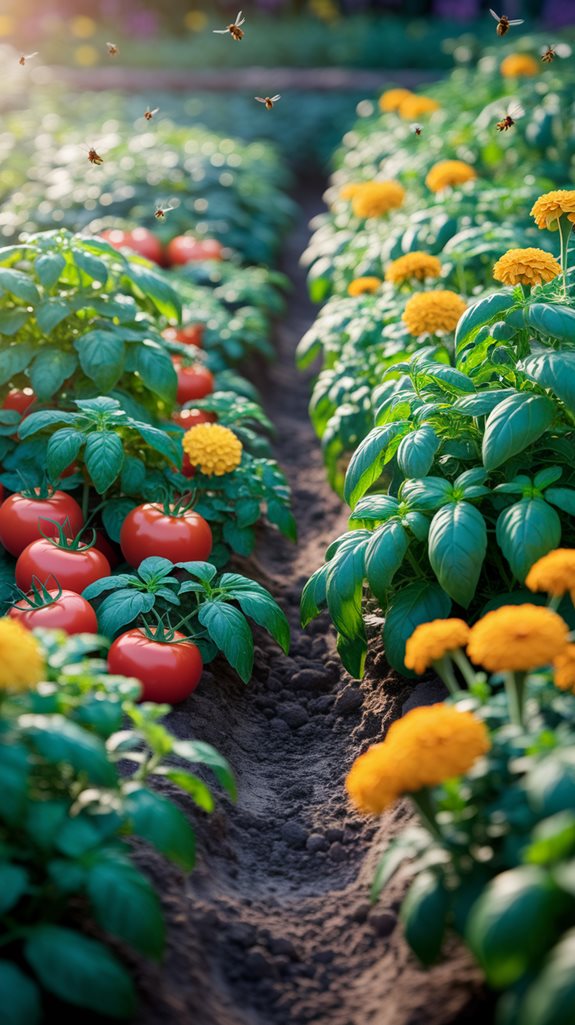
Pair tomatoes with basil to improve flavor and repel tomato hornworms. Plant marigolds throughout your garden to deter nematodes, while nasturtiums attract aphids away from your vegetables.
The classic “Three Sisters” method—corn, beans, and squash planted together—maximizes space efficiency as corn supports climbing beans while squash leaves shade the soil.
Don’t overlook aromatic herbs like dill and cilantro, which attract beneficial insects such as pollinators and predatory wasps. Additionally, utilizing raised garden beds can further enhance plant growth by improving drainage and soil quality.
Avoid competing combinations, like planting fennel near vegetables, as it inhibits growth in many plants.
Vertical Growing Techniques to Maximize Limited Space
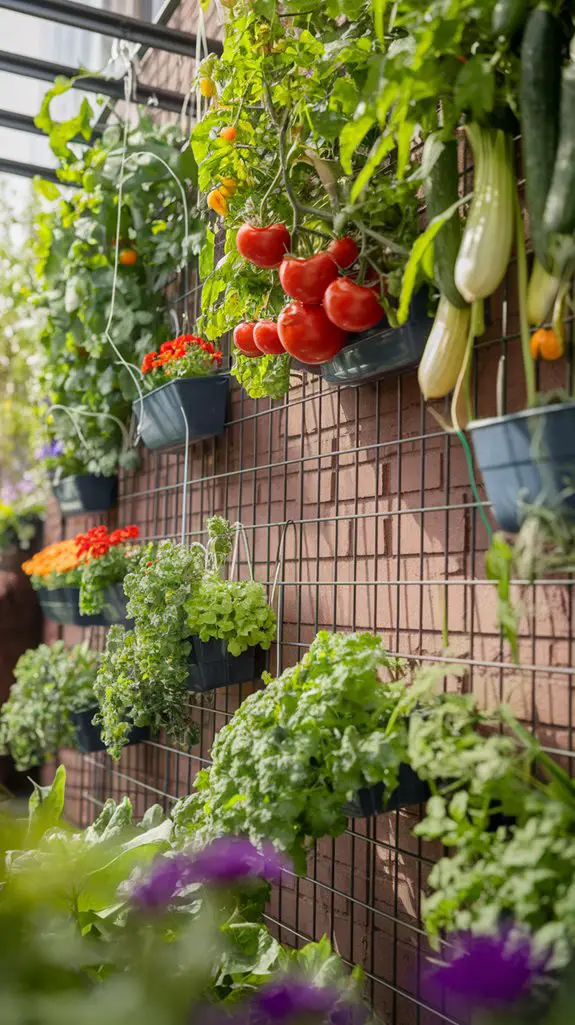
Limited square footage needn’t restrict your vegetable harvests when you build upward instead of outward. Vertical gardening transforms fences, walls, and trellises into productive growing spaces, effectively doubling or tripling your garden’s capacity.
Select structures that match your space constraints and plant needs:
- Trellises – Perfect for vining crops like cucumbers, peas, and pole beans; can be freestanding or attached to existing structures.
- Wall-mounted planters – Ideal for herbs, leafy greens, and strawberries; create living walls that maximize sun exposure.
- Tiered containers – Excellent for mixed plantings; position taller plants at the back and shorter ones in front.
Position vertical elements on your garden’s northern side to prevent unwanted shadows, and guarantee sturdy anchoring for wind resistance.
Succession Planting for Continuous Harvests
Rather than harvesting everything at once and facing weeks of emptiness in your garden beds, succession planting creates a continuous flow of fresh vegetables throughout the growing season. This technique involves staggering plantings of the same crop or replacing harvested crops with new ones.
Start by dividing quick-growing crops like radishes, lettuce, and spinach into three plantings spaced 2-3 weeks apart. When one crop finishes, follow it with a different vegetable that thrives in the current season. For example, replace spring peas with summer beans, then fall spinach.
Keep a garden calendar noting planting dates, expected harvest times, and available spaces. Temperature-sensitive crops require careful timing—plant heat-lovers after soil warms and cool-season crops as temperatures drop.
This rhythmic approach maximizes your garden’s productivity across all seasons.
Raised Bed Configurations for Different Vegetables
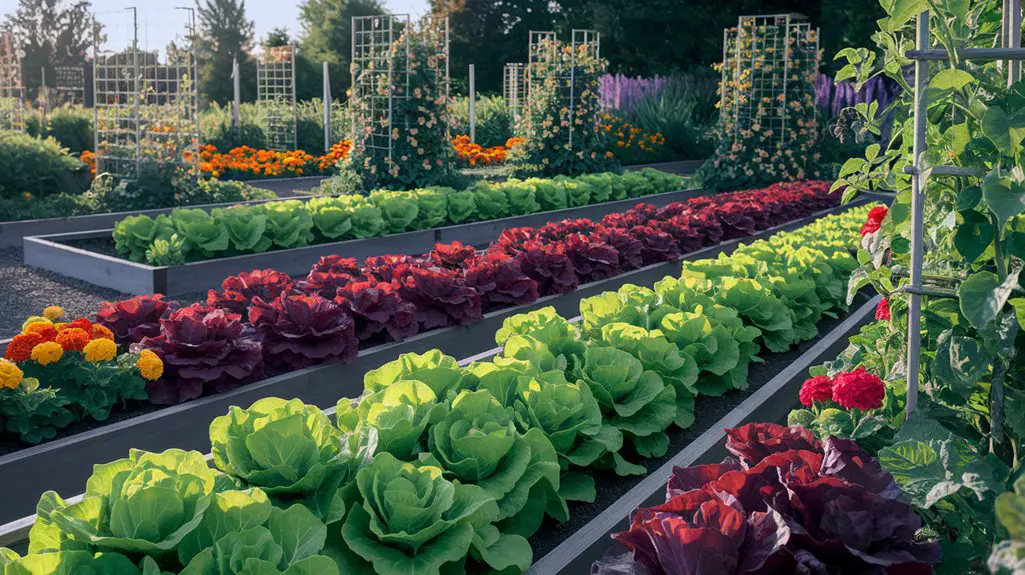
Raised beds offer unparalleled versatility when configured properly for different vegetable types. You’ll achieve maximum productivity by matching bed dimensions to specific plant needs. Deep-rooted vegetables like tomatoes and carrots require beds at least 12 inches deep, while shallow-rooted lettuces thrive in 6-inch depths.
- Root vegetables: Create 3-4 foot wide beds with loose, stone-free soil. Space carrots 2-3 inches apart, potatoes 10-12 inches, and arrange in north-south orientation for even sunlight.
- Climbing plants: Install trellises on the north side of 4-foot beds for peas, cucumbers, and beans to maximize vertical space without shading other crops.
- Leafy greens: Use 3-foot wide beds with rich compost and place where they’ll receive afternoon shade during summer months. Organic gardening in raised beds can also improve soil health and reduce pest issues.
Square Foot Gardening Method for Optimal Productivity
Square foot gardening revolutionizes small-space cultivation by dividing growing areas into manageable 1’×1′ sections. This systematic approach eliminates wasted space and guesswork when planting.
You’ll need a grid system—typically made from string, thin wood slats, or metal rods—placed over rich, well-draining soil mix. Each square accommodates specific plant quantities: one for large plants like broccoli or peppers, four for medium-sized crops like lettuce, nine for spinach or beans, and sixteen for small plants like radishes or carrots.
Position your garden where it receives 6-8 hours of sunlight daily. Leave pathways between beds for easy maintenance without soil compaction.
Track planting dates and harvests in each square to implement effective crop rotation and succession planting, ensuring continuous harvests throughout the growing season. Additionally, proper soil maintenance is crucial for maximizing the productivity and health of your raised garden beds.
Irrigation and Mulching Systems to Support Dense Planting
Effective irrigation and mulching systems become essential when implementing dense planting methods like square foot gardening. With plants competing for moisture and nutrients in confined spaces, you’ll need strategic solutions to guarantee each plant thrives.
- Drip irrigation – Install a simple drip system with emitters positioned at each square foot to deliver water directly to root zones, reducing waste and preventing leaf diseases caused by overhead watering.
- Soaker hoses – Weave these porous hoses between plant rows to provide slow, deep watering that encourages stronger root development.
- Organic mulch layers – Apply 2-3 inches of straw, compost, or leaf mulch around plants to retain soil moisture, suppress weeds, and gradually release nutrients as materials decompose. Additionally, using containers for vegetable gardening can maximize space utilization and improve access to sunlight and water.
Conclusion
While you might worry that implementing these layout strategies requires too much initial planning, you’ll quickly discover the time investment pays off exponentially. Your garden will not only yield more food per square foot but will become a self-sustaining ecosystem requiring less ongoing maintenance. By adopting these space-maximizing techniques, you’re not just growing vegetables—you’re creating a resilient food production system that works with nature’s principles.
