
Did you know that 35% of American households now grow some of their own food, with container gardening seeing the fastest growth? You don’t need acres of land or perfect soil to enjoy fresh homegrown vegetables. Whether you’re dealing with limited space, poor soil conditions, or simply want the flexibility to rearrange your garden, the right containers can transform your backyard into a productive mini-farm. Let’s explore the three most effective options for your vegetable growing success.
Repurposed Wooden Crates for Herbs and Leafy Greens
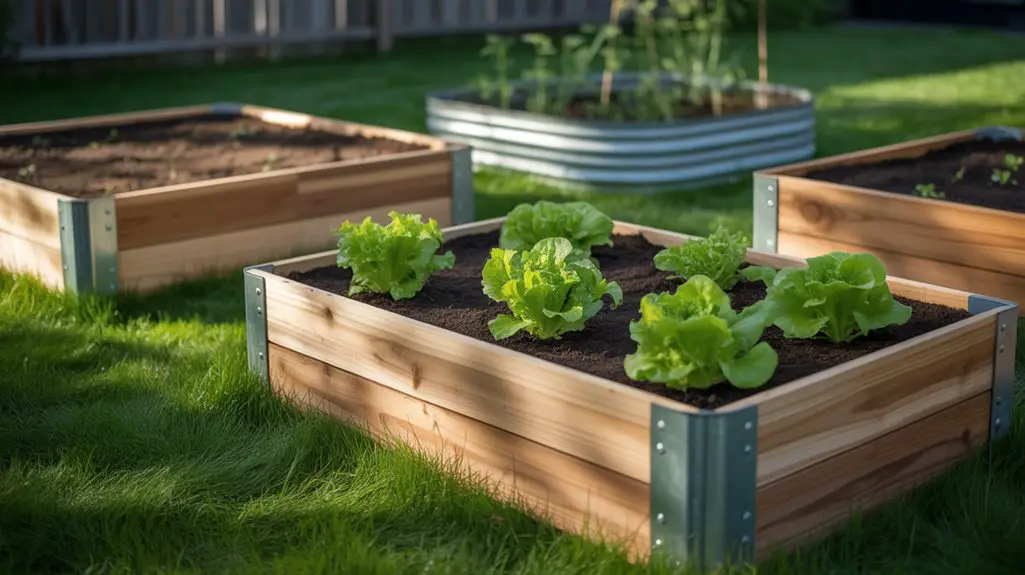
While traditional garden beds require substantial yard space, repurposed wooden crates offer an excellent alternative for growing herbs and leafy greens in limited areas.
These versatile containers provide adequate depth for root development while maintaining excellent drainage through their slatted construction.
You’ll find wine crates, fruit boxes, and shipping pallets work exceptionally well after proper preparation.
Line your crate with landscape fabric to retain soil while allowing water to escape.
For herbs like basil, thyme, and cilantro, a 4-inch soil depth suffices, while lettuce, spinach, and kale need 6-8 inches for ideal growth.
Position your crates strategically to maximize sun exposure—most herbs require 6+ hours daily.
The portable nature of crates allows you to relocate them as seasonal sunlight patterns change. Additionally, using DIY backyard vegetable garden layout plans can help optimize your gardening space for better yields.
Self-Watering Plastic Containers for Tomatoes and Peppers
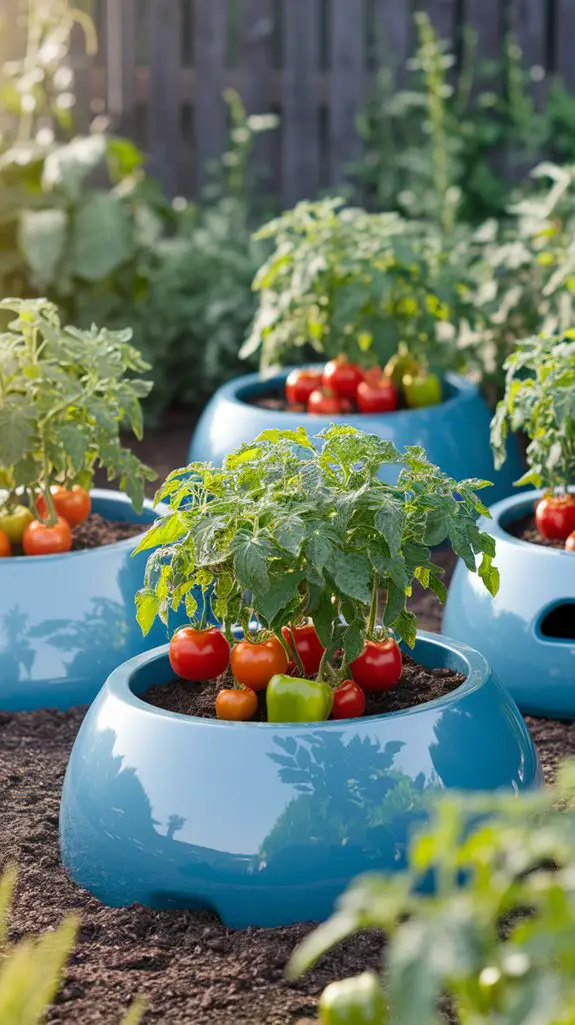
Self-watering plastic containers offer three significant advantages for growing tomatoes and peppers: consistent moisture levels, reduced daily maintenance, and maximized production in limited spaces.
These containers feature a reservoir at the bottom that supplies water through capillary action, preventing the soaking-drying cycles that stress plants. You’ll need to fill the reservoir only every 3-5 days, depending on weather conditions—ideal if you’re busy or travel occasionally.
Choose containers at least 5 gallons in capacity for tomatoes and 3 gallons for peppers to accommodate their extensive root systems.
The best self-watering designs include overflow holes to prevent waterlogging and removable drainage plugs for flushing built-up salts.
Position them in spots receiving 6-8 hours of direct sunlight for peak fruit development.
Vertical Container Systems for Small-Space Vegetable Growing
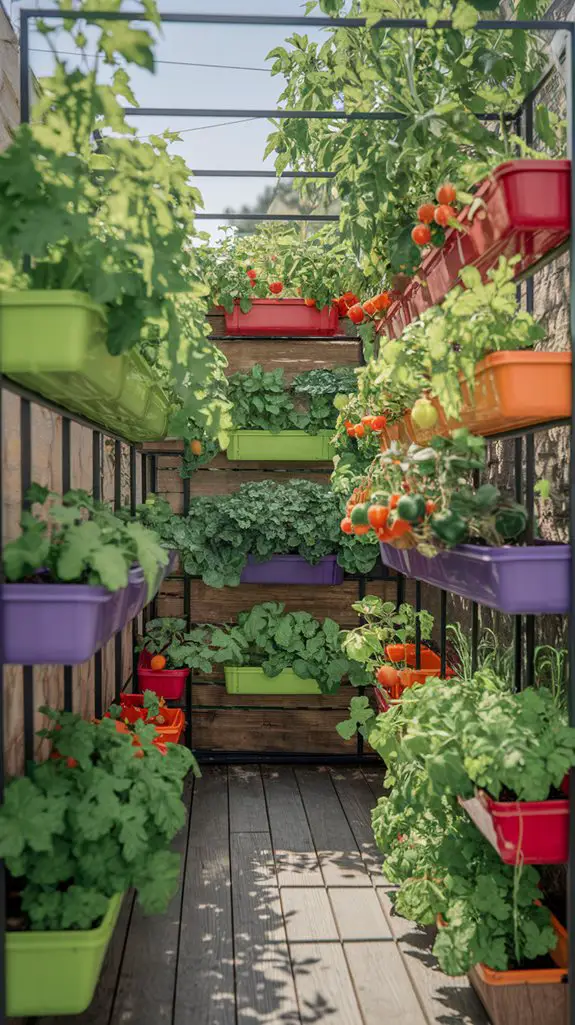
Vertical container systems have transformed small-space gardening by utilizing one resource many gardeners overlook: upward space. When horizontal real estate is limited, you’ll find vertical growth provides abundant growing opportunities in minimal footprints.
| Container Type | Best For | Cost |
|---|---|---|
| Pocket Planters | Herbs, Greens | $15-30 |
| Stackable Pots | Strawberries, Radishes | $25-50 |
| Trellis Systems | Cucumbers, Beans | $20-40 |
Choose systems that match your space constraints and plant needs. Wall-mounted options work well for balconies and fences, while freestanding towers suit patios. Most climbing vegetables thrive in vertical setups with adequate support. You’ll maximize your yield while creating an impressive visual display that transforms bland outdoor spaces into productive garden showcases. Incorporating edible landscaping ideas can further enhance the beauty and utility of your garden space.
Conclusion
These three container options will transform your backyard into a vegetable wonderland. You’ll find wooden crates bringing rustic charm while nurturing herbs to perfection – they’re the Polaroid cameras of gardening, combining simplicity with excellent results. Self-watering containers deliver worry-free growing for your prized tomatoes, while vertical systems maximize every square inch of space. Start with any of these, and you’re well on your way to container gardening success.