
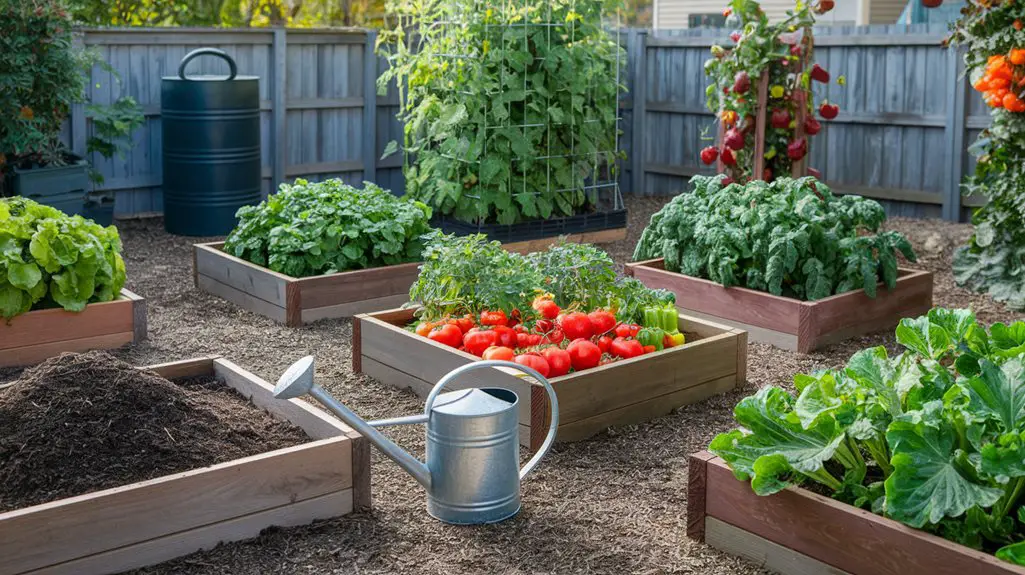
Just as a single seed can produce a harvest worth hundreds of dollars, your backyard vegetable garden can flourish without draining your wallet. You’ll find that successful gardening doesn’t require expensive equipment or store-bought solutions.
Instead, practical knowledge and resourcefulness will yield the most abundant results. By applying these five budget-friendly techniques, you can transform your outdoor space into a productive food source that nourishes both body and budget.
On this page
Start With Free Compost: Turn Kitchen Scraps Into Garden Gold
Three essential components establish the foundation of successful vegetable gardening: healthy soil, proper lighting, and adequate water supply—with soil fertility being paramount.
You’ll achieve ideal soil conditions by creating your own compost from kitchen waste.
Begin by designating a container for vegetable scraps, coffee grounds, and eggshells. Avoid meat, dairy, and oily items as they attract pests and impede decomposition.
Layer these nitrogen-rich materials with carbon sources like dried leaves or shredded newspaper at a 1:3 ratio. Maintain consistent moisture—similar to a wrung-out sponge—and turn the pile weekly to accelerate breakdown.
Incorporating organic materials for backyard composting will enhance the nutrient content of your compost.
Within 2-3 months, you’ll produce nutrient-dense humus that improves soil structure, enhances moisture retention, and provides essential micronutrients without chemical fertilizers—all at zero cost while reducing household waste.
Space-Saving Container Gardens for Small Budgets
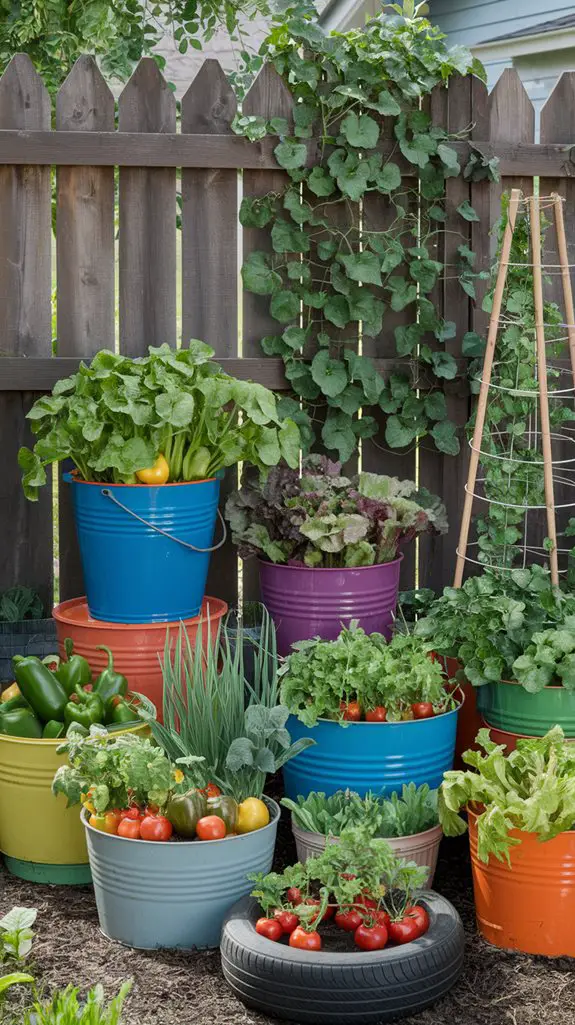
While your homemade compost will provide exceptional nutrition for your plants, you don’t need expansive garden beds to grow nutritious vegetables. Container gardening offers budget-friendly solutions for small spaces while maximizing yield potential.
- Repurpose household items – Transform 5-gallon buckets, milk jugs, or wooden crates into planters by adding drainage holes. Wash thoroughly before use to remove residual chemicals.
- Choose compact varieties – Select bush cucumbers, determinate tomatoes, or dwarf peppers specifically bred for container cultivation.
- Stack vertically – Utilize wall space with hanging planters or build a tiered system from reclaimed pallets to triple growing area without increasing footprint.
- Implement succession planting – Once fast-growing crops like radishes or lettuce are harvested, replant the container with warm-season vegetables to maintain continuous production. Additionally, container vegetable gardening is an effective way to enhance your gardening experience, allowing for greater flexibility in plant placement and care.
Seed Swaps and DIY Seedling Trays
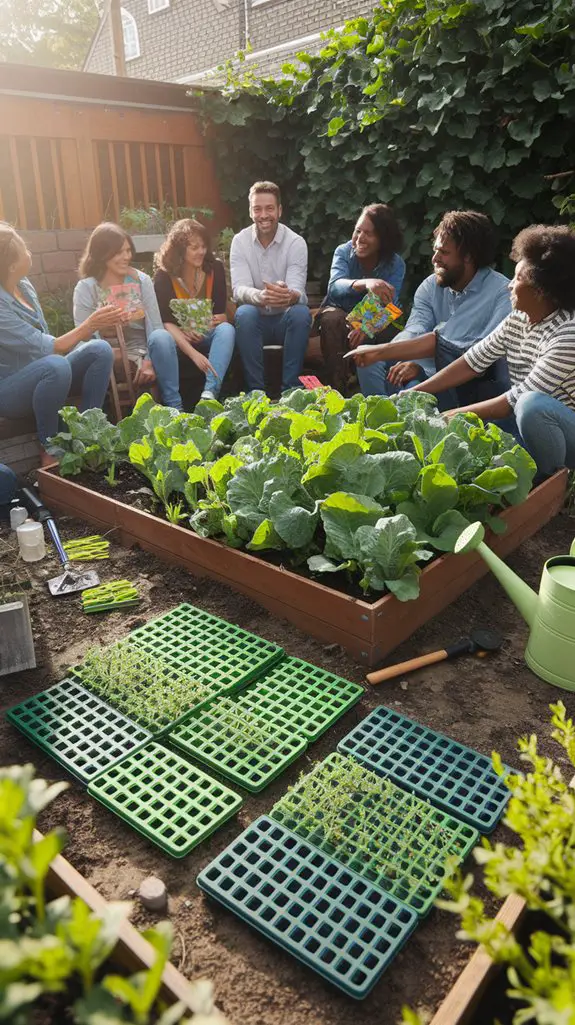
One of the most cost-effective strategies for expanding your garden’s variety involves participating in community seed swaps and creating your own seedling trays from household materials. Locate regional gardening groups that host seasonal exchanges where you’ll trade your excess seeds for new varieties without spending money. Additionally, utilizing composting techniques can enhance the soil quality for your seedlings, ensuring robust growth.
| Container Type | Materials Needed | Ideal For |
|---|---|---|
| Egg Cartons | Paper cartons, soil | Herbs, small seedlings |
| Newspaper Pots | Newspaper, soil, cylindrical mold | Tomatoes, peppers |
| Yogurt Cups | Clean cups, drainage holes, soil | Root vegetables |
When crafting DIY seedling trays, guarantee adequate drainage by puncturing bottoms of containers. Pre-moisten soil before filling your homemade containers. These DIY solutions perform comparably to commercial products while reducing plastic waste and utilizing materials you’d otherwise discard.
Water Conservation Strategies That Save Money
Just as repurposing household items saves resources when starting seedlings, implementing effective water conservation techniques can dramatically reduce your garden’s environmental footprint and utility costs.
Combine these practical strategies with your existing knowledge to maximize water efficiency in your vegetable garden.
- Install drip irrigation systems – Direct water precisely to plant roots, reducing waste compared to traditional sprinklers while minimizing leaf wetness that can promote disease.
- Apply 2-3 inches of organic mulch – Retain soil moisture, suppress weeds, and regulate soil temperature with materials like straw, wood chips, or shredded leaves.
- Harvest rainwater – Collect roof runoff in barrels equipped with mosquito screens and spigots for gravity-fed irrigation.
- Water deeply but infrequently – Encourage deep root growth by applying 1-1.5 inches of water per week in fewer sessions.
Additionally, incorporating composting techniques into your gardening routine can further enhance soil health and moisture retention, benefiting your overall vegetable yield.
Free Pest Control: Attracting Beneficial Insects Naturally
As garden pests threaten your vegetable yields, naturally occurring beneficial insects offer a cost-free alternative to expensive chemical controls. You’ll find these natural predators enthusiastically patrol your garden when properly attracted and supported. It’s also important to remember that organic pest control methods can further enhance the health of your garden ecosystem.
| Beneficial Insect | Target Pests | Attractant Plants |
|---|---|---|
| Ladybugs | Aphids, Mites | Dill, Fennel, Yarrow |
| Lacewings | Aphids, Thrips | Carrot, Angelica, Cosmos |
| Hoverflies | Aphids, Scale | Alyssum, Mint, Lavender |
| Parasitic Wasps | Caterpillars, Beetles | Parsley, Queen Anne’s Lace |
| Ground Beetles | Slugs, Cutworms | Perennial Groundcovers |
Plant these companion species throughout your vegetable garden to establish permanent populations. You’ll maximize effectiveness by providing shallow water sources and avoiding broad-spectrum insecticides that kill indiscriminately. Small rock piles and mulched areas create essential overwintering habitat, ensuring your free pest control returns year after year.
Conclusion
By implementing these cost-effective gardening techniques, you’ll transform your backyard into a vegetable-producing powerhouse without depleting your finances. Your efforts will bear fruit—both literally and figuratively—as you create a sustainable ecosystem that regenerates itself. Remember that successful gardening requires systematic application of these principles: composting provides nutrition, containers maximize space, seed swaps guarantee diversity, water conservation maintains growth, and natural pest control protects your investment.
