
Is your gardening game falling flat due to the wrong tools in your shed? You’ll find that successful vegetable gardening relies on having the right equipment at hand. Here are the five essential tools that consistently deliver results for home growers.
While the market floods with gadgets promising miracles, these fundamental implements form the backbone of efficient garden work. I’ll reveal why each deserves a place in your arsenal.
On this page
Essential Digging Tools for Preparing Garden Beds
When establishing a vegetable garden, proper soil preparation becomes the foundation for successful plant growth. You’ll need several specialized implements to effectively cultivate your growing medium.
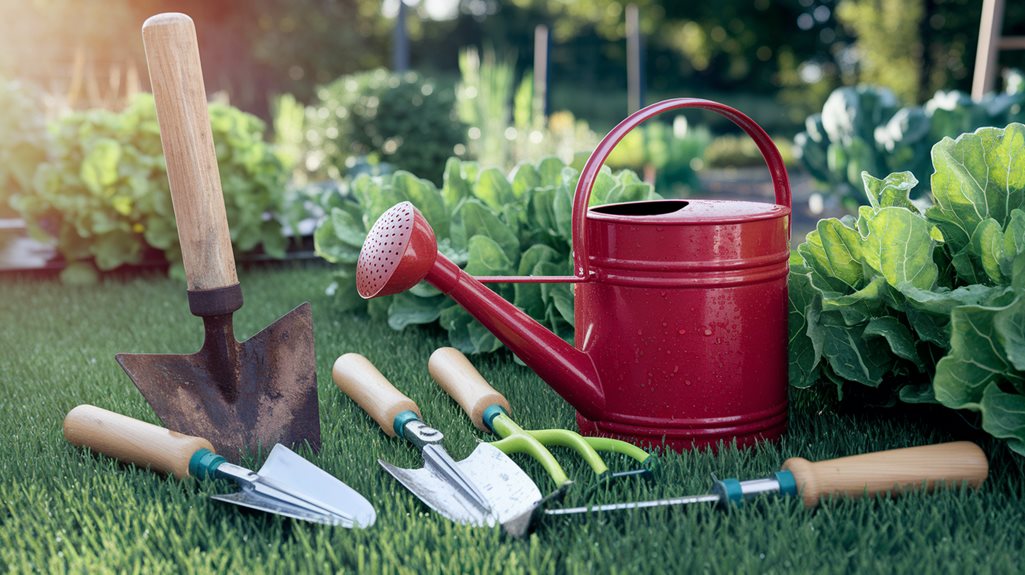
A full-sized garden spade with a sharp, squared edge provides ideal functionality for breaking ground and turning soil. Complement this with a garden fork featuring 4-5 sturdy tines to aerate compacted areas and incorporate amendments efficiently.
For precision work, invest in a hand trowel with ergonomic grip and stainless-steel construction. A soil rake with metal tines proves indispensable for creating level planting surfaces and removing debris.
Finally, a high-quality hori-hori knife serves multiple functions—cutting roots, dividing perennials, and creating furrows for seed placement. Understanding proper soil preparation is crucial as it directly impacts the health and yield of your vegetable garden. These five implements constitute the core arsenal for effective soil preparation prior to planting.
Precision Planting Equipment for Optimal Spacing
Once you’ve properly prepared your garden beds, your attention must shift to accurate plant spacing—a factor that directly impacts yields and plant health.
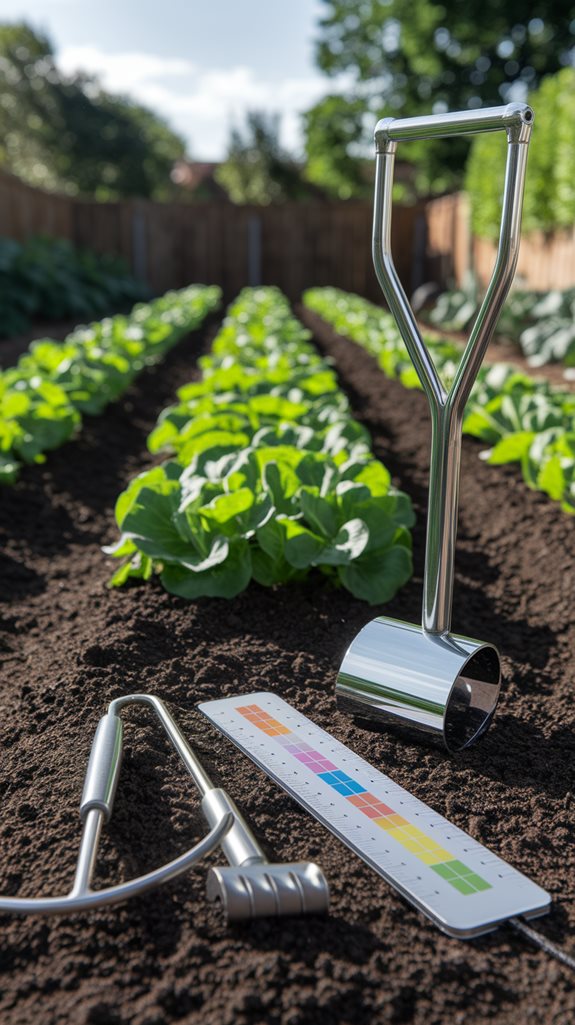
Professional-grade garden dibbers create uniform holes at precise depths, eliminating guesswork when sowing seeds. Pair these with seed dispensers that release individual seeds to prevent overcrowding.
For row crops, invest in a planting template or seeding square that creates consistently spaced holes according to each vegetable’s requirements. These tools maintain proper air circulation and minimize competition for nutrients.
Traditional twine and measuring sticks work effectively for larger plantings, but wheel-style row markers excel for long, straight rows. They’ll create furrows at your desired depth while maintaining consistent spacing, considerably reducing transplant shock and optimizing growth potential. Additionally, using raised beds can enhance organic gardening practices, leading to healthier vegetables and improved yields.
Watering Systems for Healthy Vegetable Growth
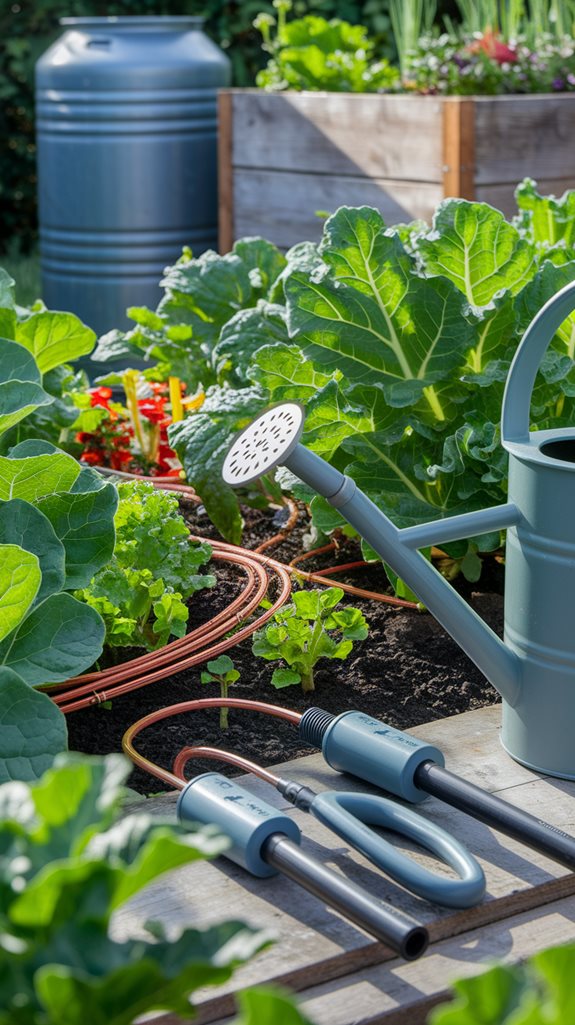
Proper irrigation stands at the heart of successful vegetable gardening, determining not just survival but ideal development of your plants. Modern watering systems offer efficiency and precision that traditional methods can’t match. Select equipment based on your garden’s specific requirements and local climate conditions.
- Drip irrigation kits deliver water directly to root zones at 1-4 gallons per hour, using less water while minimizing leaf wetness that promotes fungal diseases.
- Soaker hoses with 0.5-1 GPH flow rates work effectively for row crops, releasing water through micropores along their length for even soil saturation.
- Oscillating sprinklers covering 10-25 foot radiuses provide gentle rainfall-like distribution ideal for newly seeded beds requiring uniform moisture across larger areas.
Ergonomic Weeding Implements for Garden Maintenance
Regular weeding remains essential for vegetable garden health, yet this repetitive task can strain your body without properly designed tools.
Long-handled weeders with leverage-enhancing fulcrums allow you to extract deep-rooted weeds while standing, minimizing back strain. For precision work, ergonomic hand weeders featuring curved handles and thumb rests distribute pressure across your palm rather than concentrating it at stress points.
Cape cod weeders excel at maneuvering tight spaces between vegetable rows with their angled blade design.
Consider investing in kneeling benches with handles that double as support for standing up after extended weeding sessions.
Oscillating hoes with sharp, self-sharpening blades cut weeds just below the soil surface, requiring minimal wrist rotation and reducing repetitive strain injuries common to conventional hoeing techniques. Raised garden beds offer better soil drainage and reduced competition from weeds, making regular maintenance even more manageable.
Harvesting Gear for Collecting Your Fresh Produce
When your vegetables reach maturity, specialized harvesting tools become essential for collecting produce without damaging plants or reducing shelf life.
Garden scissors with curved blades allow you to snip herbs, greens, and delicate stems with precision, while harvest knives featuring serrated edges efficiently cut through squash stems and tougher stalks.
For ideal produce collection, consider:
- Harvest baskets with ventilated sides that prevent bruising while allowing air circulation to extend freshness
- Cut-and-hold pruners that grip cut stems to prevent fruits from dropping to the ground
- Fruit pickers with telescoping handles that extend your reach for tree fruits without ladder requirements
Don’t overlook protective gear such as puncture-resistant gloves when harvesting thorny plants like cucumbers or okra.
Quality harvesting implements justify their cost through reduced produce damage and improved efficiency.
Conclusion
With these five essential gardening tools, you’ll transform your backyard into a vegetable-producing powerhouse. Isn’t it remarkable how proper implement selection greatly impacts cultivation efficiency?
Your spade, fork, trowel, rake, and hori-hori knife work synergistically to optimize soil preparation, planting precision, and harvest yield. Invest in high-quality versions that fit your ergonomic requirements—they’ll withstand seasons of use while reducing physical strain during intensive gardening periods.
