
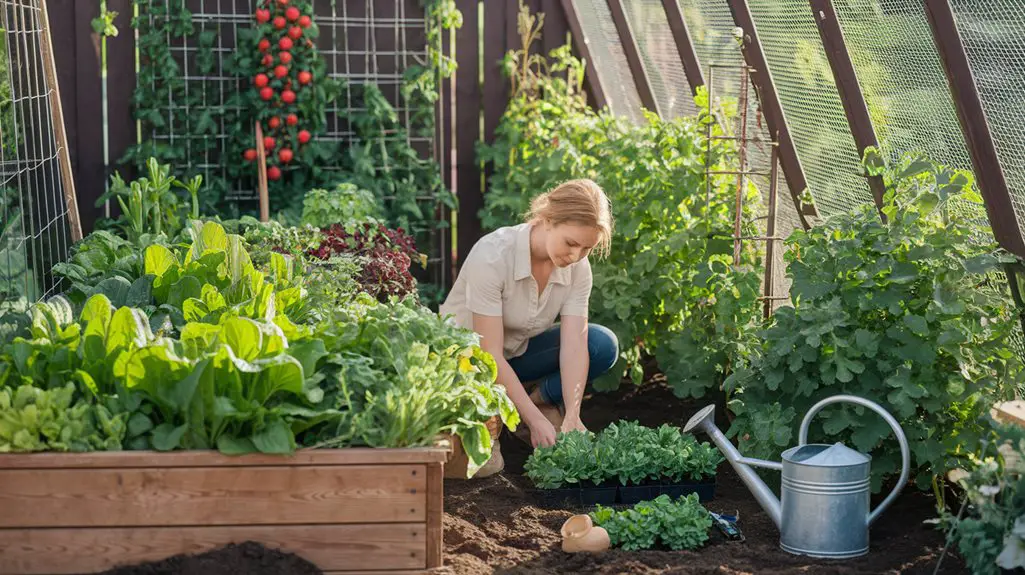
Year-round gardening transforms your backyard into a perpetual source of fresh produce, regardless of season or climate. You’ll need strategic planning and specialized techniques to maintain productivity through changing weather patterns.
Start with an extensive planting calendar that accounts for your specific hardiness zone and local frost dates. By combining proper infrastructure, season-appropriate plant selection, and protective measures, you can harvest homegrown vegetables even when snow blankets the ground. The key lies in understanding how to work with nature’s cycles rather than against them.
On this page
Planning Your Year-Round Backyard Garden Calendar
While many gardeners focus only on spring planting, successful backyard gardening requires year-round planning and attention.
Create a thorough calendar that divides tasks by season to maximize productivity in your space.
In winter, analyze last year’s results, order seeds, and plan bed rotations. Late winter is ideal for starting seedlings indoors.
Spring demands soil preparation, planting cold-hardy crops, and gradually introducing warm-season varieties after frost danger passes.
Summer involves maintenance—regular harvesting, watering, pest control, and succession planting.
Fall is harvest time for summer crops while establishing cool-weather vegetables and cover crops.
Record planting dates, varieties, and outcomes throughout the year.
This documentation becomes invaluable for future planning, helping you refine timing and plant selection based on your specific microclimate. Additionally, understanding seasonal planting guide is crucial for optimizing your crop yields throughout the year.
Selecting Season-Appropriate Vegetable Varieties
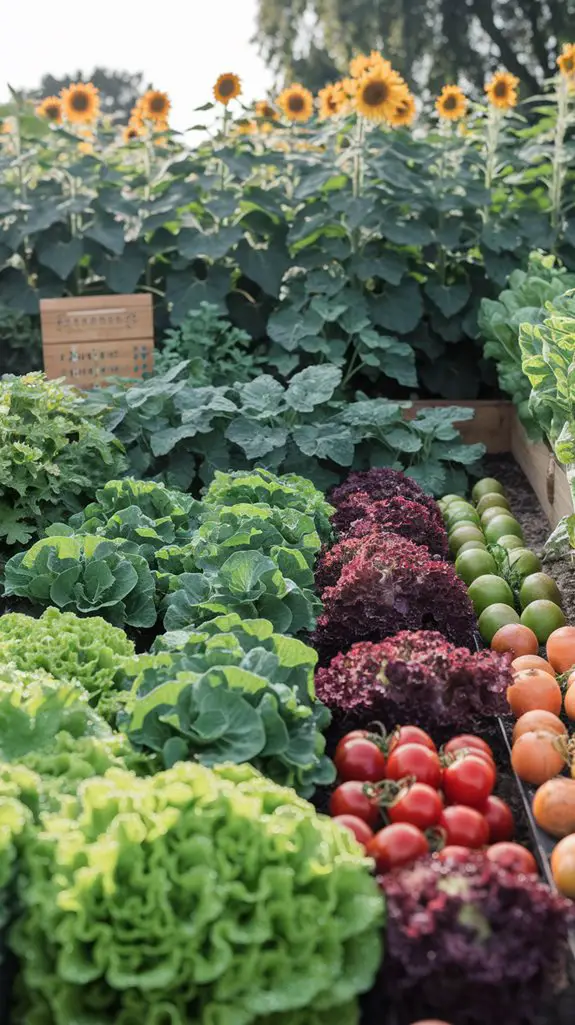
Choosing the right vegetable varieties for each growing season stands as perhaps the most essential decision in creating a productive backyard garden. Focus on cool-weather crops like spinach, kale, and peas for spring and fall planting. These hardy varieties thrive in temperatures between 40-75°F and often resist light frosts.
For summer, select heat-tolerant varieties of tomatoes, peppers, eggplants, and cucumbers that won’t drop blossoms when temperatures climb above 85°F. Look for cultivars labeled “bolt-resistant” for leafy greens.
When purchasing seeds, check “days to maturity” to guarantee they’ll complete their growth cycle within your season’s length.
Don’t overlook specialized varieties developed for specific seasons, like winter squashes with long storage capabilities or fast-maturing summer radishes that go from seed to harvest in just 25 days.
Building Raised Beds and Container Systems for Year-Round Growing
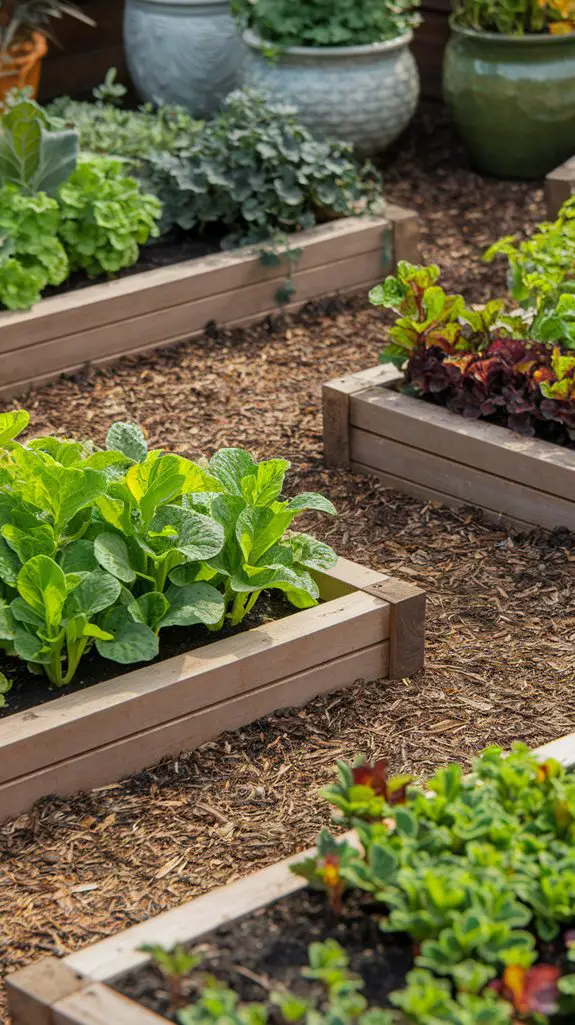
Once you’ve selected appropriate seasonal vegetables, your next opportunity lies in creating ideal growing environments through raised beds and container systems.
Construct raised beds using untreated cedar or composite lumber at 12-24 inches tall with a minimum soil depth of 8 inches. Install these beds where they’ll receive 6-8 hours of sunlight daily.
For container gardening, select food-grade plastic or ceramic pots with adequate drainage holes. Use 5-gallon containers for tomatoes and peppers, while herbs thrive in 1-gallon vessels.
Fill both raised beds and containers with a mixture of 60% topsoil, 30% compost, and 10% perlite for best drainage and nutrition. Raised garden beds provide additional benefits, such as improved soil drainage and easier access for planting and maintenance.
During winter months, add cold frames or hoop houses over raised beds, or move containers indoors near south-facing windows for continued production.
Implementing Season Extension Techniques and Structures
When frost threatens to cut your growing season short, implementing strategic season extension techniques can add weeks or even months to your harvest calendar.
Start with simple row covers—lightweight fabric that traps heat while allowing light and water to penetrate. For more protection, install cold frames or hoop houses using PVC pipes covered with greenhouse plastic. These structures create microenvironments that stay warmer than the outside air.
Consider thermal mass elements like water-filled containers or dark-colored stones that absorb daytime heat and release it at night. Incorporate protective mulch layers around cold-sensitive plants. Additionally, understanding how to maintain raised garden beds can significantly enhance the health and productivity of your crops.
For early spring and late fall crops, use wall-o-water protectors or cloches for individual plants. Don’t overlook timing—stagger plantings and select cold-hardy varieties specifically bred for extended seasons.
Managing Soil Health Throughout the Seasons
Healthy soil forms the foundation of every successful garden, serving as both the life support system and nutritional warehouse for your plants throughout the changing seasons. You’ll need to adjust your soil management practices as temperatures and moisture levels fluctuate. Incorporating organic gardening techniques can also enhance the vitality of your soil.
| Season | Soil Tasks | Amendments |
|---|---|---|
| Spring | Soil testing, light tilling | Compost, balanced fertilizer |
| Summer | Mulching, moisture monitoring | Compost tea, side dressing |
| Fall | Cover cropping, leaf incorporation | Bone meal, wood ash |
| Winter | Rest period, soil protection | Manure, mineral supplements |
Test your soil pH and nutrient levels annually to track changes. Rotate your heavy-feeding crops to prevent nutrient depletion in specific areas. Remember that organic matter breaks down continuously, so replenishment through compost additions should be a year-round priority.
Crop Rotation Strategies for Continuous Harvests
Building on proper soil management, crop rotation takes your garden’s productivity to the next level. Divide your garden into 3-4 sections and rotate plant families annually to disrupt pest cycles and balance soil nutrients.
Follow nightshades (tomatoes, peppers) with legumes (beans, peas) to replenish nitrogen, then move to leafy greens, and finally to root crops. Track rotations in a garden journal to maintain your system year after year.
For continuous harvests, implement succession planting within your rotation scheme. As you remove spring crops from one section, immediately replant with summer varieties, followed by fall crops.
Use season extenders like cold frames to overlap growing periods and maintain productivity through shoulder seasons. Additionally, consider incorporating creative vegetable garden designs to maximize space and enhance aesthetics in your garden.
Incorporate cover crops during changing periods to protect and enrich soil while maintaining your rotation schedule.
Winter Gardening Methods and Cold-Hardy Vegetables
Winter gardening doesn’t need to end your growing season, despite what many novice gardeners believe. With proper planning and protection methods, you’ll harvest fresh vegetables throughout the coldest months.
| Vegetable | Hardiness Zone | Harvest Time |
|---|---|---|
| Kale | Zones 3-9 | All winter |
| Brussels | Zones 2-9 | After frost |
| Carrots | Zones 3-10 | Mid-winter |
| Spinach | Zones 2-9 | Early spring |
| Garlic | Zones 0-10 | Early summer |
Implement cold frames or hoop houses to create microenvironments that stay warmer than outside temperatures. For root vegetables, apply a thick mulch layer of straw or leaves (8-12 inches) to prevent soil freezing.
Time your planting so cold-hardy crops reach maturity before the first hard freeze. Remember, growth slows dramatically below 40°F, but many crops improve in flavor after light frosts. Additionally, consider proper planning to ensure you have the right varieties suited for your climate zone.
Smart Watering Solutions for Changing Seasonal Needs
Water conservation remains one of the most critical aspects of sustainable gardening, as seasonal changes dramatically affect how, when, and how much you’ll need to water your plants.
Install drip irrigation systems to deliver moisture directly to root zones, reducing evaporation compared to sprinklers.
In summer, water deeply but infrequently to encourage drought-resistant root systems.
Apply mulch 2-3 inches thick to retain soil moisture and regulate temperature.
During spring and fall, adjust your watering schedule to match moderate temperatures and increased rainfall.
For winter, drastically reduce watering for dormant plants, while maintaining moisture for evergreens and cold-season crops.
Consider collecting rainwater in barrels or installing soil moisture sensors to optimize your watering efficiency year-round. Implementing eco-friendly rainwater harvesting can further enhance your garden’s sustainability.
Conclusion
Your year-round gardening success depends on thoughtful planning and adaptive techniques. Prepare your soil, protect your plants, and preserve your harvest. When winter threatens, you’ll innovate; when summer scorches, you’ll mitigate.
Through each season’s challenges and rewards, you’re not just growing vegetables—you’re cultivating resilience, sustainability, and connection to natural cycles that modern life often obscures. The garden thrives, and so will you.
