
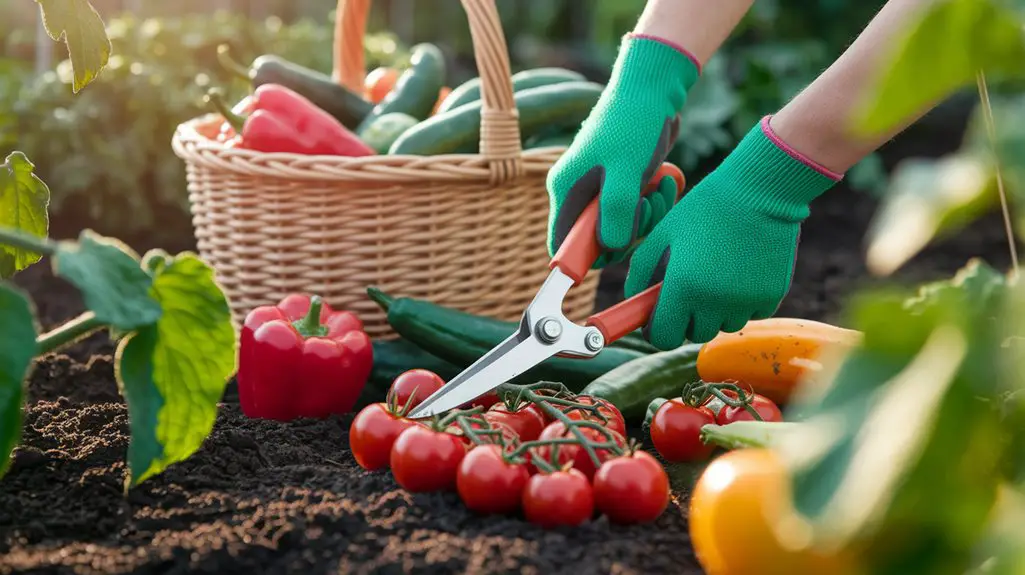
You’ve invested months of care into your vegetable garden, but improper harvesting can compromise all your hard work in seconds. The right techniques will maximize your yield, enhance flavor, and extend your growing season considerably.
Proper timing, specialized tools, and gentle handling aren’t just preferences—they’re essential practices that separate amateur gardeners from consistent producers. The methods you’ll implement at harvest time determine whether your vegetables reach their full nutritional potential or fall disappointingly short.
On this page
Timing Your Harvest for Peak Flavor and Nutrition
While most home gardeners focus exclusively on planting and maintenance, the timing of your harvest greatly impacts both flavor and nutritional content. Vegetables harvested at their peak contain ideal phytonutrient levels and superior taste profiles.
Leafy greens should be harvested in early morning when turgor pressure is highest, preserving crispness and vitamin content. Root vegetables reach maximum sweetness after light frost converts starches to sugars. Tomatoes develop full lycopene content only when allowed to ripen fully on the vine.
Monitor your crops daily during peak season, as vegetables can quickly become overripe. Utilize the fingernail test for summer squash—if your nail easily punctures the skin, it’s prime for harvesting.
For herbs, harvest before flowering to capture essential oils at their zenith. Additionally, proper harvesting techniques can help you maximize your yield and enhance the overall quality of your produce.
Essential Tools for Efficient Vegetable Harvesting
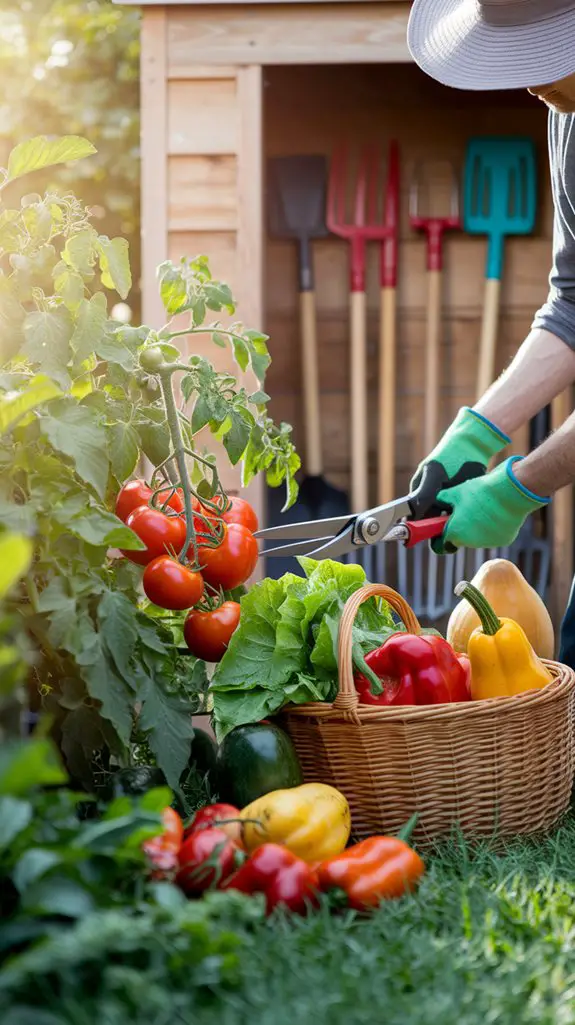
Seasoned gardeners understand that appropriate harvesting tools not only increase efficiency but also protect plant health and maximize crop yield.
Each vegetable category requires specific implements to prevent damage to both the harvested produce and the remaining plant structure.
- Pruning shears – Essential for clean cuts on thick-stemmed vegetables like eggplants, peppers, and squash; precision blades reduce plant stress and disease vulnerability.
- Garden scissors – Ideal for harvesting leafy greens, herbs, and delicate stems; serrated edges prevent crushing of plant tissue.
- Harvest knives – Curved blades designed specifically for cutting low-growing vegetables like cabbage and lettuce at soil level.
- Collection baskets – Ventilated containers that prevent bruising and allow air circulation, extending the freshness of your harvest before processing.
Root Vegetable Harvesting: Techniques to Prevent Damage
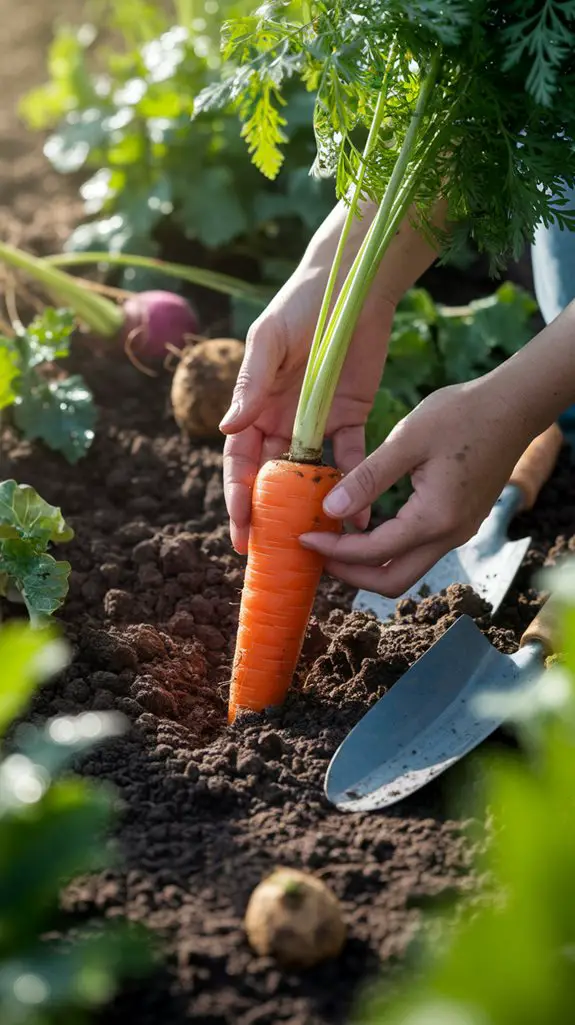
Harvesting root vegetables requires strategic excavation techniques to prevent damage that can compromise both quality and storage potential.
Begin by watering the soil lightly to ease extraction, then loosen the surrounding earth with a garden fork positioned 4-6 inches away from plant stems. Never pull directly on the foliage—instead, gently grip the crown while carefully lifting with your digging tool for support.
For delicate varieties like carrots and parsnips, use a trowel to excavate alongside the root before lifting.
With potatoes, wait until foliage has died back, then use a broadfork to lift the soil without piercing the tubers.
You’ll find that maintaining a 2-inch buffer zone around root structures minimizes abrasions and cuts that invite bacterial entry and reduce shelf life.
Leafy Green Collection Methods for Extended Growth
Unlike root vegetables that demand complete extraction, leafy greens benefit from selective harvesting strategies that promote continuous production throughout the growing season.
Proper collection techniques stimulate new growth while maintaining plant vigor, extending your harvest by weeks or even months.
- Cut-and-come-again method: Harvest outer leaves first, taking only 30% of the plant at any time. Cut 1-2 inches above the growing point using clean, sharp scissors.
- Succession harvesting: Stagger plantings every 2-3 weeks to guarantee continuous supply without exhausting individual plants.
- Morning harvesting: Collect greens during early morning hours when leaves contain maximum moisture and nutrient content.
- Threshold observation: Wait until plants reach ideal size—typically 4-6 inches for baby greens, 8-10 inches for full-size varieties—before initial harvest.
Proper Fruit Vegetable Picking to Encourage Continued Production
Many fruit-bearing vegetables operate on a production feedback system that rewards attentive picking practices with extended yields.
When harvesting tomatoes, cucumbers, peppers, and squash, use sharp pruners or scissors to cut rather than pull, reducing stem damage that can introduce pathogens.
Harvest summer squash and cucumbers while still immature—typically when they’re 6-8 inches long—as oversized specimens signal the plant to cease production.
For tomatoes and peppers, pick at peak ripeness to trigger new flower development. Don’t allow overripe fruits to remain on plants; they not only drain resources but also release ethylene gas that accelerates nearby fruit ripening.
During peak season, inspect fruiting vegetables daily.
Morning harvesting is ideal when fruits contain maximum moisture and nutrients, ensuring better flavor profiles and extended shelf life. Additionally, understanding harvesting timing can help optimize your garden’s overall productivity.
Post-Harvest Handling to Maximize Shelf Life
Once you’ve carefully collected your garden bounty, proper post-harvest handling becomes essential for preserving nutritional quality and extending storage duration. The first hours after harvesting represent a vital window when vegetables rapidly lose moisture and nutrients if mishandled.
- Cool produce immediately – Reduce field heat by moving harvested items to shade, then refrigerate most vegetables at 32-36°F within one hour of picking.
- Clean selectively – Brush off soil from root vegetables rather than washing until ready to use; berries should never be washed until consumption.
- Sort rigorously – Segregate damaged specimens from pristine ones, as ethylene from bruised produce accelerates deterioration in adjacent items.
- Store strategically – Maintain appropriate humidity levels (85-95% for leafy greens, 60-70% for alliums) and separate ethylene-producing fruits from sensitive vegetables.
Seasonal Harvesting Calendar for Year-Round Abundance
While proper post-harvest practices preserve your vegetables’ quality, timing the harvest itself throughout the growing season creates sustainable abundance.
Develop a calendar that follows your climate zone’s natural cycles, dividing the year into four key planting-harvesting windows.
Begin spring with quick-maturing crops like radishes, lettuce, and peas. Shift to summer’s heat-loving vegetables—tomatoes, peppers, and cucumbers—harvesting continuously to stimulate production.
In fall, focus on root vegetables and brassicas that withstand light frosts.
Extend your harvesting season by implementing succession planting techniques. Sow cool-weather crops every 2-3 weeks in spring and late summer.
Install row covers or cold frames to protect late-season harvests. For year-round production, incorporate season-extension infrastructure like hoop houses to create microclimates that defy your region’s limitations.
Additionally, understanding crop rotation techniques can further enhance soil health and yield in your garden.
Conclusion
Mastering methodical, mindful harvesting maximizes your garden’s bounty while boosting plant productivity. You’ll notice nutritional nuances when you’ve perfected proper picking practices.
By timing your techniques, treating tools with care, and tactfully shifting produce from plant to preservation, you’re creating conditions for continuous crops. Remember, respectful reaping rewards you with robust results—a cycle of sustainability that strengthens your self-sufficiency while securing superior seasonal satisfaction throughout the year.
