
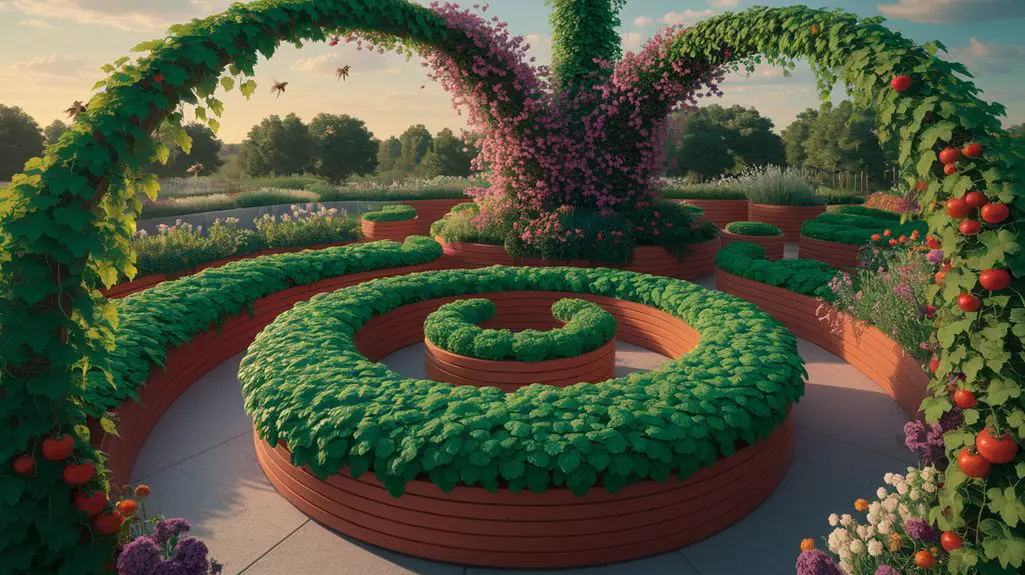
Your garden space is a blank canvas awaiting transformation into a living masterpiece. You’ll find that backyard vegetable gardens have evolved far beyond traditional straight-line plots of decades past.
Vertical systems climb walls with engineered precision, while keyhole designs create efficient microclimates. Geometric raised beds offer structural harmony, and edible food forests build living ecosystems. These innovative approaches merge artistic vision with agricultural science—changing how you’ll think about growing your own food.
On this page
Vertical Vegetable Gardens: Maximizing Small Spaces
Three dimensions are better than two when it comes to garden planning, especially in compact urban spaces. Your vertical garden transforms mundane walls into living canvases of edible art, where gravity becomes an ally rather than constraint.
Consider installing a modular system of recycled gutters cascading down sunny exposures—perfect for shallow-rooted herbs and strawberries. For substantial crops, try espalier techniques: train fruit-bearing vines against trellises in geometric precision, creating both visual rhythm and functional harvest spaces.
Wire mesh affixed diagonally creates diamond-shaped pockets for microgreens, while tiered cedar planters can accommodate root vegetables with graduated depths.
Stackable containers with self-watering mechanisms remain the quintessential solution for balconies, offering portability without sacrificing productivity. Additionally, incorporating creative vertical gardens can enhance the aesthetic appeal and functionality of these spaces.
The vertical paradigm doesn’t merely save space—it redefines it.
Keyhole Garden Designs for Water Efficiency
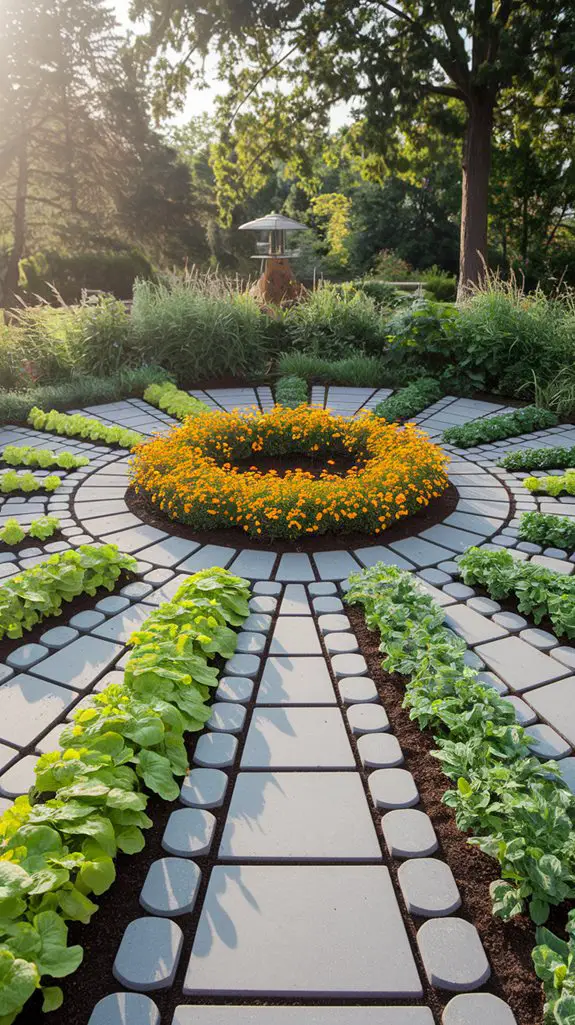
Why settle for conventional raised beds when keyhole gardens offer both sculptural presence and remarkable water conservation? These circular gardens, notched with a narrow path leading to a central composting basket, transform your gardening aesthetic while minimizing water waste.
The design’s genius lies in its radial efficiency—water and nutrients flow outward from the central composting column, reaching plant roots with minimal runoff.
You’ll create this water-wise wonder using layered materials: stones for the circular wall, cardboard base, followed by branches, compost, and topsoil.
Plant water-loving varieties nearest the center, with drought-tolerant specimens along the perimeter. The basket’s strategic placement allows you to deposit kitchen scraps and graywater directly where they’ll nourish your vegetables, creating a self-sustaining system that’s as beautiful as it’s functional. This method aligns perfectly with essential tips for starting your backyard vegetable garden, ensuring that you maximize both productivity and sustainability.
Spiral Herb and Vegetable Arrangements
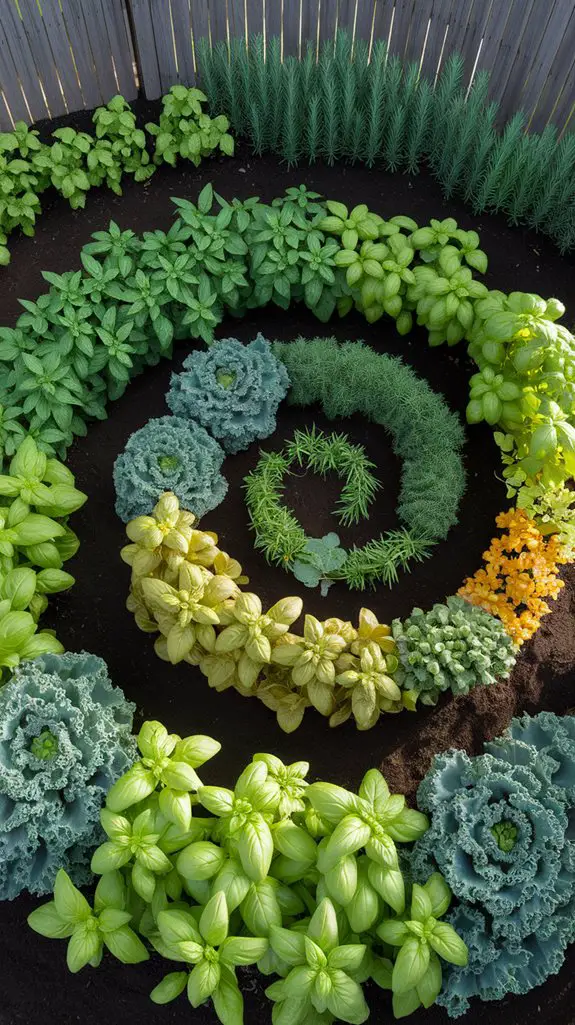
Inspired by nature’s own logarithmic patterns, spiral garden designs transform ordinary vegetable plots into enchanting three-dimensional landscapes while maximizing growing space in minimal square footage.
You’ll create a gentle incline that rises from ground level to approximately three feet at the center, allowing for microclimates throughout the structure.
Position sun-loving herbs like rosemary and thyme at the spiral’s sun-drenched summit, evolving to shade-tolerant cilantro and mint at the base.
The stonework—whether limestone, brick, or reclaimed materials—serves both aesthetic and functional purposes, absorbing daytime heat and releasing it gradually overnight.
For ideal results, construct your spiral with a diameter between five and seven feet, ensuring accessibility from all sides.
When planting, remember that the spiral’s drainage gradient creates naturally drier conditions at the top, mimicking Mediterranean growing environments. Additionally, consider incorporating culinary-inspired herb gardens to enhance your cooking experience with fresh flavors.
Edible Food Forests With Layered Plantings
While conventional vegetable gardens arrange plants in tidy rows, edible food forests mimic nature’s wild abundance through strategic vertical layering that maximizes both space and ecological harmony.
Design your forest with seven interconnected tiers: towering fruit trees form the canopy, dwarf varieties create the understory, while currants and berries establish the shrub layer.
Herbaceous plants—from asparagus to rhubarb—thrive beneath, complemented by ground-covering strawberries and herbs that suppress weeds naturally.
Root vegetables occupy the soil’s depths, while climbing beans and squash ascend trellises as the seventh vertical dimension.
This symphonic arrangement creates microclimates where tender plants shelter beneath hardier ones, pollinators flourish, and predatory insects control pests. Additionally, incorporating native plants into your design enhances biodiversity, attracting a wider range of wildlife.
You’ll cultivate a self-sustaining ecosystem that yields diverse harvests while requiring minimal intervention—nature’s ingenuity reimagined in your backyard.
Raised Bed Geometric Patterns and Layouts
Shifting from natural woodland inspiration to architectural precision, raised bed gardens transform vegetable growing into geometric artistry. Arrange rectangular beds in herringbone patterns or align square plots in checkerboard formations—each layout creates visual rhythm while maximizing growing space.
Consider the golden ratio when designing your beds—dimensions of 3:5 or 5:8 feet create aesthetically pleasing proportions while remaining functional for harvesting reach.
Hexagonal or octagonal raised beds offer striking alternatives to conventional rectangles, creating distinctive focal points within your landscape.
Connect your geometric patterns with stone pathways that echo the angles of your beds. For vertical interest, incorporate pyramidal trellises at strategic intersections. The use of raised garden beds can also enhance soil quality by improving drainage and aeration.
Don’t overlook color—alternate beds with different vegetables to create deliberate chromatic patterns that change with seasons, turning your edible garden into a living canvas of culinary potential.
Container Gardens With Upcycled Materials
Rather than discarding everyday castoffs, transform them into distinctive vessels for edible bounty in your container garden. Vintage dresser drawers, mounted vertically as shadow boxes, create striking herb displays while old metal colanders serve as perfect self-draining planters for moisture-sensitive crops like radishes.
Repurpose wooden wine crates for shallow-rooted vegetables such as lettuce and arugula—their porous nature encourages ideal root aeration. For dramatic vertical elements, suspend painted tin cans from copper piping frameworks, cascading cherry tomatoes and trailing thyme from unexpected heights. Additionally, incorporating reusable materials into your gardening setup can significantly reduce waste while enhancing your garden’s aesthetic.
When upcycling materials, guarantee proper drainage by drilling precise holes and neutralize potential contaminants in metal containers with food-safe liners.
The juxtaposition of weathered textures against vibrant foliage creates a garden that’s both environmentally conscious and visually compelling.
French Potager-Style Ornamental Vegetable Gardens
The centuries-old French potager tradition blends practical cultivation with aesthetic refinement, creating kitchen gardens that nourish both body and soul.
You’ll find vegetables, herbs, flowers, and fruit trees arranged in geometric patterns that transform utilitarian spaces into living artwork.
To create your own potager, begin with a symmetrical layout featuring intersecting paths that divide the garden into distinct beds.
Frame these quadrants with low boxwood or lavender hedges, establishing structure throughout seasons.
Within each section, interplant vegetables with companion flowers like nasturtiums, calendula, and borage that deter pests while adding vibrant color.
Include vertical elements—obelisks draped with climbing peas, espaliered fruit trees along walls, or a central herb spiral—to add architectural interest.
The potager’s magic lies in this deliberate juxtaposition of utility and beauty. Additionally, consider incorporating creative raised garden beds to enhance both functionality and design in your potager.
Conclusion
Your personal paradise awaits—whether you’re crafting cascading vertical vines or designing delightful keyhole domains. You’ll find fantastic fulfillment in spiral structures and lovely layered food forests. Don’t dismiss decorative, distinctive raised beds or charmingly creative container compositions.
Whatever wonderful design you’ve dreamed of, you’re now equipped to transform your terrain into a magnificent, multifunctional masterpiece that marries technical triumph with aesthetic allure. The palette’s prepared; the planting’s purely up to you.
