
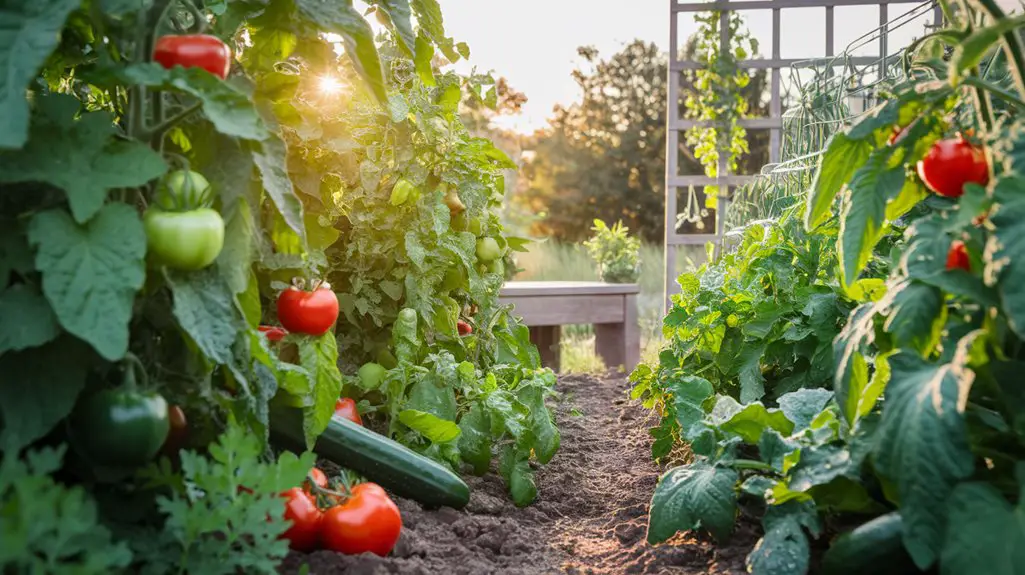
Soil microorganisms beneath your vegetable garden outnumber the human population of Earth by billions to one, forming an invisible ecosystem that directly impacts your produce quality. You’ll notice dramatic differences in flavor, nutrient density, and harvest quantity when you maintain ideal growing conditions for these microscopic allies. Proper garden maintenance isn’t merely about aesthetics—it’s about cultivating a thriving biological community that transforms ordinary vegetables into exceptional food while creating a sustainable sanctuary in your backyard.
On this page
The Health Benefits of Growing Your Own Produce
When you cultivate your own vegetables, you provide your body with unparalleled nutritional benefits that commercially grown produce often lacks. Garden-fresh vegetables contain higher vitamin and mineral content, as they’re harvested at peak ripeness rather than prematurely for transportation purposes.
You’ll considerably reduce your exposure to synthetic pesticides and fertilizers by controlling what goes into your soil. Home-grown produce also contains higher levels of phytochemicals—natural compounds that help fight inflammation and chronic disease.
Gardeners also tend to eat more vegetables, which boosts their intake of fiber and essential nutrients. Additionally, the physical activity involved in gardening—digging, planting, weeding, and harvesting—provides moderate cardiovascular exercise, helping you burn calories while strengthening muscles and improving flexibility. Moreover, having a backyard vegetable garden can enhance your mental well-being by providing a peaceful space for relaxation and mindfulness.
Building Soil Quality for Better Harvests
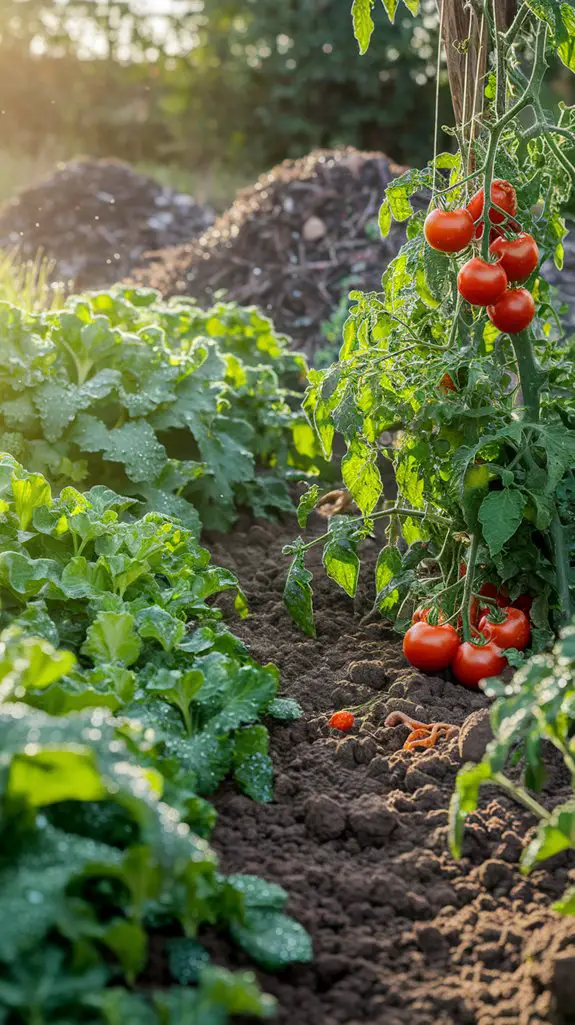
The foundation of any successful vegetable garden lies in the quality of its soil, a living ecosystem teeming with microorganisms that directly influences your harvest’s abundance and nutritional value.
Healthy soil provides essential nutrients, retains moisture appropriately, and creates proper root environments for your vegetables.
You’ll need to regularly incorporate organic matter—compost, aged manure, leaf mold—to enhance soil structure and fertility.
Test your soil’s pH annually and amend accordingly; most vegetables prefer a slightly acidic range (6.0-6.8).
Consider cover crops like clover or buckwheat during off-seasons to prevent erosion and add nitrogen naturally.
Avoid compaction by establishing permanent beds and paths.
Incorporating organic materials for backyard composting can significantly boost your soil’s nutrient content and overall health.
Effective Watering Practices for Optimal Growth
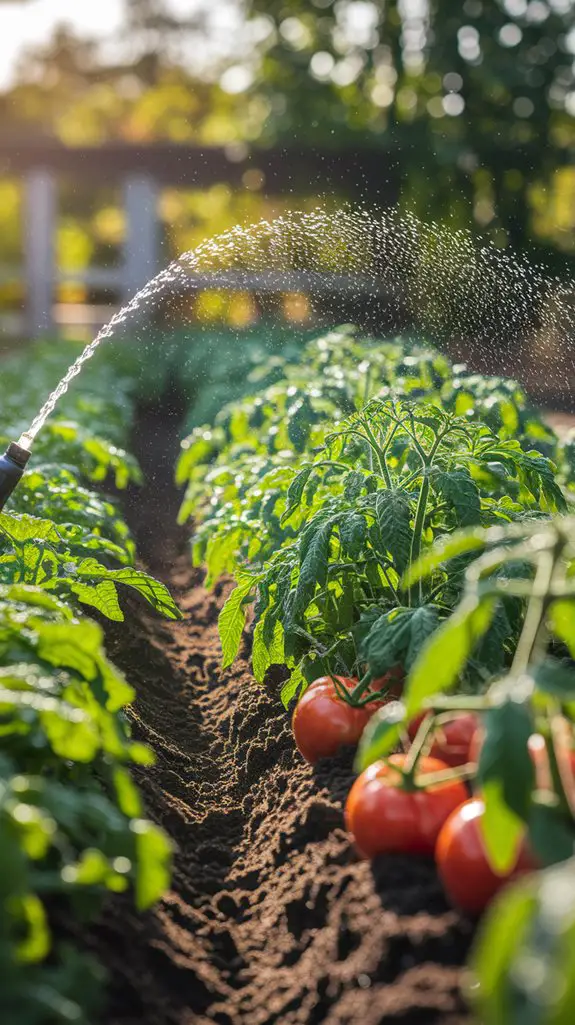
Water management stands as the cornerstone of vegetable gardening success, working in harmonious partnership with your newly improved soil to nurture plant development. You’ll need to implement strategic irrigation techniques that respond to each plant’s hydration requirements.
| Plant Type | Water Needs | Ideal Technique |
|---|---|---|
| Leafy Greens | Frequent, shallow | Drip irrigation |
| Fruiting Vegetables | Deep, consistent | Soaker hoses |
| Root Crops | Moderate, even | Morning watering |
Apply water directly to the root zone rather than foliage to prevent fungal diseases. Mulching considerably reduces evaporation while maintaining consistent soil moisture.
Monitor your garden’s water needs by inserting your finger 2 inches into the soil—if it’s dry at that depth, it’s time to water. Adjust your regimen seasonally, as plants require more hydration during flowering and fruiting stages. Proper soil moisture management is essential to ensure plants thrive throughout their growth cycle.
Pest Management Strategies That Protect Your Plants
Protecting your vegetable garden from unwanted invaders requires a multi-faceted approach that balances prevention with intervention. You’ll achieve better results by implementing integrated pest management (IPM) techniques rather than relying solely on chemical solutions.
Start by selecting pest-resistant cultivars and practicing crop rotation to disrupt pest life cycles. Encourage beneficial insects by planting companion flowers like marigolds and nasturtiums alongside your vegetables.
Physical barriers such as row covers effectively exclude many pests while still allowing light and moisture to reach plants.
When intervention becomes necessary, begin with the least toxic methods. Handpick larger pests like tomato hornworms, and use insecticidal soaps for soft-bodied insects.
Only escalate to botanical pesticides like neem oil when infestations threaten crop viability. Regular monitoring allows you to identify problems before they become unmanageable. Additionally, maintaining natural pest management practices can significantly reduce pest populations in your garden.
Seasonal Maintenance Calendar for Year-Round Success
Successful vegetable gardens demand consistent attention throughout the year, with each season requiring specific maintenance tasks to secure ideal growth and production.
Spring calls for soil testing, bed preparation, and early planting of cool-season crops. You’ll need to establish irrigation systems before summer heat arrives.
Summer maintenance centers on consistent watering, mulch application, and vigilant pest monitoring. It’s vital to harvest frequently, as mature vegetables signal plants to reduce production.
Fall requires clearing spent plants, planting cover crops, and preparing garlic and overwintering varieties. This is prime time for composting garden debris.
Winter isn’t idle—it’s for tool maintenance, garden planning, and seed ordering. You’ll guarantee spring readiness by cleaning structures and analyzing last season’s successes and failures. Additionally, utilizing raised garden beds can enhance soil drainage and improve plant health, making your garden even more productive.
Space Optimization Techniques for Small Gardens
Limited gardening space needn’t constrain your vegetable production when you employ strategic optimization techniques.
Vertical growing systems utilizing trellises, cages, and wall-mounted planters allow vining crops like cucumbers and beans to develop upward rather than outward.
Intercropping—planting fast-maturing crops like radishes between slower-growing vegetables—maximizes yield per square foot and enhances sunlight capture.
Consider square-foot gardening methods, dividing your plot into 1’×1′ sections for precise plant spacing.
Succession planting guarantees continuous harvests; as you remove spent crops, immediately replace them with new seedlings.
Utilize container gardening for herbs and compact varieties like bush tomatoes and dwarf peppers.
For maximum efficiency, select high-yielding cultivars bred specifically for spatial constraints.
Carefully planned polycultures create symbiotic relationships between plants, increasing overall productivity while reducing pest pressure. Additionally, incorporating sustainable vertical gardens can further optimize space and enhance your gardening experience.
Companion Planting for Increased Yield and Fewer Pests
Companion planting, an ancient agricultural practice dating back thousands of years, elevates garden productivity through strategic plant partnerships.
You’ll find that combining certain plant species creates mutually beneficial relationships that deter pests and enhance growth conditions.
Plant aromatic herbs like basil near tomatoes to repel hornworms while improving flavor.
Marigolds, when interspersed throughout your garden, release thiopene, which deters nematodes and other soil-borne pests.
The classic “Three Sisters” method—corn, beans, and squash grown together—demonstrates how corn provides structure, beans fix nitrogen, and squash suppresses weeds with broad leaves.
Consider interplanting quick-maturing radishes between slower-growing carrots to maximize space and yields. Additionally, crop rotation can further enhance soil health and prevent pest buildup, ensuring long-term garden sustainability.
Cost Savings and Economic Benefits of Home Gardening
While the initial investment in a vegetable garden may seem substantial, the long-term economic advantages often outweigh these costs considerably. A well-maintained 4×8 raised bed can produce a surprising amount of food each year, with seeds costing merely $2-$4 per packet.
You’re eliminating grocery markups, transportation costs, and packaging waste.
Beyond direct savings, you’ll reduce food waste by harvesting only what you need. Preserving excess yield through freezing, canning, or dehydrating extends your garden’s economic benefits year-round.
Calculate your ROI by tracking expenses against retail costs of equivalent organic produce.
Additionally, home gardening provides insulation against food price inflation and supply chain disruptions, offering both immediate savings and long-term food security. Top vegetables to grow can significantly enhance your garden’s productivity and financial returns.
The financial benefits increase with each successive growing season.
Sustainable Practices to Reduce Your Environmental Footprint
Home vegetable gardening inherently reduces your environmental impact, yet implementing specific sustainable practices can greatly amplify these ecological benefits.
Establish a composting system to recycle kitchen scraps and garden waste, creating nutrient-rich soil amendments while diverting organic matter from landfills.
Implement rainwater harvesting through barrels or cisterns to reduce municipal water consumption. This method not only conserves water but also utilizes rainwater harvesting to provide essential moisture for your plants.
Practice companion planting—pairing mutually beneficial species like basil with tomatoes—to naturally deter pests without chemical interventions.
Choose open-pollinated varieties and save seeds to preserve genetic diversity and reduce dependence on commercial seed production.
Apply mulch to conserve soil moisture, suppress weeds, and gradually build soil carbon.
These practices create a self-sustaining ecosystem that minimizes external inputs while maximizing your garden’s ecological resilience.
Harvesting Methods That Promote Continued Production
When harvesting leafy greens like kale and lettuce, remove outer leaves first while leaving the growing center intact. This “cut-and-come-again” approach stimulates continued growth for multiple harvests.
For fruiting plants such as tomatoes and peppers, regular harvesting triggers hormone signals that promote additional flowering. Don’t wait until produce is overripe—cucumber and zucchini plants produce more abundantly when fruits are picked young.
Morning harvesting preserves nutrient density and flavor as plants retain moisture from overnight recovery.
Use sharp, clean tools to make precise cuts that minimize tissue damage and disease entry points.
For herbs, pinch stems just above leaf nodes to encourage branching and denser growth habit. These deliberate harvesting practices extend your production season considerably. Additionally, incorporating culinary-inspired herb garden ideas can enhance the variety and flavor profile of your dishes throughout the growing season.
Conclusion
Your garden is a living ecosystem that rewards diligent care with abundant harvests. Like a well-conducted orchestra, each maintenance practice—from nurturing soil biology to strategic companion planting—harmonizes to create resilient botanical communities.
You’ll find that your efforts blossom into tangible benefits: nutrient-dense produce, reduced household expenditures, and a thriving microhabitat that serves as both pantry and sanctuary. Your backyard plot isn’t just growing vegetables; it’s cultivating sustainability.
