
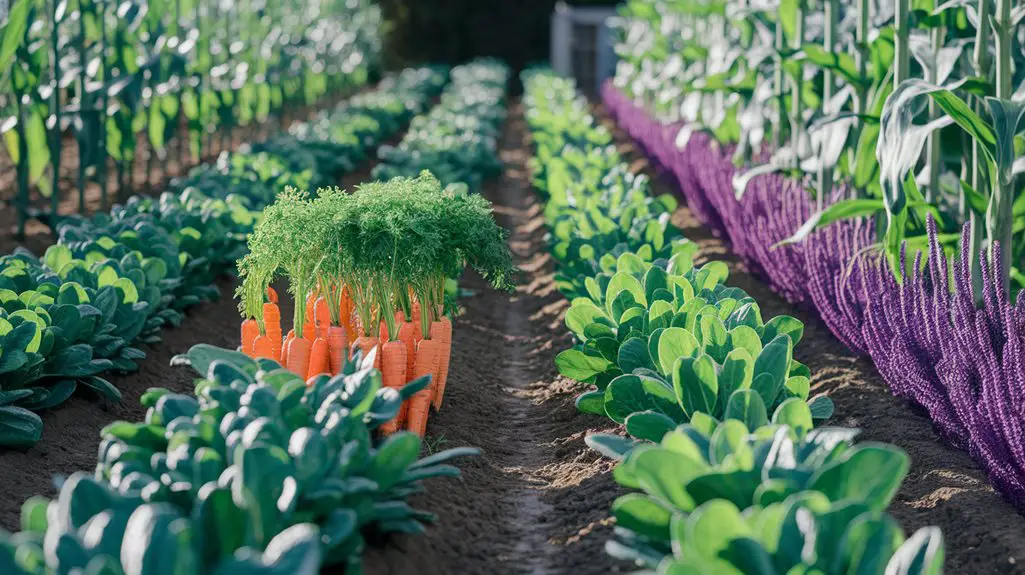
When your tomato plants wilt in the same spot year after year, you're witnessing soil memory in action. This biological phenomenon occurs when pathogens, pests, and nutrient imbalances accumulate in soil repeatedly used for the same crop family.
Crop rotation—the systematic moving of plant families through different garden areas—interrupts these harmful cycles while maximizing your soil's productive capacity. You'll discover how this ancient farming technique can transform your backyard garden's health without chemicals or expensive interventions.
On this page
Understanding the Scientific Principles Behind Crop Rotation
While many gardeners practice crop rotation based on tradition alone, understanding the scientific principles behind this technique can greatly improve your garden's health and productivity.
Crop rotation disrupts pest life cycles by removing their preferred host plants, preventing populations from establishing year after year. Different plant families extract specific nutrients from soil in varying amounts – legumes even add nitrogen through symbiotic bacteria.
When you rotate crops, you're breaking disease pathways that persist in soil. Pathogens targeting nightshades can't infect brassicas planted in the following season.
You'll also improve soil structure as diverse root systems reach different depths, creating varied pathways for water and air. The microbial diversity in your soil increases too, as each plant family cultivates specific beneficial relationships with soil organisms. Additionally, incorporating composting techniques can further enhance soil health and fertility, providing a nutrient-rich environment for your crops.
Preventing Soil Depletion and Nutrient Loss
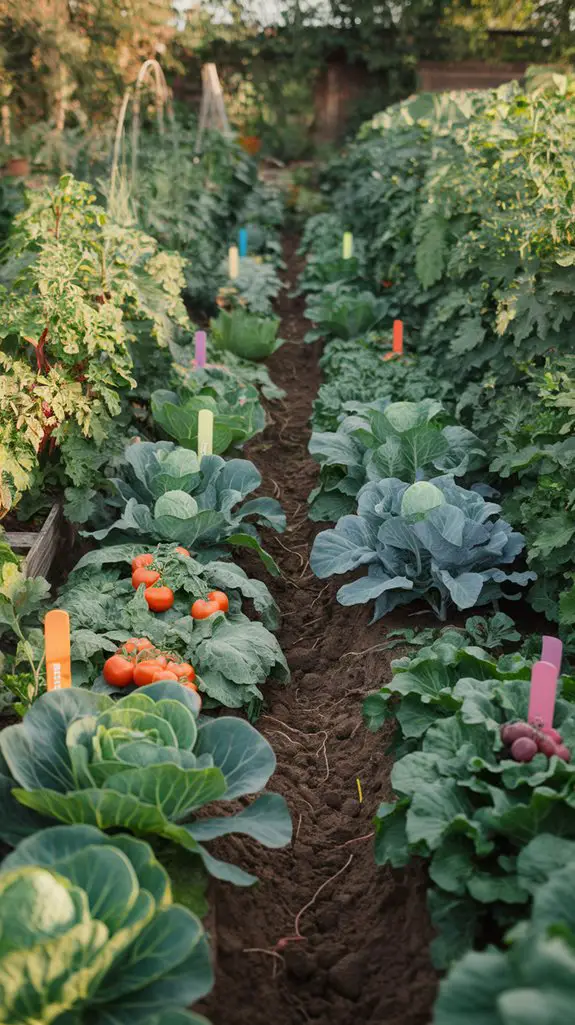
Because plants extract specific nutrients from the soil during their growth cycle, successive plantings of the same crop can rapidly deplete essential minerals and organic matter.
Leafy greens demand nitrogen, while fruiting plants like tomatoes require more phosphorus and potassium. Without rotation, you'll soon find your soil unable to support healthy growth.
Implementing a 3-4 year rotation schedule allows soil to recover between crop families. You'll notice heavy feeders like corn benefit from following nitrogen-fixing legumes such as beans. Additionally, incorporating sustainable practices like composting can further enhance soil fertility.
Adding cover crops like clover during rest periods further rebuilds soil structure and fertility.
For maximum effectiveness, maintain a garden journal tracking which plant families occupy each bed. This simple practice helps prevent the gradual nutrient depletion that leads to diminished harvests and increased susceptibility to pests.
Natural Pest and Disease Management With Rotation
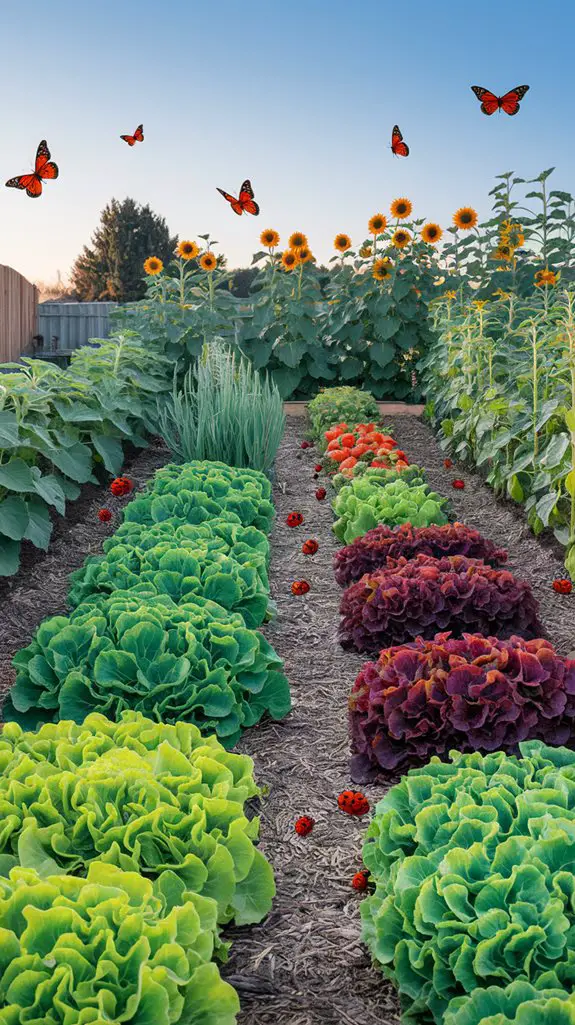
Crop rotation serves as one of your most powerful tools for disrupting pest life cycles and preventing disease buildup in garden beds.
When you plant the same crops repeatedly in one location, you're fundamentally creating an ideal habitat for specialized pests and pathogens to thrive.
By rotating plant families—moving nightshades, brassicas, legumes, and alliums to different beds each season—you'll interrupt pest reproduction cycles.
Colorado potato beetles won't find their host plants in the same location, and soil-borne diseases like fusarium wilt can't accumulate.
This strategy works because most garden pests and diseases target specific plant families.
For maximum effectiveness, don't plant related crops in the same bed for at least three years.
You'll greatly reduce reliance on pesticides while creating a naturally resilient garden ecosystem. Additionally, incorporating effective natural insecticides can further enhance your pest management efforts.
Four-Year Rotation Plans for Small Garden Spaces
Even in confined spaces like backyard gardens, you can implement effective four-year rotation plans to maximize soil health and minimize pest issues.
Divide your garden into four distinct sections, rotating plant families through each section annually.
Follow this simple sequence:
- Year 1: Leafy greens (lettuce, spinach) and brassicas (cabbage, broccoli)
- Year 2: Fruiting crops (tomatoes, peppers, eggplant)
- Year 3: Legumes (beans, peas)
- Year 4: Root vegetables (carrots, onions, potatoes)
For tiny gardens, use containers or raised beds as separate rotation zones.
Keep detailed records of what's planted where each season. You'll still disrupt pest cycles even with just two rotation areas if space is extremely limited. Additionally, crop rotation helps in preventing soil depletion by maintaining nutrient balance across different plant families.
Companion Planting Within Your Rotation Schedule
While implementing your crop rotation schedule, you can enhance its benefits by incorporating companion planting strategies. Certain plant combinations naturally repel pests, improve pollination, or boost growth.
For example, interplant basil with tomatoes to deter hornworms, or grow nasturtiums near cucumbers to distract aphids.
When planning your rotation blocks, group compatible companions together. Alliums (onions, garlic) work well alongside brassicas (cabbage, broccoli) by deterring cabbage moths.
Similarly, carrots and beans make excellent rotation partners with tomatoes in subsequent years.
Remember that companion planting doesn't replace rotation—it complements it. You'll still need to move plant families to new locations annually, but you're maximizing each bed's productivity and resilience within each rotation cycle by thoughtfully pairing mutually beneficial plants. Additionally, utilizing companion planting techniques can lead to healthier crops and a more vibrant garden ecosystem.
Seasonal Planning for Continuous Garden Productivity
By integrating seasonal planting schedules with your rotation plan, you'll maximize harvest yields throughout the growing season.
Map your garden into distinct rotation zones, then stagger plantings within each zone based on seasonal windows. As spring crops finish in one bed, shift immediately to summer or fall varieties from different plant families.
Create a calendar noting when each crop matures and when the next rotation begins. For example, follow spring peas (legumes) with fall brassicas, using the nitrogen fixed in the soil. Additionally, consider incorporating edible landscaping techniques to enhance both productivity and aesthetics in your garden.
Don't leave beds empty—plant quick-growing cover crops between main rotations to protect soil and add organic matter.
Remember that cool-season crops like lettuce and spinach can be planted twice yearly (spring and fall), effectively doubling your rotation options while maintaining family-based separation.
Record-Keeping Systems for Successful Rotation
Maintaining thorough garden records forms the foundation of any successful crop rotation system.
You'll need to document what crops grew where, when they were planted, and how they performed. A simple garden journal, spreadsheet, or specialized app can track these details effectively.
Create a garden map each season, numbering or naming beds for easy reference. Note planting dates, varieties, fertilization methods, and pest issues for each area.
Don't forget to record harvest yields and quality—this data helps identify ideal plant families for specific locations. Implementing organic gardening techniques can further enhance the health of your soil and crops.
Color-coding plant families in your records simplifies rotation planning. For example, mark nightshades red, brassicas blue, and legumes green.
This visual system lets you quickly confirm you're not planting related crops in the same soil for at least three years.
Adapting Commercial Farming Techniques to Backyard Scale
Commercial farming techniques, though developed for large-scale operations, can be effectively scaled down for backyard gardens with thoughtful adaptation. You don't need expensive machinery or vast acreage to implement professional rotation strategies.
Start by dividing your garden into manageable sections that mimic commercial fields. Use string grids or permanent pathways to define these areas. Adapt the four-year rotation system by assigning plant families to each section: brassicas, legumes, alliums, and nightshades.
Commercial cover cropping can be simplified by using fast-growing options like buckwheat or clover in small patches. Instead of large-scale soil testing, use home test kits to track nutrient changes between rotations. Additionally, incorporating eco-friendly materials can enhance soil health and biodiversity in your garden.
You'll find that these scaled-down approaches provide many of the same benefits as commercial practices while suiting your backyard space.
Conclusion
Implementing crop rotation in your backyard garden isn't just good practice—it's the single most powerful tool in your gardening arsenal. You'll prevent soil depletion, naturally manage pests, and boost productivity without chemicals.
Even in the smallest spaces, a simple four-year plan combined with companion planting and good records will transform your garden's health. Start rotating your crops today and watch your garden thrive season after season.
