
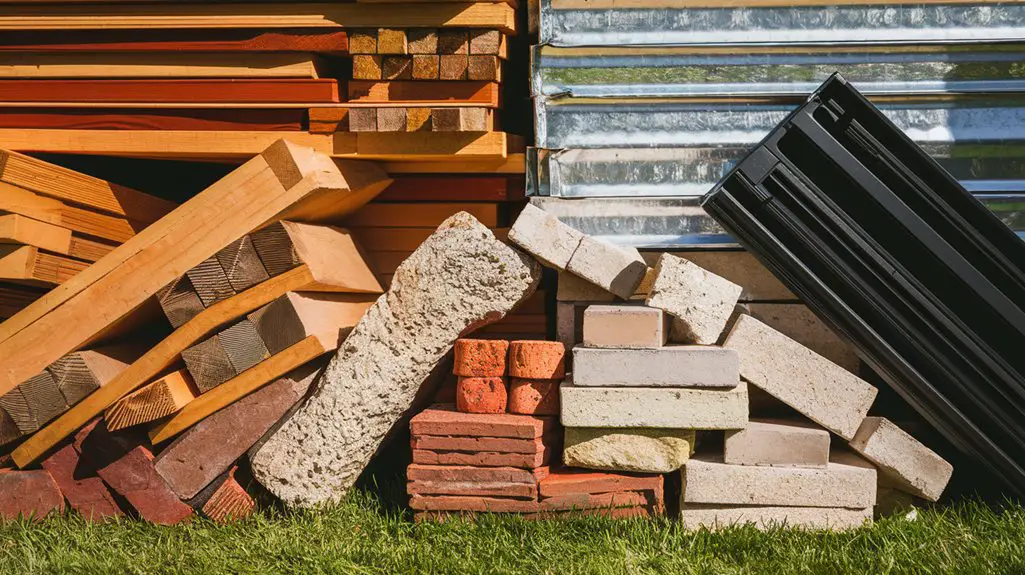
Did you know that the choice of material for your raised garden bed can greatly impact plant health and soil conditions? While many people default to wood, options like metal and composite materials offer unique advantages that enhance growth.
Understanding the properties of each material helps you make a more informed decision. Let's explore the best choices to create an ideal environment for your garden.
On this page
Wood
Wood remains one of the most popular materials for raised garden beds due to its natural aesthetic and versatility. When choosing wood, you'll want to take into account rot-resistant options like cedar, redwood, or treated lumber.
These types not only withstand moisture but also offer longevity, making them ideal for outdoor use. Standard dimensions for raised beds typically range from 4 to 6 feet in length and 2 to 3 feet in width, allowing for easy access to plants. Additionally, raised garden beds can improve drainage and soil quality, which is crucial for healthy plant growth.
Make sure to use screws rather than nails for assembly, as they provide better stability. Additionally, lining the interior with landscape fabric can prevent soil from washing away and prolong the life of the wood.
Metal
When it comes to durability and modern design, metal is a strong contender for raised garden beds. Steel and aluminum are popular choices, offering strength and resistance to rot and pests.
Galvanized steel is particularly advantageous, as it's coated to prevent rust, ensuring longevity. Metal beds retain heat, which can extend your growing season, especially in cooler climates.
Additionally, their sleek appearance can enhance your garden's aesthetics. You'll find metal beds available in various heights, widths, and finishes, allowing you to customize based on your gardening needs.
However, be cautious about temperature; metal can heat up quickly, potentially affecting soil moisture.
Composite Materials
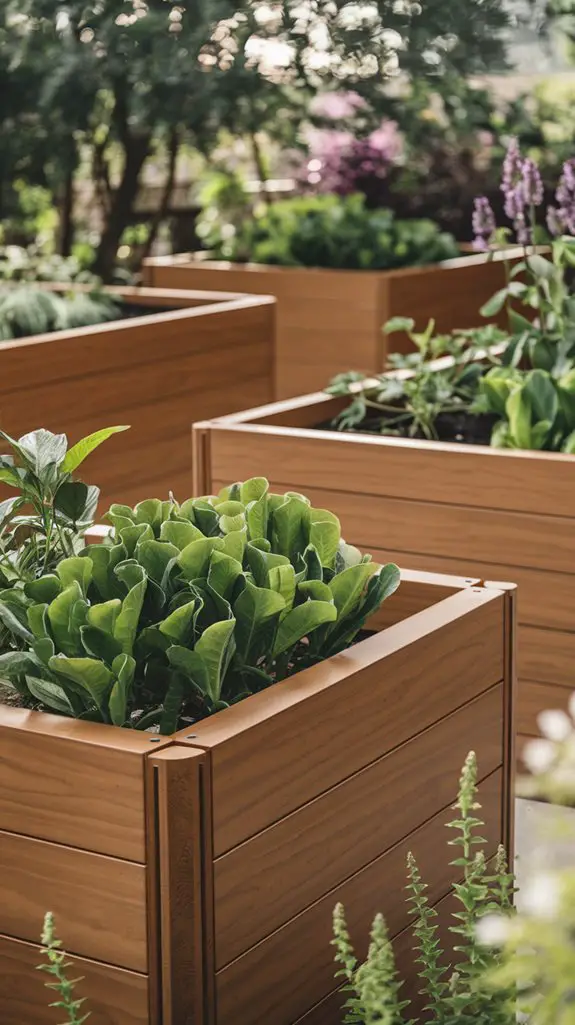
Although you might not think of composite materials as a traditional choice for raised garden beds, they offer a blend of durability and low maintenance that can greatly benefit your gardening experience. Composites are typically made from a mix of recycled plastics and wood fibers, providing resistance to rot, insects, and warping. This makes them a sustainable option that lasts longer than untreated wood.
Here's a quick comparison of composite materials:
| Feature | Composite Materials |
|---|---|
| Durability | High |
| Maintenance | Low |
| Rot Resistance | Excellent |
| Pest Resistance | Good |
| Environmental Impact | Positive |
Stone
Stone is a timeless choice for raised garden beds, offering unmatched stability and a natural aesthetic that blends seamlessly with outdoor landscapes.
When selecting stone, consider options like granite, limestone, or fieldstone, each providing unique textures and colors. You'll appreciate stone's durability; it withstands weather extremes without warping or rotting.
For construction, make sure you use a solid foundation and secure the stones with mortar or landscape adhesive to maintain structural integrity. Additionally, stones retain heat, which can benefit plant growth during cooler nights. Using raised garden beds can maximize your small outdoor space effectively.
While installation may require more effort and tools like a level and hammer, the long-lasting results are well worth it. Plus, their natural appearance enhances your garden's overall charm and appeal.
Brick
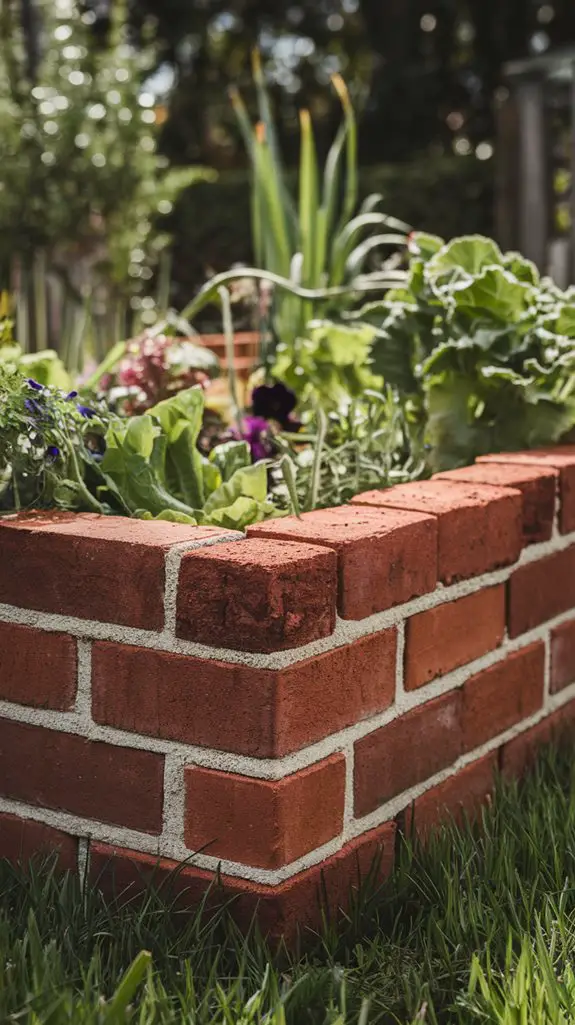
Brick is another popular material for raised garden beds, known for its durability and classic appearance. It not only offers aesthetic appeal but also provides excellent insulation for your plants.
When considering brick for your garden, keep these benefits in mind:
- Longevity: Brick can last for decades with minimal maintenance.
- Stability: Its weight guarantees that the structure remains intact against soil pressure.
- Thermal Properties: Bricks retain heat, promoting warmer soil conditions for your plants.
- Pest Resistance: Brick is less prone to pest damage compared to wood.
- Versatility: You can create various designs and shapes, enhancing your garden's visual interest.
Conclusion
In choosing the best materials for your raised garden beds, consider the benefits each offers. Cedar naturally resists rot and can last for many years, making it a cost-effective choice in the long run.
Whether you prefer the classic look of wood, the sleek design of metal, or the durability of composites, each option can enhance your garden's health and aesthetic. Ultimately, your choice will impact not just the garden's appearance but its overall productivity.
