
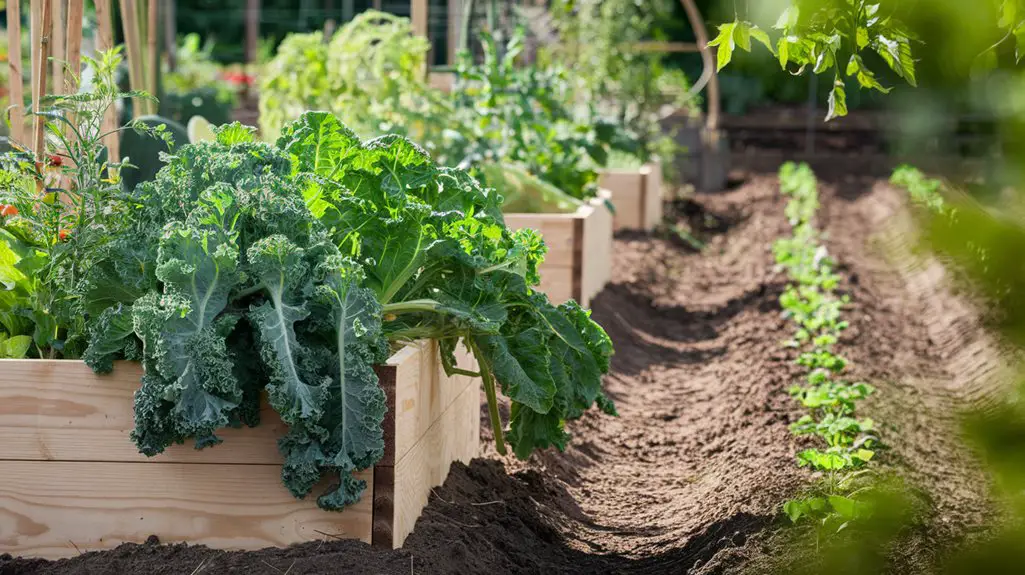
When you're deciding between raised beds and traditional gardening, it's crucial to evaluate your specific needs and conditions. Each method has unique advantages that can greatly impact your gardening experience.
By examining factors like soil quality, maintenance requirements, and aesthetic preferences, you'll be better equipped to make an informed choice. But before you settle on one approach, consider how each option aligns with your gardening goals and lifestyle. What might you be overlooking?
On this page
Advantages of Raised Beds
When you choose raised beds for your gardening, you're not just elevating your plants; you're enhancing your entire gardening experience.
Raised beds offer improved soil drainage and warmer temperatures, creating perfect conditions for plant growth. You'll find that the controlled environment allows you to customize the soil mix, ensuring ideal nutrient levels tailored to your plants' needs.
Additionally, raised beds can minimize soil compaction, promoting healthier root systems. The height of the beds means less bending and kneeling, reducing strain on your back and knees. This accessibility enhances your gardening enjoyment and encourages longer time spent outdoors.
Furthermore, raised beds can deter pests and weeds, leading to less maintenance and more fruitful yields. Overall, they provide a more efficient and productive gardening approach. Choosing the right materials for your raised beds can further enhance these benefits.
Benefits of Traditional Gardening
While raised beds offer distinct advantages, traditional gardening remains a compelling choice for many gardeners. One significant benefit is the accessibility of soil amendments, allowing you to enhance the earth directly.
Traditional gardens also support a broader range of plant sizes and types, promoting biodiversity. Additionally, they often require less initial investment than raised beds, making them budget-friendly.
Moreover, traditional gardening allows for better soil drainage, which can lead to healthier plants. Here's a quick comparison of benefits:
| Benefit | Traditional Gardening | Raised Beds |
|---|---|---|
| Soil Accessibility | Yes | Limited |
| Plant Variety | High | Moderate |
| Initial Cost | Low | Moderate to High |
| Maintenance Level | Variable | Generally Lower |
In essence, traditional gardening provides a versatile, cost-effective, and enriching experience for those who appreciate working directly with the land.
Choosing the Right Method for Your Space
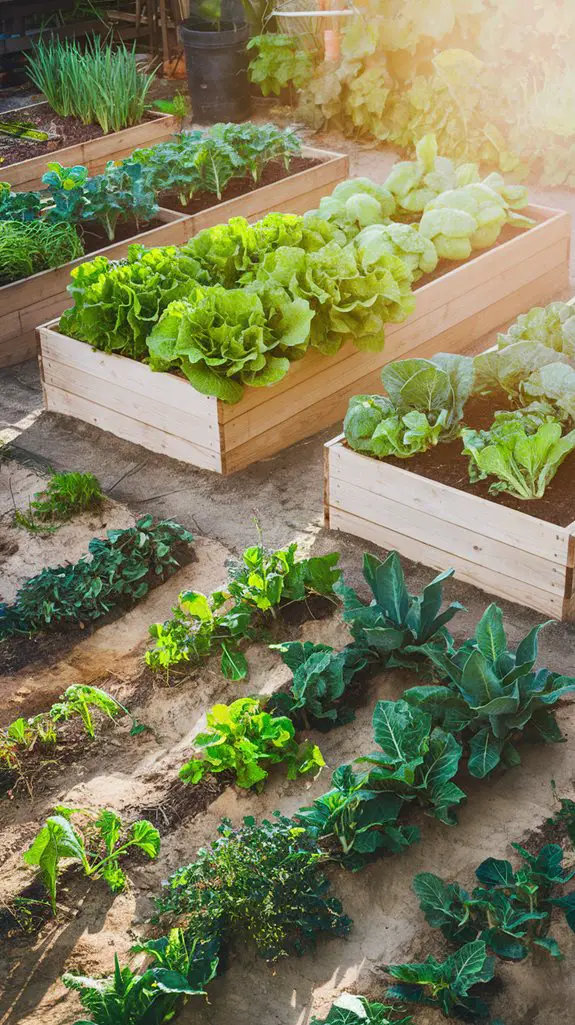
How do you determine the best gardening method for your unique space? Start by evaluating your available area—consider sunlight, soil quality, and drainage.
If you have limited space or poor soil, raised beds might be your best option. They allow for better control over soil quality and can fit into smaller areas. Additionally, raised beds are particularly beneficial for growing herbs and veggies, as they provide improved drainage and prevent soil compaction.
However, if you've got ample space and fertile soil, traditional gardening could work well, offering a more natural ecosystem.
Next, think about maintenance. Raised beds typically require less bending and are easier to manage, while traditional gardens might need more weeding.
Finally, consider your aesthetic preferences; raised beds can add structure and design to your landscape. Choose the method that aligns with your gardening goals and lifestyle.
Conclusion
Ultimately, the choice between raised beds and traditional gardening hinges on your specific needs. If you seek improved soil conditions, reduced maintenance, and enhanced aesthetics, raised beds may be your best bet.
Conversely, if you prefer a natural look, thrive in fertile soil, and enjoy a hands-on approach, traditional gardening could suit you better. By weighing these factors thoughtfully, you can cultivate a gardening method that aligns with your goals, elevates your experience, and nurtures your plants effectively.
