
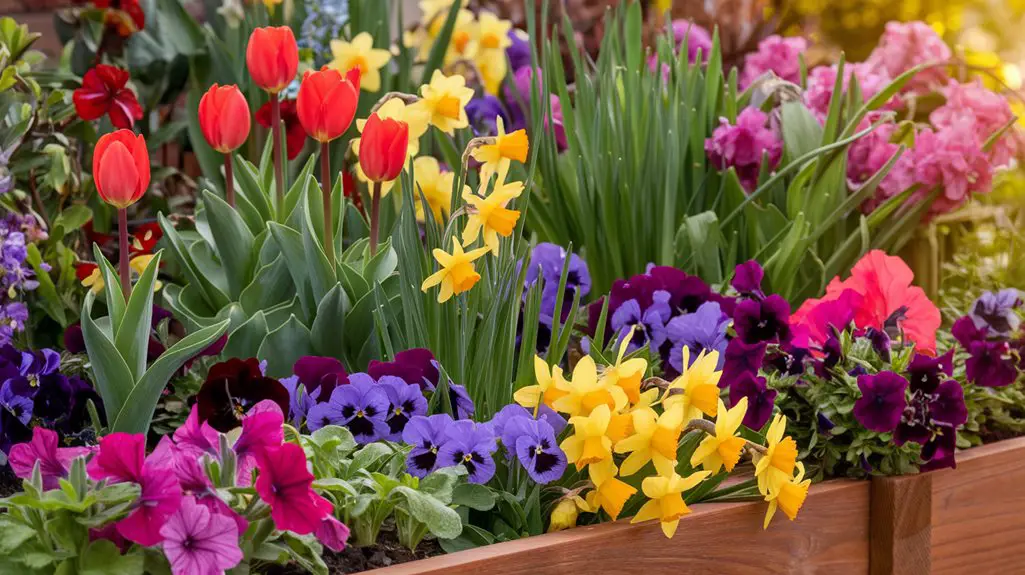
If you're considering planting colorful flowers in raised garden beds, you'll find a range of options that not only brighten your space but also thrive in this environment. Flowers like petunias, marigolds, and zinnias flourish in well-drained soil and full sun.
Understanding the characteristics of each flower can help you create a vibrant display. Let's explore how these selections can enhance both the aesthetic and ecological value of your garden.
On this page
Petunias: A Burst of Color
When you want to add a vibrant touch to your raised garden beds, petunias stand out as a top choice. These annuals come in a variety of colors—ranging from soft pastels to bold, bright hues. Their versatility allows you to create stunning combinations that can transform your garden space.
Petunias thrive in well-drained soil and require full sun, making them perfect for raised beds that receive ample light. Regular deadheading encourages continuous blooming, ensuring your garden remains colorful throughout the growing season.
They're also relatively low-maintenance, which suits busy gardeners. Additionally, their fragrant blooms attract pollinators, enhancing biodiversity. Incorporating colorful flower garden landscaping tips can further elevate the visual appeal of your outdoor space.
With proper care, petunias can provide a breathtaking display that elevates the aesthetic of your garden.
Marigolds: Vibrant and Resilient
Petunias may bring a splash of color to your garden, but marigolds offer a unique vibrancy and resilience that can't be overlooked. These hardy flowers thrive in various conditions, making them an excellent choice for raised garden beds. They're not just visually appealing; marigolds also repel pests, which can help protect your other plants.
| Feature | Benefits | Care Tips |
|---|---|---|
| Colors | Bright yellows, oranges | Plant in full sun |
| Growth Habit | Compact and bushy | Water regularly |
| Pest Resistance | Effective against nematodes | Deadhead for blooms |
| Bloom Time | Spring to frost | Fertilize monthly |
With their stunning hues and low maintenance, marigolds are a must-have for any vibrant garden.
Zinnias: Easy to Grow and Stunning
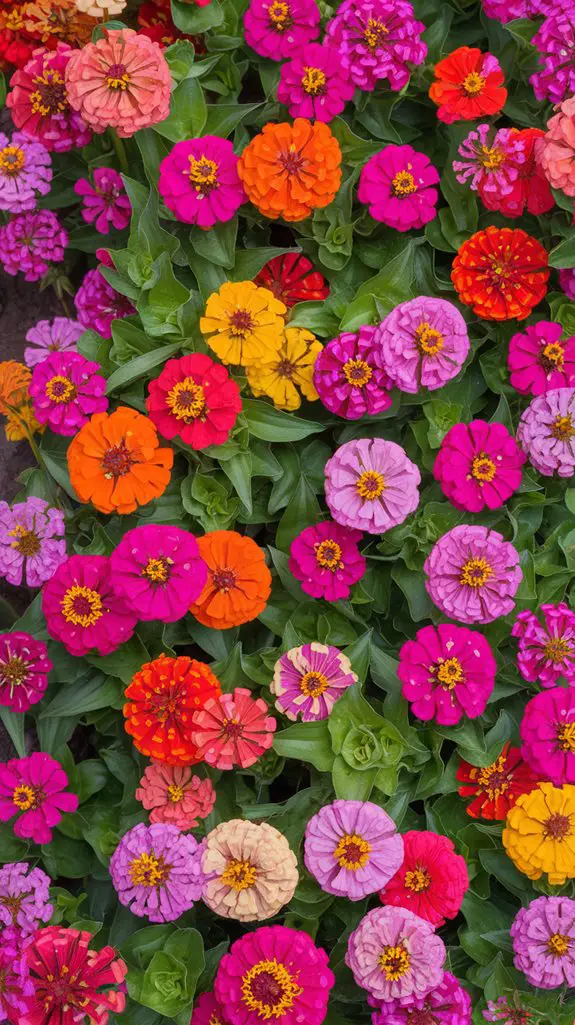
Zinnias are a fantastic choice for any raised garden bed, offering a stunning array of colors and a straightforward growing experience.
These annuals thrive in full sunlight, needing at least six hours of direct light daily. They tolerate a variety of soil types, though well-draining, nutrient-rich soil promotes healthier blooms.
Zinnias are also drought-resistant, requiring minimal watering once established, making them perfect for low-maintenance gardens. You can choose from various heights and flower types, ensuring a dynamic visual appeal.
Plus, their vibrant colors attract pollinators, enhancing your garden's ecosystem. Regular deadheading encourages continuous blooming throughout the summer. Additionally, raised garden beds provide improved drainage and soil quality, which can further benefit zinnias.
With such ease of care and beautiful results, zinnias truly shine in any raised garden bed.
Snapdragons: Tall and Graceful Blooms
Snapdragons bring a vertical elegance to raised garden beds, standing tall with their striking blooms that range from soft pastels to vibrant hues. These flowers thrive in cooler temperatures, making them perfect for early spring and fall planting. They require well-drained soil and benefit from regular watering to keep their roots healthy.
Here's a quick comparison of different snapdragon varieties:
| Variety | Height | Bloom Color |
|---|---|---|
| Tall | 24-48 inches | Red, Yellow |
| Medium | 12-24 inches | Pink, White |
| Dwarf | 6-12 inches | Lavender, Peach |
Planting snapdragons not only enhances your garden's aesthetic but also attracts pollinators, contributing to a thriving ecosystem in your raised beds.
Cosmos: Whimsical and Colorful
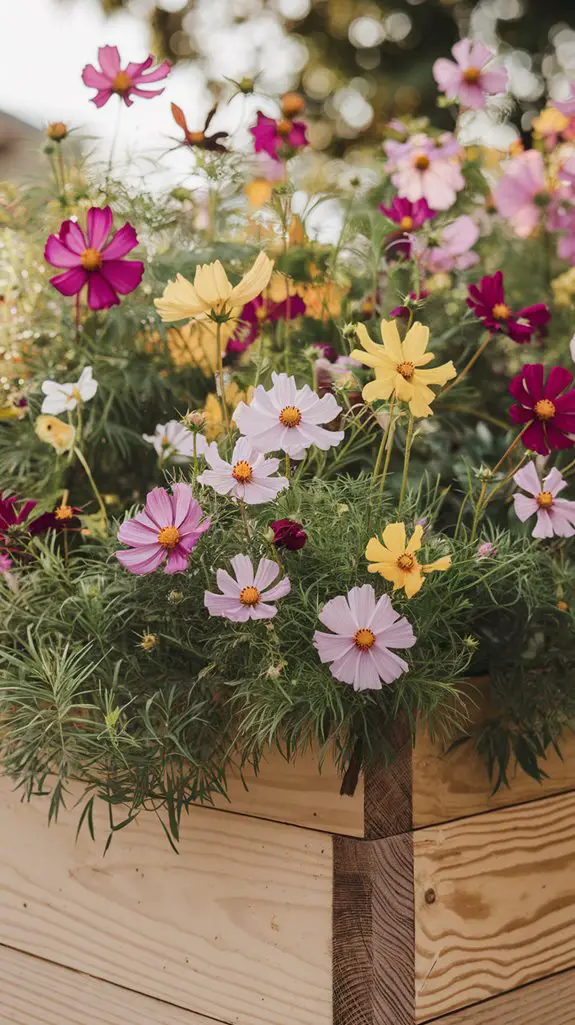
Cosmos add a whimsical touch to raised garden beds, with their delicate petals swaying gracefully in the breeze.
These annuals come in a variety of colors, including vibrant pinks, oranges, and whites, making them perfect for a cheerful display. They thrive in well-drained soil and full sunlight, requiring minimal maintenance, which is ideal for busy gardeners.
Cosmos are also drought-tolerant, so you won't need to worry about overwatering. Their height ranges from 1 to 4 feet, allowing you to create layers in your garden design.
Additionally, these flowers attract beneficial insects, enhancing your garden's ecosystem. Implementing companion planting techniques can further maximize their benefits and boost your garden's productivity. Whether you choose the classic Cosmos bipinnatus or the more compact varieties, you'll enjoy their carefree charm throughout the growing season.
Salvia: Bold Hues and Attracts Pollinators
Salvia stands out in any raised garden bed with its bold hues and striking foliage. This vibrant flower not only adds color but also attracts beneficial pollinators, making it a smart choice for your garden.
When planting salvia, consider these key points:
- Diverse Color Range: From deep blues to fiery reds, salvia offers a palette that complements any landscape.
- Pollinator Magnet: Bees, butterflies, and hummingbirds flock to salvia, enhancing your garden's ecological health.
- Low Maintenance: Once established, salvia thrives in various conditions, requiring minimal care while delivering maximum visual impact.
Incorporating salvia into your raised beds guarantees a lively display while supporting local wildlife, making it a win-win for garden enthusiasts. Additionally, pairing salvia with edible plants can create a beautiful and functional garden space.
Calibrachoa: Miniature Petunias With Charm
Calibrachoa, often referred to as miniature petunias, brings a delightful charm to raised garden beds with its abundant blooms and compact growth habit.
These vibrant flowers come in a multitude of colors, including pink, yellow, and purple, making them an excellent choice for adding visual interest. Their small, trumpet-shaped blossoms aren't only attractive but also attract pollinators like bees and butterflies, enhancing your garden's ecosystem.
Calibrachoa thrives in well-draining soil and requires full sun, making it perfect for sunny spots. Regular deadheading encourages continuous blooms throughout the season.
Plus, their trailing nature means they work beautifully in containers or hanging baskets. Incorporating Calibrachoa into your garden will create a stunning display that's easy to maintain.
Geraniums: Classic Blooms for Any Garden
Geraniums stand out as a timeless choice for raised garden beds, offering a blend of beauty and resilience.
These vibrant flowers can thrive in various conditions, making them perfect for any gardener. When you choose geraniums, consider their:
- Variety of Colors: From bold reds to soft pinks, they can brighten any space.
- Long Blooming Season: With proper care, geraniums can bloom from spring through fall.
- Low Maintenance: They require minimal watering and are often pest-resistant.
Planting geraniums in your raised bed not only enhances the visual appeal but also encourages pollinator activity. Additionally, geraniums can serve as a pest-resistant option for your garden, helping to protect other plants from common garden pests.
Their versatility allows you to mix them with other plants or feature them as standalone specimens, making your garden truly unique.
Lavender: Fragrant and Beautiful
Lavender, with its alluring scent and striking purple hues, is a must-have for any raised garden bed. This perennial herb thrives in well-drained soil and prefers full sun, making it ideal for sunny locations.
You'll appreciate its drought-resistant nature, saving you time on watering once established. Lavender not only adds beauty but also attracts beneficial pollinators like bees and butterflies to your garden.
Its fragrant flowers can be harvested for culinary uses, essential oils, or potpourri. When planting, space your lavender at least 12 to 18 inches apart to guarantee proper airflow.
Regular pruning encourages bushy growth and enhances bloom production. By incorporating minimalist outdoor seating designs in your garden, you create a visually stunning and aromatic space that's practical and pleasing.
Sunflowers: Bright and Cheerful Giants
Adding vibrant colors to your raised garden beds can elevate their aesthetic appeal, and sunflowers are a perfect choice.
These cheerful giants not only brighten your space but also attract pollinators, playing an essential role in your garden's ecosystem.
When planting sunflowers, consider the following:
- Variety Selection: Choose from tall varieties that can reach heights over six feet or dwarf types for smaller spaces.
- Sunlight Requirements: Sunflowers thrive in full sun, requiring at least six hours of direct sunlight daily.
- Soil Preparation: Well-drained, nutrient-rich soil enhances growth and stability.
Conclusion
Incorporating colorful flowers into your raised garden beds not only brightens your outdoor space but also supports a thriving ecosystem. Each bloom, from the radiant petunias to the graceful snapdragons, adds its unique charm and character, creating a vibrant tapestry of color and life. As you cultivate these beauties, think of your garden as a living canvas, where every flower paints a stroke of joy and energy, inviting both pollinators and people to bask in its splendor.
