
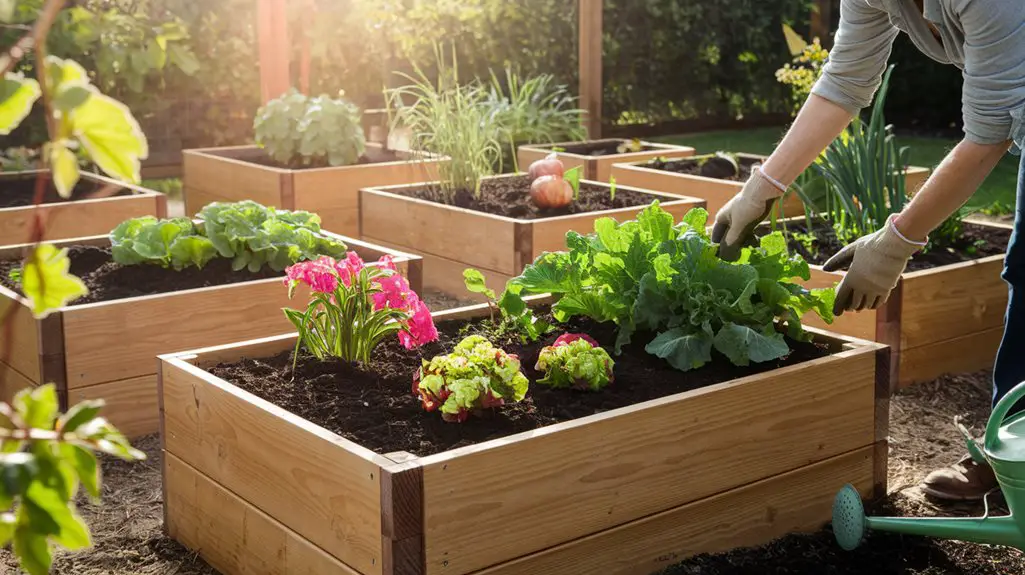
Imagine stepping into your backyard and seeing a beautifully arranged raised garden bed brimming with fresh vegetables and vibrant flowers. Building raised garden beds can transform your gardening experience, making it more enjoyable and productive. But where do you start?
From choosing the right location to selecting materials, there are essential tips you should follow to guarantee success. Let's explore the key factors that will set you up for a thriving garden.
On this page
Choose the Right Location
When you're setting up your raised garden bed, it's vital to choose the right location to guarantee your plants thrive.
Look for a spot that receives at least 6 to 8 hours of sunlight daily. This sunlight is essential for growing healthy plants. Avoid areas with excessive shade from trees or buildings, as this will hinder growth.
Also, consider the proximity to a water source for easy irrigation. Confirm the ground is level, providing good drainage to prevent waterlogging.
Additionally, think about accessibility; you'll want to make certain you can easily reach your plants for maintenance and harvesting.
Finally, choose a location away from strong winds that could damage delicate plants. Raised garden beds can improve soil drainage and create a more controlled growing environment for your plants.
Make these considerations, and you'll set yourself up for a successful garden!
Select Suitable Materials
After you've found the perfect spot for your raised garden bed, the next step is selecting suitable materials. Choosing the right materials is essential for the longevity and health of your garden.
Here are some options to take into account:
- Wood: Untreated cedar or redwood is durable and naturally resists decay.
- Metal: Galvanized steel or aluminum provides a modern look and long-lasting strength.
- Brick or Stone: These materials offer stability and aesthetics but can be more labor-intensive.
- Composite: Made from recycled materials, composite boards are rot-resistant and eco-friendly.
Consider that the choice of materials can significantly impact the soil temperature and drainage in your raised beds. Think about your budget, aesthetics, and the types of plants you want to grow. Selecting the right materials will guarantee your garden thrives for years to come!
Determine the Ideal Size
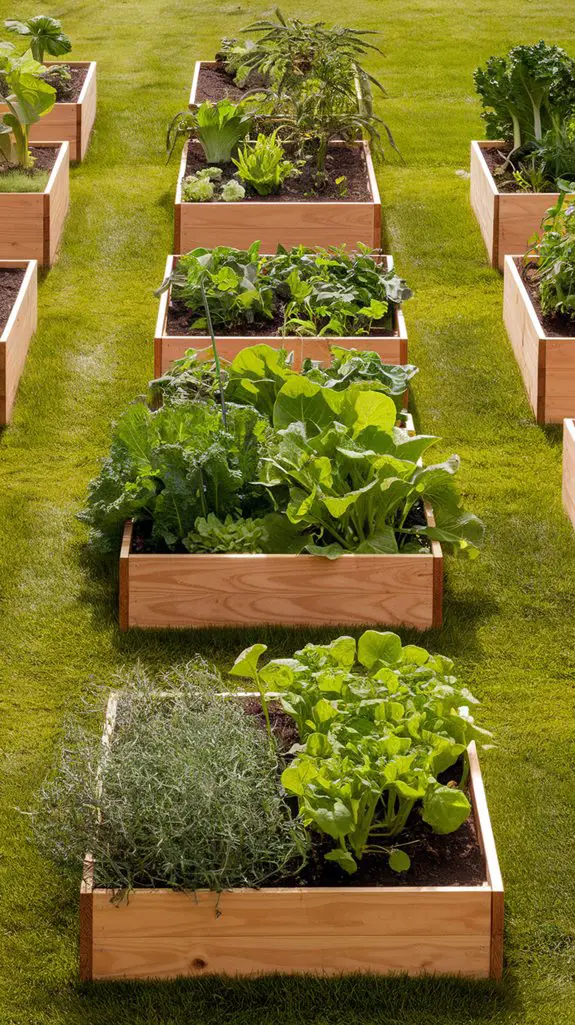
As you plan your raised garden bed, determining the ideal size is crucial for both your gardening success and comfort. Consider your available space, the types of plants you want to grow, and how you'll maintain it.
A common size is 4 feet by 8 feet, allowing easy access from all sides. Here's a quick reference to help visualize different dimensions:
| Width | Length | Height |
|---|---|---|
| 2 ft | 4 ft | 12 in |
| 3 ft | 6 ft | 18 in |
| 4 ft | 8 ft | 24 in |
Choosing the right height also guarantees you can tend to your plants without straining your back. Aim for a height that suits your needs and the plants' root systems. Additionally, using raised beds can enhance soil quality and drainage, making it easier to cultivate a thriving garden.
Plan for Drainage
Proper drainage is essential for a healthy raised garden bed, and planning for it can make all the difference.
Here are four key tips to guarantee your plants thrive:
- Choose the Right Location: Look for a spot with good natural drainage, avoiding low areas where water tends to pool.
- Add Drainage Holes: Drill holes in the bottom of your raised bed to allow excess water to escape.
- Incorporate Gravel: Place a layer of gravel or small stones at the bottom to enhance drainage and prevent soil from clogging the holes.
- Use Well-Draining Soil: Mix your garden soil with compost and perlite to improve aeration and drainage. Additionally, consider utilizing raised garden beds for vertical gardening, which can help maximize space and enhance drainage efficiency.
Build a Strong Frame
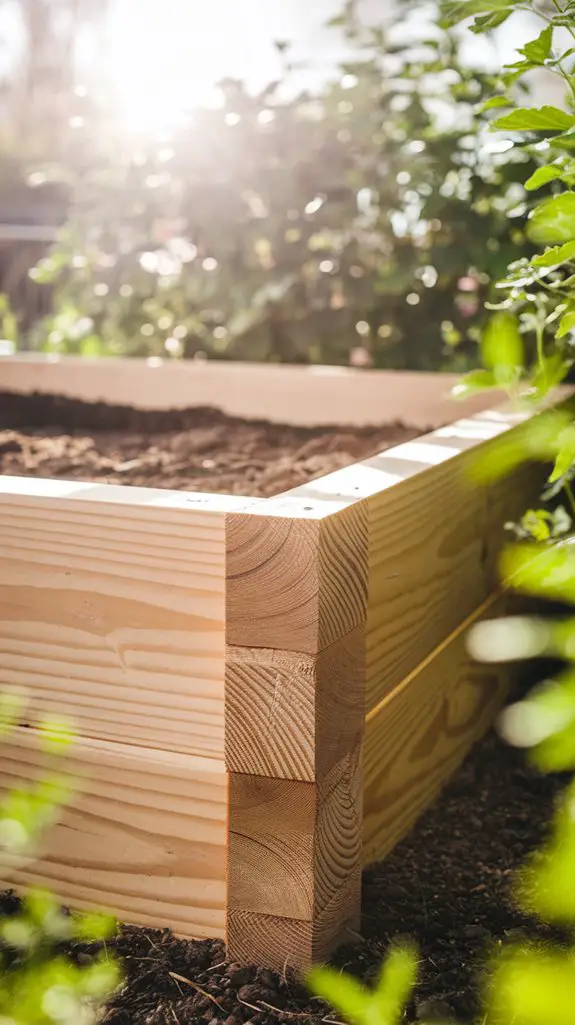
To create a durable raised garden bed, you need a strong frame that can withstand the elements and support your plants. Start by choosing materials like cedar or redwood, which resist rot. Use 2×6 or 2×8 boards for the sides, ensuring they're at least 12 inches deep.
| Material | Pros |
|---|---|
| Cedar | Naturally rot-resistant |
| Redwood | Lasts long, beautiful |
| Treated Pine | Cost-effective |
| Composite Wood | Low maintenance |
| Concrete Blocks | Durable, customizable |
Assemble the frame using corrosion-resistant screws or bolts. Reinforce corners with brackets for added stability.
With a strong frame, you'll provide a solid foundation for your garden to thrive. Additionally, consider using affordable raised garden bed solutions to maximize your gardening experience without breaking the bank.
Fill With Quality Soil
Once you've built your sturdy frame, the next essential step is filling it with quality soil that promotes healthy plant growth.
Choosing the right blend can make all the difference. Here are four key components to take into account:
- Topsoil: Start with nutrient-rich topsoil as the base.
- Compost: Add compost to enhance soil fertility and moisture retention.
- Peat Moss: Incorporate peat moss for improved aeration and drainage.
- Perlite or Vermiculite: Mix in perlite or vermiculite to prevent compaction and encourage root growth.
Consider Planting Layout
A well-thought-out planting layout can greatly enhance your garden's productivity and aesthetics. Start by considering companion planting; some plants thrive next to each other, while others may compete for resources.
Arrange taller plants, like tomatoes, on the north side of your bed to avoid shading shorter plants, such as lettuce or radishes. Utilize vertical space by incorporating trellises for climbing plants, maximizing your growing area.
Don't forget to leave pathways for easy access; you want to reach every corner without trampling your plants. Rotate your crops each season to maintain soil health and prevent pest buildup. Additionally, combining companion planting techniques can lead to healthier plants and improved yields.
Finally, group plants with similar water and sunlight needs together to simplify care. This strategic layout will keep your garden thriving all season long!
Incorporate Pest Control Measures
After establishing a thoughtful planting layout, it's important to keep those plants healthy and thriving by incorporating pest control measures.
Here are some effective strategies you can use:
- Companion Planting: Pair plants that deter pests with those that attract beneficial insects.
- Natural Barriers: Use row covers or netting to physically block pests from reaching your plants.
- Organic Insecticides: Consider neem oil or insecticidal soap for targeted pest control without harming beneficial organisms.
- Regular Monitoring: Check your plants frequently for signs of pest damage and take action early.
Maintain Your Raised Bed
To keep your raised garden bed thriving, regular maintenance is crucial. Start by checking the soil moisture; it should be consistently damp but not soggy. Water your plants deeply, especially during dry spells.
Next, remove any weeds that compete for nutrients and light. This helps your plants flourish without unnecessary stress.
Every season, replenish your soil with organic matter, like compost, to maintain fertility. Keep an eye out for pests and diseases, addressing issues promptly to prevent them from spreading.
Prune dead or yellowing leaves to encourage healthy growth and airflow. Finally, don't forget to rotate your crops annually, which helps maintain soil health and reduces pest problems. Implementing organic gardening practices can further enhance the productivity of your raised beds.
Regular care will guarantee your raised bed remains productive and vibrant!
Experiment With Companion Planting
While you might think of planting your favorite vegetables in isolation, experimenting with companion planting can greatly enhance your garden's productivity and health.
By pairing certain plants together, you can improve growth and deter pests. Here are some effective combinations to try:
- Tomatoes and Basil: Basil can improve the flavor of tomatoes and repel pests.
- Carrots and Onions: Onions help deter carrot flies, while carrots can mask their scent.
- Cucumbers and Nasturtiums: Nasturtiums attract aphids away from cucumbers, acting as a trap crop.
- Beans and Corn: Beans fix nitrogen in the soil, benefiting corn's growth.
Conclusion
By following these tips for building raised garden beds, you're setting yourself up for a thriving garden. With the right location, materials, and care, you'll not only enjoy a productive space but also reduce pest issues and improve soil health. So roll up your sleeves, get planting, and watch your garden flourish while you reap the rewards of your hard work!
