
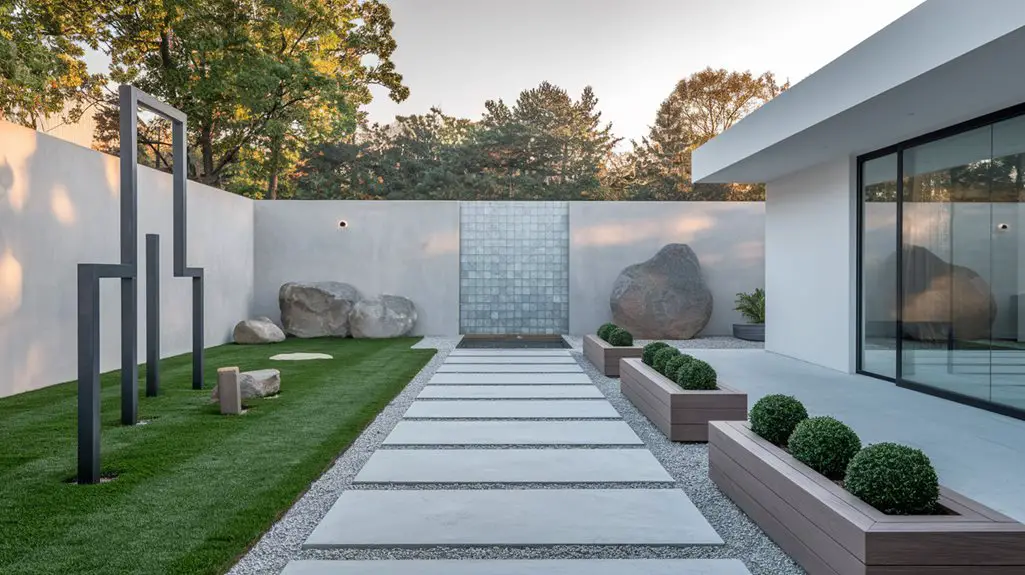
You’ll find that minimalist installations offer the perfect balance—making bold statements without overwhelming your carefully designed exterior spaces. These seven art concepts merge seamlessly with contemporary architecture while celebrating the natural environment surrounding your home. Each idea transforms ordinary outdoor areas into contemplative spaces that change with light, weather, and seasons—revealing new perspectives with every glance.
On this page
Floating Geometric Sculptures for Water Features
Water, the ultimate canvas for minimalist expression, transforms with the addition of floating geometric sculptures. These buoyant installations create dynamic visual experiences as they respond to gentle currents and changing light conditions.
Consider clear acrylic cubes that seemingly disappear then capture sunlight in prismatic displays. Metal polyhedrons, treated to withstand moisture, offer striking contrast against the water’s surface while their reflections double the visual impact.
You’ll achieve maximum effect by positioning these pieces where morning or evening light can cast dramatic shadows. For eco-conscious design, explore biodegradable materials like sustainably-harvested bamboo forms that gracefully weather over time. Incorporating eco-friendly water features enhances the overall sustainability of your garden design.
The beauty lies in restraint—a single bold shape often delivers more impact than multiple elements. Allow negative space to frame your floating sculpture, creating a contemplative focal point that honors both design principles and natural surroundings.
Shadow-Casting Metal Panels for Garden Spaces
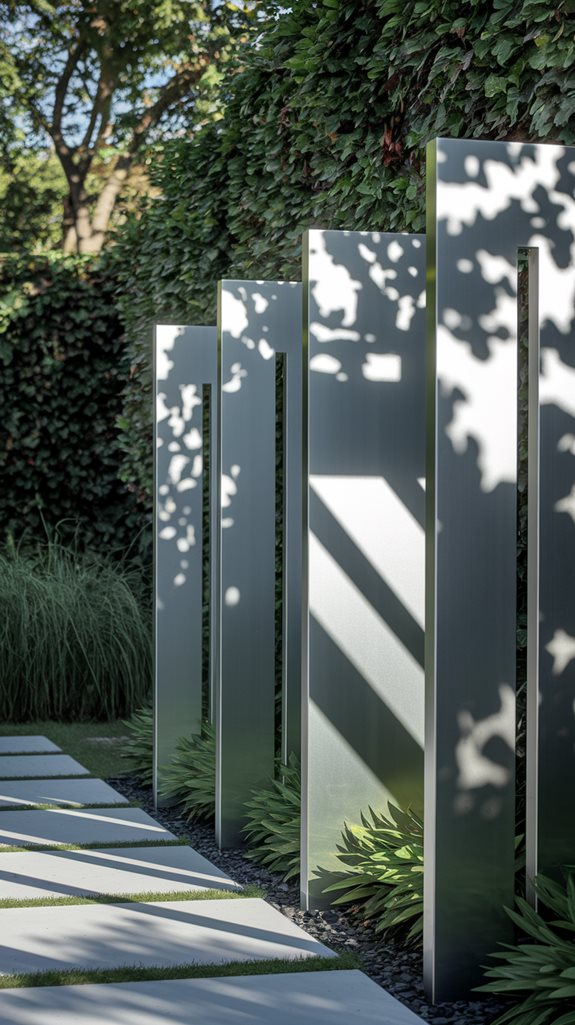
Expertly positioned metal panels transform garden spaces into living canvases where light and shadow perform an ever-changing dance throughout the day.
You’ll find these installations most striking when mounted perpendicular to the sun’s path, maximizing their dramatic effect as seasons shift.
Consider perforated Corten steel panels that weather naturally, developing a rich patina while casting intricate shadow patterns on walls, pathways, or ground cover.
These panels require minimal maintenance and integrate seamlessly with surrounding vegetation.
For maximum impact, place panels where they’ll interact with existing elements—against a pale wall or above delicate groundcover.
The contrast between hard metal edges and soft plant textures creates visual tension that defines minimalist design.
The filtered light benefits shade-loving plants beneath, merging artistic expression with ecological function. Additionally, privacy fence ideas can enhance the overall aesthetic, creating a cohesive outdoor retreat that prioritizes both style and seclusion.
Monochromatic Stone Arrangements for Zen Aesthetics
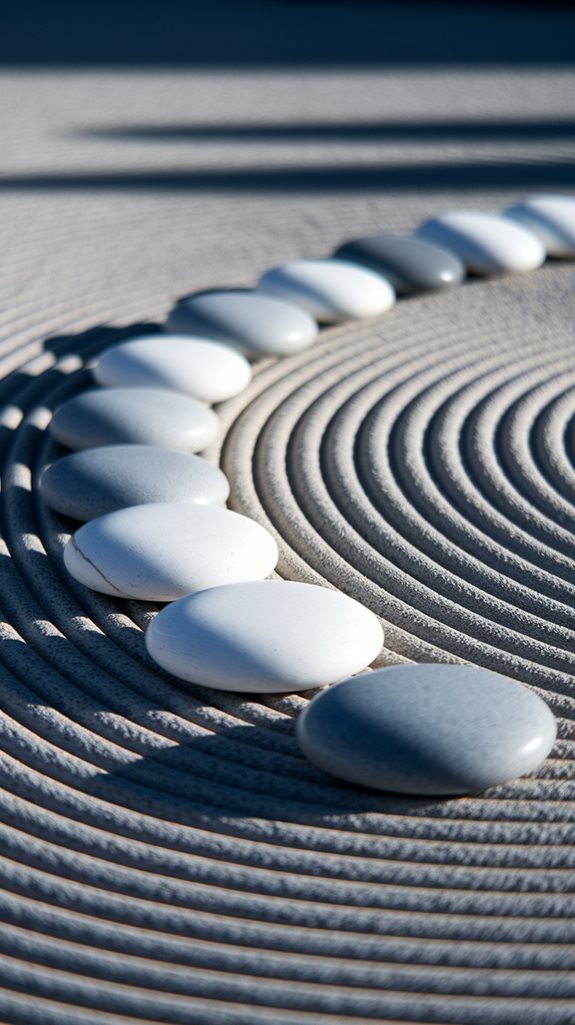
Nestled within the principles of ancient Japanese garden design, monochromatic stone arrangements offer profound simplicity that anchors outdoor spaces with meditative calm.
Choose stones in varying sizes but similar tones—slate grays, chalky whites, or earthy tans—to create visual rhythm without color distraction.
Position larger anchor stones first, then arrange smaller elements around them, maintaining negative space that allows each piece to breathe. The arrangement should guide your eye naturally through the composition, creating moments of pause and contemplation.
For authentic Zen aesthetics, partially bury stones to suggest permanence and age.
Consider how morning dew, afternoon light, and evening shadows will transform your arrangement throughout the day. These stone compositions require minimal maintenance while providing year-round structure that complements seasonal plantings and winter’s stark beauty. Additionally, incorporating artistic installations can enhance the overall tranquility of the space.
Linear Light Installations for Evening Ambiance
Linear light installations transform nocturnal landscapes into geometric poetry, using minimal elements to achieve maximum impact after sunset.
You’ll find these streamlined luminous pathways create depth and dimension in otherwise dark outdoor spaces while maintaining minimalist principles.
When designing your light installation, consider:
- Recessed pathway lights that follow architectural lines for subtle ground-level guidance
- Suspended cable lighting between structures to define aerial boundaries without visual weight
- LED strip integration along existing hardscape edges for seamless environmental shift
- Solar-powered minimal stakes to create ephemeral patterns that change with the seasons
These installations consume minimal energy while dramatically altering spatial perception. Additionally, incorporating energy-efficient lighting can enhance the sustainability of your outdoor design.
Weathering Steel Statement Pieces for Natural Patinas
Weathering steel sculptures emerge as day-focused counterparts to evening light installations, offering permanent architectural presence that evolves with time and elements. You’ll find these rust-colored forms create dynamic focal points that complement minimalist landscapes without overwhelming them.
| Form Factor | Environmental Response | Spatial Impact |
|---|---|---|
| Monolithic | Develops rich amber patina | Anchors open spaces |
| Geometric | Changes with rainfall patterns | Defines boundaries |
| Abstract | Captures seasonal variations | Creates shadow play |
| Functional | Interacts with surrounding flora | Directs movement |
| Layered | Records passage of time | Frames perspectives |
Position these sculptures where they’ll catch changing light throughout the day. Their surfaces transform gradually—from raw metal to complex textures—recording your garden’s unique environmental conditions.
This living quality embodies true sustainability, requiring zero maintenance while gaining character and depth with each passing season. Incorporating artful outdoor displays not only enhances the visual appeal but also cultivates a deeper connection to nature.
Minimalist Wind-Activated Elements for Movement
While static sculptures anchor your landscape, wind-activated elements introduce enthralling kinetic dimensions that transform with every breeze. Consider installing slender metal pendulums or suspended geometric forms that respond to air currents with graceful, unpredictable movements.
- Position wind spinners at varying heights to create visual rhythm without overwhelming the space.
- Select materials that weather elegantly—brushed aluminum catches light while brass develops rich patina.
- Install whisper-quiet kinetic pieces near seating areas where subtle movement can be appreciated.
- Arrange wind elements to complement prevailing breezes rather than fighting against natural airflow.
These dynamic installations bridge the gap between minimalist aesthetics and natural forces, requiring no electricity while creating perpetually changing compositions. Incorporating minimalist outdoor seating can enhance the overall harmony of your space.
The gentle motion adds life to your outdoor space while maintaining clean, uncluttered design principles.
Negative Space Frameworks for Framing Landscape Views
Negative space serves as a powerful compositional element in minimalist outdoor art, moving beyond motion to frame and highlight your landscape’s inherent beauty.
Through strategic placement of open frameworks—think metal rectangles, circular portals, or geometric cutouts—you’ll create intentional viewing portals that direct attention to specific garden vistas.
Position these frameworks where they’ll capture seasonal changes: a distant mountain peak, the path of setting sun, or a heritage tree’s silhouette.
Materials like weathered steel or blackened timber complement rather than compete with the living canvas they frame. The most successful designs integrate with the environment’s natural rhythm, revealing different perspectives as you move through your outdoor space. Incorporating eco-friendly materials can further enhance the sustainability of your outdoor art installations.
Unlike traditional garden art that demands attention, these negative space elements enhance what already exists—transforming ordinary views into composed, contemplative experiences.
Conclusion
As you curate your outdoor space, remember that minimalist art isn’t just what you add—it’s what you allow to breathe. Like nature itself, the most powerful installations speak volumes through simplicity.
By thoughtfully positioning these seven elements, you’ll create dialogues between structure and landscape, light and shadow. Your home’s exterior becomes not merely decorated, but transformed into a living canvas that evolves with each season.
