
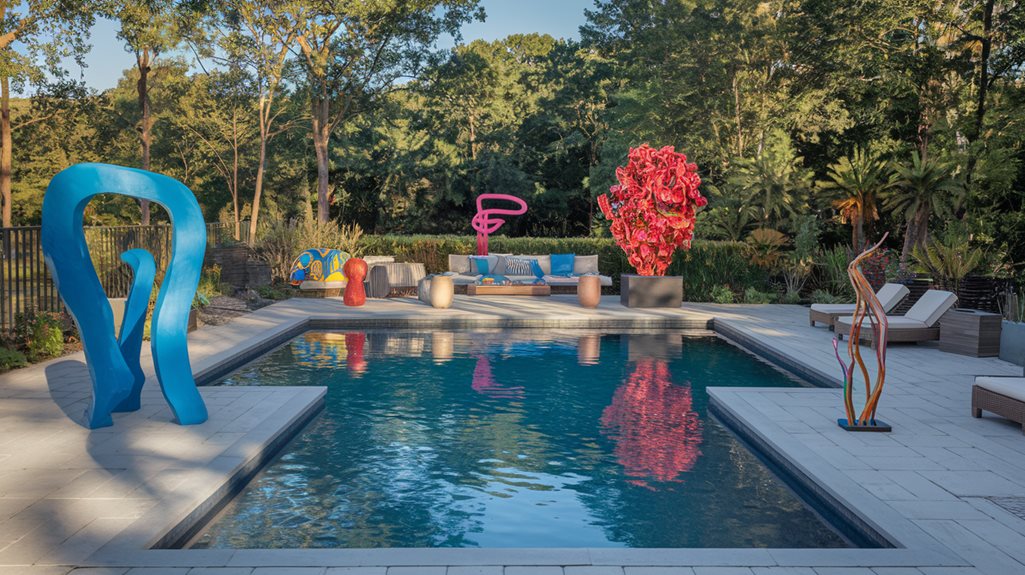
Your backyard craves character, demands dimension, and deserves distinction. When you place a statement art piece strategically in your outdoor space, you’re not merely decorating—you’re orchestrating a sensory experience.
The interplay between sculptural forms and natural elements creates visual tension that draws the eye and anchors the atmosphere. Whether it’s a steel sculpture catching afternoon light or a ceramic installation echoing your garden’s palette, these artistic focal points transform mundane yards into considered landscapes. The secret lies in their thoughtful integration.
On this page
The Psychology Behind Outdoor Art and Mood Enhancement
When you position statement art strategically in your outdoor space, you’re actually engaging with a complex psychological framework that shapes how you experience your environment. Art occupies the visual cortex in ways that standard landscaping can’t, creating focal points that direct attention and redistribute cognitive load.
Color theory principles embedded in your chosen pieces trigger specific neural pathways—blues induce tranquility through parasympathetic response, while reds stimulate alertness through sympathetic activation. The juxtaposition of sculptural forms against organic backgrounds creates cognitive contrast that refreshes mental fatigue.
Your brain craves visual anchors in expansive settings; statement art provides these reference points, establishing perceptual boundaries that paradoxically expand your sense of space while creating intimate zones for psychological restoration. Additionally, incorporating unique outdoor art installations can further enhance the aesthetic appeal and emotional resonance of your backyard.
Selecting Statement Art Pieces That Reflect Your Personality
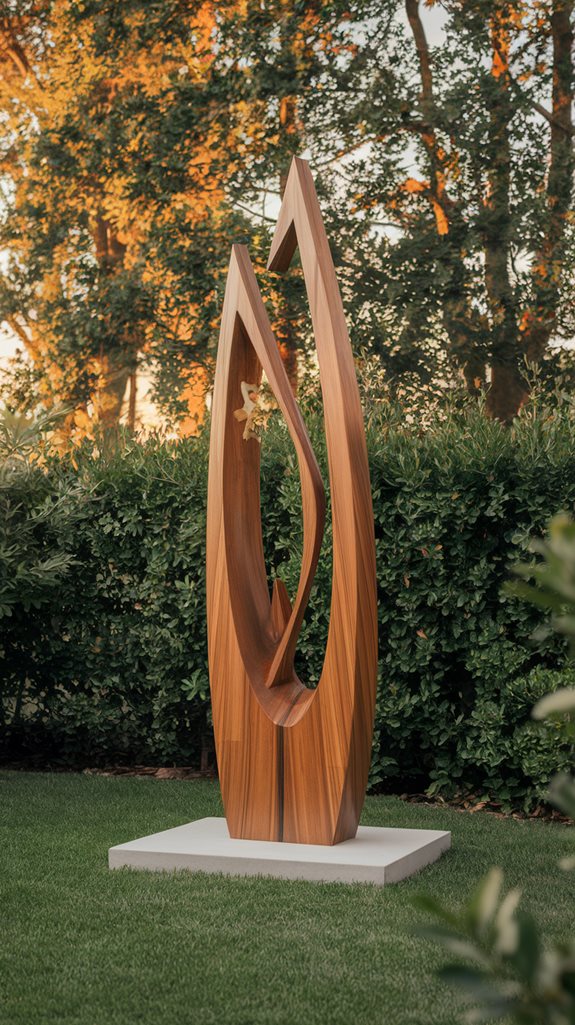
The psychological impact of outdoor art establishes the foundation for your next important decision—which specific pieces will authentically represent you.
Consider your spatial narrative: do you prefer horizontal flow pieces that guide the eye across your landscape, or vertical statements that draw attention upward?
Material selection speaks volumes—weathered Corten steel conveys industrial sophistication, while polished marble suggests classical refinement. Incorporating eco-friendly art installations can further enhance the sustainability of your garden.
Evaluate how textures contrast with existing elements; rough-hewn stone creates dialogue against smooth facades.
Scale matters critically. Measure your key viewpoints and sight lines before committing. A piece that’s perfectly proportioned from your patio may appear diminutive when viewed from second-story windows.
Remember that statement art isn’t merely decorative—it’s an extension of your design philosophy, anchoring your outdoor space with intentionality and personal significance.
Weather-Resistant Materials for Lasting Backyard Installations
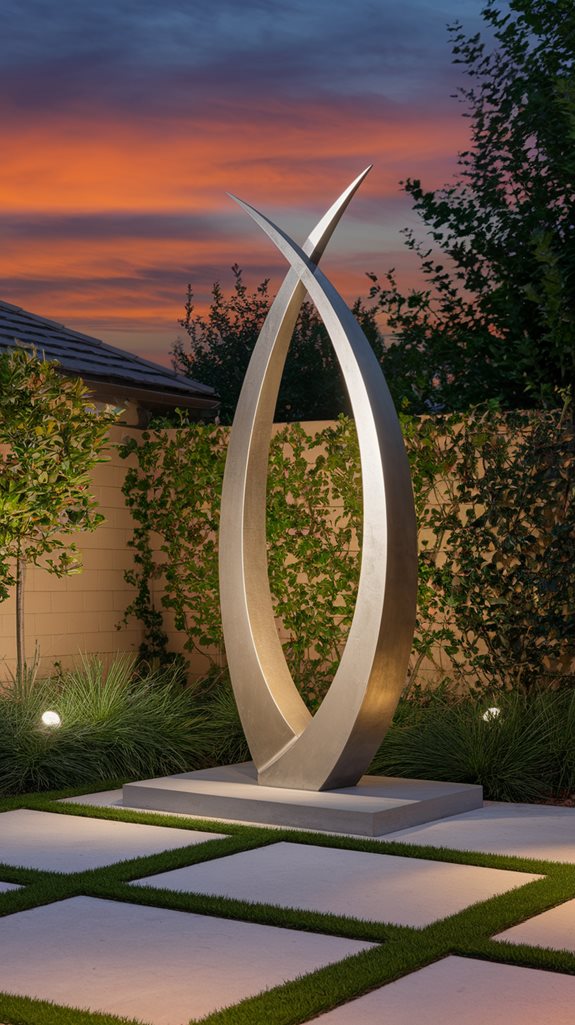
Because your investment in statement art deserves protection from nature’s relentless elements, selecting appropriate materials becomes paramount for installation longevity.
Opt for marine-grade stainless steel (316), which resists salt corrosion and maintains structural integrity despite humidity fluctuations. Corten steel offers a compelling alternative—its controlled rusting process creates a self-protecting patina while delivering rich, evolving aesthetics.
For sculptural pieces, consider high-density polyethylene or architectural-grade ceramics that withstand UV exposure without color degradation.
Glass installations require tempered or laminated construction with silicone sealing to prevent moisture infiltration. When mounting, utilize titanium or brass hardware rather than standard galvanized options that deteriorate rapidly outdoors.
Position pieces strategically—elevated platforms with proper drainage prevent water pooling that accelerates material deterioration, while strategic overhangs provide partial shelter without compromising visual impact. Additionally, incorporating creative art elements enhances both the visual appeal and emotional connection to your outdoor space.
Strategic Placement and Lighting for Maximum Visual Impact
Strategic positioning of your statement art forms the foundation of its visual resonance in outdoor spaces.
Consider sightlines from primary viewing areas—patios, seating zones, and interior windows—to establish ideal placement. Position larger pieces at natural focal points where they’ll command attention without obstructing pathways.
Lighting transforms static installations into dynamic elements after sunset.
Install adjustable spotlights 8-10 feet from sculptures, angled at 45 degrees to create dramatic shadows and highlight dimensional qualities. For metallic or reflective pieces, position LED strips behind them to create a halo effect.
Consider color temperature: 2700K-3000K warm lighting enhances organic materials, while 4000K cooler tones accentuate contemporary metal or glass installations. Incorporating large outdoor art pieces can significantly enhance the overall aesthetic and charm of your garden.
Solar-powered options eliminate complex wiring while sustainable timer systems reduce light pollution and energy consumption while maximizing your art’s after-dark impact.
Integrating Art With Natural Elements for Cohesive Outdoor Spaces
Successful integration of statement art with your garden’s natural elements creates harmonious outdoor compositions where neither dominates but rather complement each other.
Position sculptures against foliage backdrops to establish depth, or frame water features with vertical art pieces that echo the fluidity below.
Consider material compatibility—weathered copper develops patinas that blend with surrounding vegetation, while glass installations capture and refract natural light across your space.
Scale relationships matter; substantial art pieces require adequate negative space, while clusters of smaller works can punctuate dense plantings.
Layer textures intentionally—juxtapose rough stone sculptures against feathery ornamental grasses, or pair sleek metal with coarse bark mulch.
These deliberate contrasts heighten sensory engagement while maintaining visual cohesion throughout your outdoor gallery. Additionally, incorporating elements of backyard art activities fosters creativity and encourages family participation in enhancing the outdoor space.
Conclusion
Your garden deserves art that speaks to your soul. Like a compass rose orienting a traveler, well-placed statement pieces guide the eye and anchor your outdoor design within its 360° context.
You’ll find that positioning art at 45° angles creates dynamic sightlines, while maintaining 4-6 feet of negative space prevents visual crowding. Remember, your backyard isn’t just a canvas—it’s a three-dimensional gallery where your personality shines.
