
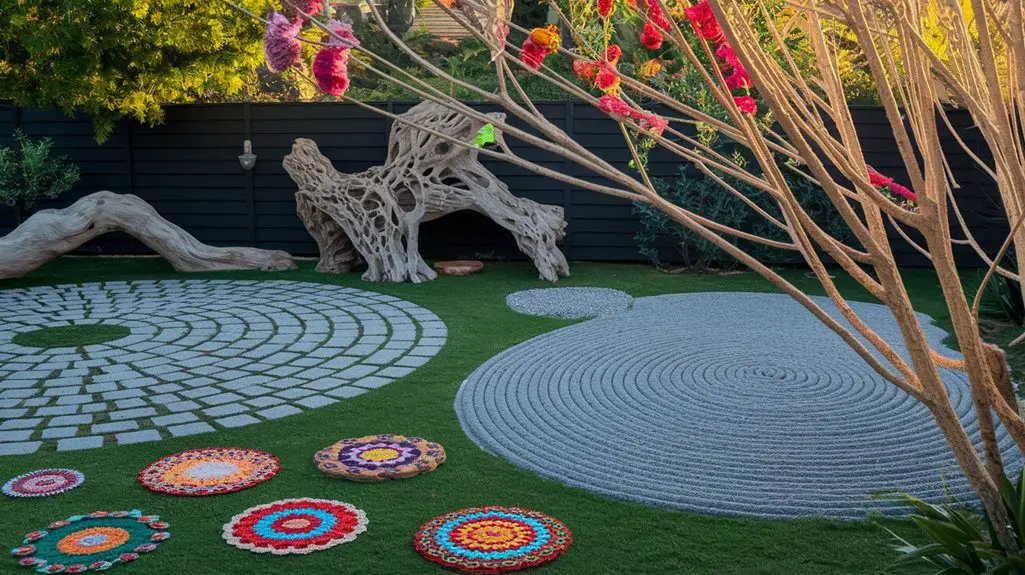
You’ve noticed it too, haven’t you? That distinct calm that washes over you when you’re immersed in nature’s artistry. Your outdoor space holds untapped potential for mindfulness and deep relaxation.
By transforming your garden, patio, or balcony with intentional artistic elements, you’re creating more than just visual appeal—you’re crafting a sanctuary for your well-being. These five artistic approaches will show you how to merge creativity with mindfulness in your own personal retreat.
On this page
Creating a Zen Garden With Natural Sculptures
While traditional Zen gardens originated in Japanese monasteries centuries ago, you can create your own peaceful retreat in any outdoor space you have available. Start by choosing a quiet corner where you’ll arrange natural elements with intention.
Incorporate smooth stones, weathered driftwood, and native plants as living sculptures. Position larger rocks to represent mountains or islands, surrounded by carefully raked sand or fine gravel that mimics flowing water. The repetitive motion of raking patterns into the surface becomes a meditative practice itself.
You’ll find that arranging these elements isn’t just decorative—it’s a mindful exercise in balance and harmony. As you work with natural materials, you’re creating both a visual sanctuary and a space for contemplation where the artistic process itself becomes as restorative as the finished garden. Additionally, consider incorporating wildlife-friendly plants that attract beneficial creatures, enhancing the garden’s tranquility and ecological value.
Wind Chimes and Sound Installation Gardens
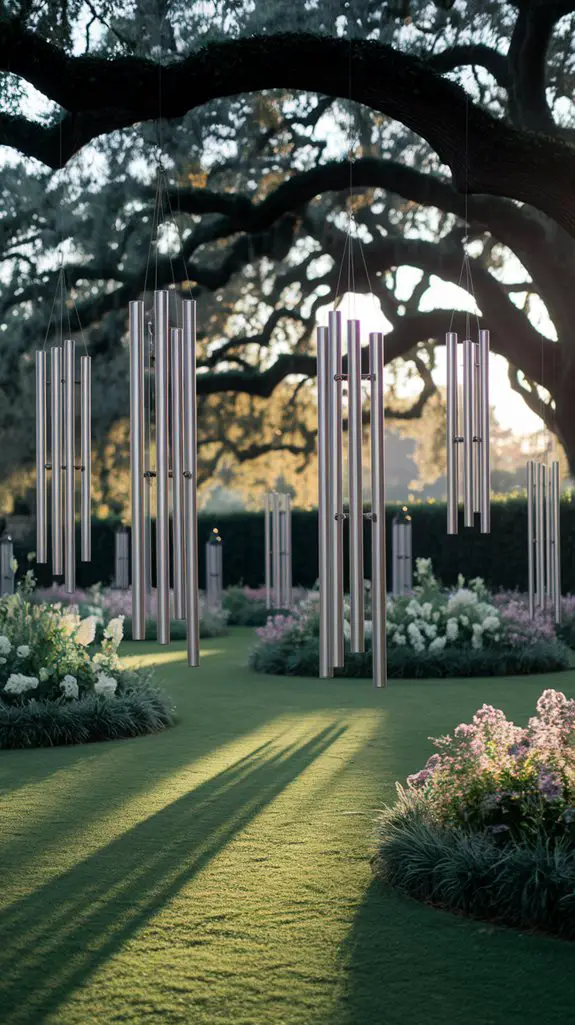
How often do you pause to truly listen to your environment? Sound gardens invite you to engage your auditory senses, creating spaces where wind becomes music and silence transforms into mindful awareness.
Place wind chimes strategically throughout your garden to create different sound zones that respond to nature’s breath. These acoustic elements turn ordinary spaces into sonic sanctuaries.
| Material | Sound Quality | Best Placement |
|---|---|---|
| Metal | Bright, clear | Open corners |
| Bamboo | Hollow, warm | Near pathways |
| Ceramic | Soft, mellow | Close to seating |
Consider incorporating water features that provide gentle background melodies. Water features like fountains or ponds not only enhance your garden’s aesthetic but also contribute to a tranquil atmosphere.
Wind-powered sculptures add visual movement while creating subtle soundscapes. These acoustic gardens don’t just sound beautiful—they reconnect you with the present moment, where healing begins.
Outdoor Mandala Making With Natural Materials
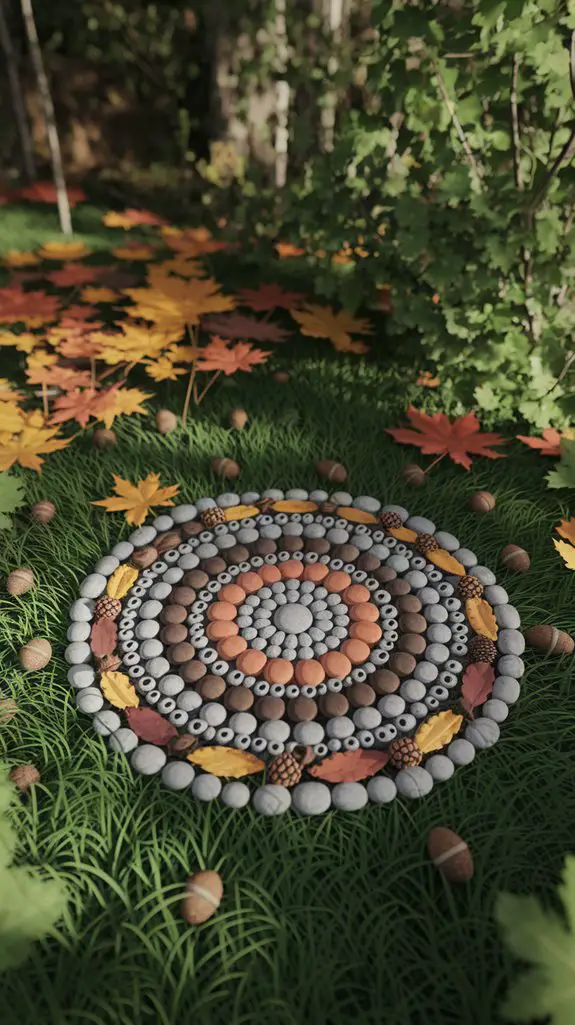
Creating mandalas with nature’s bounty invites you to enter a meditative state where each pebble, leaf, and flower becomes part of your mindful practice.
Begin by selecting a flat outdoor space—perhaps a clearing in your garden or a quiet spot in the park. Gather materials as you walk: colorful stones, pinecones, acorns, fallen petals, and twigs. This collecting process itself becomes a grounding exercise.
Start from the center, placing a distinctive element as your focal point. Work outward in concentric circles, arranging items by color, shape, or size. Don’t rush—let each placement be intentional and conscious.
The temporary nature of your creation teaches impermanence, as wind or rain will eventually reclaim your materials. Engaging in this outdoor art activity not only fosters creativity but also enhances family bonding. Photograph your mandala if you wish, but appreciate the peace that comes from creating something beautiful meant to return to nature.
Water Features as Living Art Installations
Water transforms any outdoor space into a multisensory haven where art and nature blend in peaceful harmony.
You’ll find that even simple water features can become living installations that evolve with changing light, weather, and seasons.
Consider a shallow reflection pool lined with smooth stones where leaves drift and light dances.
Or craft a bamboo water spout that creates a melodic dripping into a ceramic bowl—each drop a meditative heartbeat.
Solar-powered floating fountains offer movement without complexity.
As you design your water feature, think beyond aesthetics to engage all senses.
The gentle splash becomes your background soundtrack; moisture cools the surrounding air; reflective surfaces capture sky, clouds and surrounding greenery.
These living installations invite you to pause, breathe deeply, and reconnect with the present moment. Incorporating creative water features can enhance the peaceful atmosphere and provide additional layers of tranquility.
Mosaic Pathways for Mindful Walking Practice
While ordinary garden paths guide you from one point to another, mosaic pathways invite you to slow down and experience the journey itself. These artful walkways transform routine steps into a walking meditation, where each colorful tile demands your present attention.
Create your mosaic path using materials that speak to your aesthetic—sea glass, broken pottery, polished stones, or ceramic pieces. Design patterns that draw the eye downward, encouraging a natural gaze that grounds you in the moment. Consider incorporating symbols meaningful to your personal journey.
You’ll find that walking these paths naturally slows your pace. The varied textures beneath your feet awaken sensory awareness, while intricate designs captivate wandering thoughts.
Each step becomes deliberate, each breath deeper, as your pathway becomes both beautiful art and practical tool for cultivating mindfulness. Additionally, these pathways can serve as a powerful way to transform your outdoors into a serene sanctuary that fosters relaxation and introspection.
Conclusion
By engaging with these artistic outdoor projects, you’re sowing seeds of serenity that will bloom into profound tranquility. Whether you’re arranging stones in your Zen garden or following the colorful path of your mosaic walkway, each mindful moment connects you deeper to nature’s rhythm. Remember, the art isn’t just what you create—it’s the peace you cultivate within yourself during the process.
