
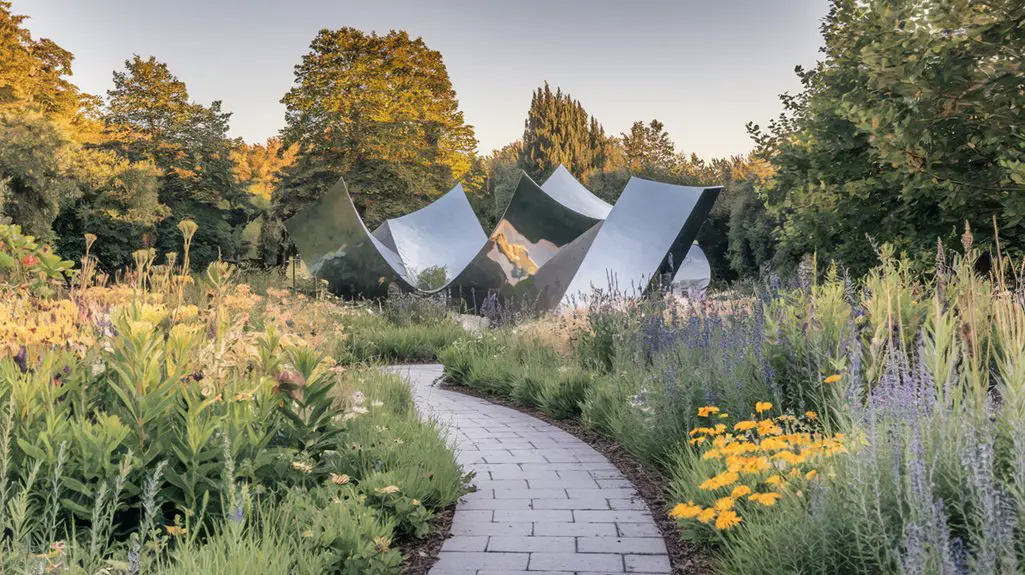
Imagine walking through the celebrated Kröller-Müller Museum gardens, where Rodin’s sculptures emerge from strategic plantings, creating focal points that draw your eye through the landscape. You’ll find that integrating art with your outdoor spaces isn’t merely decorative—it’s transformative.
When you pair deliberate plantings with thoughtful artistic elements, you’re creating a dialogue between the manufactured and the natural. This interplay enhances spatial perception while establishing a unique ecological narrative that changes with each season and time of day.
On this page
Creating Harmony Between Nature and Artistic Expression
While natural landscapes offer intrinsic beauty, integrating artistic elements requires a thoughtful approach to achieve true harmony.
You’ll need to contemplate the spatial relationship between sculptural forms and existing vegetation, ensuring neither overwhelms the other. Analyze your site’s ecology—soil conditions, light patterns, and indigenous plant communities—to determine ideal placement for art installations.
Select materials that weather appropriately within your microclimate; metals may patina, wood will age, and stone develops character over time. Additionally, incorporating colorful outdoor murals can enhance the vibrancy of your space and create a striking focal point.
These natural transformations create dynamic relationships between artwork and surroundings. Reflect on seasonal changes when positioning pieces; dormant winter branches might frame a sculpture differently than summer foliage.
The most successful integrations establish visual conversations between art and landscape, where each enhances rather than competes with the other, creating cohesive outdoor galleries that evolve through natural cycles.
Elevating Garden Aesthetics Through Sculptural Elements
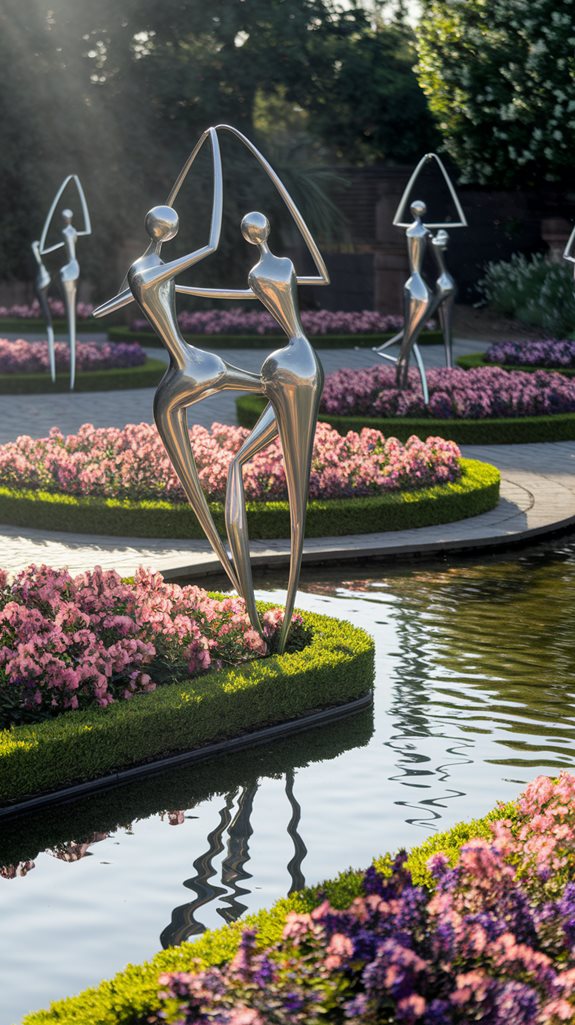
Sculptural elements serve as focal anchors that transform ordinary garden spaces into curated aesthetic experiences. When strategically positioned, sculptures create visual tension against organic plantings, establishing rhythm and directing eye movement through the landscape.
You’ll find that three-dimensional art pieces establish vertical interest where topography remains flat, while defining spatial boundaries without physical barriers.
Consider material compatibility with your microclimate—weathering steel develops protective patinas in humid environments, while limestone may erode prematurely.
Scale relationships matter critically; oversized sculptures compress surrounding space, while undersized pieces get visually consumed by mature vegetation.
Position sculptural works where seasonal light changes interact with their surfaces, creating dynamic shadow play that evolves throughout the day and across seasons, effectively doubling their aesthetic contribution to your garden’s visual complexity. Additionally, integrating modern art installations can further enhance the interplay between natural and artistic elements in your outdoor space.
Seasonal Changes and Their Impact on Outdoor Art Displays
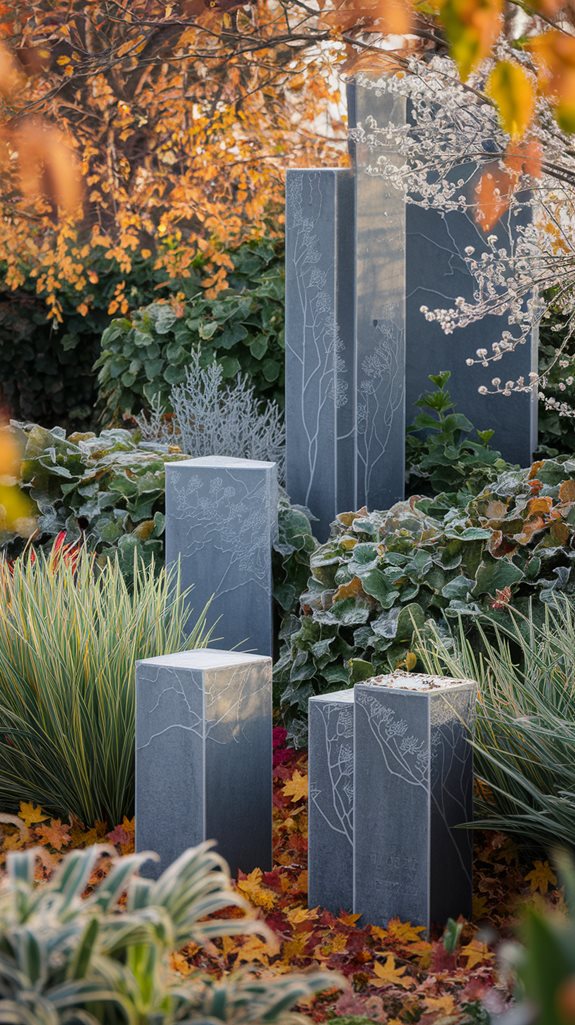
As seasons cycle through their predictable progressions, outdoor art installations undergo dramatic contextual transformations that you’ll need to anticipate in your integrated landscape design.
Sculptures that stand stark against winter’s snow acquire different spatial dynamics when surrounded by summer’s lush foliage. Thoughtful placement leverages these temporal shifts instead of fighting them.
- Design for winter visibility by positioning key pieces where deciduous plantings reveal rather than conceal during dormant months.
- Incorporate materials that respond positively to weathering—corten steel develops rich patina while limestone sculptures cultivate lichen colonies that enhance temporal depth.
- Plan lighting systems that adjust to compensate for seasonal daylight variations, maintaining ideal viewing conditions throughout the year.
Your art-landscape integration becomes a dynamic system rather than a static installation, capitalizing on nature’s cyclical rhythms. Additionally, consider including water features like ponds or fountains as they can provide a stunning backdrop for your outdoor art pieces.
Practical Considerations for Art Placement in Landscape Design
When integrating art into your landscape, strategic placement becomes the foundation upon which all other design decisions rest.
Consider the artwork’s scale relative to surrounding vegetation and structures—oversized pieces demand ample negative space, while smaller works benefit from intimate viewpoints.
Analyze sun patterns across your property, as changing light dramatically alters visual perception throughout the day.
Position reflective or translucent pieces where they’ll capture morning or evening light for maximum impact.
Account for sight lines from key vantage points: patios, windows, and garden paths.
You’ll need to evaluate soil bearing capacity for heavier sculptures and integrate proper footings.
Remember that drainage patterns affect longevity—avoid placing vulnerable materials in water collection zones or where irrigation might cause splash-back onto delicate surfaces. Additionally, incorporating unique outdoor art installations can enhance the overall aesthetic and create focal points in your garden design.
The Psychological Benefits of Artistic Garden Spaces
Gardens enhanced with thoughtfully integrated artwork create measurable psychological benefits beyond mere aesthetic appeal. When you experience these curated spaces, cortisol levels decrease while dopamine production increases, creating a neurochemical environment conducive to mental restoration.
The biophilic connection between natural elements and artistic expression stimulates cognitive pathways linked to creativity and problem-solving.
- Stress Reduction – Time in green, art-filled spaces can help you relax.
- Cognitive Restoration – Time in garden spaces can help restore your focus after a busy day.
- Enhanced Well-being – Regular time outdoors can lift your overall sense of well-being.
You’ll find these spatial-cognitive benefits amplify when artwork resonates with the surrounding ecosystem’s natural patterns. Additionally, incorporating art into backyard design can further enhance these positive effects by creating unique focal points that draw the eye and engage the mind.
Sustainable Materials for Long-lasting Outdoor Installations
Selecting sustainable materials for outdoor art installations guarantees both environmental integrity and structural longevity in ever-changing landscape conditions.
You’ll find reclaimed metals like Corten steel particularly valuable, as they develop a protective patina that prevents deeper corrosion while adding aesthetic complexity through natural oxidation.
Consider locally-sourced stone for its minimal carbon footprint and inherent resilience to UV degradation and moisture cycling.
Sustainably harvested hardwoods treated with non-toxic sealants offer biodegradability without leaching harmful compounds into surrounding soil.
For contemporary applications, recycled polymers and bio-composites provide lightweight alternatives that resist microbial breakdown while maintaining structural integrity.
When specifying materials, evaluate full lifecycle impacts—from extraction and processing to eventual decomposition or repurposing—ensuring your installation contributes positively to its ecosystem throughout its existence. Additionally, incorporating eco-friendly materials can enhance the sustainability of your water features, further enriching the natural habitat.
How Lighting Transforms Nighttime Art-Landscape Experiences
Strategic illumination transforms outdoor art installations from static daytime objects into dynamic nocturnal experiences that redefine spatial relationships within the landscape.
When you carefully position lighting elements, you’re not merely highlighting art—you’re creating entirely new compositions that emerge after sunset, extending your garden’s functional hours while establishing distinctive nocturnal ecosystems.
- Uplighting sculptures creates dramatic shadows that interact with surrounding vegetation, projecting artistic silhouettes onto adjacent surfaces.
- Color temperature selection affects perceptual depth—warmer lights (2700K) compress spatial awareness while cooler tones (4000K) expand perceived distances.
- Motion-activated illumination introduces temporal dimensions to static installations, encouraging wildlife interaction that integrates biodiversity with artistic expression.
Incorporating backyard lighting designs amplifies the overall experience, enhancing the interplay between light and art in your outdoor space.
Your nighttime art-scape becomes a living canvas where light manipulation alters ecological perceptions and spatial hierarchies throughout changing seasons.
Conclusion
You’re creating powerful multisensory experiences when you blend artistic elements with thoughtful landscaping. Spaces that blend art with natural elements tend to draw people in and keep them lingering.
By carefully positioning sculptures within your ecosystem’s microclimate variations, you’ll establish dynamic visual dialogues that evolve through seasonal cycles while simultaneously enhancing biodiversity corridors. This integration transcends mere decoration—it’s a technical framework for ecological enrichment.
