

The gentle ripple across a garden pond mirrors the rippling effects your material choices have on our planet. You’re faced with critical decisions when designing your backyard water feature—decisions that impact both aesthetics and environmental footprint.
From natural stone and reclaimed wood to solar-powered pumps and bioplastic components, today’s eco-friendly options deliver both sustainability and beauty. Let’s explore how these conscious choices can transform your outdoor sanctuary while protecting our precious resources.
On this page
Natural Stone Options for Sustainable Water Features
Limestone, granite, and slate represent the most sustainable natural stone options for water features due to their regional availability and minimal processing requirements. These materials boast longevity ratings of 50+ years when properly maintained, greatly reducing replacement frequency and associated environmental impacts.
You’ll find limestone ideal for pH buffering in water systems, naturally maintaining levels between 7.2-7.8. Granite offers exceptional durability with compression strengths exceeding 19,000 psi, withstanding freeze-thaw cycles without deterioration. Slate, with its natural cleavage planes, splits into usable pieces with little processing.
For maximum sustainability, source stones within a 500-mile radius of your location. This proximity cuts transportation emissions compared to imported options while supporting local economies and traditional extraction methods. Additionally, using eco-friendly water features can further promote a sustainable garden environment.
Reclaimed Wood and Bamboo Elements
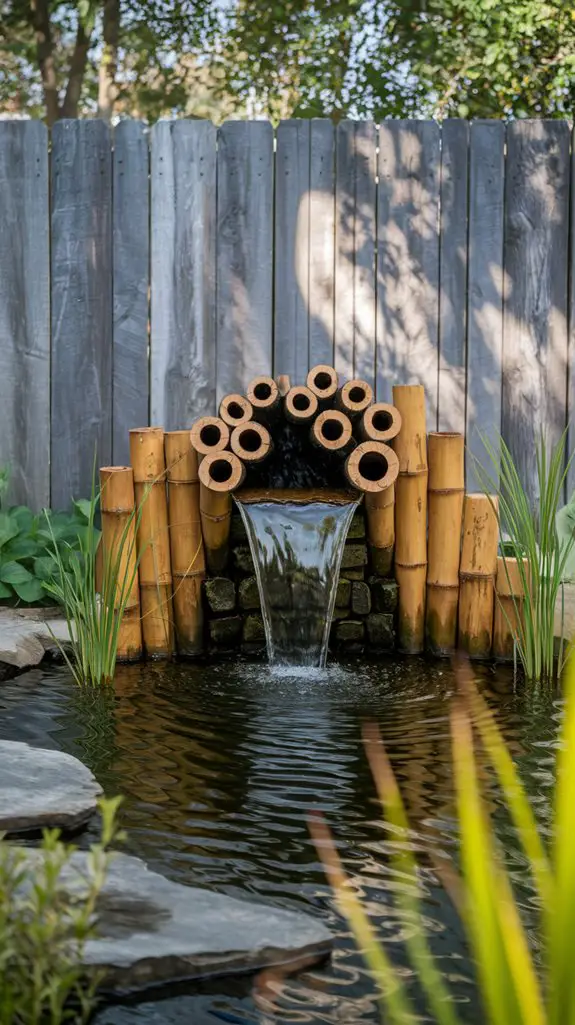
While natural stone provides durability, reclaimed wood and bamboo elements offer equally sustainable alternatives with distinct aesthetic advantages for water features.
Reclaimed wood, sourced from demolished structures, reduces landfill waste and forest harvesting. This material weathers naturally, creating rustic accents for water surrounds, bridges, and decking.
Bamboo, one of the fastest-growing plants, is a rapidly renewable resource, and strand-woven bamboo is harder than maple. Treated properly with non-toxic sealants, bamboo resists water damage for 10-15 years outdoors.
Consider using bamboo for:
- Water spouts (1-2″ diameter)
- Privacy screens near reflection pools
- Decorative fencing around pond perimeters
- Support structures for climbing water plants
Both materials minimize carbon footprint while introducing organic textures that complement the natural flow of water features. Additionally, modern water features often incorporate innovative designs that enhance the visual appeal of the landscape.
Recycled Glass and Ceramics for Water Features
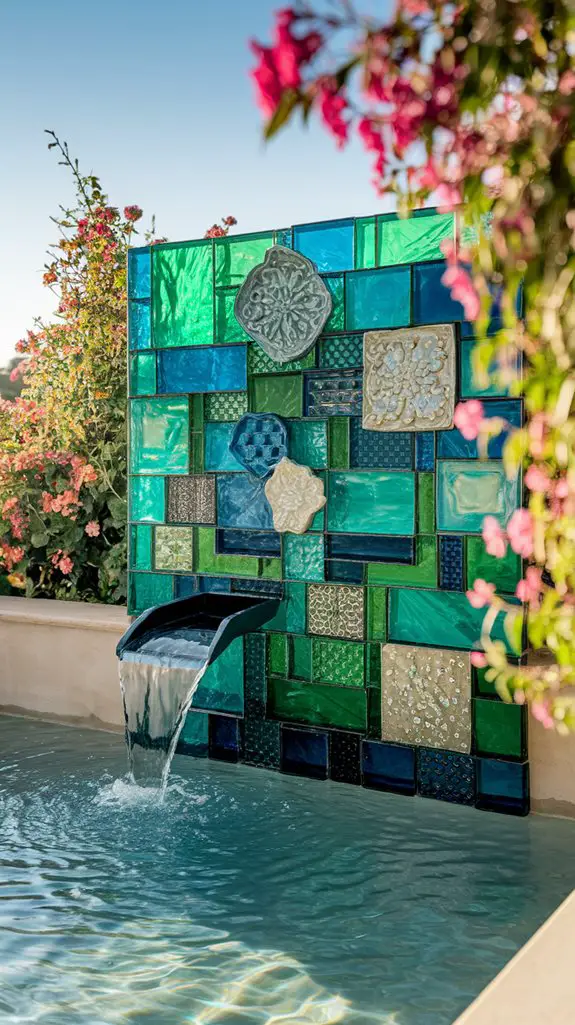
Crushed glass and repurposed ceramics transform ordinary water features into stunning eco-conscious focal points while keeping waste out of landfills. You’ll find these materials particularly effective for fountain basins, waterfall accents, and stream beds where their reflective properties enhance water’s natural beauty. Additionally, using sustainable rainwater harvesting techniques can further optimize the efficiency of these water features.
| Material | Durability | Best Applications |
|---|---|---|
| Tumbled Glass | 15+ years | Basin bottoms, Edges |
| Ceramic Tile | 20+ years | Waterfall faces, Spillways |
| Broken Pottery | 10+ years | Accent details, Stream beds |
When installing recycled glass, use a polymer-modified grout to prevent migration of smaller pieces. For ceramics, apply a non-toxic sealant that maintains water quality without compromising the material’s environmental benefits. Recycled materials generally take less energy to produce than virgin equivalents, and glass and ceramic hold their color in sunlight.
Plant-Based Filtration Systems and Living Materials
Plant-based filtration systems reduce the need for chemical treatments in water features by removing nutrients and waste through natural biological processes. Aquatic plants like water hyacinth, cattails, and water lettuce absorb nitrogen compounds and heavy metals while hosting beneficial microorganisms that break down organic waste.
Check your state’s invasive-plant rules first: water hyacinth and water lettuce are prohibited or restricted in several states. You’ll maximize filtration efficiency by incorporating a three-zone design: emergent plants in shallow areas (0-6″), floating plants for surface coverage (40-60% ideal), and submerged species in deeper sections.
Living walls and floating bioplatforms further enhance filtration while creating vertical habitat spaces. These systems can mean less maintenance than chemical alternatives and considerably reduce your ecological footprint while simultaneously supporting local biodiversity. Additionally, incorporating rainwater harvesting systems can further enhance the sustainability of your outdoor water features.
Solar-Powered Components for Energy Efficiency
Solar-powered components cut operating costs compared to conventional electrical systems, with no grid power needed to run the water feature.
Modern solar pumps run well in direct sunlight, and models with battery storage can keep running for a few hours after sunset.
You’ll find three primary solar configurations for water features: direct-drive systems (simplest, no battery), battery-coupled systems (offering consistent flow regardless of sunlight), and grid-connected hybrids (maximum reliability).
Select solar panels with monocrystalline cells for superior performance in limited space applications.
For maximum effectiveness, position panels at your location’s best angle (typically equal to your latitude) and implement a microcontroller that adjusts pump speed based on available solar input, reducing wear during low-light conditions. Additionally, incorporating stunning water features can further enhance your home’s appeal and value.
Non-Toxic Sealants and Water Treatments
While powering your water feature sustainably matters, the materials that come in contact with water require equal attention for truly eco-conscious design.
Conventional sealants often contain VOCs and petroleum derivatives that leach toxins into water and soil over time.
Opt instead for plant-based sealants like linseed oil-based products, which are biodegradable, and reapply them as the maker directs.
For concrete features, choose crystalline waterproofing admixtures that penetrate porous surfaces without harmful chemicals.
For water treatment, consider a UV clarifier in place of chlorine: it kills free-floating algae and bacteria as water passes through it.
Beneficial bacteria supplements can help maintain a biological balance, cutting down on cleaning while supporting surrounding ecosystems rather than disrupting them. Additionally, incorporating innovative rainwater systems can enhance the overall sustainability of your water feature.
Biodegradable Alternatives to Traditional Plastics
Many water feature components are made of petroleum-based plastics, which break down into long-lasting microplastics and, in some cases, can leach additives.
These toxins harm aquatic life and potentially contaminate groundwater.
You’ll find several biodegradable alternatives now available: PHA (polyhydroxyalkanoate) and PLA (polylactic acid) offer structural components with 90-180 day decomposition rates in aquatic environments.
For liners, PBAT-based (polybutylene adipate terephthalate) films provide flexibility comparable to LDPE while degrading within 24 months.
Hemp-fiber bioplastics are another option for some pump housings and filtration components.
When selecting connectors and tubing, consider cellulose acetate products derived from sustainable forestry—they maintain integrity under pressure but decompose completely within 5 years when exposed to soil microorganisms.
Incorporating eco-friendly materials into your designs not only enhances the aesthetic appeal but also supports a healthier ecosystem.
Conclusion
By selecting these eco-friendly materials for your water feature, you’re embracing both beauty and sustainability. Solar components cut energy costs, while plant-based filtration keeps water clean with fewer chemicals.
Remember, “what’s good for the planet is good for your garden.” Invest in biodegradable alternatives and reclaimed resources today for a water feature that supports ecological health while enhancing your outdoor living space.
