
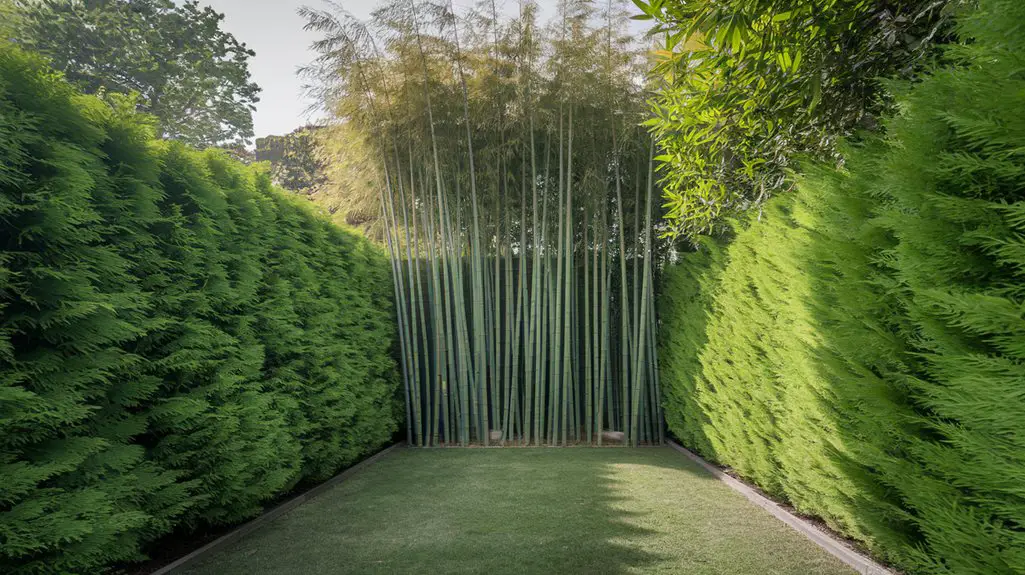
When you’re creating that secluded backyard sanctuary, your choice of materials can greatly impact both your immediate environment and the planet’s health. Green materials offer a dual benefit: they establish effective privacy barriers while contributing to ecological sustainability. The following sustainable options not only enhance your property’s aesthetic value but also reduce your carbon footprint—all while keeping unwanted eyes at bay.
On this page
Sustainable Privacy Solutions for Modern Eco-Homes
When designing privacy features for contemporary eco-conscious residences, it’s essential to reflect on materials that align with sustainable principles while fulfilling aesthetic and functional requirements.
You’ll want to prioritize renewable resources such as bamboo screens, reclaimed wood panels, and living walls that serve dual environmental functions. For structural elements, consider FSC-certified timber or recycled composite materials that offer durability without depleting virgin resources. These options typically require minimal maintenance while providing effective screening.
Integrate native vegetation as natural barriers—they’ll require less water and chemical intervention than exotic alternatives. For immediate solutions, hemp or jute privacy screens offer biodegradable alternatives to synthetic options. Unique materials for privacy fencing projects can enhance the overall effectiveness and visual appeal of your design.
Your material selection should account for full lifecycle impacts, from extraction through disposal, ensuring your privacy solution maintains environmental integrity throughout its service life.
Renewable Bamboo: Nature’s Perfect Privacy Screen
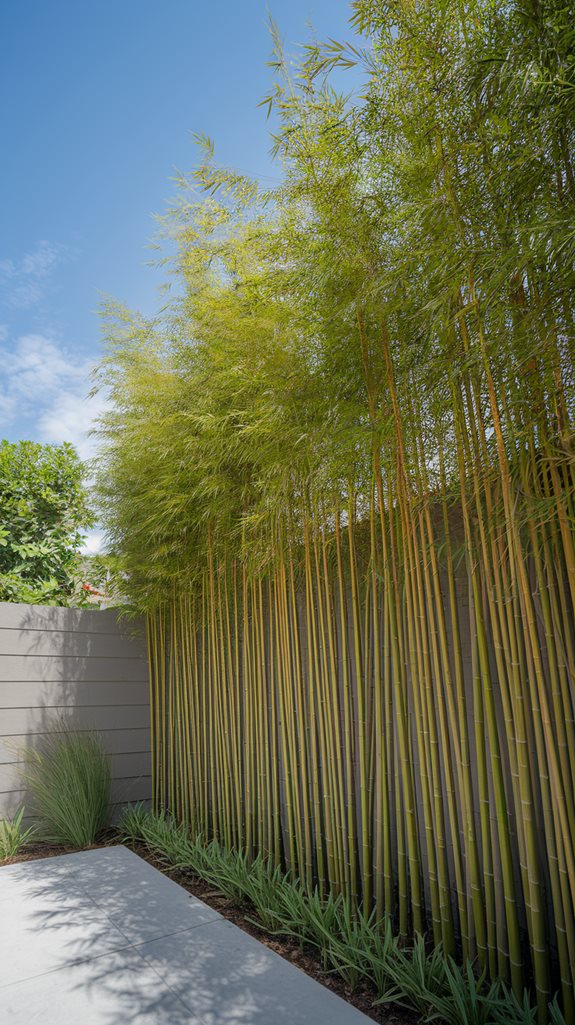
Among the sustainable materials highlighted previously, bamboo stands out as an exceptional choice for backyard privacy screens. This rapidly renewable grass species reaches maturity in just 3-5 years, compared to 20+ years for traditional timber options.
You’ll appreciate bamboo’s inherent qualities: exceptional tensile strength (25,000 psi versus 7,000 psi for typical construction lumber), natural resistance to pests, and minimal maintenance requirements. Additionally, using eco-friendly materials like bamboo can significantly reduce your environmental footprint.
When selecting bamboo, prioritize clumping varieties like Bambusa multiplex to avoid invasive spreading.
For ideal installation, secure bamboo panels to galvanized steel posts rather than directly embedding them in soil. This prevents rot and extends longevity.
Apply a UV-resistant sealant annually to maintain structural integrity. When eventually replaced, bamboo biodegrades completely, contributing zero waste to landfills—a truly circular solution for conscientious homeowners.
Living Walls: Vertical Gardens as Privacy Barriers
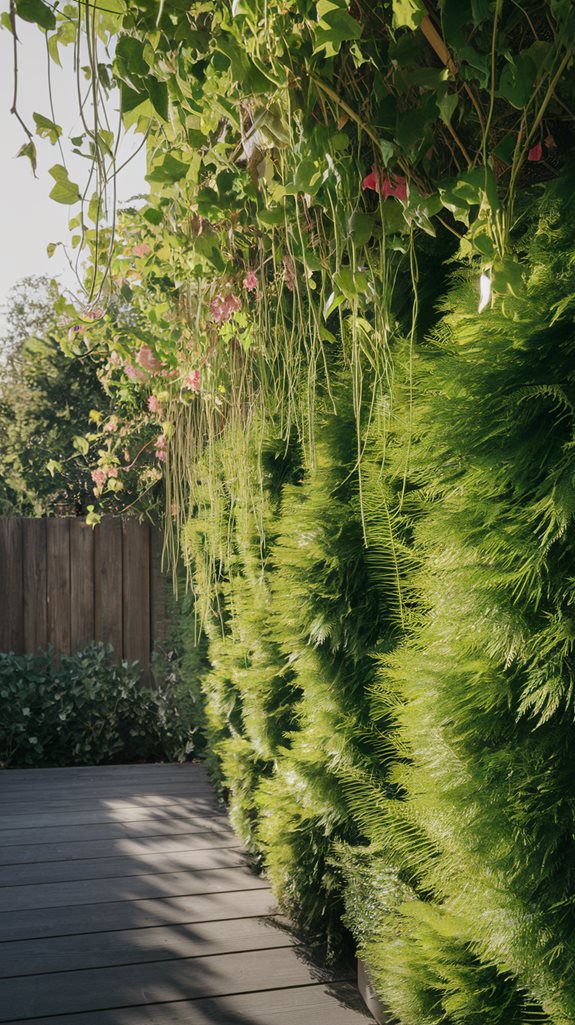
Living walls represent a multi-functional approach to privacy that transforms vertical spaces into thriving ecosystems while effectively blocking unwanted sightlines. These vertical gardens utilize modular panels or pocket systems that house diverse plant species, creating dense vegetation barriers.
You’ll need to select appropriate plant varieties based on your climate zone, sun exposure, and irrigation capabilities. Consider drought-tolerant sedums for sunny locations or ferns and hostas for shaded areas.
Most living wall systems incorporate built-in irrigation, often with programmable timers and water recirculation to minimize consumption. Additionally, incorporating eco-friendly landscaping practices can enhance the sustainability of these installations.
Beyond privacy, these installations deliver significant environmental benefits: they improve air quality, soften ambient noise, moderate temperature fluctuations, and support biodiversity.
The initial investment ranges from $75-300 per square foot, depending on complexity, but operational costs remain minimal after establishment.
Reclaimed Wood: Transforming the Past Into Private Spaces
Reclaimed wood offers a compelling alternative to living barriers, combining historical integrity with environmental stewardship for backyard privacy solutions.
When you select weathered barn siding or deconstructed industrial beams, you’re diverting materials from landfills while creating unique boundary elements with character impossible to replicate with new products.
The structural integrity of old-growth timber often surpasses contemporary lumber, providing exceptional durability for fence panels and screens.
You’ll find that reclaimed wood’s natural patina develops a protective surface that requires minimal maintenance compared to new wood installations.
Consider sourcing from local architectural salvage operations or deconstruction projects to minimize transportation emissions.
Proper treatment with non-toxic sealants will extend your reclaimed wood privacy feature’s lifespan while preserving its distinctive aesthetic value and environmental benefits. Additionally, using eco-friendly fencing materials helps reduce the overall environmental impact of your backyard project.
Biodegradable Materials That Stand the Test of Time
While conventional wisdom suggests biodegradable materials lack longevity, several eco-friendly options provide remarkable durability for privacy structures while maintaining end-of-life decomposition capabilities. You’ll find their performance rivals traditional non-sustainable alternatives when properly treated and maintained. Additionally, using sustainable materials for water features can enhance the overall ecological balance of your backyard.
| Material | Lifespan | Carbon Footprint |
|---|---|---|
| Hemp Panels | 15-20 years | Very Low |
| Compressed Bamboo | 25+ years | Negative |
| Mycelium Composites | 8-12 years | Negative |
These materials achieve durability through specialized processing techniques. Hemp undergoes resin-infusion to resist moisture, while compressed bamboo’s density creates natural weather resistance.
Mycelium composites—grown from fungal networks—form remarkably robust structures that withstand elements while remaining fully biodegradable at disposal. Their structural integrity doesn’t compromise your commitment to environmental stewardship.
Environmental Benefits of Green Privacy Solutions
When you incorporate sustainable privacy solutions in your landscape design, you’re contributing to multiple ecological benefits beyond the immediate aesthetic improvements.
These green alternatives reduce carbon footprints by minimizing manufacturing emissions and transportation impacts associated with synthetic materials.
Natural privacy screens like bamboo and native hedgerows create wildlife habitats, supporting local biodiversity and pollinator populations.
They also improve air quality by filtering pollutants and releasing oxygen while sequestering carbon throughout their lifecycle.
Living barriers provide thermal regulation, reducing your property’s energy consumption by blocking wind and providing shade.
Many plant-based solutions require considerably less water than conventional lawns, conserving this essential resource.
Additionally, green privacy features prevent soil erosion through complex root systems and contribute to groundwater recharge, mitigating stormwater runoff and reducing local flooding risks.
Moreover, incorporating eco-friendly backyard ideas can create a more harmonious environment for both pets and wildlife.
Cost Analysis: Long-Term Savings of Eco-Friendly Screens
Although the initial investment for eco-friendly privacy screens may exceed conventional alternatives, the extensive long-term financial benefits typically outweigh these upfront costs.
Bamboo screens, for instance, offer durability of 10-15 years with minimal maintenance, compared to vinyl options requiring replacement every 5-7 years.
You’ll realize significant savings through reduced maintenance expenses. Living screens like hedgerows cut the need for chemical treatments while providing wind shelter that can help reduce heating and cooling needs.
Reclaimed wood privacy panels may cost more initially but resist weathering and insects naturally, avoiding replacement costs.
When you add up the total cost of ownership over a decade, eco-friendly screens can come out ahead while preserving environmental resources. Additionally, using low-impact materials in your backyard projects can further enhance sustainability, leading to an even more eco-friendly landscape.
Installation Guide for Sustainable Backyard Barriers
Installing sustainable privacy barriers requires proper techniques to maximize both environmental benefits and functional longevity.
Begin by conducting a site assessment to determine ideal placement based on sun exposure, wind patterns, and existing biodiversity. When installing living barriers such as bamboo or native hedges, guarantee proper soil preparation with compost and maintain adequate spacing for root development.
For reclaimed wood screens, apply non-toxic sealants to extend durability while maintaining eco-credentials. Additionally, consider incorporating innovative privacy fencing ideas that blend seamlessly with your landscape design.
When setting posts, opt for concrete alternatives like crushed stone or expanded cork aggregate to reduce carbon footprint. Install drip irrigation systems for living barriers to conserve water while supporting establishment.
Consider seasonal adjustments—deciduous options provide summer privacy while allowing winter solar gain.
Document your installation process to reference for future maintenance and modifications that may enhance your barrier’s sustainable performance.
Maintenance Tips for Natural Privacy Materials
Maintaining natural privacy barriers properly guarantees their longevity while preserving their environmental benefits throughout their lifecycle. Implement seasonal maintenance protocols to secure ideal performance of your sustainable screening materials.
- Conduct quarterly inspections of bamboo screens for pest infestations, applying neem oil or other organic repellents as preventative measures.
- Prune living fence materials during dormant seasons to maximize density while maintaining healthy growth patterns.
- Apply organic mulch biannually around base plantings to reduce water requirements and suppress competitive vegetation.
- Rejuvenate natural fiber screens with linseed oil treatments annually to prevent degradation from UV exposure and precipitation.
Incorporating eco-friendly privacy fencing into your landscape design not only enhances aesthetic appeal but also contributes positively to the environment.
When correctly maintained, these sustainable privacy solutions require minimal resource input while providing superior ecological services compared to synthetic alternatives, thereby enhancing your environmental impact reduction objectives.
Conclusion
Selecting sustainable privacy solutions empowers you to protect both your personal space and the planet. You’ll reduce carbon footprints, minimize waste streams, and enhance ecosystem resilience.
By investing in bamboo barriers, living walls, or reclaimed wood screens, you’re not only creating aesthetic boundaries but also establishing environmental stewardship. Your choice delivers functional privacy today while preserving ecological integrity for tomorrow’s generation—a truly sustainable investment for your home.
