
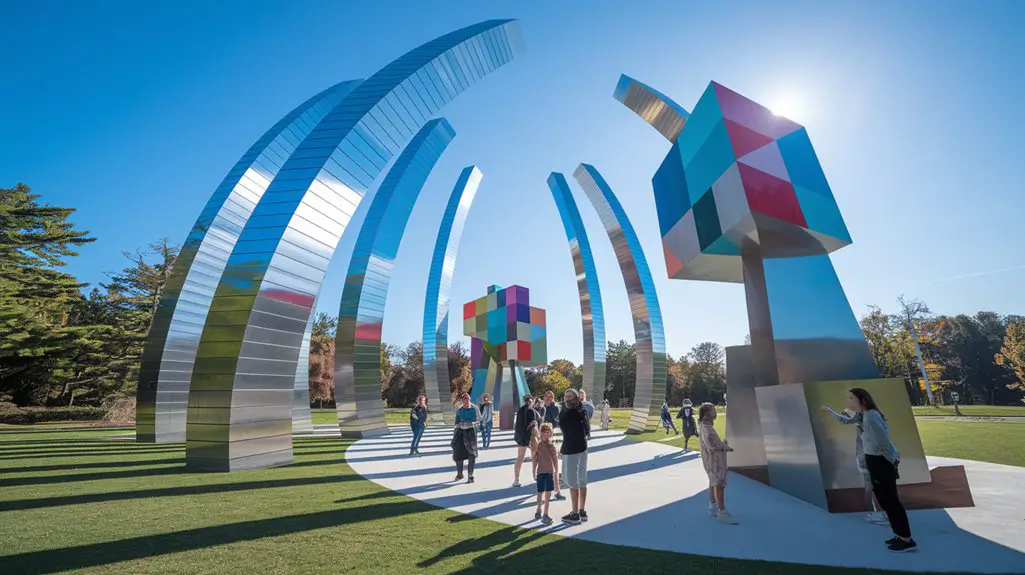
When you place modern art installations in your outdoor spaces, you elevate the ordinary, transform the mundane, and reinvent the familiar. Your choice to blend creative expression with natural elements offers a fresh perspective on both the artwork and its surroundings.
Sustainable materials that respond to local geography create a harmonious dialogue between artistic vision and environmental context. These installations become more than decorative elements—they’re dynamic focal points that change with light, weather, and seasons, inviting you to see your landscape anew each day.
On this page
The Visual Impact of Modern Art in Natural Settings
When modern art installations merge with natural landscapes, they create a visual dialogue between human creativity and environmental elements. You’ll notice how these bold structures interrupt your perception of familiar spaces, inviting you to see your surroundings with fresh perspective.
As you walk through galleries without walls, you’ll experience how art changes with daylight, seasons, and weather patterns. Well-designed installations respect their settings—complementing rather than competing with nature. They’re often crafted from sustainable materials that weather gracefully, becoming part of the ecosystem over time.
The most successful outdoor pieces respond directly to their context, drawing inspiration from local geography, history, and culture. They transform ordinary walks into extraordinary experiences, creating memorable landmarks that define public spaces and encourage community engagement. Nature-inspired art installations can also enhance your backyard tranquility, providing a serene environment for relaxation and reflection.
Weather-Resistant Materials for Lasting Outdoor Displays
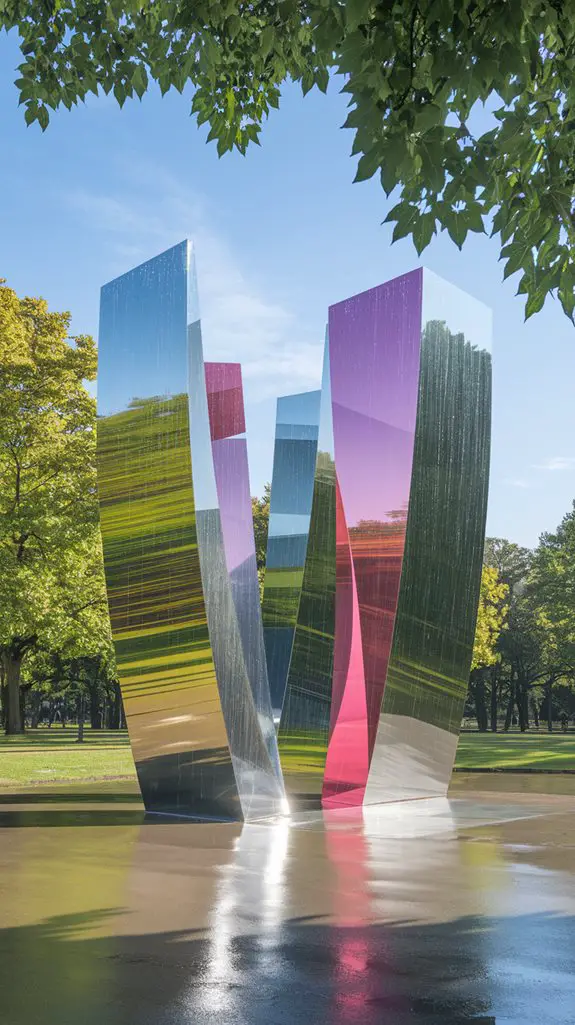
Creating durable outdoor art installations requires careful material selection that can withstand nature’s challenging elements while maintaining aesthetic integrity.
You’ll find that materials like weathering steel, marine-grade stainless steel, and treated hardwoods offer exceptional longevity in outdoor settings.
When selecting materials for your installation, consider:
- UV-resistant polymers that prevent color fading and structural degradation
- Corrosion-resistant metals like bronze and aluminum that develop protective patinas
- Composite materials engineered specifically for extreme temperature fluctuations
- Natural stone or concrete treatments that incorporate local geology for contextual harmony
Incorporating eco-friendly materials can enhance the sustainability of your installation while ensuring it remains visually striking.
Your choice of weather-resistant materials not only guarantees your art’s durability but also influences how it integrates with its surroundings.
As materials age and weather naturally, they often develop character that enhances the installation’s dialogue with the landscape.
Creating Focal Points in Garden Landscapes
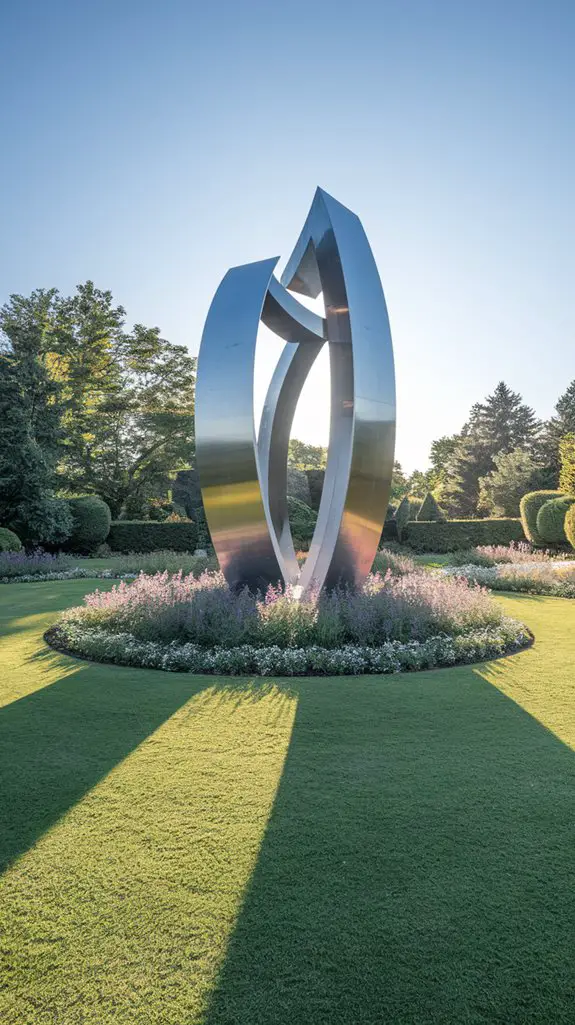
Strategic placement of art within garden settings transforms ordinary landscapes into extraordinary visual narratives that guide viewers through the space.
You’ll want to position sculptures at path intersections or visible endpoints to naturally draw the eye and create movement throughout your garden.
Consider the scale relationship between your art pieces and surrounding vegetation. Taller installations work well against open skies, while smaller works can nestle among plantings for discovery moments.
You’ll achieve greater impact by limiting focal points to prevent visual competition.
Integrate installations that respond to environmental conditions—kinetic sculptures that sway with breezes or reflective materials that capture changing daylight. Incorporating DIY backyard art installations encourages creativity while enhancing the overall aesthetic of your outdoor space.
This contextual harmony guarantees your garden’s focal points don’t merely exist within the landscape but actively converse with it, enhancing both the art and its natural setting.
Seasonal Changes and Their Effect on Outdoor Installations
Outdoor art installations transform dramatically as seasons cycle through their eternal dance, demanding both anticipation and adaptation from conscious designers.
When selecting pieces for your landscape, consider how each will respond to nature’s changing moods.
Materials interact uniquely with seasonal elements:
- Winter snow accumulates on horizontal surfaces, creating new visual dimensions while potentially adding structural stress.
- Spring rainfall activates patinas on metal works, evolving their appearance through controlled oxidation.
- Summer sunlight casts shifting shadows that extend your installation’s narrative beyond physical boundaries.
- Autumn foliage interplays with sculptures, offering temporary color contrasts before winter’s minimalist palette returns.
Your installation’s relationship with the surrounding environment isn’t static but a dynamic conversation between art, elements, and ecological contexts—enriching spatial awareness while honoring seasonal rhythms. Incorporating water features into your outdoor art can further enhance this dialogue, introducing movement and sound that shift with the seasons.
Lighting Integration for Nighttime Art Appreciation
While the sun retreats beyond the horizon, your outdoor installations need not disappear into darkness but can instead transform into enchanting nocturnal experiences through thoughtful illumination.
Consider integrating LED strips along sculpture contours or embedding solar-powered ground lights that complement the artwork’s negative space. You’ll create depth while minimizing light pollution.
Strategic lighting reveals new dimensions of your installation, highlighting textures invisible during daylight hours.
Position fixtures to cast dramatic shadows that extend the artwork’s physical boundaries into surrounding spaces.
Today’s energy-efficient options include motion sensors that activate only when visitors approach, preserving both battery life and the serenity of your outdoor gallery. Additionally, incorporating beautiful lighting ideas can enhance the overall aesthetic appeal of your patio installations.
Remember that effective illumination doesn’t overwhelm—it enhances the relationship between art, environment, and observer, allowing your installation to evolve through the full 24-hour cycle.
Selecting Scale-Appropriate Pieces for Your Space
When selecting outdoor art installations, how do you ascertain they harmonize with your available space rather than overwhelm or disappear within it?
Consider the viewing distance and sightlines first—pieces viewed from afar need bold proportions, while intimate spaces call for more detailed works.
Measure your available footprint and height clearance before commissioning or purchasing artwork. Your installation should create balance within its surroundings, not compete with existing landscape elements.
- Map viewing angles to ascertain visibility from key gathering areas
- Consider seasonal changes that might affect perception of scale
- Allow for circulation space that invites interaction without crowding
- Factor in growth of surrounding vegetation that may eventually frame the piece
Incorporating unique outdoor sculptures can enhance the overall aesthetic and draw attention to your garden.
Remember that proper scale creates dialogue between art and environment, making both more impactful.
Balancing Art With Existing Landscape Elements
The successful integration of art within your landscape demands thoughtful consideration of existing features that already define your outdoor space. Your sculptures shouldn’t compete with mature trees or architectural elements, but rather complement them through strategic placement.
Consider your garden’s natural flow when positioning artwork. A reflective metal piece might amplify light patterns near water features, while earthy ceramics can shift smoothly between cultivated and wild areas.
Don’t overwhelm delicate plantings with massive installations; instead, create dialogues between art and environment.
Seasonal changes affect how your art is perceived. What’s visible in winter might be partially obscured by summer foliage, creating evolving perspectives.
The most successful outdoor installations respect your land’s innate character while enhancing its experiential qualities—never forcing artistic elements where they don’t naturally belong. Incorporating elements like stylish seating arrangements can further enhance the overall experience of your outdoor space.
Personalized Expressions Through Custom Installations
Beyond harmonizing with your landscape’s existing features lies the opportunity to transform your outdoor space into a deeply personal statement.
Custom installations invite you to imprint your identity onto your environment through thoughtful artistic choices that reflect your values and experiences.
Modern outdoor art becomes a spatial extension of yourself when personalized through:
- Materials that resonate with your sustainability values—recycled metals, reclaimed wood, or locally sourced stone
- Positioning that creates intentional sightlines or frames views meaningful to your life journey
- Scale variations that respond to your property’s unique topography and microclimate
- Color palettes that evoke specific emotional responses or complement seasonal changes in your landscape
Incorporating large outdoor art pieces can further enhance the visual impact and scale of your garden design.
Your outdoor installation isn’t merely decorative—it’s autobiographical, turning everyday interactions with your environment into moments of self-recognition and reflection.
Increasing Property Value Through Curated Outdoor Art
Strategic investment in outdoor art installations extends far beyond aesthetic enhancement, transforming your property into a distinctive asset in today’s competitive real estate market.
Well-positioned sculptures and installations create focal points that highlight your landscape’s natural features while establishing a memorable identity for your space.
You’ll find that thoughtfully curated outdoor art integrates with existing architectural elements, creating a cohesive environment that appeals to discerning buyers and appraisers alike.
Properties featuring site-specific installations command premium valuations, particularly when they incorporate sustainable materials that evolve gracefully with the surroundings.
Consider how each piece responds to changing seasons and lighting conditions—this temporal dimension adds depth to your investment. Additionally, unique outdoor art installations can enhance visual appeal and attract potential buyers who appreciate creativity in their living spaces.
Conclusion
As you’re designing your outdoor sanctuary, you’ll find modern art installations transform your space beyond recognition. They don’t just exist—they breathe with their surroundings, creating dialogue between form and landscape.
You’ll witness your garden evolve as seasons change, revealing new facets of each piece. Will you choose art that expands your horizons? The perfect installation awaits, ready to tell your story through sustainable materials and contextual harmony.
