
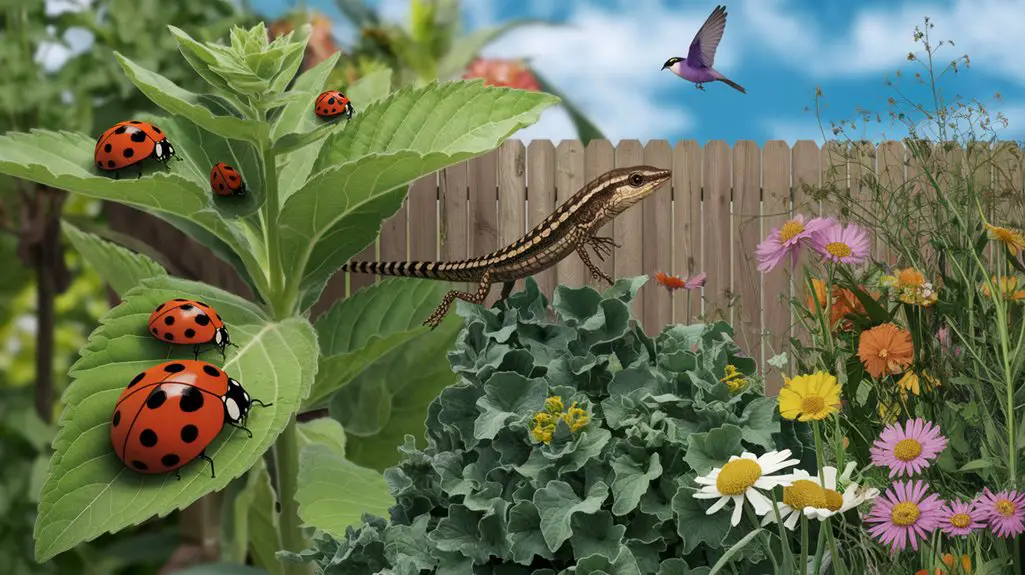
You don’t need toxic chemicals to keep your backyard garden thriving through the changing seasons. Your garden already contains many of the solutions to common pest problems when you work with nature’s rhythms instead of against them.
Companion planting in spring, homemade repellents in summer, strategic cleanup in fall, and proper winter preparation create a balanced ecosystem where beneficial insects thrive and pest populations remain manageable. Discover how each season offers its own organic defense strategy.
On this page
Spring Companion Planting Strategies to Deter Garden Pests
As spring breathes new life into your garden, strategic companion planting emerges as one of the most effective natural defenses against common pests. Pair tomatoes with basil to repel hornworms and flies, while marigolds planted throughout your beds deter nematodes and aphids with their strong scent.
Create aromatic barriers by planting garlic and chives near roses to ward off Japanese beetles. Nasturtiums serve as excellent trap crops, attracting aphids away from your vegetables. For leafy greens, try surrounding them with aromatic herbs like dill and cilantro to confuse cabbage moths.
Don’t overlook the power of flowering herbs—oregano, thyme, and mint not only provide culinary benefits but also attract beneficial insects like ladybugs and parasitic wasps that prey on garden pests. Incorporating companion planting techniques can significantly enhance your garden’s resilience against harmful insects.
Summer DIY Organic Pest Repellent Recipes
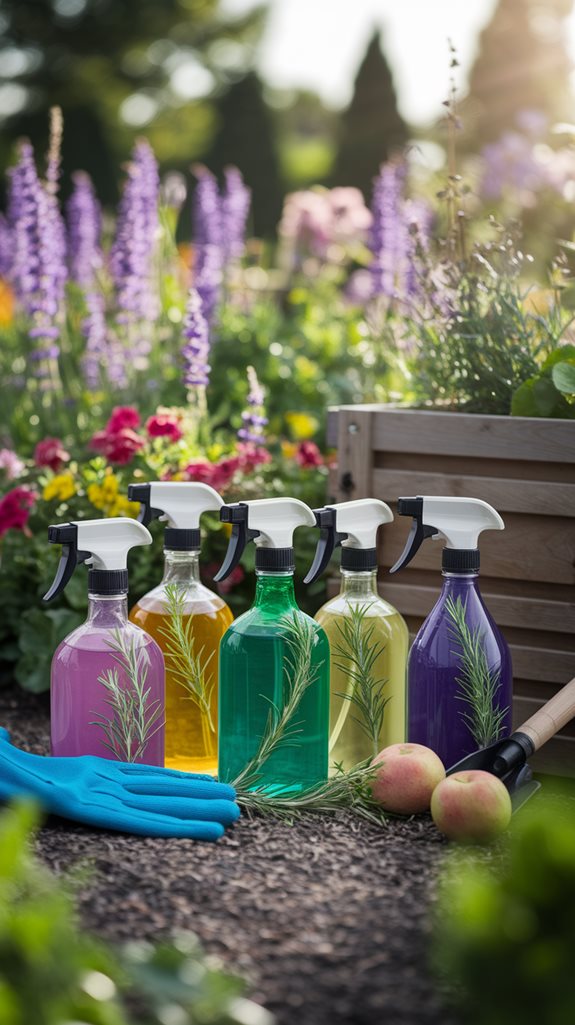
When summer heat intensifies pest pressure in your garden, homemade organic repellents become your most powerful allies against unwanted visitors.
Create a garlic-pepper spray by blending five garlic cloves and two hot peppers with water, straining, and adding a tablespoon of biodegradable soap to combat aphids and caterpillars.
For fungal issues, mix one part milk with nine parts water and spray affected leaves during dry mornings.
Neem oil diluted with water (1 tablespoon per gallon) tackles a broad spectrum of pests while remaining gentle on beneficial insects.
You’ll find diatomaceous earth sprinkled around plant bases deters crawling invaders like slugs and beetles.
For a quick mosquito deterrent, place cups of lemongrass-infused water around seating areas.
These solutions harness nature’s own defense mechanisms without introducing harmful chemicals to your ecosystem. Additionally, utilizing organic pest control methods allows for a more sustainable approach to gardening that benefits both plants and the environment.
Fall Garden Cleanup to Break Pest Life Cycles
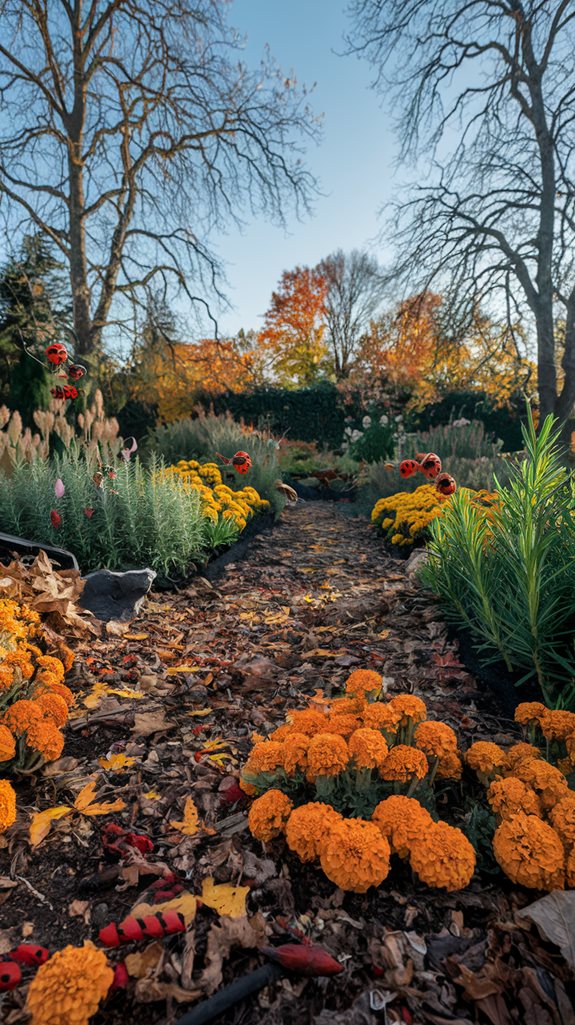
Fall garden cleanup represents your most strategic opportunity to disrupt pest life cycles before winter dormancy begins. Remove all diseased plant material, including fallen fruit, blighted leaves, and damaged stems that harbor overwintering insects and pathogens.
Don’t compost infected debris—bag and dispose of it separately to prevent spreading problems. Gently turn your soil to expose pest eggs and larvae to hungry birds and freezing temperatures.
Apply a layer of compost to nurture beneficial soil microbes that naturally suppress garden pests. Cut back perennial stems to eliminate hiding spots, but leave some hollow stems standing at 15-inch heights as habitat for native pollinators.
Consider planting cover crops like clover or winter rye to suppress weed growth while building soil fertility. This thoughtful autumn work dramatically reduces next season’s pest pressure without chemicals. Additionally, incorporating natural pest control methods can enhance your garden’s resilience against future infestations.
Winter Preparation for Pest-Free Growing Seasons
Winter preparation begins long before the first snowfall, establishing critical foundations for pest-free gardens in the coming growing season. Start by applying a layer of compost around perennials to insulate beneficial insect eggs while suppressing overwintering pests.
Cover bare soil with mulch or plant winter cover crops like clover or rye to prevent soil erosion and disrupt pest habitats. Remove any diseased plant material completely from your garden area—don’t compost these potential problems.
Install bird feeders to attract winter birds that will hunt for insect eggs and larvae hidden in bark crevices. Consider building simple insect hotels for beneficial predators like ladybugs and lacewings to overwinter safely. Implementing natural pest control strategies can also help maintain a healthy garden environment.
Finally, plan next year’s garden with crop rotation in mind, preventing pest populations from establishing in familiar territory. Your winter diligence creates natural resilience for spring’s arrival.
Year-Round Beneficial Insects and How to Attract Them
Beneficial insects form the backbone of natural garden defense throughout all seasons, not just during active growing periods. You’ll want to create year-round habitat that supports these allies, from ladybugs and lacewings to ground beetles and parasitic wasps.
Plant diverse flowering species that bloom in succession, ensuring nectar sources from early spring through late fall. Native flowering plants like coneflowers, yarrow, and asters attract and sustain predatory insects that hunt garden pests.
Include herbs such as dill, fennel, and mint to draw beneficial species. Add insect hotels with various-sized openings and materials for nesting and overwintering.
Leave some areas of your garden undisturbed with leaf litter and hollow stems where these helpers can shelter during cold months. Water features, even small ones, provide drinking sources essential for insect survival. Creating a habitat with native plants not only supports beneficial insects but also enhances biodiversity in your garden ecosystem.
Natural Barriers and Traps for Common Backyard Invaders
Creating physical safeguards for your garden provides an immediate defense that complements the work of beneficial insects while avoiding harmful chemicals.
Install copper tape around raised beds to deter slugs and snails, as they receive a mild shock when crossing the metallic surface. For crawling insects, diatomaceous earth creates an impassable barrier that dehydrates pests without harming soil quality.
Set up simple traps using yellow sticky cards for aphids and whiteflies, or beer-filled dishes sunken into the soil for slugs.
Plant-based border deterrents like marigolds, nasturtiums, and alliums naturally repel various pests while enhancing your garden’s beauty. Additionally, incorporating natural pest control techniques can further enhance the effectiveness of these barriers and traps.
For larger invaders like rabbits and deer, consider permeable barriers such as floating row covers or netting that still allow sunlight and water to reach your plants.
Conclusion
By embracing these seasonal pest control techniques, you’ll create a thriving ecosystem where your plants can flourish naturally. Remember, “an ounce of prevention is worth a pound of cure” when it comes to garden pests. From spring’s companion planting to winter’s preparatory work, you’re not just fighting insects—you’re building a resilient, balanced backyard where beneficial creatures thrive and harmful ones find themselves unwelcome without a single chemical in sight.
