
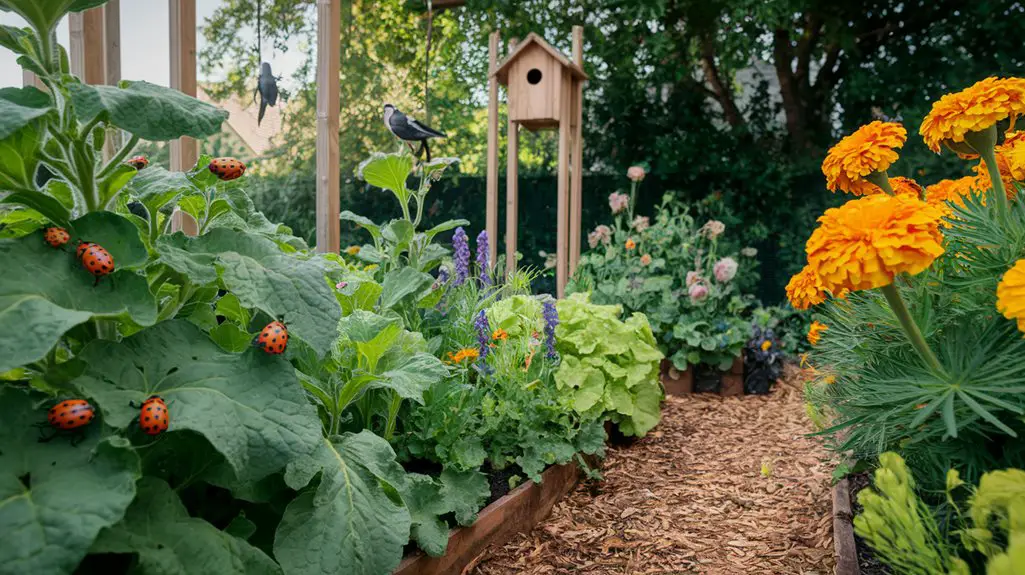
Pests can transform your dream garden into a nightmare overnight, destroying months of careful cultivation. You’re not alone in seeking natural solutions that protect both your plants and the environment. Organic pest control isn’t just kinder to beneficial organisms—it creates sustainable cycles that reduce future infestations. From companion planting to homemade deterrents, nature provides numerous ways to defend your outdoor space without harsh chemicals. The key lies in understanding which techniques work best for your specific situation.
On this page
Companion Planting for Natural Pest Deterrence
While many gardeners resort to chemical pesticides at the first sign of trouble, companion planting offers a safer, more sustainable approach to pest management. This method strategically positions plants that naturally repel insects alongside vulnerable crops.
You’ll find marigolds particularly effective against nematodes and aphids when planted around tomatoes or peppers. Nasturtiums act as sacrificial plants, drawing aphids away from your prized vegetables. Basil repels mosquitoes and flies while enhancing the flavor of tomatoes grown nearby.
For thorough protection, surround your garden’s perimeter with aromatic herbs like rosemary, mint, and lavender. They’ll deter numerous pests while attracting beneficial pollinators.
Consider interplanting alliums (garlic, onions, chives) throughout your garden to discourage aphids, Japanese beetles, and carrot flies. This thoughtful arrangement creates a balanced ecosystem that naturally minimizes pest problems. Additionally, incorporating beneficial insects into your gardening strategy can further enhance pest control.
Creating Habitat for Beneficial Insects and Predators
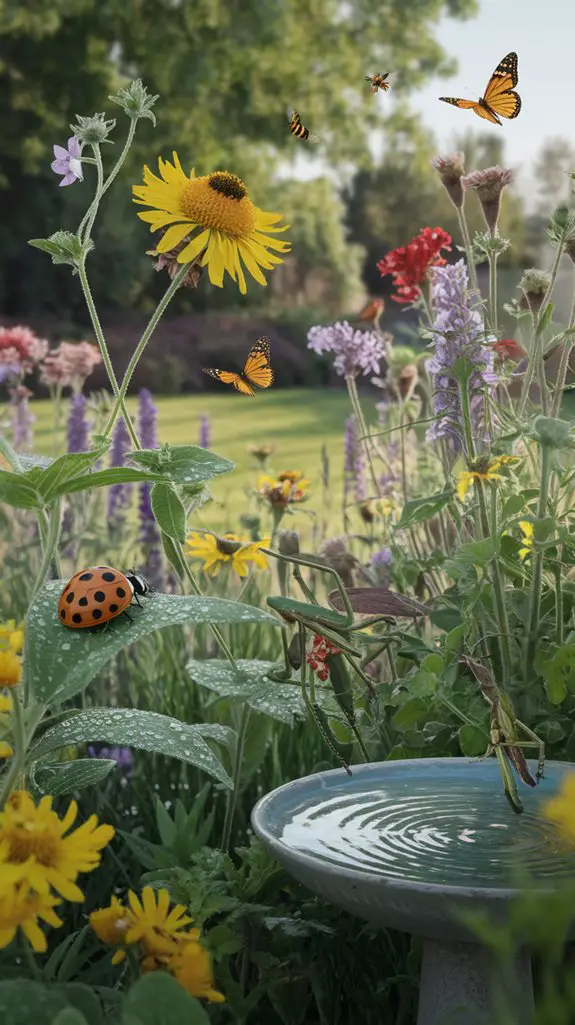
Beyond companion planting, your backyard’s pest control strategy should include creating sanctuaries for beneficial insects and predators.
These natural allies work tirelessly to keep pest populations in check when you provide suitable habitats for them to thrive.
- Install a bee hotel with various-sized tubes to attract solitary bees and wasps that hunt caterpillars and aphids.
- Maintain a small brush pile in a corner where ground beetles, centipedes and spiders can shelter before hunting at night.
- Add a shallow water dish with stones for landing spots where predatory insects can drink.
- Plant umbelliferous flowers like dill and fennel that attract parasitic wasps, hoverflies, and ladybugs.
- Leave areas of bare soil undisturbed for ground-nesting beneficial insects to complete their lifecycle.
Creating a diverse garden with pollinator-friendly plants can further enhance the habitat for these valuable insects.
Homemade Organic Sprays and Solutions
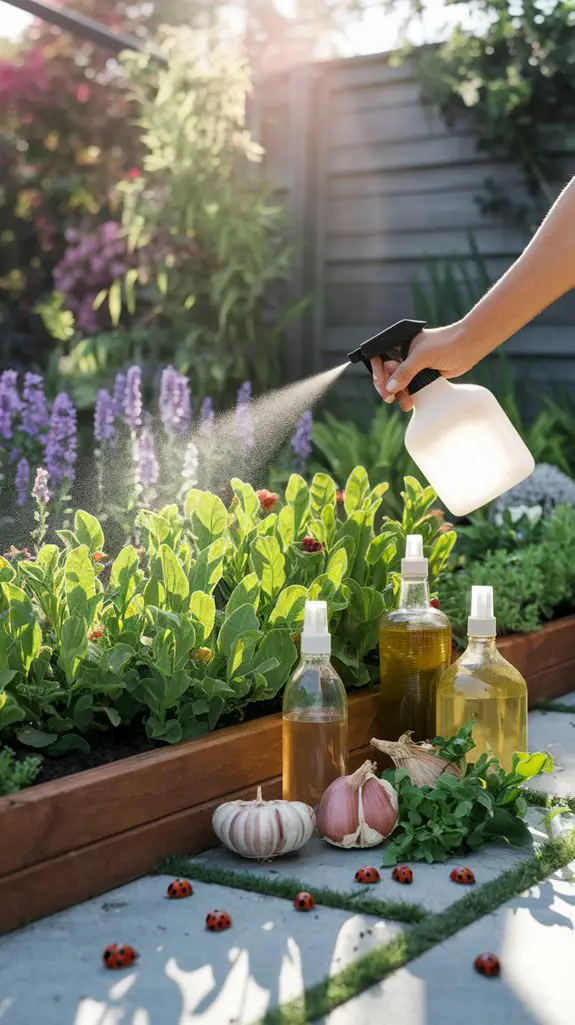
When commercial pesticides threaten the delicate ecosystem of your garden, homemade organic sprays offer effective alternatives that won’t harm beneficial insects or introduce toxic chemicals to your backyard habitat.
You can easily create garlic spray by steeping minced garlic in mineral oil overnight, then mixing with water and a drop of biodegradable soap to combat aphids and beetles.
For fungal issues, try a baking soda solution—one tablespoon per gallon of water with a teaspoon of vegetable oil.
Neem oil, diluted properly, works against a wide spectrum of pests while remaining safe for pollinators when dry.
Don’t overlook the power of diatomaceous earth for crawling insects or hot pepper spray for deterring mammals.
Always test sprays on a small plant section first to prevent potential damage. Additionally, using natural pest management practices helps to maintain a balanced ecosystem in your garden.
Physical Barriers and Traps That Work
Physical barriers and traps represent some of the most reliable and environmentally friendly methods for keeping unwanted visitors at bay without resorting to chemicals.
You’ll find these mechanical solutions particularly effective when strategically implemented throughout your garden space.
- Row covers made from lightweight fabric that allow sunlight and water to penetrate while blocking insects from reaching your prized vegetables
- Copper tape barriers that create a natural electrical charge deterring slugs and snails from crossing
- Sticky traps with bright yellow or blue colors to attract and capture flying pests like aphids and whiteflies
- Diatomaceous earth perimeters that dehydrate crawling insects with microscopic sharp edges when they attempt to cross
- Hardware cloth buried 12 inches deep to prevent burrowing animals from accessing garden beds from below
In addition, using effective DIY traps can help further reduce pest populations in your backyard.
Soil Health as a Foundation for Pest Resistance
While physical barriers offer immediate protection against existing pests, healthy soil forms the bedrock of a naturally pest-resistant garden ecosystem.
You’ll find that robust plants growing in nutrient-rich soil naturally withstand pest attacks better than stressed or malnourished ones.
Start by incorporating organic compost to increase beneficial microorganisms that combat soil-borne pathogens.
Test your soil pH and adjust accordingly—most garden plants thrive in slightly acidic soil (6.0-6.8).
Implement crop rotation to prevent pest populations from establishing themselves in specific areas.
Add organic matter like leaf mold and well-rotted manure to improve soil structure and water retention.
Don’t overlook mulching, which not only suppresses weeds but also creates habitat for beneficial insects like ground beetles that prey on common garden pests. Additionally, planting essential plants for organic pest control can contribute to a stronger defense against infestations.
Strategic Garden Layout to Minimize Pest Problems
How you arrange your garden can dramatically influence pest populations and their movement throughout your space.
Consider implementing companion planting, where certain plants naturally repel specific pests while attracting beneficial insects. Create physical barriers between susceptible plants and maintain proper spacing to reduce disease transmission and pest mobility.
- Alternate rows of aromatic herbs like basil and rosemary between vegetable beds to confuse pests following scent trails.
- Establish polyculture islands with diverse plant families rather than monoculture blocks.
- Incorporate flowering plants that attract predatory insects near pest-vulnerable crops.
- Create strategic pathways that don’t provide continuous highways for crawling pests.
- Position tall crops on the north side to prevent shadowing while creating windbreaks that slow pest movement.
Additionally, using companion planting techniques can further enhance your garden’s resilience against pests.
Natural Repellent Plants That Keep Pests Away
Nature provides an elegant solution to pest management through specific plants that actively repel unwanted visitors. Integrate marigolds throughout your vegetable garden to deter nematodes and aphids with their pungent scent.
Plant lavender to repel mosquitoes, flies, and fleas while attracting pollinators. Chrysanthemums contain pyrethrum, a natural insecticide effective against ticks, roaches, and ants.
For mosquito control, try lemongrass or citronella, which mask the carbon dioxide that attracts them to humans. Basil not only enhances your cooking but also repels flies and mosquitoes.
Position mint strategically to deter ants and rodents, but contain it in pots as it spreads aggressively. Nasturtiums serve as sacrificial plants, drawing aphids away from your prized vegetables. Additionally, using specific plants that repel pests can reduce the need for chemical pesticides in your garden.
For maximum effectiveness, distribute these repellent plants throughout your garden rather than isolating them in one area.
Seasonal Maintenance Practices for Long-Term Pest Control
Successful pest management depends on establishing consistent seasonal maintenance routines that address potential problems before they escalate.
By working with nature’s cycles, you’ll create a resilient outdoor space that naturally repels unwanted visitors throughout the year.
- In spring, remove winter debris and standing water where mosquitoes breed while pruning overgrown vegetation that harbors pests.
- Summer calls for frequent harvesting of ripe fruits and vegetables to prevent rotting produce from attracting flies and beetles.
- Fall is ideal for removing fallen fruit and applying organic compost to strengthen soil health before winter.
- Winter provides opportunity to inspect and seal entry points around your home’s foundation and garden structures.
- Year-round, maintain proper composting techniques that heat up sufficiently to kill pest eggs and larvae.
Additionally, incorporating raised garden beds can help improve drainage and deter pests by elevating plants off the ground.
Conclusion
You’ve now got an arsenal of earth-friendly solutions to keep unwanted visitors at bay. By integrating companion plants, welcoming nature’s helpers, applying homemade remedies, and erecting protective boundaries, you’re creating a resilient ecosystem. Remember, healthy soil forms your garden’s immune system, while thoughtful layout and aromatic plants further discourage uninvited guests. With consistent seasonal care, you’ll maintain a harmonious outdoor space where pests choose to relocate rather than settle in your carefully cultivated sanctuary.
