

Margaret’s suburban garden thrived pest-free while her neighbors battled aphids and beetles—her secret wasn’t chemicals but a strategic natural barrier system. You can create this protection for your own garden by combining aromatic herbs, companion planting, and physical barriers that work together to confuse and repel unwanted visitors. This approach not only protects your precious vegetables and flowers but also fosters a balanced ecosystem where beneficial insects help maintain nature’s intended harmony.
On this page
Understanding Garden Pest Patterns and Behavior
Before you can effectively create natural pest barriers, you’ll need to understand how garden pests operate in your ecosystem. Most insects follow predictable patterns based on seasons, weather conditions, and available food sources.
Observe your garden at different times of day to identify when pests are most active. Many destructive insects feed at night or during specific temperature ranges. Notice which plants attract beneficial insects and which ones consistently suffer damage.
Common garden pests typically travel along established routes – climbing up stems, following scent trails, or moving along soil surfaces. They’re often drawn to stressed or weakened plants first, making plant health your primary defense. Implementing effective natural pest control methods can further enhance your garden’s resilience against these invaders.
Understanding these behaviors allows you to intervene precisely where and when it matters most, creating targeted barriers that work with nature’s rhythms rather than against them.
Selecting Pest-Repellent Plants for Your Barrier
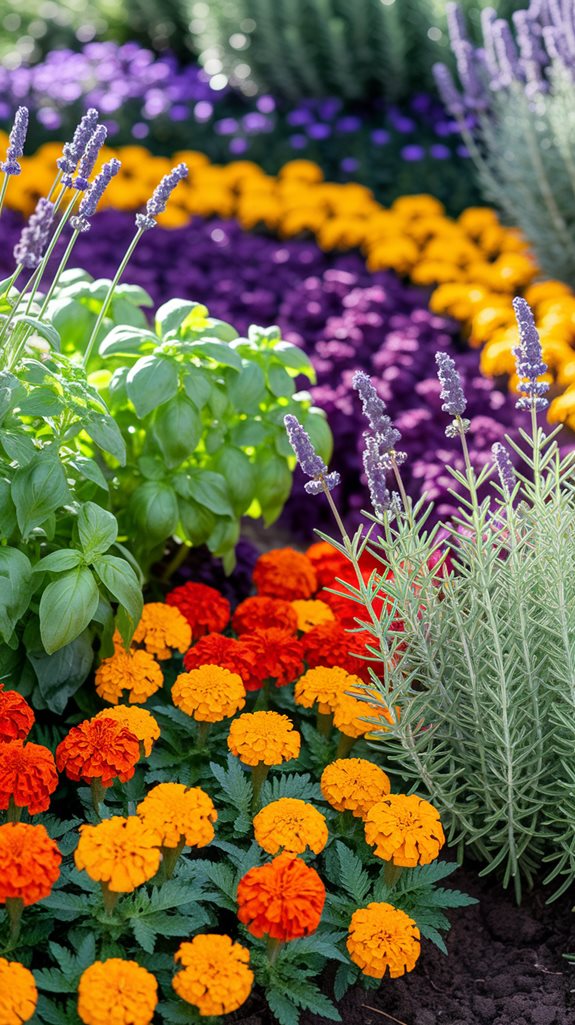
One of the most effective strategies for natural pest management involves creating living barriers with plants that naturally deter unwanted visitors.
Choose aromatic herbs like rosemary, thyme, and mint—their strong scents confuse pests seeking your vegetables. Marigolds repel nematodes and aphids, while nasturtiums act as trap crops for aphids, drawing them away from your precious produce.
Consider planting tall companions like sunflowers and cosmos to attract beneficial predators such as ladybugs and lacewings.
Strategically place alliums (garlic, chives, onions) around susceptible plants to deter a variety of insects with their sulfur compounds. Natural pest management can significantly reduce the need for chemical interventions in your garden.
For maximum effectiveness, interplant these protective species throughout your garden rather than isolating them to borders.
This creates a living maze that disrupts pest navigation while enhancing biodiversity and garden resilience.
Creating Companion Planting Strategies
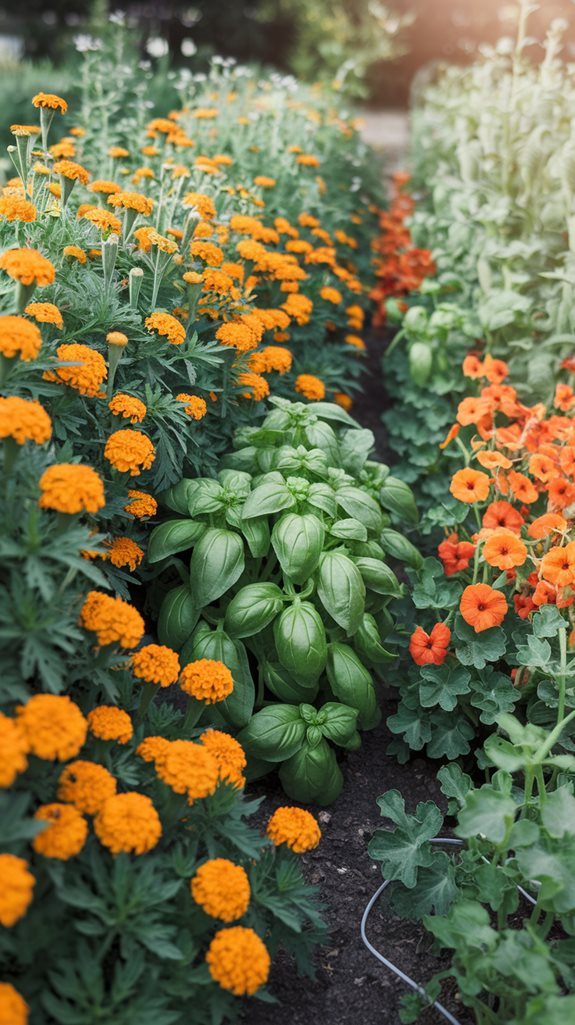
Beyond selecting individual pest-repellent plants, developing thoughtful companion planting strategies can transform your garden into a harmonious ecosystem that naturally manages pests.
Pair aromatic herbs like basil and mint with your tomatoes to confuse pests seeking their favorite crops. Interplant marigolds throughout vegetable beds to repel nematodes while attracting beneficial insects.
Create diversity in each garden section by mixing plant families rather than grouping them together. You’ll achieve multiple benefits when you strategically position tall sunflowers to provide shade for heat-sensitive lettuce while attracting pollinators.
Consider the classic “Three Sisters” approach—corn, beans, and squash growing symbiotically, with each plant contributing something essential to its companions. Additionally, incorporating natural herbs such as rosemary and lavender can further enhance your garden’s defenses against unwanted pests.
Designing Your Multi-Layered Pest Barrier
Creating a truly effective pest barrier requires thinking in layers, much like a forest ecosystem protects itself through diverse defensive strategies.
Start with a perimeter of pest-repelling plants like marigolds, lavender, and rosemary to create your first defensive line.
Your second layer should include strategic companion planting throughout garden beds, positioning vulnerable plants next to protective neighbors.
Incorporate physical barriers as your third layer—floating row covers, diatomaceous earth rings, and copper tape.
Add biodiversity for your fourth layer with flowering plants that attract beneficial insects. These natural predators hunt pests while pollinating your garden.
Finally, integrate living soil as your foundation layer by building compost-rich beds that nurture strong, naturally pest-resistant plants.
This multi-layered approach creates a resilient garden ecosystem that manages pests without synthetic chemicals. Additionally, incorporating biodiversity in planting can enhance the overall health of your garden by fostering a balanced ecosystem.
Building Physical Barriers With Natural Materials
Physical barriers form an essential component of your garden’s defense system when constructed from natural, sustainable materials.
Consider using bamboo stakes to create sturdy fences that deter larger pests, or woven willow panels that blend seamlessly into your landscape while blocking unwanted visitors.
Cedar mulch serves dual purposes—it suppresses weeds while repelling insects with its natural oils.
For slug protection, crushed eggshells or diatomaceous earth creates sharp barriers they won’t cross. Pine cone borders similarly discourage soft-bodied pests.
Don’t overlook vertical barriers—burlap wrapped around tree trunks prevents climbing insects, while copper tape around raised beds deters slugs and snails through a mild electrical reaction.
These materials decompose naturally over time, contributing to your soil’s health rather than harming the ecosystem. Additionally, using natural pest solutions can further enhance your garden’s resilience against unwanted visitors.
Incorporating Beneficial Insects Into Your Garden Defense
While physical barriers provide excellent protection, beneficial insects serve as your garden’s living defense system, patrolling plants and soil to keep pest populations in check naturally.
Ladybugs devour aphids, while lacewings target whiteflies and caterpillars. Ground beetles hunt slugs under cover of darkness.
To attract these garden allies, plant diverse flowering herbs like dill, fennel, and yarrow that provide nectar and habitat.
Create insect hotels with bamboo tubes, pinecones, and hollow stems to offer shelter during harsh weather.
Incorporating organic pest control methods can enhance the effectiveness of these beneficial insects, ensuring a thriving garden ecosystem.
Avoid broad-spectrum pesticides that kill indiscriminately.
Remember that balance is key—a few pests actually help by sustaining predator populations.
Utilizing Aromatic Herbs as Natural Deterrents
Beyond beneficial insects, your garden’s defense strategy can incorporate nature’s aromatic armor. Many herbs contain potent essential oils that naturally repel common pests.
Plant lavender and rosemary to deter cabbage moths and carrot flies, while basil keeps aphids and mosquitoes at bay.
Create strategic herb borders around vulnerable crops – marigolds protect tomatoes, while chives safeguard roses and berries from harmful insects.
Interplant your vegetables with strongly-scented herbs like thyme, mint, and sage to mask the scent trails that pests follow to find their preferred hosts.
For maximum effectiveness, crush a few leaves occasionally to release their volatile compounds. Additionally, consider incorporating natural pest control solutions that utilize these herbs for even more robust protection against unwanted invaders.
This aromatic approach not only deters pests naturally but adds culinary value to your garden while eliminating the need for synthetic chemicals in your growing space.
Maintaining Your Living Pest Barrier Throughout Seasons
A thriving pest barrier requires seasonal attention to remain effective throughout the year’s changing conditions.
In spring, thin overcrowded plants and add fresh compost to replenish soil nutrients.
Summer calls for consistent watering during dry spells and harvesting mature herbs before they become woody.
As autumn approaches, collect seeds from annual barrier plants like marigolds and dill for next year’s planting.
Cut back perennials like lavender and rosemary by one-third, but avoid severe pruning that might compromise winter hardiness.
Winter preparation means mulching around plant bases with leaf litter or straw to insulate roots from freeze-thaw cycles. Additionally, incorporating homemade pest repellents can further enhance your garden’s defenses against unwanted visitors.
In colder regions, consider potting key deterrent plants like lemongrass to overwinter indoors.
This seasonal care guarantees your living barrier remains robust and ready to protect when pests emerge again in spring.
Troubleshooting Common Barrier Weaknesses
Even the most carefully designed living pest barriers can develop vulnerabilities that compromise their effectiveness. Recognizing these weak spots early allows you to address issues before pests establish a foothold in your garden sanctuary.
- Gaps between plants – Fill spaces with quick-growing companions like nasturtiums or marigolds, which repel insects while closing pathways that slugs and beetles might exploit.
- Stressed or unhealthy barrier plants – Apply compost tea weekly to struggling sections, as robust plants naturally produce stronger pest-deterring compounds and resist invasion.
- Seasonal shifts – Bridge protection gaps during plant dormancy by strategically placing cedar mulch borders or diatomaceous earth perimeters, creating continuous protection as your living fence regrows or shifts. Additionally, consider incorporating natural pest repellents like garlic or pepper sprays to further enhance your barrier’s effectiveness.
Conclusion
By creating your natural pest barrier, you’ve hit the bullseye in sustainable garden defense. Your living boundary of aromatic herbs, companion plants, and physical barriers works in harmony with nature’s rhythm.
As seasons change, maintain this balanced ecosystem, strengthening weak spots and welcoming beneficial insects. Your garden now thrives without harmful chemicals, proving that working with nature rather than against it yields the sweetest harvests.
