
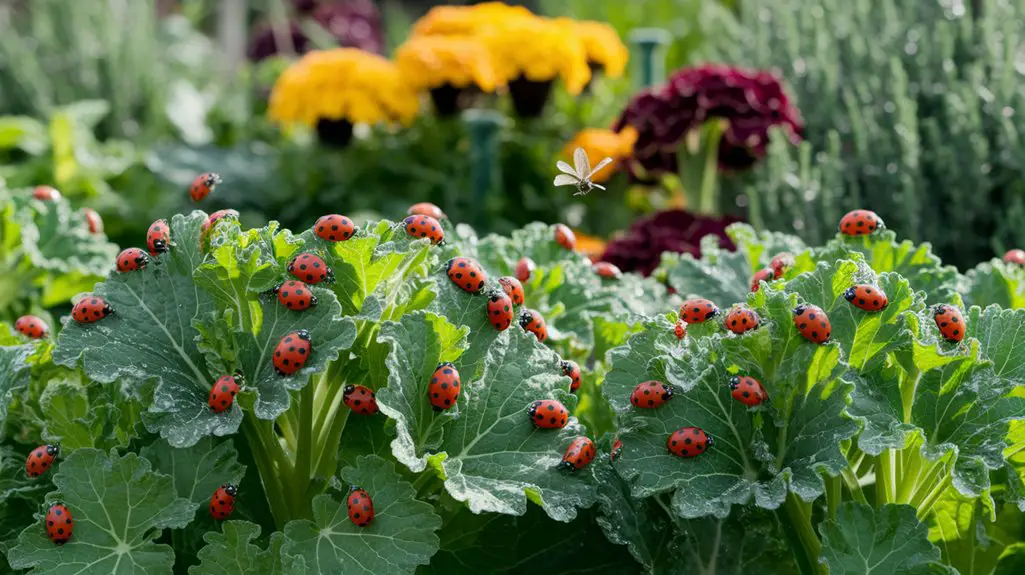
You don’t need chemicals to protect your vegetable garden from destructive pests. Nature already provides all the solutions you’ll need for effective pest management.
When you work with natural systems instead of against them, you’re creating a balanced ecosystem where beneficial insects help control problematic ones. By combining companion planting, essential oil sprays, physical barriers, and healthy soil practices, you’ll build a resilient garden that can withstand pest pressure. Want to know which specific techniques will work best for your particular garden challenges?
On this page
Understanding Common Garden Pests in Vegetable Gardens
Before implementing natural pest control methods, you’ll need to identify the common culprits affecting your vegetable garden.
Aphids cluster on new growth, while tomato hornworms strip leaves overnight. Cucumber beetles attack vine crops, spreading bacterial wilt as they feed. Slugs and snails leave slimy trails and irregular holes in leaves.
Watch for cabbage worms on brassicas, recognized by their green bodies and telltale holes in leaves. Squash bugs and squash vine borers specifically target cucurbits, causing wilting and collapse.
Spider mites thrive during hot, dry conditions, leaving stippled yellow foliage and fine webbing. Implementing effective natural pest control methods can help manage these pests without harmful chemicals.
Beneficial observation is key—check under leaves regularly and monitor for early signs of damage. Many pests are most active at night, so evening inspections with a flashlight can reveal problems you’d otherwise miss.
Companion Planting Strategies for Natural Pest Deterrence
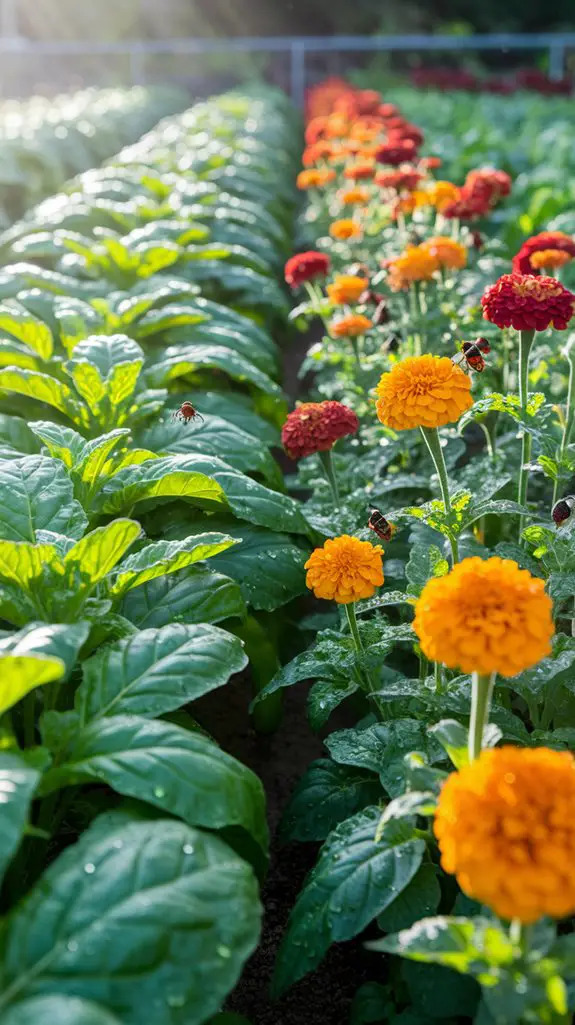
Companion planting serves as one of the most elegant and effective strategies in natural pest management for your vegetable garden.
By strategically positioning plants that naturally repel insects alongside vulnerable crops, you’ll create a protective ecosystem that reduces pest pressure without chemicals.
- Plant aromatic herbs like basil near tomatoes to repel hornworms, or marigolds throughout your garden to deter nematodes with their root secretions.
- Interplant onions, garlic, and chives near carrots and leafy greens to confuse and repel carrot flies and aphids with their strong odor.
- Create diversity with flowering plants like calendula and nasturtiums that attract beneficial predatory insects such as ladybugs and lacewings, which naturally control pest populations.
The key is creating biodiversity that disrupts pest recognition patterns while attracting nature’s own pest controllers. Additionally, understanding plant compatibility can further enhance your garden’s resilience against pests.
Essential Oils and Homemade Sprays That Repel Insects
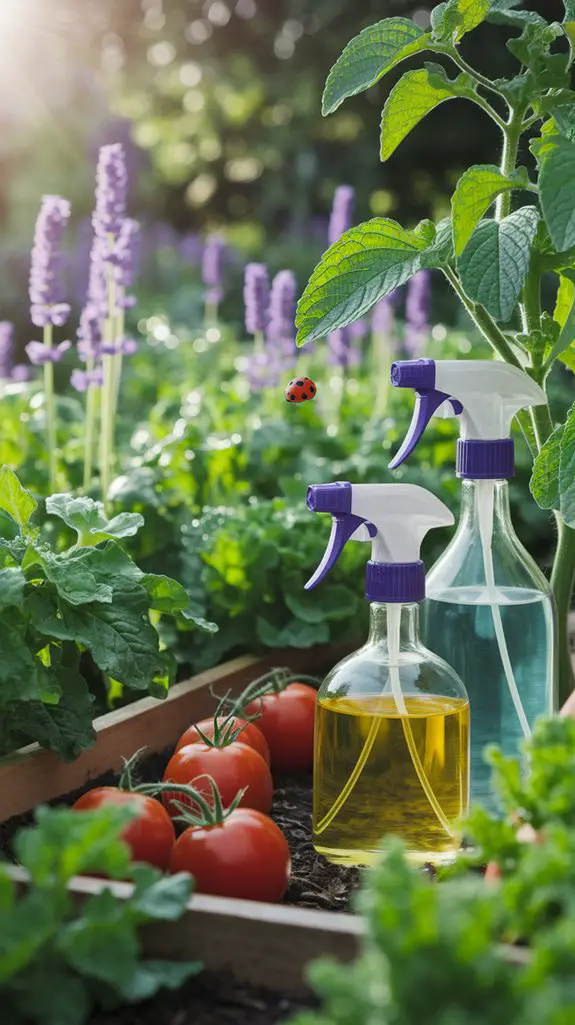
When chemical pesticides threaten both environmental health and beneficial insect populations, essential oil-based sprays offer a powerful alternative for organic vegetable gardeners. You’ll find these natural solutions effective against common pests while preserving your garden’s ecosystem. Additionally, natural pest management strategies can significantly enhance the effectiveness of these sprays.
| Oil | Target Pests | Application Method |
|---|---|---|
| Neem | Aphids, beetles | 1 tbsp oil + 1L water |
| Peppermint | Spider mites, ants | 10 drops + 1L water |
| Garlic | Whiteflies, thrips | 3 cloves + 1L water |
| Eucalyptus | Mosquitoes, flies | 15 drops + 1L water |
Mix your chosen essential oil with water in a spray bottle, adding a drop of dish soap as an emulsifier. Apply during early morning or evening to prevent leaf burn. Reapply after rain or every 5-7 days for ideal protection.
Beneficial Insects: Inviting Nature’s Pest Controllers
While chemical sprays offer temporary relief from garden pests, beneficial insects provide a sustainable, long-term solution that maintains your garden’s natural balance.
By creating a welcoming environment for predatory insects, you’re enlisting an army of helpers that work around the clock. Ladybugs, lacewings, and parasitic wasps can dramatically reduce aphid populations, while ground beetles hunt slugs and caterpillars.
To attract these garden allies:
- Plant diverse flowering herbs like dill, fennel, and cilantro that provide nectar and pollen for adult beneficial insects.
- Install insect hotels with hollow stems and small cavities where predatory insects can nest and overwinter.
- Avoid broad-spectrum pesticides that kill beneficial insects alongside pests, disrupting the ecological balance.
Creating a habitat for beneficial insects not only supports pest control but also enhances biodiversity in your garden.
You’ll find that nature’s pest controllers often work more effectively than any commercial product.
Physical Barriers and Row Covers for Vegetable Protection
Although beneficial insects provide excellent biological control, physical barriers and row covers offer immediate and dependable protection for your vegetable plants against persistent pests.
Row covers made of lightweight fabric allow sunlight, air, and water to reach plants while keeping insects out. Install them at planting time, securing the edges with soil or landscape pins.
Collar guards protect seedlings from cutworms when placed around stems at soil level. For larger plants, try protective netting to prevent birds and larger insects from damaging crops.
Sticky traps positioned strategically throughout the garden will capture flying pests before they reach your vegetables. Additionally, utilizing organic pest control methods can help enhance the effectiveness of these barriers.
Remember to remove covers during flowering if your plants require pollination. These physical methods work best when implemented early, before pest populations establish themselves in your garden.
Diatomaceous Earth and Other Mineral-Based Solutions
[Diatomaceous earth (DE) offers gardeners a powerful mineral-based weapon against soft-bodied pests like slugs, aphids, and beetles. This natural, fossil-based powder works by abrading insects’ exoskeletons, causing them to dehydrate.
Apply it as a dry dust around plants when conditions are dry, as moisture reduces its effectiveness.
Other mineral solutions complement your pest control strategy:
- Kaolin clay creates a protective barrier on plants that irritates and confuses insects, preventing them from feeding while being harmless to beneficial insects.
- Rock dust minerals strengthen plant cell walls, making them naturally more resistant to pest damage.
- Sodium bicarbonate (baking soda) solutions control fungal issues like powdery mildew without harming soil ecology.
Incorporating these natural pest control methods can enhance your garden’s resilience against infestations. Remember to reapply these mineral treatments after rain to maintain their protective qualities throughout the growing season.
Strategic Garden Layout to Minimize Pest Problems
The design of your vegetable garden plays just as important a role in pest management as the treatments you apply.
Implement companion planting by placing pest-repelling plants like marigolds, nasturtiums, and basil throughout your beds. They’ll deter aphids, beetles, and nematodes naturally.
Create diversity by avoiding monoculture rows. Instead, interplant different vegetable families to confuse pests seeking their preferred hosts. Incorporate paths and buffer zones to prevent pest migration between plant groups.
Rotate crops annually, following a three-year cycle where related vegetables don’t return to the same spot. This breaks pest life cycles that depend on specific plant hosts.
Consider raised beds with physical barriers at the base to block soil-dwelling pests while improving drainage—waterlogged soil attracts many unwanted visitors. Additionally, using natural insecticides can enhance your pest management strategy, providing a more holistic approach to keeping your garden healthy.
Neem Oil Applications and Usage Guidelines
Why has neem oil become a cornerstone of organic gardening? This natural extract from the neem tree contains azadirachtin, which disrupts insects’ feeding and growth cycles without harming beneficial creatures.
When applied correctly, neem oil tackles over 200 pest species while remaining safe for your vegetable garden’s ecosystem. Additionally, neem oil functions not only as a repellent but also as a natural insecticide, making it a versatile option for pest management.
- Mix 1-2 teaspoons of neem oil with a quart of water and a few drops of mild soap for an effective spray solution.
- Apply during early morning or evening to prevent leaf burn and maximize effectiveness against feeding pests.
- Reapply every 7-14 days and after rainfall for continuous protection, especially during peak pest seasons.
For best results, spray both leaf surfaces thoroughly, focusing on new growth and existing problem areas where pests congregate.
Crop Rotation Principles for Long-Term Pest Management
While many gardeners focus on immediate pest solutions, strategic crop rotation forms the foundation of sustainable pest management in vegetable gardens. By changing where you plant specific vegetables each season, you’ll disrupt pest life cycles and reduce population buildup.
Follow these basic principles: Avoid planting vegetables from the same family in the same location for at least three years. Group crops by family—nightshades (tomatoes, peppers), brassicas (cabbage, broccoli), legumes (peas, beans), and cucurbits (squash, cucumbers).
Consider creating a simple four-bed rotation system. Each year, move plant families one bed clockwise.
This practice not only controls pests but also balances soil nutrients, as different plant families have varying nutritional needs and root depths. Additionally, incorporating companion planting techniques can enhance pest control and improve overall plant health.
Organic Soil Amendments That Build Pest-Resistant Plants
Healthy plants naturally resist pests better than weak ones, which is why building nutrient-rich soil becomes your first line of defense against garden invaders.
When you incorporate organic amendments like compost, worm castings, and well-rotted manure, you’re creating a biological fortress where beneficial microorganisms thrive, enhancing your plants’ immune systems and stress response.
- Compost tea applications strengthen cell walls and boost plants’ natural defense compounds, making them less appetizing to common pests.
- Rock dust minerals provide trace elements that commercial fertilizers lack, resulting in more complete plant nutrition and resilience.
- Biochar improves soil structure while housing beneficial microbes that compete with pathogenic organisms.
Use these amendments regularly but thoughtfully—too much of even organic matter can create imbalances that attract certain pests.
Your goal is building living soil that sustains robust plants. Additionally, maintaining chemical-free pest solutions in your garden can further enhance the effectiveness of these organic amendments.
Conclusion
By embracing these natural pest control strategies, you’ll create a garden ecosystem that’s more balanced than a tightrope walker at the county fair. Your vegetables will thrive without harmful chemicals, as you’ve invited nature’s helpers to do the heavy lifting. Remember, building resilient plants through healthy soil is your best defense—when your garden’s strong, pests don’t stand a chance in your sustainable veggie paradise.
