
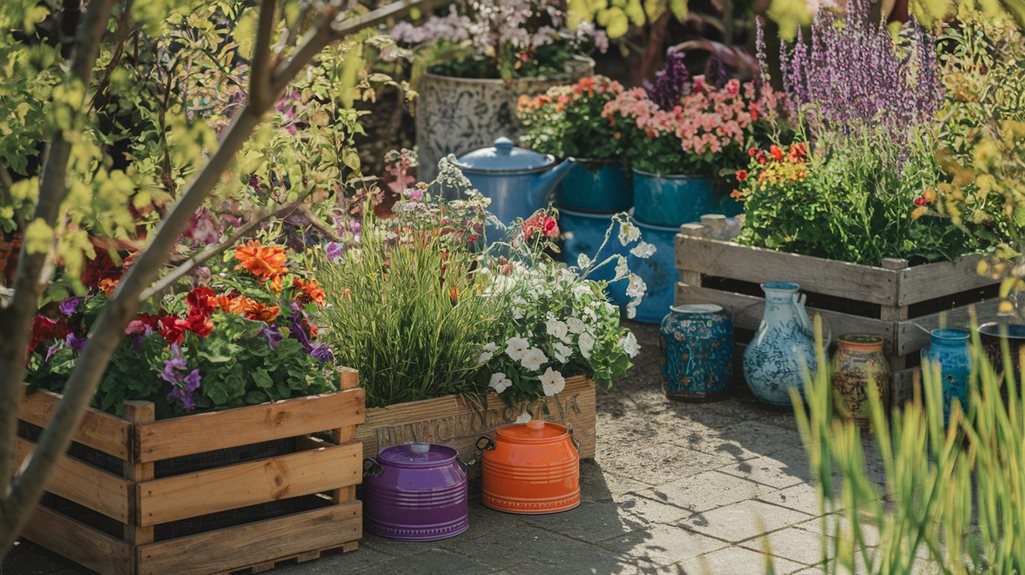
Is recycling truly beneficial, or just a feel-good practice? When you transform everyday discarded items into backyard planters, you’re participating in a tangible form of waste reduction with measurable environmental impact.
You’ll divert materials from landfills, conserve resources, and reduce your carbon footprint—all while creating unique garden elements. The sustainability benefits extend beyond your yard, contributing to broader ecological health and biodiversity. What might you repurpose first?
On this page
Environmental Benefits of Upcycled Planters
While traditional planters require new resources and manufacturing processes, upcycled planters drastically reduce your environmental footprint. By repurposing items destined for landfills, you’re diverting waste from overflowing disposal sites that release methane—a greenhouse gas the EPA says traps 27 to 30 times more heat than CO₂ over 100 years.
You’ll also conserve the raw materials and energy typically demanded in new planter production. Manufacturing virgin ceramic, plastic, or concrete containers generates significant carbon emissions and consumes finite resources like petroleum and minerals.
Additionally, upcycled planters often require minimal processing. Converting an old tire, wooden crate, or tin can into a planter demands far less energy than recycling these materials through industrial processes. Eco-friendly mulch options can also be incorporated into your upcycled planters to enhance their sustainability.
This hyperlocal waste management approach eliminates transportation emissions associated with conventional waste processing channels.
Cost Savings Compared to Store-Bought Options
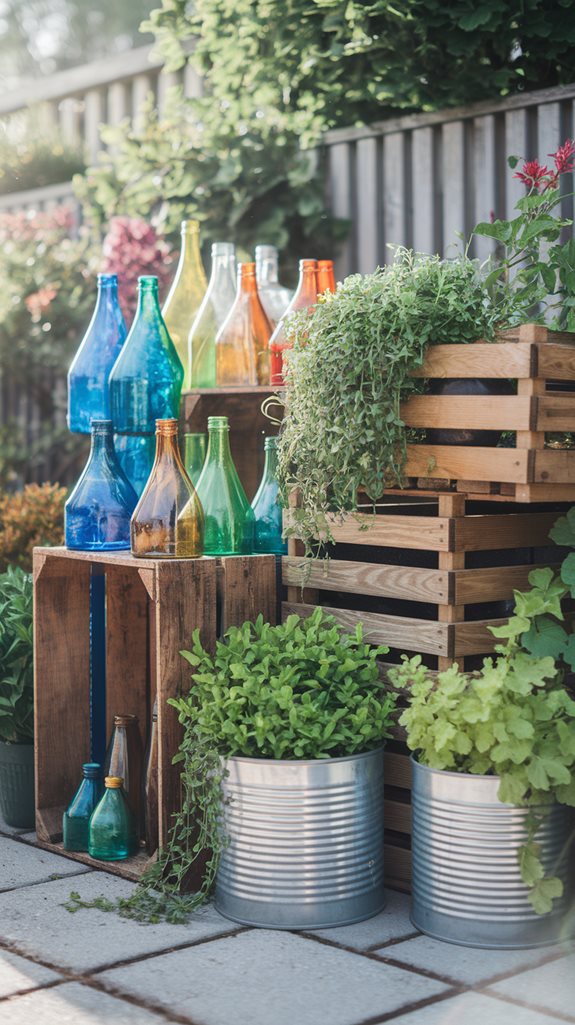
The economic advantages of upcycled planters extend beyond environmental benefits to your wallet. Store-bought planters typically cost $15-75 depending on size and material, while repurposed items are fundamentally free or require minimal investment for modifications.
You’ll save considerably by repurposing items already in your possession—old buckets, worn tires, broken furniture, and shipping pallets. Even factoring in supplementary materials like paint or screws, the total cost stays well below retail alternatives.
Additionally, these DIY planters eliminate recurring expenses. Commercial containers often deteriorate after 2-3 seasons, whereas many upcycled materials (particularly hardwoods and certain plastics) demonstrate superior durability when properly treated, potentially lasting 5+ years with minimal maintenance, delivering exceptional return on your minimal investment. Not only do these solutions save money, but they also promote creative storage ideas that maximize the functionality of your small backyard space.
Creative Expression Through Repurposed Materials
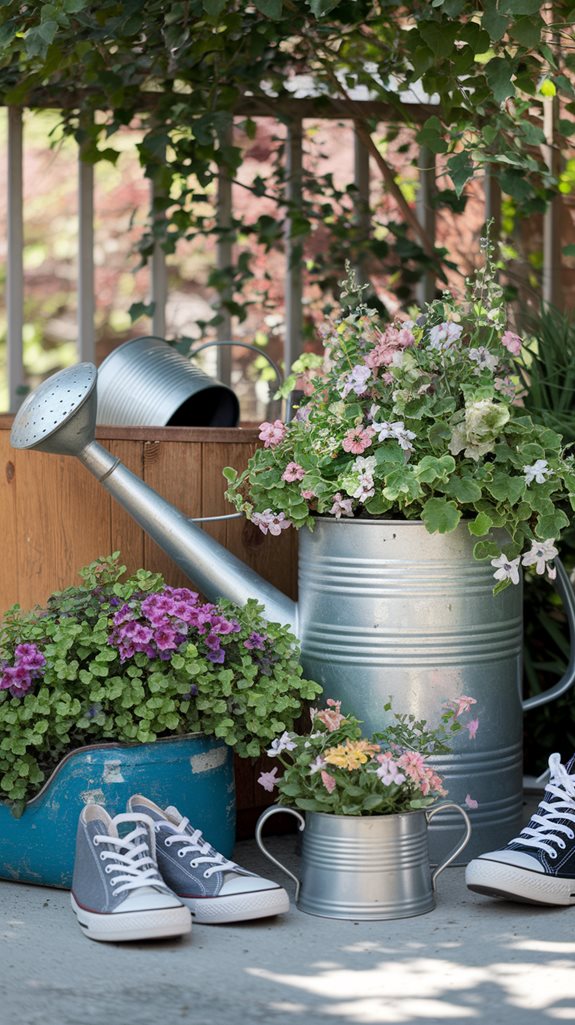
Beyond practical and financial benefits, repurposed planters offer unlimited opportunities for personal artistic expression that commercial options simply can’t match.
You’ll transform discarded items into unique garden features that reflect your personality and environmental values.
Every repurposed planter tells a story of transformation and preservation:
- Material Conversation – Each item’s original function creates dialogue with its new purpose, whether it’s an old boot sprouting succulents or industrial pipes housing herbs.
- Texture Experimentation – Weathered wood, rusted metal, and broken ceramics provide distinctive aesthetic qualities unavailable in mass-produced containers.
- Evolving Design – Unlike store-bought options, recycled planters naturally patina and change over time, creating living art that evolves alongside your plants.
You’re not just gardening—you’re creating functional sculpture that celebrates sustainability. Additionally, using sustainable materials in your projects enhances both the aesthetic and ecological impact of your garden.
Reducing Landfill Waste One Planter at a Time
Every discarded container repurposed as a planter represents one less item entering our overwhelmed landfills, where decomposition can take decades or even centuries depending on material composition.
When you transform waste into planters, you’re creating significant environmental impact. Consider these decomposition timelines:
| Material | Decomposition Time | CO₂ Saved (kg) | Water Saved (L) |
|---|---|---|---|
| Plastic | 450+ years | 2.5 | 100 |
| Tin/Metal | 50-100 years | 1.8 | 76 |
| Tires | 80+ years | 9.1 | 54 |
| Glass | 1+ million years | 0.6 | 42 |
You’ll prevent these materials from releasing harmful chemicals during decomposition while simultaneously reducing demand for new products. Each DIY planter contributes to circular economy principles, transforming waste streams into resource flows.
Best Household Items to Transform Into Planters
Countless household items destined for trash bins can be reimagined into thriving plant homes with minimal effort and maximum environmental benefit.
By recognizing the potential in everyday objects, you’re extending their lifecycle while creating unique garden elements that reduce virgin material demand.
- Kitchen containers – Colanders, old pots, and tin cans provide excellent drainage properties. Metals contribute trace minerals to soil, while ceramic retains moisture balance essential for root health.
- Plastic bottles – Cut horizontally or vertically, these vessels create self-watering systems when properly modified. Their lightweight nature makes them ideal for vertical gardening installations.
- Wooden items – Dresser drawers, crates, and broken furniture pieces offer organic decomposition benefits. They harbor beneficial microorganisms and naturally regulate soil temperature during seasonal fluctuations. Incorporating low-maintenance landscaping ideas into your planters can further enhance your garden’s sustainability and ease of care.
Practical Tips for Preparing Recycled Containers
Transforming found objects into functional planters requires three essential preparation steps to guarantee plant health and container longevity.
First, thoroughly clean your containers with a vinegar-water solution (1:4 ratio) to remove contaminants that might harm plants or leach into soil. Avoid commercial cleaners that leave toxic residues.
Second, create adequate drainage by drilling 4-6 holes (¼-inch diameter) in the bottom of non-porous containers. For metal items, apply non-toxic rust inhibitor to prevent deterioration and soil contamination.
Finally, evaluate container materials for sun exposure compatibility. Plastic deteriorates in UV light, while dark metal containers can overheat root systems in direct sunlight. Using recycled materials can also enhance your garden’s sustainability.
Apply food-safe sealants to wooden containers to prevent rot while maintaining soil ecology integrity.
Plant Selection for Different Recycled Materials
While recycled containers offer creative planting opportunities, matching plants to container materials greatly impacts growth success and sustainability. Different materials influence moisture retention, temperature regulation, and root development, affecting which species will thrive in your upcycled planters.
- Metal containers (tin cans, buckets) heat quickly in sun and conduct temperature extremes – ideal for heat-loving Mediterranean herbs like rosemary and thyme, but need drainage holes and insulation in severe weather.
- Plastic containers (bottles, tubs) retain moisture well – perfect for humidity-loving ferns, spider plants, and peace lilies, though they may degrade under UV exposure.
- Wood materials (pallets, crates) provide excellent insulation and natural drainage – support root vegetables, strawberries, and native perennials that benefit from temperature stability and fungal interactions within decomposing wood. Incorporating wildlife-friendly elements can further enhance the biodiversity of your garden and promote a thriving ecosystem.
Weatherproofing and Maintaining DIY Eco-Planters
To guarantee your recycled planters withstand environmental challenges throughout the seasons, proper weatherproofing becomes essential for both longevity and plant health.
Apply non-toxic sealants to wooden containers—linseed oil or beeswax provide sustainable alternatives to petroleum-based products. For metal planters, prevent rust with vinegar cleaning followed by mineral oil application.
Monitor drainage regularly, as recycled materials often require additional holes to prevent waterlogging. You’ll need to reinforce plastic containers exposed to UV rays with shade cloth to prevent degradation.
For tire planters, line interiors with landscape fabric to block potential chemical leaching into soil.
Implement seasonal maintenance checks—tighten loose parts, remove biofilm from container edges, and apply fresh sealant annually to extend your eco-planter’s functional lifespan while maintaining ideal growing conditions. Additionally, consider incorporating natural pest deterrents to protect your vegetables from infestations.
Conclusion
By embracing recycled materials for your planters, you’re not just growing plants—you’re cultivating a healthier planet. Your creative reuse slashes carbon footprints while diverting waste from overflowing landfills. The science is clear: even small-scale interventions create measurable ecological benefits.
So plunge into your shed, garage, or recycling bin and transform yesterday’s discards into tomorrow’s thriving garden spaces. Every repurposed container counts!
