
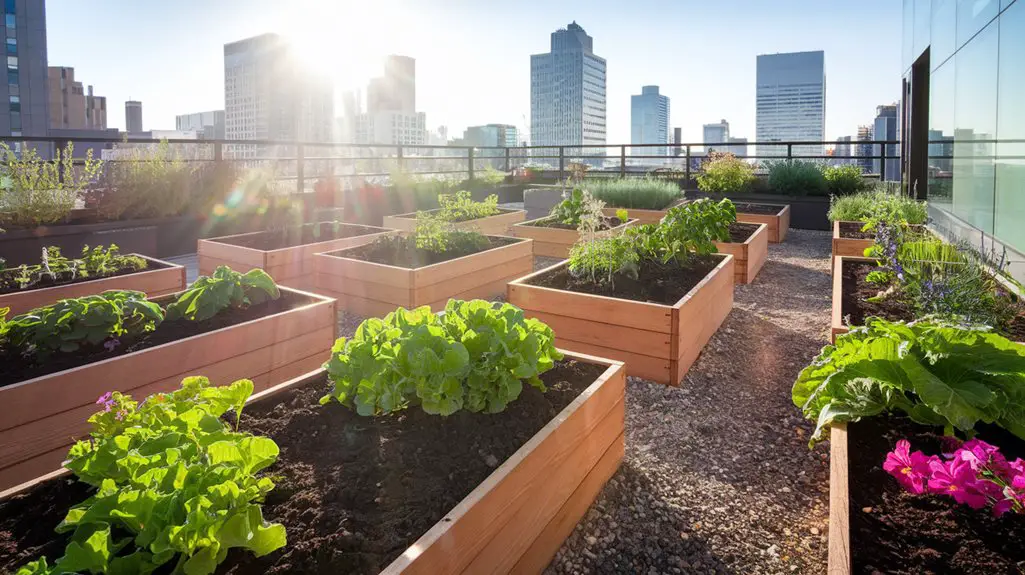
Creating a green oasis in your urban environment can be as simple as building raised garden beds. You'll want to start by scouting the perfect spot that gets plenty of sunlight and is easy to access.
With the right materials and a little creativity, you can transform even the smallest area into a thriving garden. Curious about the best practices to make your garden both beautiful and productive? Let's explore the essential steps together.
On this page
Choosing the Right Location for Your Raised Garden Bed
When you're selecting the perfect spot for your raised garden bed, consider not just the sunlight but also how accessible the area is for watering and maintenance.
Look for a location that receives at least six hours of direct sunlight daily; this'll help your plants thrive.
Think about proximity to a water source—having a hose nearby saves you time and effort.
Also, make certain the spot is easily reachable for weeding and harvesting.
Avoid areas with heavy foot traffic to minimize disruption.
If space allows, place your garden bed near a patio or sitting area to enjoy the beauty and fragrance of your plants.
Finally, verify the ground is level to provide stability and good drainage for your garden, as proper leveling is essential to prevent water pooling and promote healthy root growth.
Selecting Appropriate Materials
Selecting the right materials for your raised garden bed can make a significant difference in its longevity and effectiveness. You'll want to evaluate factors like durability, cost, and aesthetics. Here's a quick comparison of common materials:
| Material | Pros | Cons |
|---|---|---|
| Cedar | Rot-resistant, lightweight | Higher cost |
| Treated Wood | Affordable, durable | Chemicals may leach |
| Metal | Long-lasting, modern look | Can heat up too much |
Choose materials that suit your budget and gardening goals. If you're after a more natural look, cedar might be your best bet. If you're looking for something cost-effective, treated wood is a solid choice.
Additionally, consider the impact of material selection on the health of your plants. Happy building!
Designing Your Raised Garden Bed
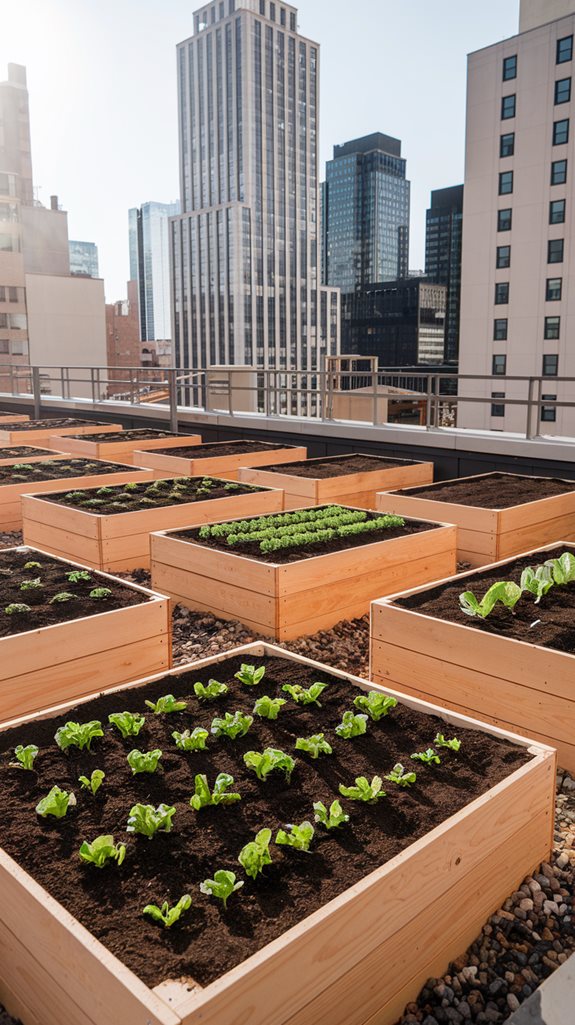
Designing your raised garden bed involves more than just stacking materials; it's about creating a functional and visually appealing space that suits your gardening needs.
Start by choosing the right shape—rectangular beds fit well in tight urban spots, while circular beds can add a unique touch. Consider the height, too; taller beds can ease strain on your back, while shorter ones may be more accessible for kids.
Don't forget to add features like trellises for climbing plants or built-in seating for relaxation. Paint or stain your wood in vibrant colors to enhance aesthetics, but make certain you use safe, non-toxic finishes. Additionally, incorporating raised garden beds can maximize your gardening potential in limited areas.
Finally, think about drainage; include holes in the bottom or elevate your bed slightly to promote healthy root growth.
Preparing the Site and Soil
After you've settled on the design of your raised garden bed, the next step is preparing the site and soil to guarantee your plants thrive.
Start by choosing a sunny spot—most vegetables need at least six hours of sunlight daily. Clear away any grass, weeds, or debris, then level the ground to create a stable base. If your soil's compacted, consider loosening it with a shovel or garden fork.
Next, enrich the soil with organic matter, like compost or well-rotted manure. This will improve drainage and provide essential nutrients.
You can also test the soil pH if you're growing specific plants. Raised garden beds offer improved drainage and soil quality, which can lead to healthier plants and increased yields.
Finally, verify proper drainage by checking for any low spots that may collect water. Your plants will appreciate the effort!
Building Your Raised Garden Bed
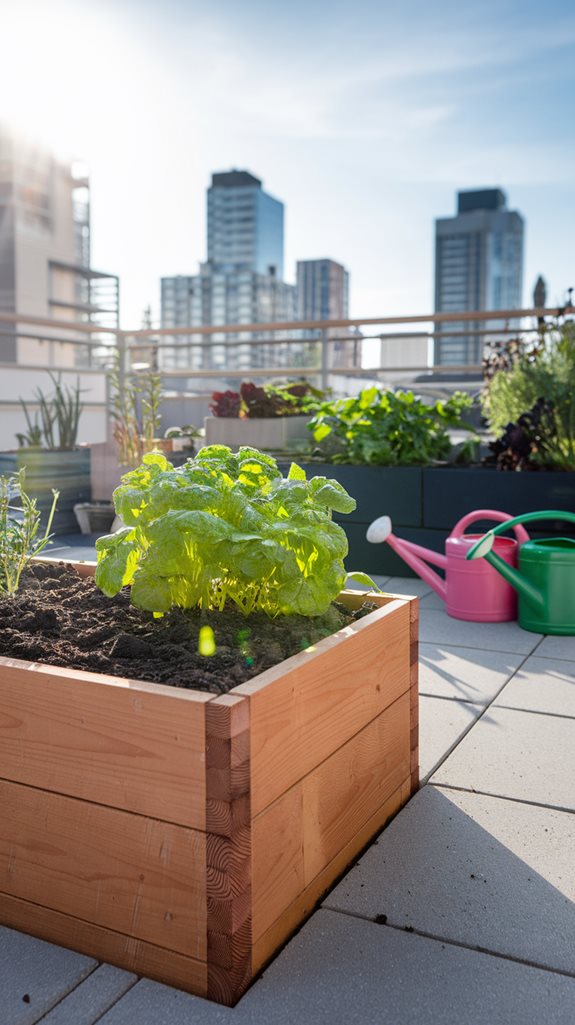
Once you've prepared the site and soil, it's time to get your hands dirty and build your raised garden bed.
First, choose your materials—wood, metal, or even recycled materials work well. Cut the wood into your desired dimensions, typically a rectangle or square, ensuring it's at least 12 inches deep.
Assemble the frame using screws or brackets for stability. If you're using untreated wood, consider lining the interior with landscaping fabric to prolong its life.
Once your frame is ready, place it in your designated spot, ensuring it's level. Fill it with a mix of quality soil and compost for ideal plant growth. To enhance your gardening experience, consider incorporating creative raised garden bed ideas that suit your urban space and personal style.
Now, you've created a sturdy, functional space to nurture your garden!
Planting and Maintaining Your Garden
As you immerse yourself in planting and maintaining your garden, it's essential to choose the right plants for your raised bed's environment. Consider sunlight, soil type, and your local climate when making your selections.
Start with companion planting to enhance growth and deter pests. Implementing effective pest control strategies will also help in safeguarding your plants from common garden invaders.
| Plant Type | Benefits |
|---|---|
| Herbs | Pest repellent |
| Tomatoes | High yield |
| Leafy greens | Fast-growing |
| Radishes | Space-efficient |
Water your plants consistently, especially during dry spells. Mulching helps retain moisture and suppress weeds.
Regularly check for pests and diseases to keep your garden healthy. With a little care, your urban garden will thrive, providing fresh produce right at your doorstep.
Maximizing Space and Yield in Urban Settings
While urban spaces often limit gardening options, you can maximize both space and yield with some clever strategies.
Start by using vertical gardening techniques—install shelves or trellises to grow climbing plants like cucumbers and tomatoes. Additionally, consider incorporating stunning vertical gardens to enhance your outdoor aesthetics while making efficient use of space.
Consider companion planting; pair crops that benefit each other, like basil with tomatoes, to boost productivity.
Utilize container gardening for herbs and smaller vegetables, allowing you to rearrange and optimize sunlight.
Don't forget to stagger your planting; sow quick-growing crops like radishes alongside slower ones to make the most of your bed.
Finally, implement succession planting, where you replace harvested crops with new seeds to guarantee continuous yield.
With these methods, your urban garden can thrive despite limited space.
Conclusion
Building raised garden beds in urban spaces is like turning a concrete jungle into a vibrant oasis. By choosing the right location, materials, and design, you can create an accessible garden that thrives in limited space.
With careful preparation and maintenance, your garden will flourish, providing fresh produce and beauty to your surroundings. Embrace vertical gardening and smart planting choices to maximize your yield, transforming your urban environment into a lush retreat that's both productive and enjoyable.
