
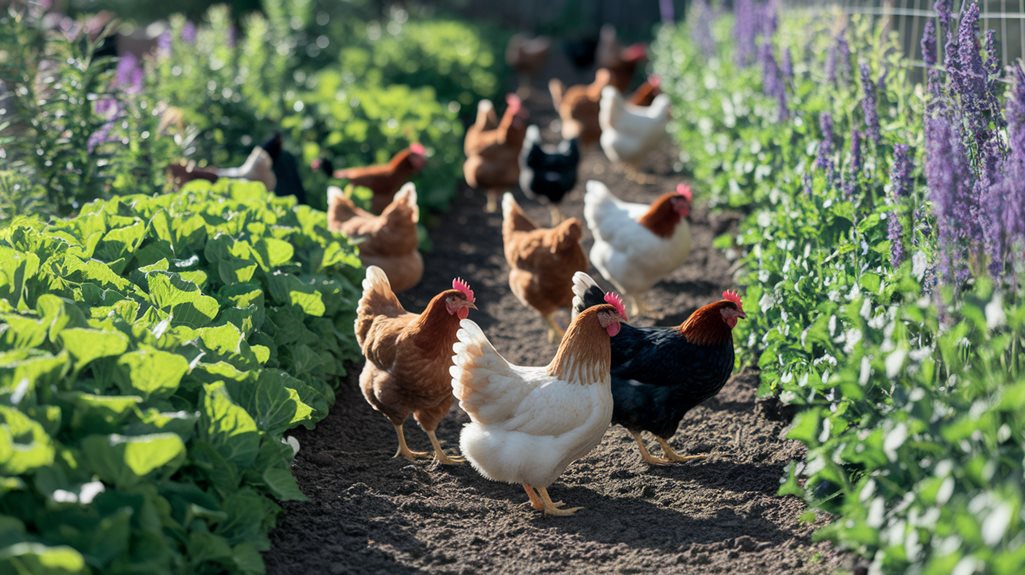
Have you ever wondered how our ancestors cultivated thriving gardens without chemical fertilizers or pesticides? You're likely missing a key element in your garden ecosystem—chickens.
These feathered partners transform garden maintenance by devouring pests, enriching soil, and closing nutrient cycles naturally. When you integrate chickens thoughtfully, your garden becomes not just a place that grows food, but a resilient, interconnected system that mimics nature's perfect design. The benefits extend far beyond fresh eggs.
On this page
Natural Pest Control Through Chicken Foraging
While many gardeners reach for chemical sprays at the first sign of pests, chickens offer a far more elegant solution that works in harmony with natural systems.
These feathered allies enthusiastically hunt slugs, snails, grasshoppers, and beetles that damage your plants.
You'll appreciate how chickens methodically scratch and peck through mulch and soil, uncovering hidden insect eggs and larvae before they become problematic.
This disrupts pest life cycles naturally without toxic residues that harm beneficial insects or soil microorganisms.
Your chickens don't discriminate between "good" and "bad" bugs, so implementing rotational grazing within your garden allows balance to emerge.
Enriching Soil With Chicken Manure
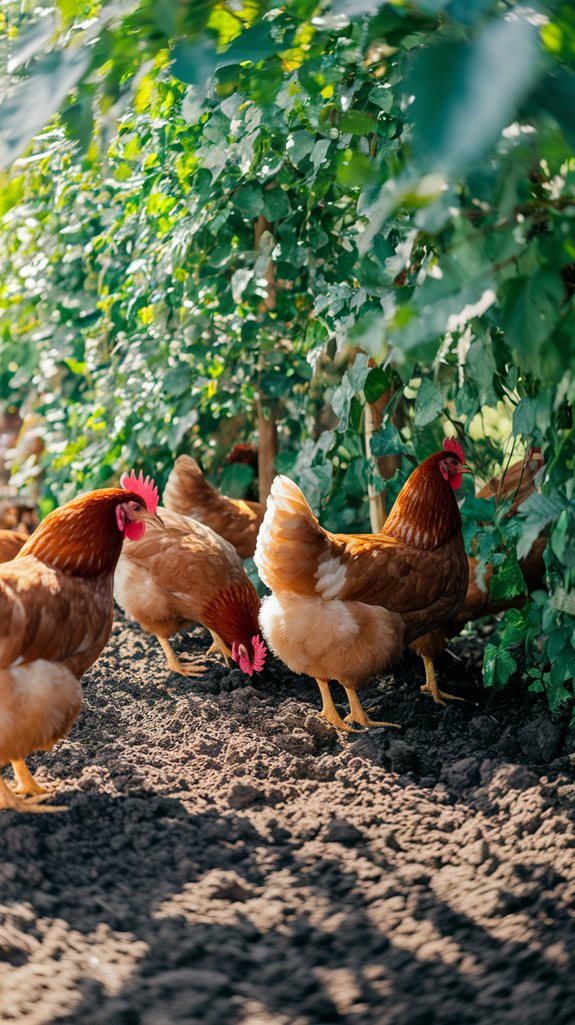
Though often overlooked, chicken manure represents one of nature's most potent soil amendments, containing higher nitrogen levels than horse, cow, or rabbit manure.
When properly composted, this nutrient-rich resource transforms your garden's fertility cycle, feeding soil microorganisms that ultimately nourish your plants.
You'll notice dramatic improvements in soil structure as you integrate this amendment—compacted clay loosens, sandy soil retains moisture better, and overall tilth improves. Additionally, backyard composting allows you to combine chicken manure with other organic materials, enhancing its effectiveness.
The complete nutrient profile supports vibrant plant growth while reducing or eliminating your need for purchased fertilizers.
To harness this gift, allow manure to age for 6-12 months before application, or compost it with carbon-rich materials like straw or leaves.
Apply it in fall or early spring, giving it time to incorporate fully before heavy planting.
Your garden becomes more self-sustaining with each cycle, embodying true ecological harmony.
Reducing Garden Waste With Chicken Composting
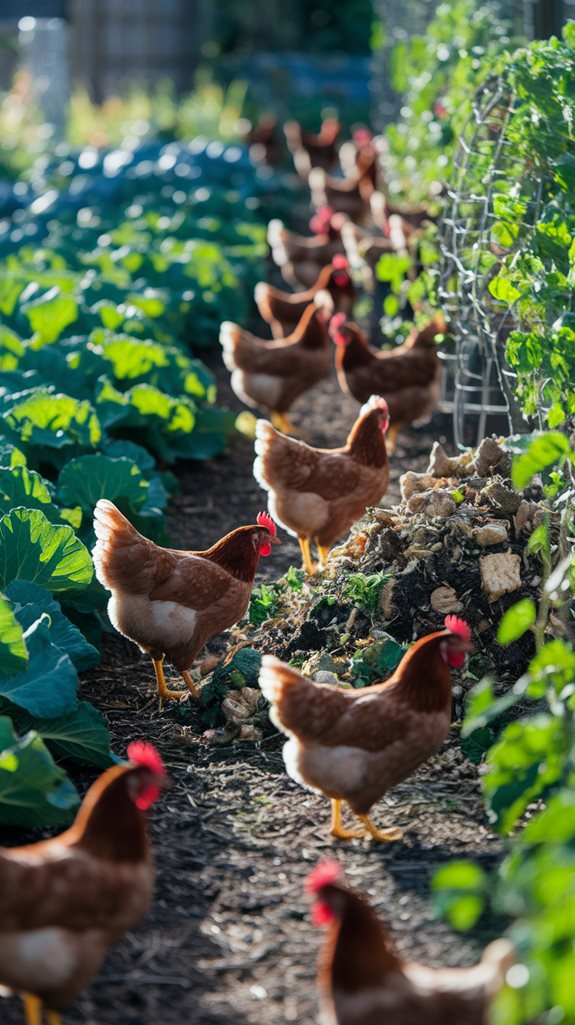
As garden waste accumulates throughout the seasons, chickens become exceptional partners in transforming what might be considered refuse into valuable resources.
They'll enthusiastically devour vegetable scraps, fallen fruits, weeds, and lawn clippings—converting these materials into nitrogen-rich manure while shrinking your compost pile.
You can design a closed-loop system by creating a designated composting zone where your flock scratches through garden debris, accelerating decomposition through their constant turning and biological activity.
Their natural behaviors break down materials that would otherwise take months to decompose. This regenerative partnership eliminates the need for mechanical turning while creating living soil teeming with microorganisms.
Creating Synergistic Plant-Poultry Systems
The garden-chicken relationship extends far beyond waste management into true ecological partnerships where each element supports the other.
By strategically planting perennial herbs like comfrey near your coop, you'll create medicinal forage while chickens deposit targeted fertility exactly where needed.
Design chicken "tractors" or mobile coops that can be rotated through garden beds seasonally. Your birds will clear spent crops, hunt pests, and precisely fertilize next season's growing areas while enjoying fresh forage.
Consider planting insectary strips of flowering plants that attract beneficial insects for chickens to hunt.
For fruit trees and berry patches, allow supervised chicken access during dormant seasons. They'll clean up fallen fruit (reducing pest cycles) while scratching mulch into soil.
This mimics forest-edge ecosystems where birds naturally interact with perennial plant communities. Additionally, incorporating eco-friendly gardening techniques can enhance the sustainability of your garden and chicken integration practices.
Maximizing Small Spaces With Vertical Chicken Gardens
Urban homesteaders with limited square footage need not abandon their chicken-keeping dreams, since vertical integration creates abundant opportunities in even the smallest yards.
By thinking upward instead of outward, you'll create holistic systems that benefit both plants and poultry.
Install wall-mounted planters near your coop, using chicken-safe herbs like oregano and thyme that naturally repel parasites.
Construct trellises for climbing vegetables above dust bathing areas, allowing chickens to hunt insects while plants thrive overhead.
Hanging gardens can provide shade for your flock while growing trailing plants like strawberries or nasturtiums.
This vertical symbiosis mimics nature's layered ecosystems, where every inch serves multiple purposes.
Your chickens provide fertility through manure, pest management through foraging, while you harvest eggs and vegetables from a regenerative system that honors ecological principles. Additionally, consider using eco-friendly options for your backyard decking to further enhance your sustainable gardening efforts.
Seasonal Benefits of Chickens in Garden Cycles
Integrating chickens into your seasonal garden cycles creates a harmonious dance that shifts with nature's rhythms throughout the year.
In spring, your flock scratches through winter debris, exposing dormant pests and preparing soil for planting while depositing nitrogen-rich fertilizer precisely where needed.
Summer brings pest management as chickens enthusiastically devour Japanese beetles, tomato hornworms, and squash bugs that would otherwise devastate your crops.
Their constant foraging disrupts pest life cycles naturally.
Fall transforms your birds into cleanup specialists—they'll process garden waste, fallen fruit, and declining plants while continuing to build soil fertility.
Their activity helps break seed cycles of unwanted plants.
Winter isn't idle time—chickens continue composting beneath the surface, turning kitchen scraps into black gold for the coming season while maintaining garden health during dormancy.
Designing Chicken-Friendly Garden Layouts
When designing your garden for chicken integration, consider creating zones that honor both plant needs and chicken behaviors while fostering mutual benefit.
Establish designated scratching areas with mulch and fallen leaves where chickens can express natural foraging instincts without damaging your prize plantings.
- Create rotating paddock systems using portable fencing to direct chickens' soil-building activities where most needed.
- Plant chicken-resistant perennials like lavender, rosemary, and mature fruiting trees to form the garden's resilient backbone.
- Include edible ground covers like clover or comfrey that withstand pecking while providing supplemental chicken nutrition.
Design with ecological succession principles in mind—chickens can help clear spring beds, fertilize summer growth, and clean up fall debris, becoming true garden partners rather than mere visitors to your living system. Additionally, incorporating natural pest control through chicken foraging can significantly reduce the need for chemical interventions in your garden.
Economic Benefits of Egg Production and Garden Integration
Beyond the elegant garden layouts and harmonious plant-chicken relationships, the financial advantages of this integrated system deserve our attention. You'll discover significant savings while creating regenerative cycles that enhance your household economy. Additionally, incorporating chickens can be beneficial for rainwater harvesting practices, as their natural behaviors can help manage moisture levels in the soil.
| Benefit | How It Saves Money |
|---|---|
| Fresh eggs | Fewer eggs to buy |
| Fertilizer | Manure for the compost pile (compost it before using it on edibles) |
| Pest control | Fewer bugs and weeds to treat |
| Reduced food waste | Kitchen scraps become feed |
| Soil building | Fewer soil amendments to buy |
Conclusion
Invite chickens into your garden, and you'll witness nothing short of ecological magic! Your garden will transform into an impossibly vibrant ecosystem where pests vanish, soil becomes supernaturally fertile, and waste simply doesn't exist.
You're not just growing vegetables—you're orchestrating a perfect symphony of life where every element nourishes another. In this sacred partnership, you'll harvest abundance beyond imagination while honoring nature's perfect design.
