
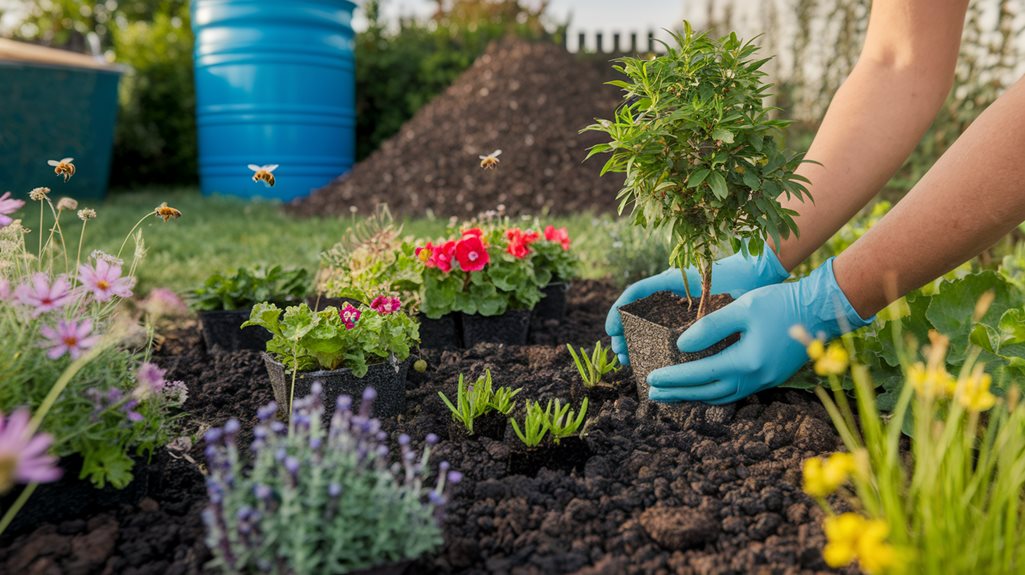
You've got a chance to transform your garden into an eco-powerhouse this season. While traditional gardening methods often harm soil health and deplete resources, sustainable approaches work with nature's cycles instead of against them.
By adopting even a few eco-friendly planting techniques, you'll reduce your environmental footprint while creating a more resilient, productive space. Ready to discover how native plants, chemical-free practices, and water conservation can revolutionize your seasonal growing strategy?
On this page
Choose Native Plants for Your Regional Climate
When selecting plants for your garden, native species offer the most sustainable and ecologically sound choice for any regional climate.
These plants have evolved alongside local wildlife, creating essential habitat connections that support biodiversity.
You'll find native plants require considerably less water, fertilizer, and pesticides than non-native alternatives.
They've adapted to your region's soil conditions, rainfall patterns, and temperature fluctuations over thousands of years.
Research your hardiness zone and seek out plant nurseries specializing in local species.
Many conservation organizations offer native plant sales and guidance.
Consider creating micro-habitats that mirror natural local ecosystems—from prairie patches to woodland understories.
Additionally, planting native species can significantly enhance the resilience of your garden against pests and diseases.
Create a Chemical-Free Composting System
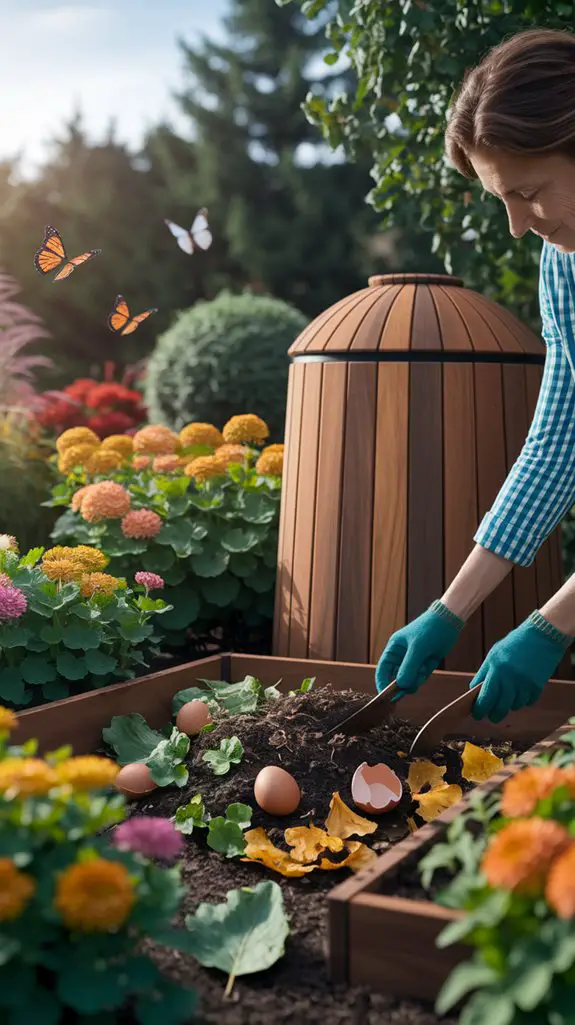
While chemical fertilizers offer quick results, establishing your own composting system provides a truly sustainable foundation for garden health.
Begin by selecting a dry, shaded spot in your yard for a compost bin or pile. Layer "green" materials (vegetable scraps, coffee grounds, fresh grass clippings) with "brown" materials (dried leaves, cardboard, straw) at a 1:2 ratio.
Turn your compost every two weeks to accelerate decomposition and prevent odors. Avoid adding meat, dairy, or diseased plants which can attract pests or spread pathogens.
You'll know your compost is ready when it's dark, crumbly, and earthy-smelling—typically after 3-6 months. This nutrient-rich humus improves soil structure, increases water retention, and promotes beneficial microbial activity while diverting waste from landfills. Additionally, incorporating organic materials for backyard composting can enhance the nutrient profile of your compost.
Practice Water Conservation Techniques
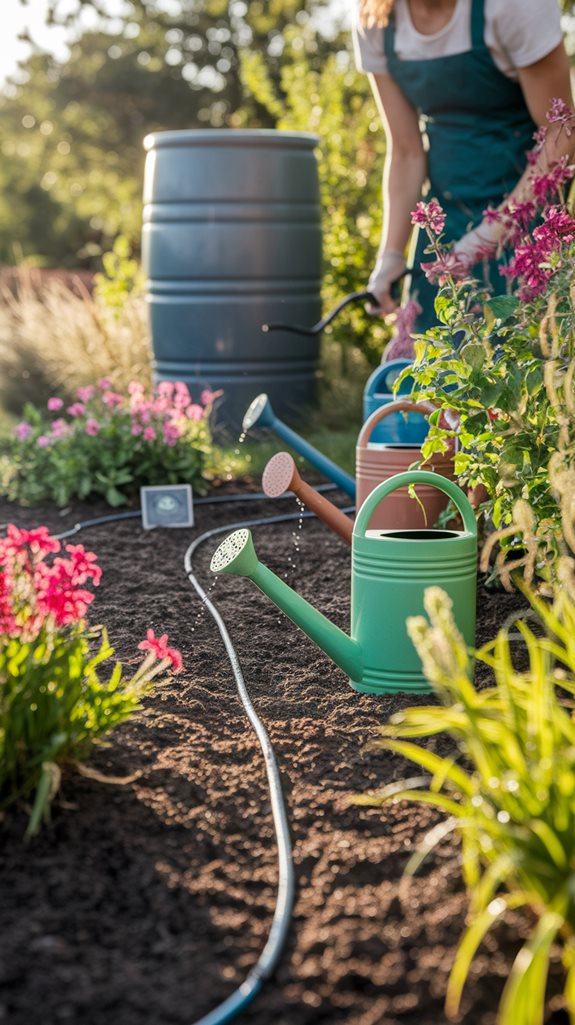
As responsible gardeners seek to minimize their environmental footprint, water conservation becomes a central pillar of sustainable cultivation. You'll find that implementing strategic irrigation methods dramatically reduces waste while promoting healthier plants.
Install drip irrigation systems that deliver water directly to root zones, using less water than conventional sprinklers. Collect rainwater in barrels positioned beneath downspouts for a free, chemical-free water source during dry periods.
Consider applying 2-3 inches of organic mulch around plants to retain soil moisture and suppress water-hungry weeds. When selecting plants, prioritize native and drought-tolerant species that thrive in your local climate without excessive irrigation.
Group plants with similar water needs together to prevent overwatering some while underwatering others. Additionally, incorporating rainwater harvesting techniques can significantly enhance your garden's resilience during drought conditions.
Implement Companion Planting Strategies
Companion planting, the strategic arrangement of different plant species in close proximity, represents one of nature's most elegant solutions for sustainable gardening.
You'll find this practice reduces pest pressure naturally, minimizing the need for harmful chemicals. Pair aromatic herbs like basil with tomatoes to repel hornworms, or plant marigolds throughout your garden to deter nematodes.
Beyond pest management, companion planting improves soil health and productivity. Creating a pest-resistant garden not only helps control unwanted visitors but also enhances the biodiversity of your garden.
Legumes like beans fix nitrogen that benefits heavy feeders such as corn. Deep-rooted plants can break up compacted soil, while shallow-rooted varieties maximize surface nutrients.
When planning your garden, consider plant communities that exist in nature.
These time-tested relationships create resilient ecosystems that thrive with minimal intervention. You're not just growing food—you're cultivating a balanced ecosystem that works with nature, not against it.
Establish Wildlife-Friendly Garden Spaces
Creating a wildlife-friendly garden takes your ecological approach beyond plant partnerships to embrace the broader web of life. You'll foster biodiversity while enhancing your garden's resilience against pests and disease naturally.
| Wildlife Element | Benefits | Seasonal Implementation |
|---|---|---|
| Native plants | Support local pollinators | Plant in spring/fall when rainfall is abundant |
| Water sources | Attract birds, beneficial insects | Maintain year-round, prevent freezing in winter |
| Shelter areas | Provide habitat for predatory insects | Leave fall debris until spring emergence |
Consider leaving unmowed patches of lawn for ground-nesting bees and designating "messy corners" with fallen logs and leaf litter. These microhabitats support decomposers that enrich your soil.
Remember, each creature that visits your garden—from birds to beetles—contributes to a self-sustaining ecosystem that requires less intervention and resource input from you. Additionally, incorporating pollinator-friendly plants can significantly increase the presence of beneficial insects in your garden.
Adopt No-Till Gardening Methods
While conventional tilling disrupts essential soil ecosystems, no-till gardening preserves the underground network of microorganisms that naturally aerate and enrich your garden.
You'll protect crucial fungi, bacteria, and earthworms that build soil structure and cycle nutrients.
To shift to no-till methods, start by adding organic matter as a top layer rather than digging it in.
Use cardboard or newspaper covered with compost and mulch to smother weeds. When planting, simply move aside mulch and create small holes for seedlings.
You'll notice immediate benefits: reduced erosion, improved water retention, and decreased carbon emissions from not using gas-powered tillers. Implementing effective natural strategies for weed control can further enhance your gardening success.
Over time, your soil's structure will rebuild itself, becoming more resilient to both drought and heavy rainfall while storing more carbon underground.
Save and Share Seeds for Future Seasons
Seed saving represents one of gardening's most rewarding traditions, connecting you directly to the complete plant lifecycle while reducing dependency on commercial seed sources.
Select open-pollinated or heirloom varieties, which produce offspring true to their parents, unlike hybrids. Wait until seeds are fully mature—typically when fruits are overripe or seed pods have dried.
Store your harvested seeds in paper envelopes or glass jars in cool, dark, dry locations. Don't forget to label each package with the variety name and collection date.
Consider organizing seed swaps with neighbors or joining local seed libraries to diversify your garden while preserving regional biodiversity. These community exchanges help maintain genetic diversity and preserve varieties uniquely adapted to your local growing conditions, creating a sustainable, resilient food system independent of commercial agriculture. Additionally, vegetable gardening tips for small backyards can help you maximize your space while growing a variety of crops.
Conclusion
By embracing these eco-friendly planting practices, you'll transform your garden into a sustainable ecosystem while reducing your environmental footprint. Native plant gardens support far more beneficial insects and birds than conventional landscapes.
Your choices matter—each ecological gardening decision you make contributes to the larger movement of healing our planet, one backyard at a time. Start small, but dream big.
