
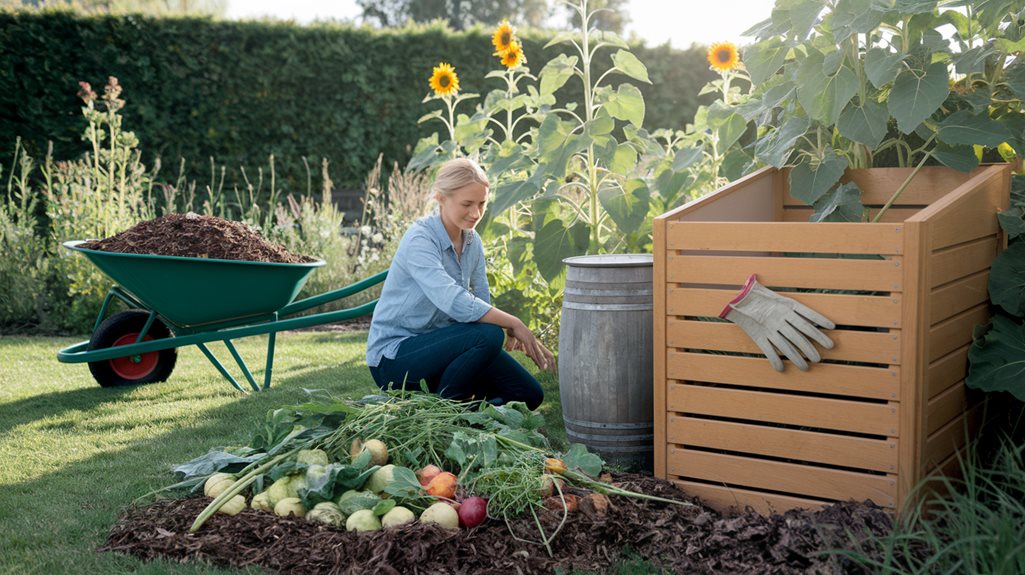
Your garden's waste represents a missed opportunity that many homeowners overlook. You're probably generating bags of clippings, branches, and plant debris that could transform your landscape instead of heading to the landfill.
With the right techniques, you'll cut your waste output dramatically while improving soil health and plant vigor. These waste reduction methods don't just save time and resources—they'll revolutionize how you approach garden maintenance and sustainability.
On this page
Smart Composting Systems for Complete Waste Recycling
While traditional composting has been around for centuries, today's smart composting systems offer unprecedented efficiency in recycling garden waste.
You'll find sensor-equipped bins that monitor moisture, temperature, and decomposition rates, automatically alerting you when to add water or turn the pile.
Consider investing in a tumbling composter that aerates materials with each rotation, which can speed up breakdown compared to static piles.
Many modern systems feature separate chambers allowing continuous composting—add fresh scraps to one side while finished compost matures in the other.
For tech enthusiasts, smartphone-connected composters track your waste diversion metrics and provide customized advice based on your specific garden waste.
These smart systems transform virtually all organic garden debris into nutrient-rich soil amendment, completing the natural cycle right in your backyard. Additionally, organic materials for backyard composting are essential for creating high-quality compost that enriches your soil.
Strategic Pruning Methods to Minimize Clippings
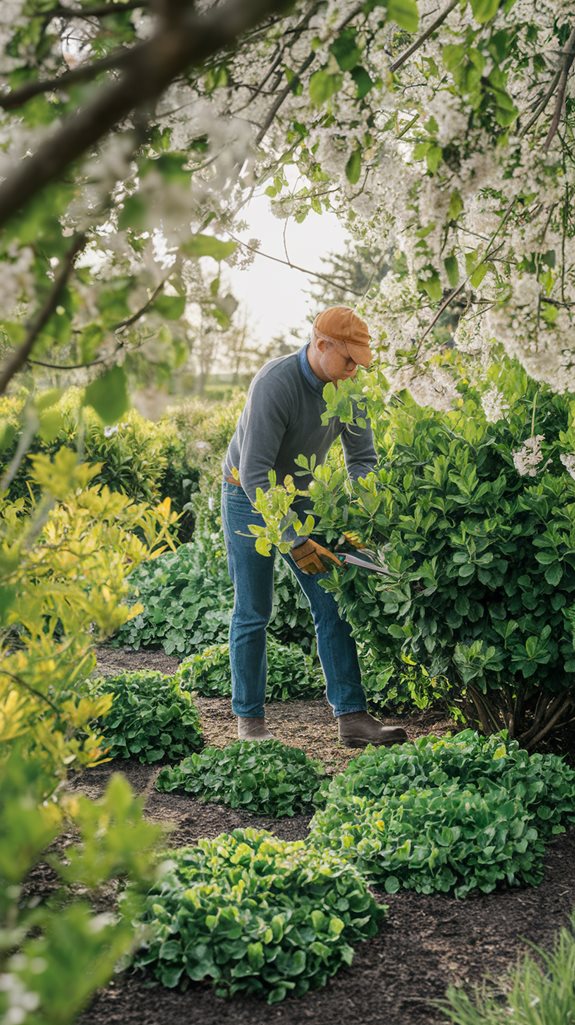
Although most gardeners focus on what to do with clippings after pruning, adopting strategic pruning methods can greatly reduce waste generation from the start.
Use the "one-third rule" – never remove more than a third of the plant at once. This promotes healthy growth while minimizing debris.
Timing matters considerably. Prune deciduous trees in late winter when you can clearly see branch structure, making precise cuts that require less correction.
For flowering shrubs, prune immediately after blooming to avoid removing next season's buds.
Consider selective heading cuts instead of shearing. Target specific branches rather than trimming entire hedges. This creates less waste and maintains the plant's natural form.
For perennials, deadhead regularly throughout the season instead of cutting back large amounts at once.
Sheet Mulching With Garden Residue
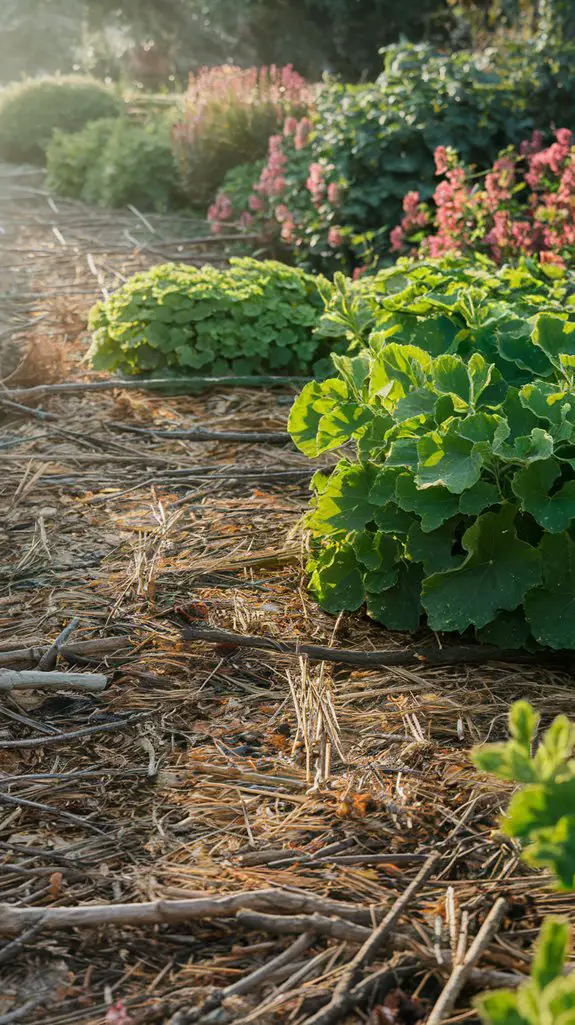
Sheet mulching transforms your garden waste into a valuable resource that improves soil health while reducing landfill contributions. This layered approach mimics natural forest floor processes, creating rich, living soil.
Begin by laying cardboard or newspaper directly over unwanted grass or weeds. Next, add a nitrogen-rich layer of kitchen scraps, grass clippings, or manure.
Follow with carbon-heavy materials like fallen leaves, small twigs, and woody prunings. Alternate these layers, wetting each thoroughly before adding the next.
You'll create a decomposition system that handles significant amounts of garden debris while suppressing weeds and retaining moisture. For best results, start sheet mulching in fall using accumulated autumn waste. Additionally, using raised garden beds can further enhance your soil health by providing better drainage and aeration.
On-Site Shredding and Chipping Solutions
Garden waste management extends beyond sheet mulching when dealing with larger woody materials. Investing in a quality chipper/shredder allows you to process branches, twigs, and prunings on-site, eliminating disposal trips and creating valuable mulch or compost ingredients.
Electric shredders work well for smaller gardens with branches up to 1.5 inches, while gas-powered models handle thicker materials for larger properties. You'll find that fresh, green materials chip more effectively than dry, brittle ones.
For occasional needs, consider renting equipment or joining with neighbors to share purchase costs. Many municipalities also offer mobile chipping services several times yearly. Additionally, employing effective DIY traps can help manage pests attracted to your garden waste.
Once processed, your wood chips can serve as pathway covering, mulch for ornamental beds, or carbon-rich "browns" for your compost pile—turning would-be waste into garden resources.
Plant Selection for Low-Maintenance Gardens
Strategic plant selection represents the foundation of any truly low-maintenance garden, dramatically reducing ongoing waste production before it starts.
Choose native plants adapted to your local climate—they'll require less water, fertilizer, and pruning. Consider slow-growing shrubs and perennials that won't need frequent cutting back.
Opt for drought-resistant varieties like lavender, sedum, and ornamental grasses that produce minimal green waste. You'll find evergreens provide year-round structure without the seasonal leaf drop of deciduous plants.
Group plants with similar water and maintenance needs together to optimize care efficiency.
When planning your garden, space plants according to their mature size to avoid excessive pruning. Incorporating perennial vegetables can further enhance your garden's sustainability and reduce waste.
Conclusion
You've now harvested the seeds of sustainable gardening wisdom. By embracing these five waste-reduction techniques, you're not just managing debris—you're orchestrating nature's cycle with purpose. Your garden becomes both canvas and compost bin, where today's trimmings fuel tomorrow's growth.
Remember, a truly skilled gardener leaves no trace but beauty. The waste that once overwhelmed you will transform into the foundation of your garden's future resilience.
