
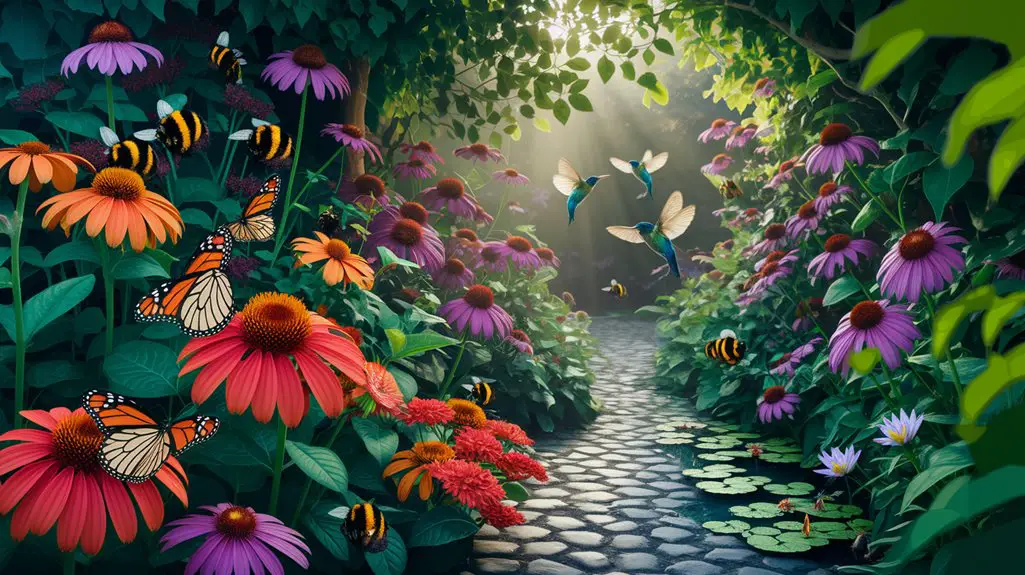
Your backyard isn't just a personal retreat—it's potential habitat for countless species struggling in urbanized landscapes. You'll find that strategic plant selection and thoughtful design can transform even small spaces into biodiversity hotspots.
Native plants support far more insect species than most exotic varieties, while layered vegetation creates microhabitats for diverse wildlife. The choices you make this season will ripple through your local ecosystem, influencing everything from soil microbes to migratory songbirds.
On this page
Native Plant Selection: The Foundation of Backyard Biodiversity
When establishing a biodiverse backyard ecosystem, native plant selection serves as the cornerstone of your conservation efforts. Native plants have co-evolved with local wildlife, creating interdependent relationships that support regional food webs and habitat structures.
Choose species that naturally occur within your ecoregion, focusing on diversity across plant types—trees, shrubs, perennials, and grasses. You'll create multi-layered vegetation that maximizes ecological niches and supports varied wildlife.
Select plants that flower sequentially throughout growing seasons to provide continuous nectar sources for pollinators. Consider keystone species like oak trees, which support over 500 caterpillar species, or milkweed, essential for monarch butterflies. Establishing a pollinator paradise in your backyard can further enhance the attraction of these vital species.
Remember that genetically local plant stock maintains ecological adaptations specific to your region's soil, climate, and wildlife interactions, enhancing resilience and ecosystem functionality.
Creating Habitat Layers in Limited Spaces
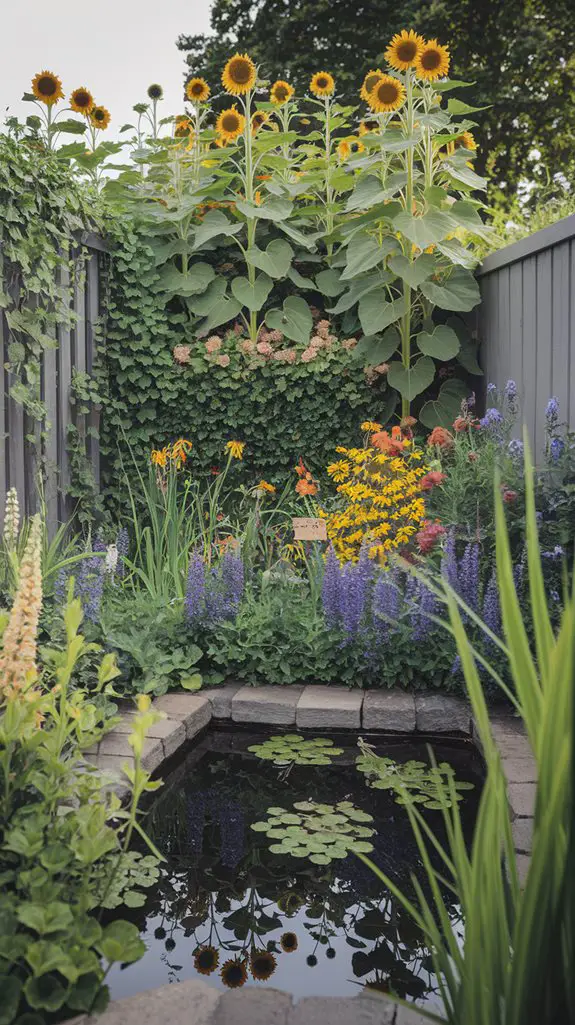
Even with limited garden space, you can create vertical habitat layering that mimics natural ecosystems and maximizes biodiversity potential.
Start with a ground layer of low-growing native groundcovers that provide shelter for beetles and other beneficial insects.
Add a herbaceous layer of perennial wildflowers and grasses, offering nectar sources and host plants for pollinators.
Incorporate a shrub layer with compact native bushes that provide nesting sites and berries.
You don't need tall trees to create canopy—dwarf varieties or strategic use of trellises with native vines can form upper habitat zones.
Consider vertical gardening techniques like wall-mounted planters or tiered containers to expand usable space.
This multi-layered approach creates ecological niches that support diverse wildlife populations while optimizing oxygen production and carbon sequestration in your small space. Furthermore, incorporating wildlife-friendly features such as water sources or insect hotels can enhance the habitat's appeal and support a wider range of species.
Water Features That Attract Diverse Wildlife
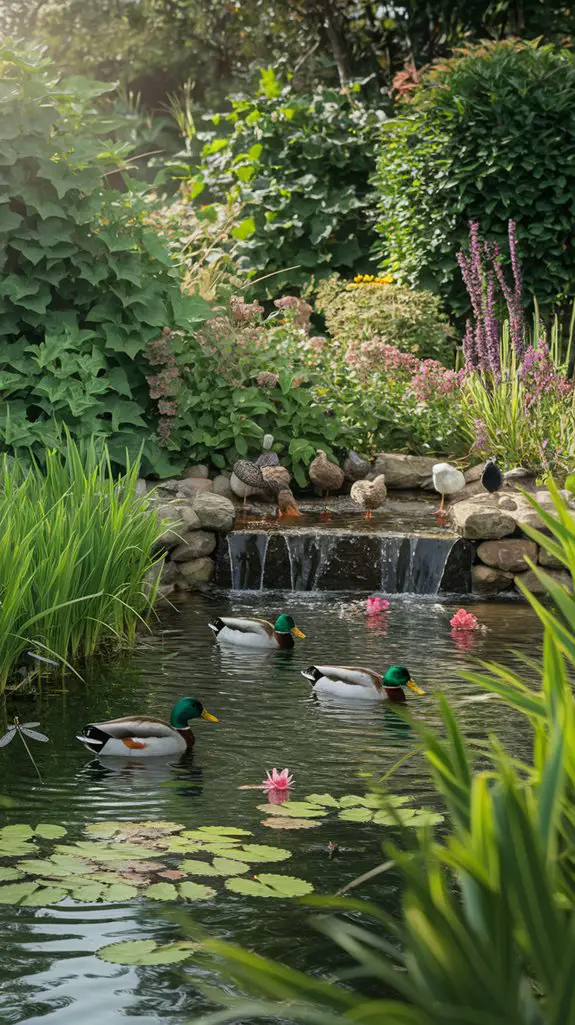
Water features represent one of the most effective additions to any biodiversity-focused garden, serving the critical ecological functions of hydration, reproduction, and habitat. You'll find that even small water elements dramatically increase your garden's wildlife diversity, attracting species that might otherwise bypass your space entirely. Additionally, incorporating wildlife-friendly water features can enhance your garden's appeal to various creatures.
| Water Feature Type | Size | Wildlife Attracted | Ecological Function |
|---|---|---|---|
| Bird Bath | Small | Birds, insects | Hydration, bathing |
| Shallow Pond | Medium | Amphibians, dragonflies | Reproduction, habitat |
| Rain Garden | Variable | Pollinators, birds | Filtration, erosion control |
| Stream Feature | Linear | Fish, aquatic invertebrates | Oxygenation, connectivity |
Consider incorporating multiple water depths within a single feature to maximize habitat niches. Even container water gardens can support microscopic ecosystems while minimizing maintenance requirements and mosquito concerns.
Pollinator Gardens: Beyond Just Butterflies
While butterflies often capture the spotlight in pollinator discussions, a truly effective pollinator garden supports a diverse community of insects that perform critical ecosystem functions.
Native bees—including mason, leafcutter, and bumblebees—pollinate many plants that honeybees don't visit. You'll also attract beneficial hover flies, whose larvae consume aphids while adults pollinate flowers.
Include plants with diverse flower shapes and blooming periods. Tubular flowers (penstemons, salvias) attract hummingbirds and long-tongued bees, while open-faced blooms (asters, coneflowers) serve beetles and short-tongued pollinators.
Don't forget night pollinators like moths by incorporating evening-blooming plants such as evening primrose and nicotiana.
Leave some bare soil patches and dead wood for ground-nesting bees and beneficial insects that need these microhabitats to complete their lifecycle. Additionally, creating a diverse habitat with various plant types and arrangements can enhance the presence of different pollinator species in your garden.
Soil Health Management for Underground Ecosystems
Beneath every thriving garden lies a complex underground ecosystem that's just as important as what grows above. Your soil harbors billions of microorganisms, fungi, invertebrates, and essential nutrients that form the foundation of biodiversity.
You'll enhance this hidden ecosystem by minimizing tillage, which disrupts fungal networks and soil structure. Instead, add organic matter through compost and mulch to feed soil organisms. These decomposers break down materials into plant-available nutrients while creating soil aggregates that improve water infiltration.
Avoid synthetic chemicals that can devastate soil food webs. Even beneficial nematodes and mycorrhizal fungi are vulnerable to these disruptions. Incorporating natural pest control methods can further support this ecosystem by promoting a balanced environment that deters harmful insects while preserving beneficial species.
You're not just growing plants; you're cultivating a living soil system where earthworms create aeration channels, arthropods fragment organic matter, and bacteria fix nitrogen—all processes that support the biodiversity you see aboveground.
Chemical-Free Pest Control to Protect Beneficial Species
How can gardeners manage pests without harming the intricate web of beneficial organisms that maintain garden health?
Start by identifying your actual pest problems rather than reacting to any insect presence. Establish diverse plantings that attract predatory insects like ladybugs, lacewings, and parasitic wasps—nature's pest control specialists.
Implement physical barriers such as row covers and copper tape to block pest access. Hand-pick larger pests during evening inspections and introduce trap crops that lure pests away from your primary plants.
For persistent issues, consider biological controls like Bacillus thuringiensis (Bt) for caterpillars or beneficial nematodes for soil-dwelling pests. Additionally, incorporating natural ways to deter pests can further enhance your garden's resilience and protect beneficial species.
Remember that ecological balance—not pest elimination—is your goal. A few pests actually indicate a functioning ecosystem where predator-prey relationships can develop naturally.
Year-Round Biodiversity Planning for Continuous Support
Creating a biodiverse garden requires thoughtful planning across all seasons, not just during peak growing months. Your garden's ability to support wildlife depends on consistent habitat availability throughout the year.
Design your space to provide ecological functions during winter dormancy, spring emergence, summer abundance, and fall shift.
- Maintain "messy" winter areas where leaf litter and standing perennial stems shelter overwintering insects and provide food sources for birds.
- Schedule sequential blooming from early spring ephemerals through late fall asters to guarantee continuous nectar sources for pollinators.
- Incorporate structural diversity with varying plant heights, canopy layers, and microhabitats (rock piles, brush heaps, water features) that function year-round. Additionally, consider adding native plants that attract beneficial insects to enhance the ecological balance in your garden.
Conclusion
Your backyard isn't just soil and plants—it's a living tapestry where countless species interweave their existence. By embracing native flora, creating multi-layered habitats, and nurturing soil health, you'll transform your garden into a resilient ecosystem.
Like a conductor leading nature's symphony, you're orchestrating a delicate balance of life. Your thoughtful gardening practices aren't merely aesthetic choices—they're lifelines in an increasingly fragmented natural world.
