
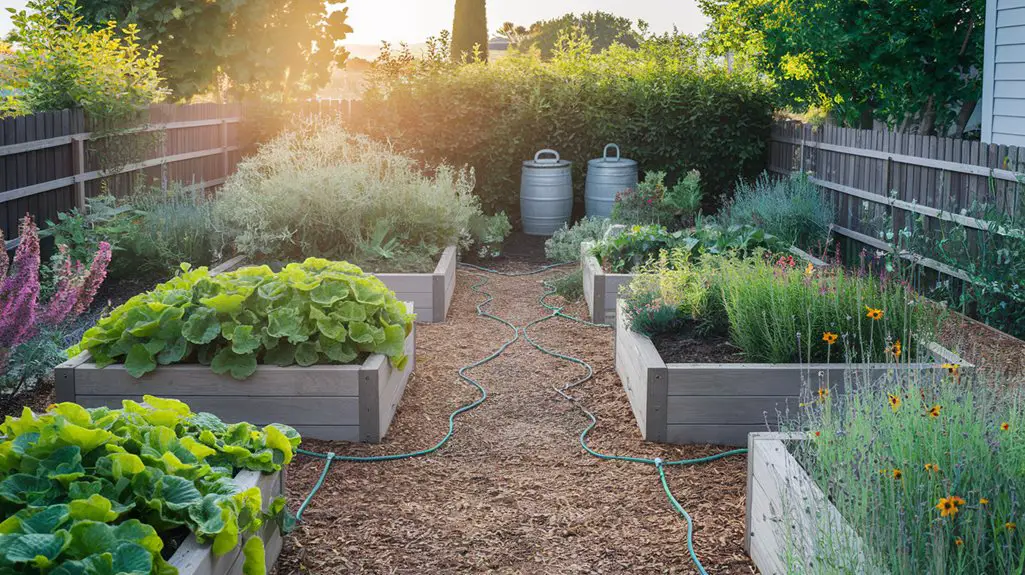
As climate change intensifies, even minor temperature shifts can dramatically impact your garden's productivity. You've likely noticed unpredictable weather patterns—extended droughts, unexpected freezes, or intense rainfall—making traditional gardening approaches increasingly unreliable.
Creating a climate-resilient garden isn't just about plant survival; it's about designing a system that adapts to environmental fluctuations while remaining productive. The strategies that once worked consistently for generations of gardeners now require thoughtful modification to thrive in our rapidly changing world.
On this page
Assessing Your Local Climate Challenges
Why do so many gardeners struggle in their first seasons? Often, they've failed to understand their local climate conditions.
Before planting your first seed, you'll need to identify your USDA hardiness zone, frost dates, seasonal temperature extremes, and precipitation patterns.
Track your yard's unique microclimate factors: areas with full sun versus shade, wind corridors, drainage issues, and heat-retaining structures.
Consider using data loggers to monitor temperature and moisture levels throughout your space.
Climate challenges vary dramatically—from drought in the Southwest to excessive rainfall in the Pacific Northwest, or extreme temperature fluctuations in the Midwest.
Adaptation strategies must be location-specific. Implementing maximum efficiency rainwater systems can significantly enhance your garden's resilience against climate variability.
Once you've properly assessed your climate realities, you'll avoid the common pitfall of fighting against, rather than working with, your environment.
Choosing Drought-Tolerant Plant Varieties
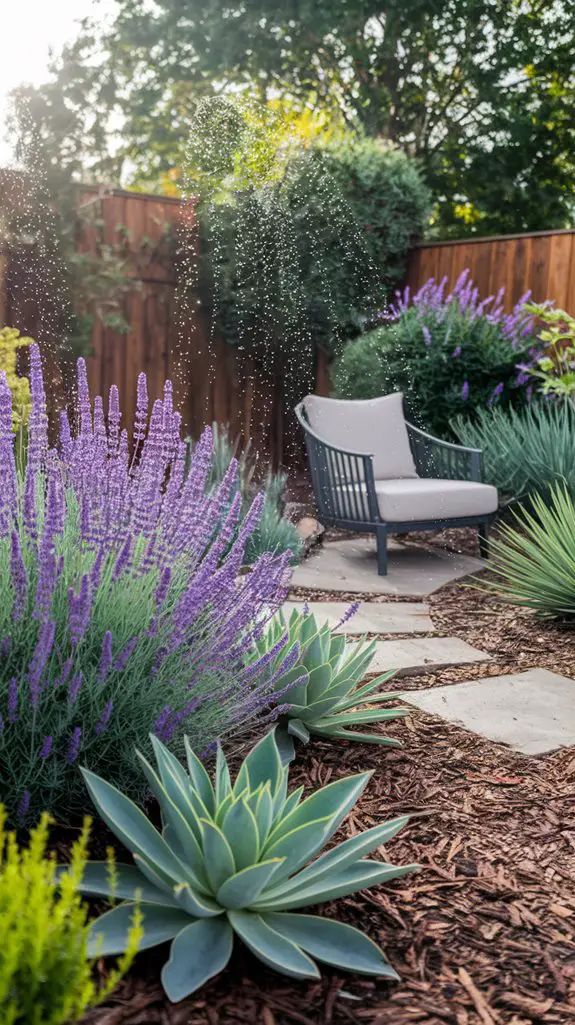
As climate change intensifies water restrictions across many regions, selecting drought-tolerant plants becomes not just an option but a necessity for sustainable gardening.
Focus on native species already adapted to your local rainfall patterns, such as lavender, sage, and rosemary in Mediterranean climates or yucca and agave in desert zones.
Look for plants with specialized drought adaptations: silvery foliage, waxy coatings, small leaves, or deep root systems.
These evolutionary features minimize water loss while maximizing absorption. Additionally, incorporating drought-resistant landscaping techniques can further enhance your garden's resilience to dry conditions.
Consider ornamental grasses like blue fescue, perennials such as coneflower and black-eyed Susan, and shrubs including juniper and barberry.
Water Conservation Techniques for Garden Survival
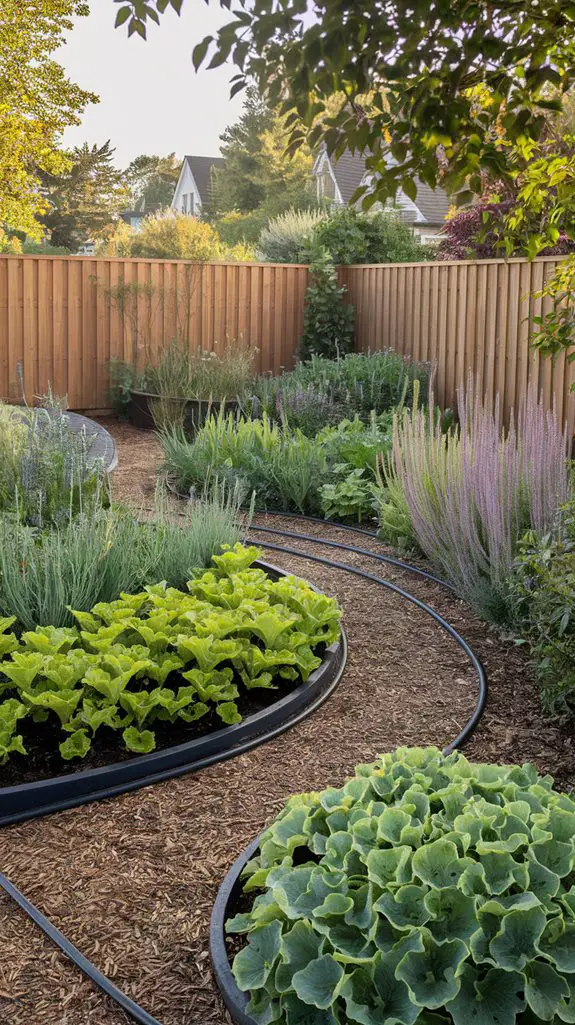
Once you've selected drought-tolerant plants, implementing effective water conservation strategies becomes the next logical step for garden success.
Install drip irrigation systems that deliver water directly to root zones, minimizing evaporation and runoff. Apply 2-3 inches of organic mulch around plants to retain soil moisture and suppress thirsty weeds.
Water deeply but infrequently to encourage roots to grow downward, making plants more resilient during dry spells. Capture rainwater in barrels positioned under downspouts for free irrigation during dry periods.
Consider installing rain gardens in low-lying areas to maximize natural precipitation absorption. Group plants with similar water requirements together, creating hydrozones that prevent overwatering.
Time your irrigation for early morning when temperatures are cooler and wind is minimal, reducing evaporation losses considerably. Additionally, utilizing water-saving irrigation systems can further enhance your garden's efficiency and sustainability.
Building Healthy, Carbon-Rich Soil
The foundation of every thriving garden lies in developing rich, carbon-sequestering soil that teems with microbial life. You'll create this living ecosystem by incorporating organic matter continuously through composting, mulching, and cover cropping.
These practices lock carbon into your soil while improving its structure and fertility. Additionally, employing DIY traps for pests can help protect your garden from harmful insects while maintaining a healthy ecosystem.
| Soil Building Strategy | Carbon Impact | Implementation Difficulty |
|---|---|---|
| Compost Application | High | Moderate |
| Cover Cropping | Very High | Low |
| No-Till Practices | High | Low |
Avoid synthetic fertilizers that disrupt soil biology and release carbon. Instead, add biochar to create permanent carbon structures while providing habitat for beneficial microorganisms.
Regular soil tests will guide your amendment strategy, ensuring balanced nutrient profiles. Remember that building carbon-rich soil isn't just good gardening—it's climate action happening right in your backyard.
Strategic Garden Layout for Temperature Extremes
Climate extremes now demand thoughtful garden design that buffers plants from temperature fluctuations while maximizing growing potential.
Orient beds east to west, allowing low winter sun to warm plants while providing summer shade. Create microclimates using structures, trees, and landforms—plant heat-sensitive crops north of walls that block afternoon sun.
Implement keyhole or mandala designs to reduce exposed edges where temperature fluctuations hit hardest. Cluster plants with similar water needs, and position drought-tolerant varieties at higher elevations in your garden.
Incorporate windbreaks on northern perimeters to deflect cold gusts, while southern barriers should be permeable to allow cooling airflow during heat waves.
Consider hugelkultur mounds that provide thermal mass, retaining daytime heat and releasing it slowly during cold nights, creating stable growing zones. Additionally, using raised garden beds can improve soil drainage and temperature regulation, further enhancing your garden's resilience.
Creating Biodiversity to Enhance Resilience
Beyond temperature management, robust gardens thrive on biodiversity—nature's built-in insurance policy against pests, disease, and weather extremes.
You'll want to incorporate multiple plant families, varying heights, and different bloom times to create a garden ecosystem rather than a collection of individual plants.
Include native plants that evolved to withstand your local conditions—they'll require less intervention during climate stress.
Interplant compatible species like the "Three Sisters" (corn, beans, squash) to maximize space and create beneficial relationships.
Add pollinator-attracting flowers near vegetables to increase yields and resilience.
Don't overlook soil biodiversity—incorporate cover crops and practice minimal tillage to nurture beneficial microorganisms.
Incorporating sustainable gardening practices can also enhance the overall health and productivity of your garden.
Remember that diverse gardens bounce back faster from extreme weather events and pest outbreaks than monocultures.
Season Extension Methods for Unpredictable Weather
When unpredictable weather threatens to shorten your growing season, implementing strategic season extension methods becomes essential for maintaining productivity.
Install floating row covers or cold frames to protect plants from unexpected frosts while allowing sunlight and moisture to penetrate. Hoop houses offer more substantial protection, creating microenvironments that can extend growing seasons by several weeks at each end.
For heat waves, employ shade cloth that reduces solar intensity by 30-50% while maintaining airflow.
Consider thermal mass techniques using water barrels or stone walls that absorb daytime heat and release it gradually overnight. Harvesting rainwater can also provide a reliable irrigation source during dry spells, supporting plant health and growth. Succession planting with staggered crop schedules hedges against weather-related losses, ensuring continuous harvests despite climate fluctuations.
Choose resilient varieties with shorter maturation periods like 'Early Girl' tomatoes or 'Sugar Ann' peas for reliable yields in unpredictable conditions.
Native Plant Integration for Ecosystem Support
Native plants form the foundation of a resilient, self-sustaining garden ecosystem that supports local wildlife while reducing maintenance demands. When you integrate indigenous species, you'll create habitat corridors that attract beneficial insects, pollinators, and natural pest predators. Additionally, implementing native plant landscaping can enhance your garden's overall aesthetic and ecological benefits.
Research plants native to your specific region and incorporate them strategically throughout your garden spaces. Focus on diversity of flowering periods and growth habits.
| Native Plant Benefits | Implementation Strategies |
|---|---|
| Drought tolerance | Group by water needs |
| Pest resistance | Use as protective borders |
| Wildlife support | Plant in diverse clusters |
| Soil improvement | Layer with companions |
Remember that even a small percentage of native plants can dramatically increase your garden's ecological value. Start with keystone species that support numerous wildlife interactions and expand gradually as you observe their performance.
Adaptive Management Practices for Changing Conditions
Climate disruptions and seasonal unpredictability require gardeners to embrace flexible, responsive approaches rather than rigid maintenance schedules.
Adaptive management means monitoring your garden's changing needs and adjusting your practices accordingly to build long-term resilience.
- Implement rolling planting schedules – Instead of single-date plantings, stagger your seeding every 7-10 days to hedge against unexpected frosts or heat waves that might destroy an entire crop.
- Create microclimate zones – Designate garden areas with different moisture, sun exposure, and wind protection levels, allowing you to shift plants as conditions change throughout seasons.
- Maintain detailed records – Track plant performance, weather patterns, and intervention results in a garden journal to identify trends and refine your strategies based on what actually works in your unique landscape.
Additionally, consider incorporating rainwater harvesting systems to optimize water usage and support plants during dry spells.
Conclusion
Climate-resilient gardening isn't merely about survival—it's about thriving through change. You'll discover that gardens designed with climate challenges in mind actually outperform traditional landscapes during extreme weather events.
By implementing these strategic adaptations, you're not just growing plants; you're creating a resilient ecosystem that will flourish despite climate uncertainties. Your efforts contribute to local biodiversity while providing sustainable harvests even as conditions shift unpredictably around you.
