
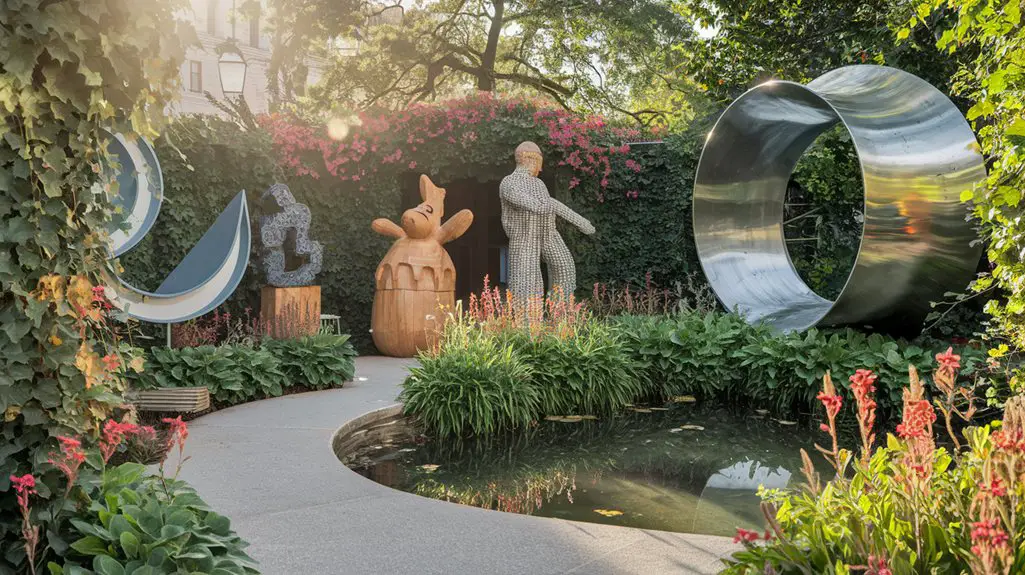
Like Olmsted’s vision for Central Park, art installations can transform desolate urban patches into vibrant sanctuaries. You’ll find these artistic elements serve multiple functions beyond mere decoration—they create focal points, enhance biodiversity, and foster community connections in otherwise overlooked spaces.
When you integrate sculptural pieces, murals, or interactive displays into garden design, you’re not simply beautifying an area; you’re developing multisensory environments that invite both contemplation and participation. What makes these installations truly essential to modern urban planning?
On this page
Transforming Urban Spaces With Artistic Expression
As urban centers continue to densify, the integration of artistic elements within garden spaces offers unprecedented opportunities for placemaking and civic engagement.
You’ll find that strategic art installations transform utilitarian green spaces into multisensory environments that invite contemplation and interaction.
By incorporating sculptures, light installations, or sound designs, you’re creating spatial interventions that redefine the urban landscape. These artistic elements serve as focal points, drawing people into previously overlooked areas while articulating the cultural identity of neighborhoods.
The juxtaposition of organic plantings with constructed art forms creates a dialectic that challenges perceptions of the built environment.
You’re not just beautifying spaces—you’re fostering ecological awareness through visual metaphors and materials that reference sustainability principles. Additionally, incorporating kids-friendly art installations can enhance the engagement and enjoyment of younger visitors, making urban gardens more inclusive and vibrant.
This synthesis of aesthetics and function elevates urban gardens from passive greenery to active cultural catalysts.
Enhancing Biodiversity Through Creative Installations
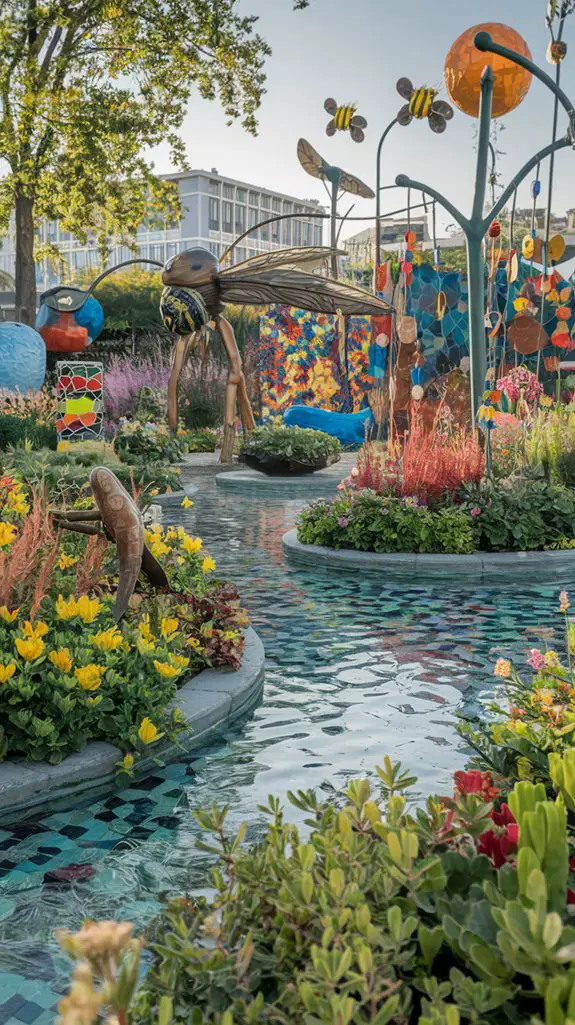
While traditional urban gardens contribute to city greening, intentionally designed art installations can greatly amplify biodiversity outcomes beyond mere aesthetics. You’ll achieve richer ecological systems by incorporating habitat-specific structures that double as sculptural elements. Incorporating solar-powered water features can further enhance the habitat by attracting various wildlife, including pollinators and amphibians.
| Installation Type | Biodiversity Benefit |
|---|---|
| Water features | Attract pollinators, amphibians |
| Vertical gardens | Create multi-level habitats |
| Insect hotels | Support beneficial invertebrates |
| Light sculptures | Minimize disruption to nocturnal species |
These designs function as both ecological interventions and public engagement tools. When you integrate native materials with artistic vision, you’re creating microhabitats that support urban wildlife corridors. Consider how your installation’s materiality—whether recycled metals, sustainable woods, or living plants—contributes to ecosystem functions while challenging viewers to reconsider human-nature relationships in built environments.
Community Engagement and Shared Cultural Experiences
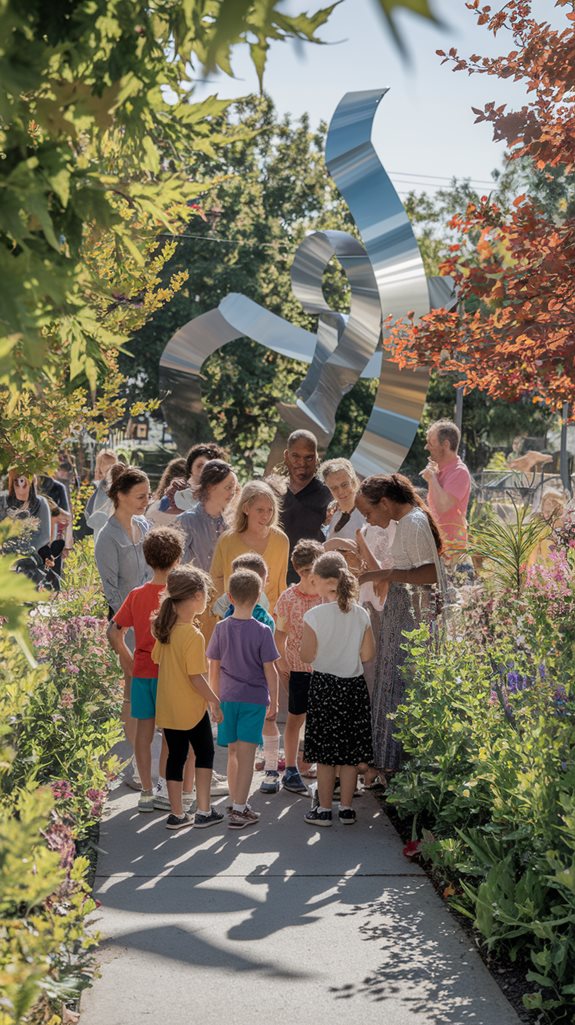
How can urban art installations transform from passive viewing experiences into catalysts for community action? By designing participatory pieces that require collective maintenance or seasonal modifications, you’ll foster neighborhood investment in shared spaces.
These installations become democratic platforms where diverse cultural narratives intersect, creating micro-commons within urban fabrics.
Consider implementing QR-coded installations that link to digital forums where residents can propose modifications or document seasonal changes. This technical integration transforms static sculptures into evolving civic dialogues.
When you commission works representing multiple cultural traditions, you’re building cross-cultural bridges while establishing place-based identity markers.
The most successful garden installations function as both aesthetic interventions and social infrastructure—spaces where environmental stewardship becomes tangible through collective care practices, effectively democratizing the urban ecological experience while building community resilience through shared cultural production.
Weather-Resistant Materials for Long-Lasting Garden Art
Selecting weather-resistant materials forms the foundation of any enduring garden art installation that must withstand nature’s persistent forces.
You’ll need to evaluate both aesthetic integrity and environmental sustainability when choosing materials that can endure seasonal changes.
- Cor-ten steel develops a protective rust patina while maintaining structural integrity for decades
- Marine-grade stainless steel (316) resists chloride corrosion even in coastal garden environments
- UV-stabilized recycled plastics offer colorfast durability without contributing to landfill waste
- Sealed hardwoods like teak and ipe provide natural beauty with minimal maintenance requirements
When designing your installation, remember that material selection directly impacts lifecycle costs. Low-impact materials can further enhance the sustainability of your project.
The initial investment in premium weather-resistant materials typically yields greater longevity, reducing replacement frequency and minimizing your installation’s environmental footprint.
Balancing Functionality and Aesthetic Appeal in Small Spaces
When designing art installations for compact urban gardens, the challenge lies in achieving dual functionality without compromising visual impact. You’ll need to prioritize pieces that serve multiple purposes—consider vertical sculptures that double as trellises for climbing plants or artistic benches that provide both seating and visual interest.
Scale is critical in limited spaces; opt for proportional pieces that create focal points without overwhelming the area. You can integrate water-efficient features like artistic rain chains or sculptural rain barrels that capture precipitation while enhancing aesthetics.
Materials should complement your existing hardscape while remaining environmentally responsible—recycled metal, reclaimed wood, or locally sourced stone reduce your installation’s carbon footprint. Additionally, incorporating unique outdoor art can elevate the overall experience of your garden. Remember that negative space remains essential; don’t crowd your garden with art to the point where functionality suffers.
Conclusion
As you weave art into your urban garden, you’re not merely decorating space—you’re cultivating ecological narratives that dance between form and function. Weather-resistant installations invite biodiversity while reflecting community identity in even the smallest spaces. By incorporating thoughtfully designed artistic elements, you’ll transform overlooked urban pockets into living galleries where environmental consciousness blooms alongside creative expression, nurturing both ecosystem health and human connection.
