
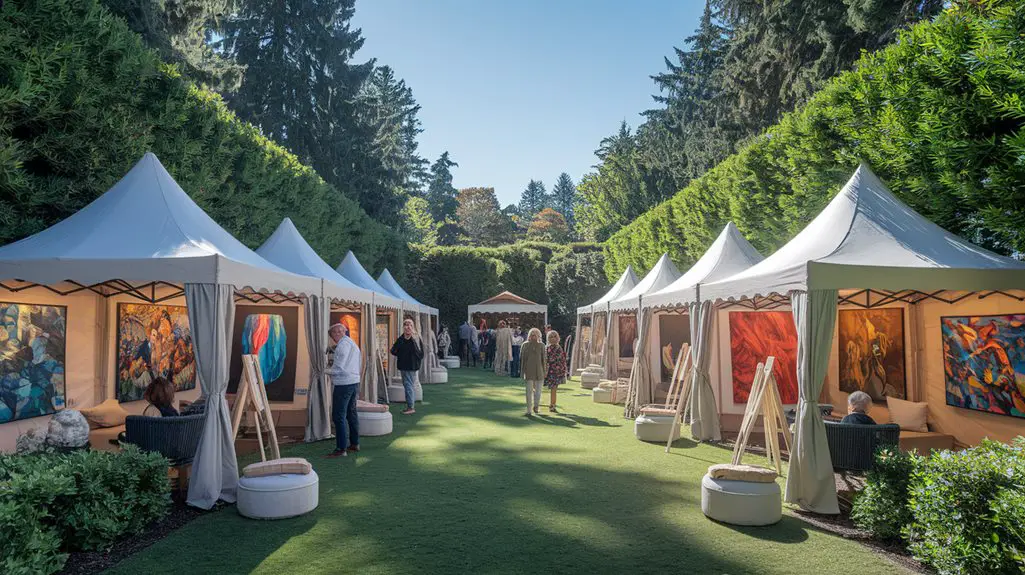
Are you preparing to showcase artwork in the open air? Your outdoor exhibit offers unique opportunities to connect art with nature, but success depends heavily on thoughtful planning.
You’ll need to evaluate space selection, weather protection, visitor experience, lighting design, and targeted promotion. Each element requires specific expertise and contemplation of both aesthetic and practical concerns. The difference between a memorable exhibition and a disappointing one often lies in these five critical areas of preparation.
On this page
Selecting the Perfect Outdoor Space for Your Art Exhibition
When commencing the journey of outdoor exhibition planning, choosing the right venue becomes your foundation for success.
You’ll need to assess several critical factors: available light throughout your exhibition hours, protection from extreme weather, and accessibility for diverse audiences.
Consider how your artwork interacts with the surrounding environment. Will trees, buildings, or natural features complement or distract from your pieces?
Evaluate the space’s foot traffic patterns—you want visibility without overcrowding that prevents proper viewing.
Don’t overlook practical concerns: proximity to restrooms, availability of parking, and security measures.
Visit potential locations at different times of day to understand how changing light affects visual perception of artwork.
Finally, verify permit requirements early. Many public spaces require applications months in advance, particularly for events involving installations or large gatherings. Incorporating creative art elements in your design can enhance the overall impact of your exhibition.
Weather-Proofing Your Artwork and Display Materials
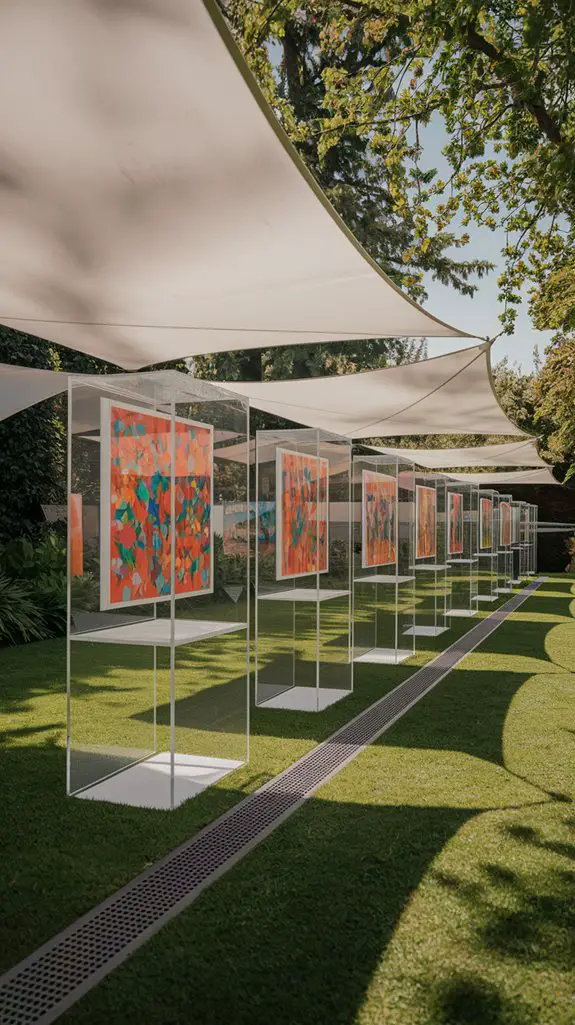
Weather presents the most formidable challenge to outdoor art exhibitions, regardless of how meticulously you’ve selected your venue.
You’ll need to implement strategic safeguards for each artwork type. For paintings, apply UV-resistant varnish and house them in waterproof display cases with silica gel packets to control humidity. Sculptures benefit from weather-resistant coatings such as polyurethane or marine-grade sealants.
Your display materials require equal attention. Choose stainless steel or powder-coated aluminum framing, which resists rust and corrosion. Anchor everything securely—wind-rated tent systems with proper ballasting can withstand gusts up to 40 mph.
Install proper drainage channels beneath platforms, and elevate all electrical components at least 12 inches from the ground. Consider modular systems that allow quick disassembly if severe weather approaches. Additionally, utilizing eco-friendly materials can enhance the sustainability of your outdoor exhibit while providing durability against the elements.
Creating an Engaging Layout and Visitor Flow
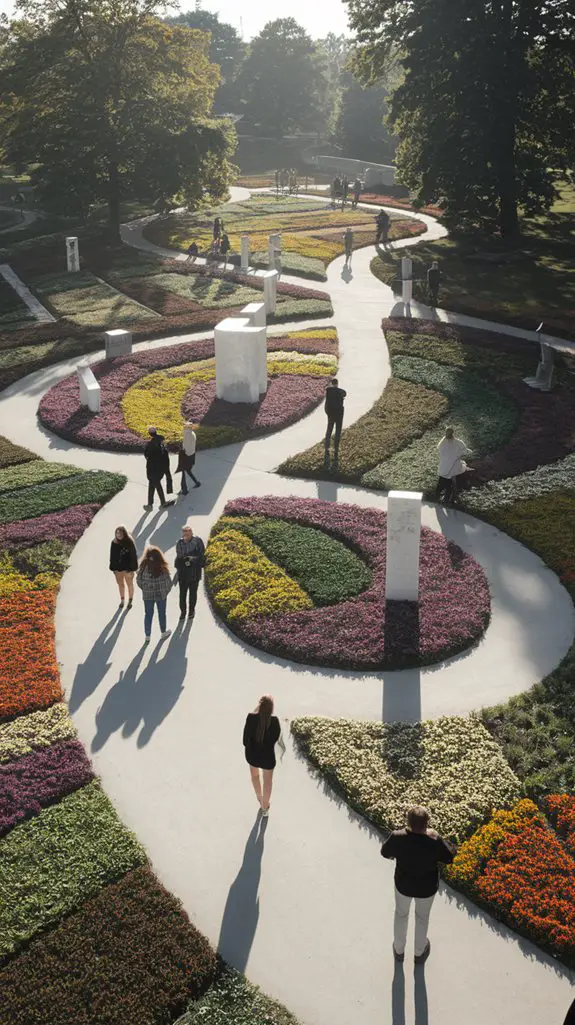
With your artwork properly protected from the elements, your attention must now shift to how visitors will experience the exhibition space. Consider both linear and non-linear pathways that allow intuitive navigation while encouraging discovery. Map your layout according to thematic connections, visual harmony, or chronological progression.
| Layout Type | Advantages | Best For |
|---|---|---|
| Circular | Maximum flow, no dead ends | Small spaces, single themes |
| Grid | Organized, predictable | Photography, uniform pieces |
| Organic | Encourages exploration | Mixed media, varied scales |
Maintain appropriate spacing—typically 3-4 feet between pieces—to prevent visual crowding. Position statement pieces at natural focal points or junctions where pathways meet. Remember that outdoor environments shift throughout the day, so anticipate how changing light conditions will affect viewing angles.
Lighting Considerations for Day and Evening Viewing
Lighting transforms an outdoor art exhibit from a daytime experience into a round-the-clock visual journey that captures visitors’ imagination differently as the hours pass.
During daylight, position sculptures and installations to leverage natural illumination—consider how shadows shift throughout the day and how sunlight interacts with different materials and textures.
For evening viewing, incorporate strategic artificial lighting. Use uplighting to dramatize three-dimensional works, spotlights to highlight focal pieces, and wash lighting for broader installations. Additionally, consider using solar-powered lighting to enhance the sustainability of your exhibit while providing an enchanting ambiance.
LED options offer energy efficiency while providing customizable color temperatures. Install pathway lighting to guarantee safe navigation between exhibits while maintaining the atmospheric quality you’ve cultivated.
Don’t overlook the power of contrast—darkness can frame illuminated works effectively, creating intimate viewing spaces within the larger exhibition environment.
Promoting Your Outdoor Art Exhibit to the Right Audience
How effectively you promote your outdoor art exhibit will ultimately determine its success, regardless of how masterfully you’ve handled the curation and lighting design.
Define your target demographic precisely—are you appealing to serious collectors, families, or the local community? This clarity informs all subsequent marketing decisions.
Leverage digital platforms strategically by creating event-specific hashtags and geotargeted social media campaigns.
Don’t overlook traditional channels; local arts publications and community newsletters often reach dedicated art enthusiasts who might miss digital promotions.
Consider partnering with nearby businesses or cultural institutions for cross-promotion opportunities.
Draft press releases that emphasize your exhibit’s unique qualities—perhaps its interaction with the natural environment or its accessibility to new audiences.
Conclusion
You’ve now mastered the essentials: selecting the ideal space, weather-proofing your displays, designing an intuitive layout, implementing strategic lighting, and targeting your promotional efforts. Your outdoor art exhibit won’t merely showcase creativity—it will transform the environment, captivate diverse audiences, and create memorable artistic experiences. Remember, successful outdoor exhibitions balance artistic vision with practical considerations, technical expertise with aesthetic sensitivity, and creative ambition with logistical precision.
