
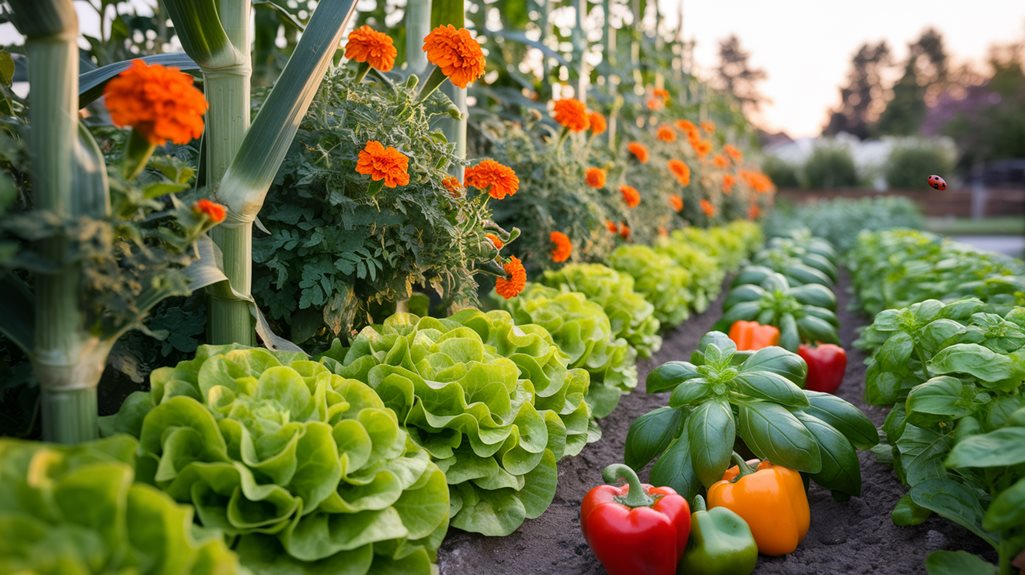
You’ve likely noticed how some vegetables in your garden seem to struggle no matter what you do, while others thrive effortlessly. The secret might be who they’re growing next to.
Companion planting isn’t just garden folklore—it’s a science-backed strategy that can dramatically boost your harvest while reducing pest problems. By understanding which plants support each other and which ones compete, you’ll transform your vegetable patch from merely productive to genuinely exceptional.
On this page
The Science Behind Companion Planting Benefits
While companion planting has been practiced for centuries by indigenous cultures worldwide, modern science has begun to validate these traditional methods through systematic research.
Certain plant combinations can reduce pest populations by either repelling insects or attracting beneficial predators that consume garden pests.
You’ll find that some plants release biochemicals that enhance growth in neighboring species—a phenomenon called allelopathy.
For example, basil releases compounds that improve tomato flavor and growth.
Other companions create microclimate benefits, with taller plants providing shade for heat-sensitive neighbors.
Root structures also play an essential role.
Deep-rooted plants can draw up nutrients from lower soil levels, making them available to shallow-rooted companions.
This complementary root relationship maximizes your garden’s nutrient efficiency without additional fertilizers. Additionally, companion planting techniques can promote overall biodiversity in your garden, leading to a more resilient ecosystem.
Essential Plant Pairings That Thrive Together
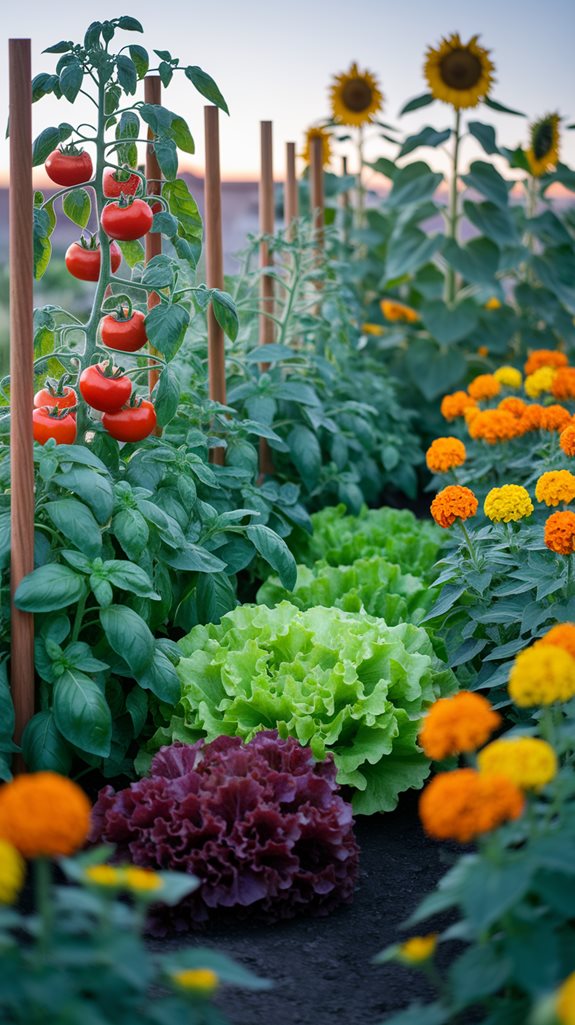
Now that we comprehend the scientific principles, let’s examine specific plant combinations that consistently demonstrate mutual benefits in vegetable gardens.
Tomatoes flourish alongside basil, which repels tomato hornworms while improving flavor. Plant carrots with onions to deter carrot flies, while onions benefit from carrots’ loosening of soil.
Beans and corn create a classic symbiosis—corn provides natural trellising while beans fix nitrogen that corn craves. Cucumbers thrive near sunflowers, which provide partial shade and windbreak protection.
Plant marigolds throughout your garden to repel nematodes and attract pollinators. Consider interplanting lettuce with taller brassicas for natural shade during summer’s heat.
Radishes excel when paired with spinach, as they mature quickly before spinach needs additional space.
Plants That Repel Garden Pests Naturally
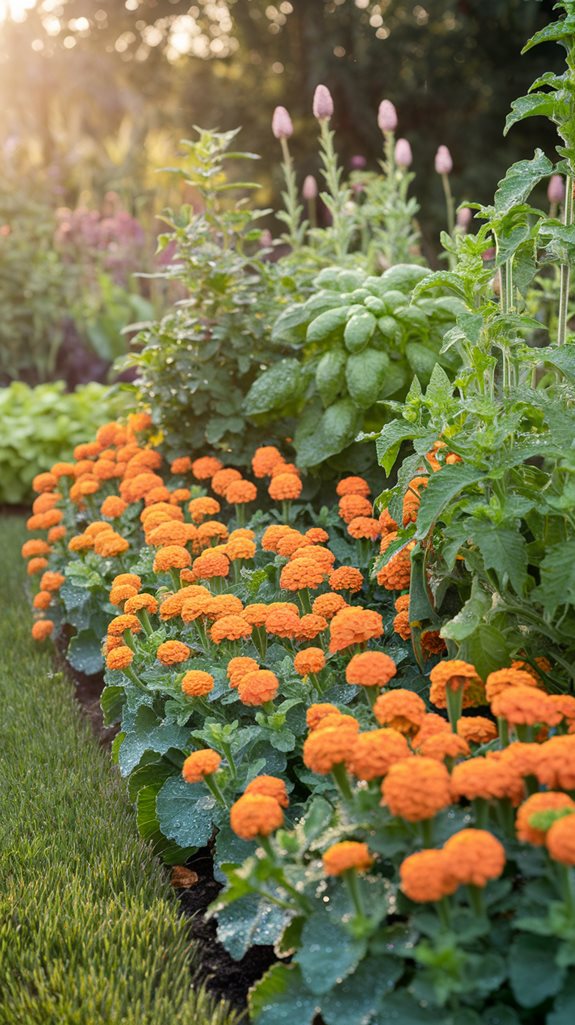
Leveraging certain plants as natural pest deterrents represents one of organic gardening’s most effective strategies.
You’ll find that strategic placement of aromatic herbs and flowers can dramatically reduce pest populations without chemical interventions.
- Marigolds release thiopene, which repels nematodes and drives away aphids, mosquitoes, and even rabbits when planted as borders.
- Nasturtiums act as trap crops for aphids, protecting your vegetables while attracting beneficial predatory insects.
- Basil planted near tomatoes repels thrips, flies, and mosquitoes while improving your tomato crop’s flavor profile.
- Chrysanthemums contain pyrethrin, a powerful natural insecticide effective against roaches, ticks, fleas, and ants.
In addition to these options, incorporating natural herbs like mint and rosemary can further enhance your garden’s defenses against unwanted pests.
Space-Saving Companion Arrangements for Small Gardens
Even with limited space, urban gardeners can maximize productivity through strategic companion planting arrangements. You’ll find that vertical structures like trellises allow climbing plants to grow upward while shade-tolerant companions flourish below. Try these space-efficient combinations to transform your small garden into a productive ecosystem.
| Vertical Plant | Ground-Level Companion |
|---|---|
| Pole beans | Radishes |
| Tomatoes | Basil/Marigolds |
| Cucumbers | Lettuce |
| Peas | Spinach |
| Sweet corn | Squash/Beans |
The “Three Sisters” method—planting corn, beans, and squash together—remains one of the most efficient space-saving techniques. Corn provides support for beans, which fix nitrogen, while squash spreads along the ground, suppressing weeds and retaining moisture. Interplanting quick-growing crops like radishes between slower-developing vegetables also maximizes your harvest from limited space.
Seasonal Rotation Strategies for Companion Planting Success
Seasonal companions shift throughout the growing year, requiring gardeners to adapt their planting strategies accordingly.
Implement a three-season rotation plan that maximizes beneficial relationships while minimizing pest buildup. You’ll need to track which plant families occupied each bed previously and plan next season’s companions based on complementary nutrient needs.
- Replace spring lettuce and spinach with heat-loving basil to companion with your maturing tomatoes in early summer.
- Follow nitrogen-fixing legumes with heavy-feeding brassicas in your fall planting schedule.
- Interplant quick-harvest radishes between slower-growing summer companions to utilize space efficiently.
- Shift aromatic pest-deterrent companions like dill from cucumber areas to carrot beds as seasons change.
Document your seasonal companion successes and failures to refine your rotation strategy year after year. Additionally, utilizing raised garden beds can enhance drainage and improve soil quality, which supports healthier plant growth.
Conclusion
You’ve now got all the tools to make companion planting work its magic in your garden. By pairing compatible plants, you’re creating a garden that’s greater than the sum of its parts.
Remember to rotate crops seasonally and use vertical space efficiently. Your garden will be turning heads and filling plates when you implement these strategic pairings that boost growth while naturally deterring unwanted pests.
