
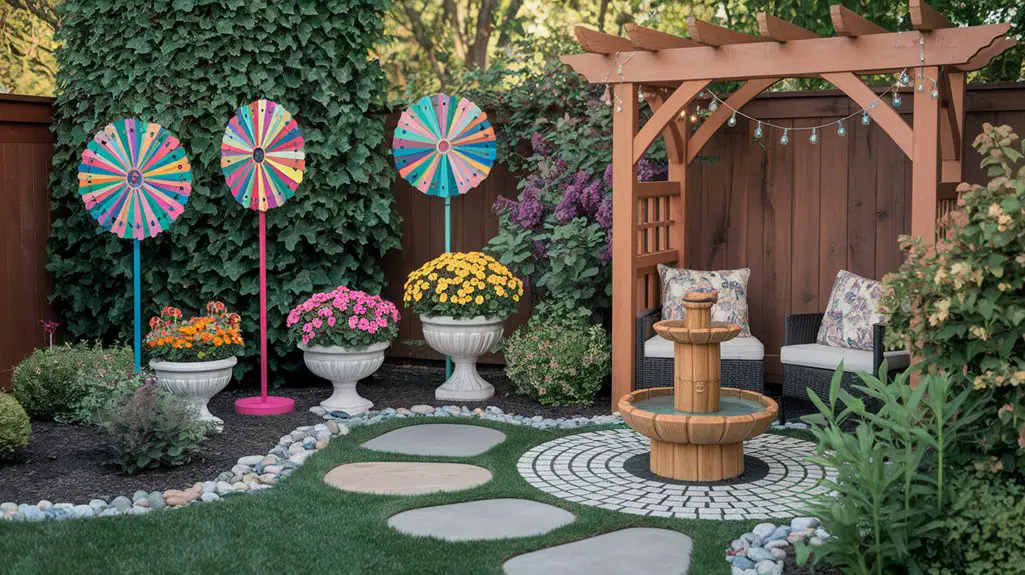
Many pet owners want a safer backyard but worry about the cost of pet-friendly landscaping. You don’t need to sacrifice your backyard aesthetic or drain your wallet to create a haven for your four-legged companions.
With thoughtful material choices and strategic upcycling, you can transform potential hazards into charming design elements. These five budget-conscious ideas will help you strike the perfect balance between style, safety, and sustainability.
On this page
Pet-Friendly Garden Borders Using Natural Materials
When designing your garden borders with pets in mind, natural materials offer the safest and most sustainable solution. Opt for smooth river rocks that won’t hurt paws but are too large for dogs to swallow. Avoid cocoa mulch, which contains theobromine that’s toxic to pets if ingested.
Consider using fallen branches or driftwood as attractive barriers that won’t leach chemicals into your soil. Cedar logs provide natural pest resistance without harmful additives. Incorporating certain plants can also enhance your garden’s ability to naturally repel pests while being safe for pets.
For flexible borders, try willow fencing that bends rather than breaks if your energetic pet collides with it.
Don’t use pressure-treated lumber in areas where pets dig or chew—the chemicals can cause serious health issues. Instead, choose untreated hardwoods or granite pavers that create distinct boundaries while remaining completely non-toxic to your furry companions.
DIY Non-Toxic Plant Displays for Curious Pets
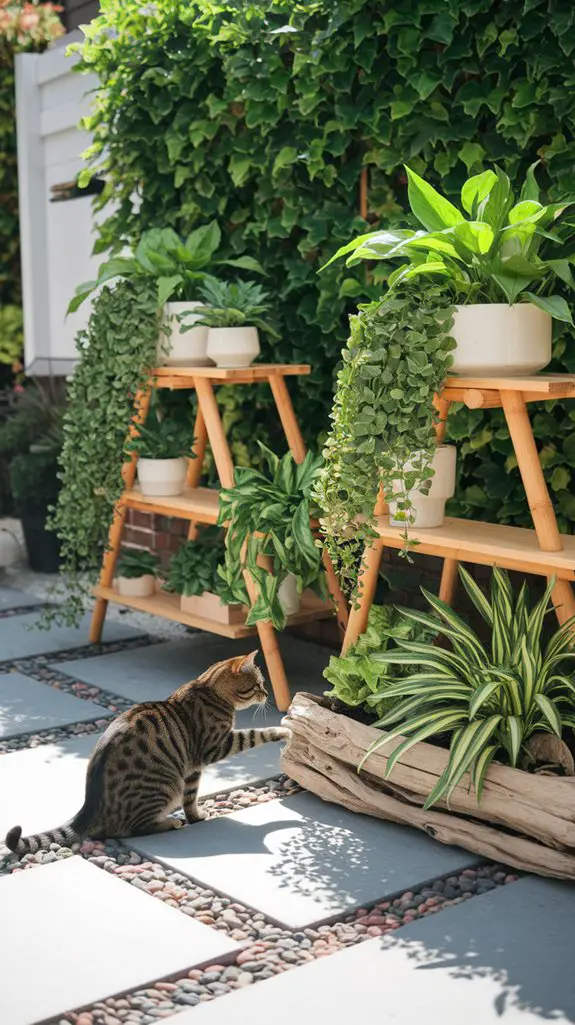
Creating elevated plant displays guarantees your pets can’t access potentially harmful greenery while still allowing you to enjoy beautiful botanicals in your yard.
Repurpose old wooden crates or pallets into hanging planters by attaching sturdy rope or chains for suspension from fence posts or tree branches.
For ground-level solutions, surround potted plants with natural deterrents like citrus peels or coffee grounds that repel curious pets without harming them.
Consider using wall-mounted mason jars for small herb gardens, keeping them well above your pet’s reach.
Always verify each plant’s safety before introducing it to your yard. Common toxic varieties include lilies, tulips, and azaleas.
Instead, opt for pet-safe alternatives such as sunflowers, marigolds, and roses. Additionally, be aware that certain landscaping choices can enhance your pet-friendly backyard while ensuring the safety of your furry friends.
Your outdoor space can be both aesthetically pleasing and completely safe for your four-legged companions.
Budget-Friendly Water Features Safe for Pets
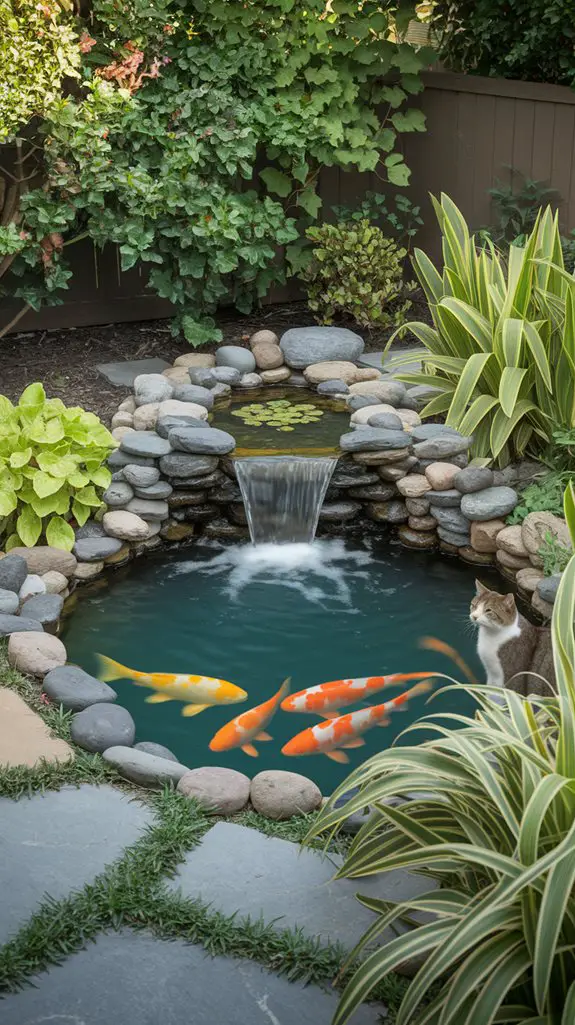
Although many commercial water features can be expensive, you’ll find several budget-friendly options that provide soothing hydration spots while keeping your pets safe.
Consider repurposing shallow ceramic dishes or plant saucers as simple pet-accessible fountains—just add a small submersible pump ($10-15). Avoid deep basins where small pets could drown.
Watch for toxic materials like treated copper, which can leach chemicals when exposed to water. Instead, opt for glazed ceramic, food-grade plastic, or natural stone.
Always secure electrical cords to prevent curious chewing and use low-voltage systems with proper GFCI protection.
Clean your DIY water feature weekly to prevent harmful algae growth.
For moving water, recirculating solar fountains ($25-30) offer energy-efficient alternatives that don’t require electrical wiring and can be placed anywhere sunlight reaches. Additionally, incorporating sustainable outdoor seating into your garden can enhance the overall eco-friendliness of your space.
Weather-Resistant Pet Play Zone Decorations
Weather-resistant play zone decorations must withstand both natural elements and enthusiastic pet activity while adding visual appeal to your yard. Choose non-toxic, durable materials that won’t leach harmful chemicals when exposed to rain or pet saliva. It’s essential to select pet-safe ground cover that complements your outdoor space and keeps your pets safe.
| Material | Benefits | Cautions |
|---|---|---|
| Cedar wood | Naturally rot-resistant, repels insects | Avoid chemically-treated varieties |
| Recycled plastic | Virtually indestructible, eco-friendly | Check for BPA-free certification |
| Natural stone | Weatherproof, provides cooling spots | Guarantee smooth edges to prevent injuries |
Consider colorful agility tunnels made from UV-resistant fabric, or install pet-safe artificial turf patches that drain properly to prevent mold. Upcycled tires painted with non-toxic outdoor paint create climbing structures while diverting waste from landfills. Remember that decorations should enhance your pet’s experience while complementing your landscape’s aesthetic.
Upcycled Furniture That’s Durable for Pet Households
While transforming old furniture into pet-friendly pieces saves money, it also reduces landfill waste and creates unique backyard focal points.
Look for solid wood pieces at thrift stores or yard sales—they’ll withstand scratching paws better than particleboard.
Sand down rough edges and apply pet-safe sealants to protect against moisture and accidents. Avoid toxic paints containing VOCs; instead, opt for milk paint or natural stains.
Remember that metals can heat dangerously in direct sunlight, potentially burning paw pads.
Old dressers can become storage benches for toys, while wooden cable spools make excellent elevated platforms where pets can lounge safely above wet grass. Incorporating low-maintenance pet-friendly yard solutions can enhance the overall safety and enjoyment of your outdoor space.
Always secure taller furniture to prevent tipping when your dog inevitably uses it as a springboard during playtime.
Conclusion
You’ve got the blueprint for a backyard that’s both beautiful and safe for your furry friends. With these affordable ideas, your outdoor space can transform like a butterfly emerging from its cocoon—naturally and without chemical dangers.
Remember, what seems harmless to us might be toxic to pets. Always research materials thoroughly and choose sustainable options that won’t harm your pets or the planet they’ll inherit.
