
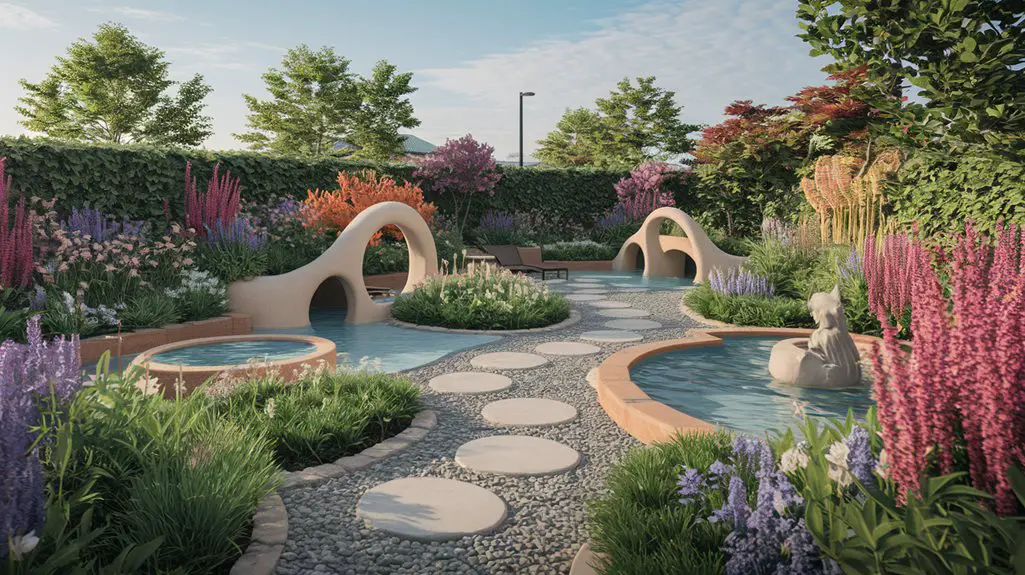
While many feline companions experience limited outdoor access due to safety concerns, you don’t have to keep your cat completely confined indoors. Creating a thoughtfully designed cat-friendly garden space offers numerous benefits for your pet’s physical and mental well-being.
You’ll provide environmental enrichment that satisfies natural instincts for climbing, exploring, and observing wildlife. The right combination of safe plants, vertical structures, and protected lounging areas transforms your outdoor space into a sanctuary that both you and your cat will appreciate.
On this page
Benefits of Outdoor Access for Your Feline Friend
While indoor-only lifestyles have gained popularity for safety reasons, providing supervised outdoor access offers numerous benefits for your cat’s physical and mental well-being.
Outdoor environments stimulate your cat’s natural instincts through enhanced sensory experiences—scents, sounds, and textures unavailable indoors. This enrichment reduces behavioral problems like furniture scratching, excessive vocalization, and destructive tendencies.
The varied terrain of gardens promotes physical exercise as cats climb, balance, and navigate different surfaces, helping maintain healthy weight and muscle tone.
Outdoor spaces also provide essential vitamin D absorption through sunlight exposure and introduce beneficial microorganisms that strengthen your cat’s immune system. Furthermore, sustainable backyard designs can create safe and engaging environments for your pet while being kind to the planet.
Additionally, gardens offer psychological benefits through territory establishment and environmental control, reducing stress-related conditions while satisfying your cat’s innate curiosity through exploration of a constantly changing landscape.
Safe Plant Selection for Curious Cats
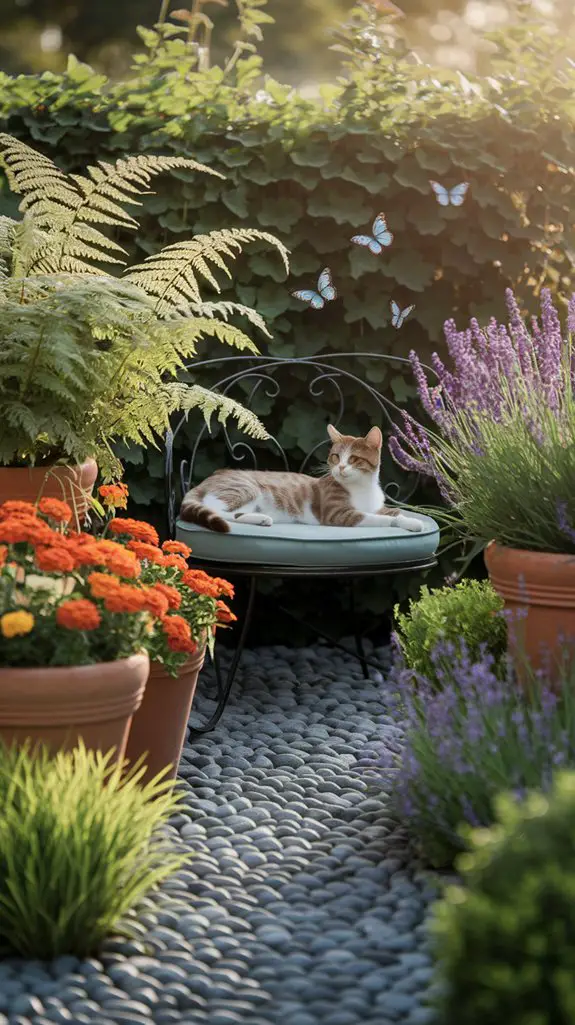
Creating a cat-friendly garden requires careful consideration of plant toxicity, as cats explore their environment through taste and touch.
Select vegetation that won’t harm your feline if ingested or contacted. The ASPCA’s toxic plant database lists hundreds of plants that can harm cats, from mild digestive upset to severe organ damage.
Choose these cat-safe options for your garden:
- Catnip, valerian, and cat thyme—herbs that provide stimulation and enrichment
- Ornamental grasses like feather reed and fountain grass—safe alternatives for cats who enjoy chewing vegetation
- Butterfly bush, zinnia, and sunflowers—non-toxic flowering options that attract beneficial insects
Additionally, incorporating eco-friendly options into your garden design can enhance the overall safety and sustainability of the space for your pets.
When designing your garden, position toxic plants in inaccessible areas or eliminate them entirely.
Regular monitoring of your cat’s outdoor behavior will help guarantee they’re interacting safely with the plants you’ve selected.
Creating Comfortable Lounging Areas
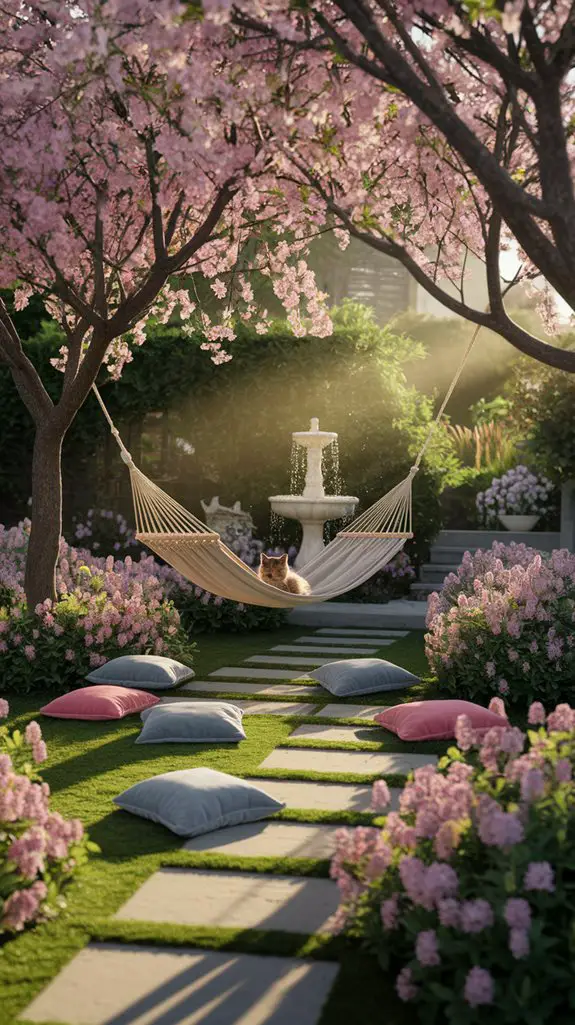
Since cats spend approximately 12-16 hours per day resting or sleeping, strategic lounging areas represent essential components of any feline-friendly garden design.
You’ll want to incorporate multiple resting zones at varying heights and exposures to accommodate your cat’s changing preferences throughout the day.
Install sturdy platforms or shelves on fence posts, garden walls, or tree-mounted brackets where cats can survey their territory safely.
Place weatherproof cushions in sheltered nooks that offer protection from precipitation and direct sunlight.
Position these lounging spots near windows for easy indoor-outdoor shifts.
Consider incorporating heated outdoor beds for cold-weather comfort.
Remember to situate some lounging areas in dappled shade and others in full sun to give your cat thermoregulatory options.
The ideal cat garden provides both concealed retreats and elevated perches that satisfy your feline’s instinctual security needs. Additionally, incorporating pet-friendly landscaping elements can enhance the overall safety and enjoyment of your outdoor space.
Vertical Elements for Climbing and Exploration
Because cats possess an innate drive to climb and explore vertical spaces, incorporating suitable climbing structures into your garden design fulfills essential behavioral needs. Vertical elements provide environmental enrichment, vantage points for territorial surveillance, and safe retreats from ground-level threats. Consider implementing these vertical features:
- Install weather-resistant cedar or bamboo shelves at graduated heights along fences or walls, creating a “cat highway” that allows for natural climbing progression.
- Position sturdy log rounds or stone cairns of varying heights (6-24 inches) to facilitate jumping practice and offer intermediate resting spots.
- Integrate cat-safe trellises with robust vines like honeysuckle or jasmine that can support a cat’s weight while providing sensory stimulation through foliage. These features not only cater to your cat’s climbing instincts but also enhance the overall backyard experience by promoting physical activity and mental engagement.
Water Features That Entice and Delight
While many cats display a natural curiosity toward water, the right water feature can transform your garden into a sensory playground that satisfies their instinctual fascination.
Consider installing a shallow bubbling fountain with gentle water movement that won’t intimidate your feline companion. The trickling sound attracts cats while providing essential hydration opportunities throughout the day.
Opt for recirculating systems to guarantee water safety and freshness. Position your water feature near plants but away from electrical components and feeding stations. Select non-toxic materials like ceramic or stone that won’t leach harmful chemicals.
The ideal depth shouldn’t exceed one inch to prevent accidents while still allowing paw-dipping exploration. Additionally, incorporating a koi pond can enhance the aesthetic appeal of your garden while offering a vibrant habitat for fish.
You’ll notice increased garden visits as cats are evolutionarily programmed to seek moving water sources—a survival instinct that perceives running water as safer than stagnant pools.
Natural Deterrents for Keeping Cats Within Boundaries
Creating feline boundaries doesn’t require harsh chemicals or unsightly barriers that compromise your garden’s aesthetic appeal. Strategic plantings can effectively define zones while maintaining your garden’s visual harmony.
Incorporate these natural deterrents to establish gentle boundaries:
- Plant Coleus canina (Scaredy Cat Plant) or rue along garden perimeters—cats find their scent repellent despite their attractive foliage and flowers.
- Create textural deterrents using stone mulch, pine cones, or eggshell fragments around protected plant beds—the uncomfortable footing discourages paw traffic.
- Install citrus peel arrangements around prized plants or newly seeded areas—the concentrated oils emit odors cats naturally avoid.
These botanically-based solutions provide effective boundary enforcement while preserving your garden’s ecological integrity and visual appeal. Additionally, implementing natural deterrents can enhance your garden’s functionality by keeping your pets safe while allowing them to enjoy the outdoors.
They’ll help direct your cat’s exploration to designated garden paths and play zones.
Protection From Predators and Weather Elements
Even in controlled garden environments, outdoor cats face natural threats that thoughtful design elements must address. Your design should include elevated platforms that allow cats to escape ground predators while providing strategic vantage points.
Install weather-resistant shelters with multiple entry points to prevent cornering. Additionally, incorporating native flowering plants can attract beneficial insects that enhance the ecosystem while providing food sources for your cats.
| Threat Type | Preventive Measure | Implementation Cost |
|---|---|---|
| Aerial Predators | Dense canopy coverage | Moderate |
| Ground Predators | Elevated escape routes | Low-Moderate |
| Weather Extremes | Insulated shelters | Moderate-High |
Incorporate dense shrubs along perimeters that deter larger animals while creating microhabitats that moderate temperature extremes. Position these plantings to block prevailing winds and create sun-warmed lounging spots. Carefully select materials that withstand environmental exposure while remaining free from toxic treatments that could harm your cat through incidental contact.
Sensory Stimulation Through Garden Design
Cats experience their environment through a complex sensory system that requires thoughtful stimulation within your garden design. When planning sensory elements, consider feline preferences for texture, sound, and scent to create an enriching outdoor space that satisfies their natural instincts.
- Textural diversity: Incorporate varied surfaces including smooth stones, soft mulch, and natural grass patches where cats can explore different tactile sensations through their sensitive paw pads.
- Auditory elements: Install wind chimes, place bird feeders at safe heights, or include water features that produce gentle trickling sounds to engage their acute hearing.
- Olfactory stimulation: Select cat-friendly aromatic plants such as catmint, valerian, and silver vine strategically throughout the garden to create scent zones that encourage exploration and stimulate their superior sense of smell. Additionally, consider incorporating pet-friendly plants that not only beautify the space but also create engaging experiences for your feline friends.
Balancing Aesthetics With Feline Functionality
While sensory elements fulfill your cat’s natural needs, a truly successful cat-friendly garden must also satisfy human aesthetic preferences.
You’ll need to integrate feline-focused features seamlessly into your overall landscape design. Consider using decorative trellises as climbing structures, incorporating catnip and cat grass within formal herb gardens, and selecting ornamental grasses that double as hiding spots.
Install pathways with stepping stones that provide both visual structure and perching spots for cats. Choose planters and garden art that complement your style while creating exploration opportunities.
Designate specific zones for litterbox alternatives using decorative gravel that blends with your hardscaping. When selecting cat-safe plants, prioritize those with architectural interest or seasonal color changes to maintain visual appeal while ensuring your garden remains both beautiful and functional. Additionally, it is essential to choose plants that are safe for pets to prevent any health issues for your feline friends.
Maintenance Considerations for a Cat-Friendly Landscape
Creating a cat-friendly garden requires thoughtful maintenance practices that balance your feline’s needs with horticultural requirements. Regular monitoring prevents your garden from becoming either overgrown or sparse, both conditions that can negatively impact your cat’s enjoyment of the space.
- Implement quarterly pruning schedules for cat-attractive plants like catnip and cat grass to prevent overharvesting while maintaining fresh growth that stimulates feline interest.
- Apply pet-safe fertilizers and soil amendments exclusively—many commercial products contain ingredients toxic to cats when ingested during grooming.
- Establish contained composting systems that prevent cats from accessing decomposing material while still allowing you to recycle garden waste efficiently.
- Consider incorporating shade solutions for your pet-friendly backyard to ensure your cat has comfortable areas to relax during hot weather.
Remember to inspect pathways and structures monthly for stability issues that could cause injury to your agile but sometimes unpredictable feline companions.
Conclusion
Your cat-friendly garden isn’t just a luxury—it’s an essential extension of your pet’s environment. As you’ve designed vertical spaces, safe plants, and secure boundaries, you’re providing vital enrichment for your cat’s physical and mental health. Remember, “a stitch in time saves nine”; preventative design choices eliminate potential hazards while creating a harmonious space that satisfies your aesthetic vision and your feline’s natural instincts simultaneously.
