
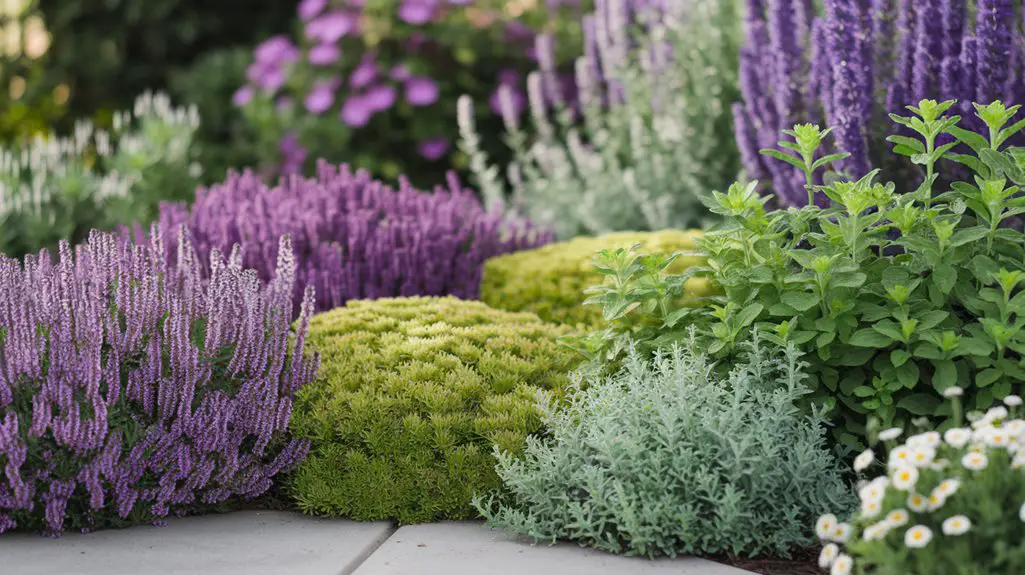
Creating a pet-friendly backyard doesn’t mean sacrificing a beautiful landscape. You’ll find that the right ground covers can withstand playful paws while enhancing your outdoor space.
From aromatic creeping thyme to resilient clover varieties, these seven options offer durability and safety for your furry companions. They’ll transform bare patches into lush retreats where your pets can roam freely without exposure to toxic plants or harsh chemicals. Let’s explore how these ground covers can revolutionize your yard.
On this page
Creeping Thyme: A Fragrant Low-Growing Option
When seeking a durable ground cover that’s both pet-friendly and aesthetically pleasing, creeping thyme (Thymus serpyllum) stands out as an exceptional choice. This aromatic perennial creates a dense carpet of tiny leaves topped with delicate purple, pink, or white flowers that bloom throughout summer.
You’ll appreciate how creeping thyme tolerates moderate foot traffic—and paw traffic—without significant damage. It thrives in well-drained soil and full sun, requiring minimal maintenance once established.
Unlike many ornamental plants, creeping thyme contains no toxic compounds harmful to dogs or cats. Additionally, its ability to attract backyard wildlife can enhance your garden’s ecosystem and contribute to natural pest control.
For best results, plant thyme plugs 6-12 inches apart in spring after frost danger passes. Water regularly until established, then reduce frequency.
Its natural pest-repellent properties mean you won’t need chemical treatments that could harm your pets.
Clover Varieties That Stand Up to Paw Traffic
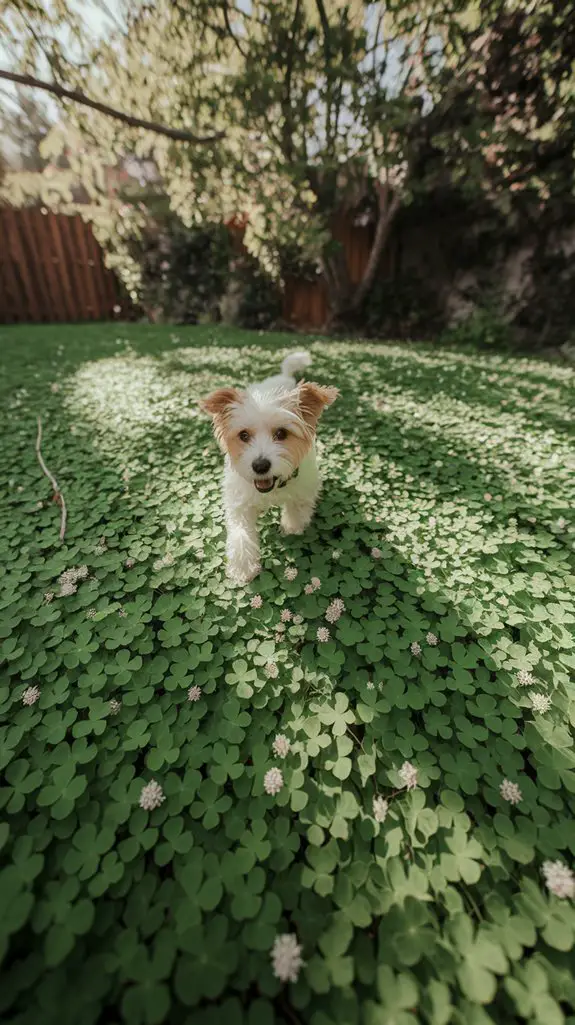
Several clover varieties offer exceptional durability for pet owners seeking ground covers that withstand regular paw traffic.
White Dutch clover creates a dense mat that resists compression and recovers quickly from your pet’s activities. Its shallow root system allows for easy establishment while remaining tough enough to handle daily wear.
Microclover presents an excellent alternative if you’re looking for a more manicured appearance. Additionally, clover varieties can provide natural resistance to pests, making them a practical choice for pet-friendly landscapes.
Irish Moss for Shady Pet Play Areas

For shaded areas where your pets love to play, Irish moss (Sagina subulata) offers an ideal ground cover solution different from clover’s sun-loving nature.
This emerald cushiony plant thrives in moist, shady locations where many ground covers struggle. Irish moss creates a soft carpet that withstands moderate paw traffic while providing a cool retreat during hot summer days.
Its dense growth pattern prevents most weeds from establishing, reducing your need for chemical treatments that could harm pets. Additionally, effective natural pest control can help maintain a healthy garden environment without risking your pet’s safety.
When planting, space plugs 6-8 inches apart in well-draining soil amended with compost. You’ll need to water regularly during establishment, but once rooted, Irish moss requires minimal maintenance.
If your pet discovers a favorite digging spot, protect new plantings with temporary chicken wire barriers until fully established.
Pet-Friendly Ornamental Grasses
Unlike traditional turf grasses that may require chemical treatments, ornamental grasses provide visual interest and natural play structures while remaining completely safe for your pets.
These hardy plants establish deep root systems, reducing erosion in high-traffic areas where your dogs play. Select varieties like feather reed grass or blue fescue that withstand occasional trampling and resist pet urine damage.
- Fountain grass creates gentle rustling sounds that many pets find fascinating, providing natural sensory enrichment.
- Switchgrass varieties grow dense enough to create mini “tunnels” for cats while maintaining sturdy stems that won’t collapse.
- Japanese forest grass thrives in shady spots and its arching form discourages digging behavior in both cats and dogs.
Plant ornamental grasses in clusters around yard perimeters to create natural boundaries your pets can explore safely. Additionally, incorporating natural pest control methods can help maintain a healthy garden environment for both your pets and your plants.
Tough-as-Nails Sedum Ground Covers
Sedum varieties offer exceptional durability for pet owners seeking low-maintenance ground covers that withstand the punishment of paws and play.
These succulent plants feature thick, fleshy leaves that resist damage from foot traffic and bounce back quickly if crushed.
For high-traffic areas, consider Sedum acre (Golden Carpet) or Sedum album (White Stonecrop), which form dense mats only 3-4 inches tall. They’ll thrive in poor soil conditions where other plants struggle, requiring minimal water once established.
Unlike delicate alternatives, sedums contain no toxic compounds harmful to dogs or cats. Their shallow root systems won’t disrupt hardscaping or foundations, making them perfect for borders and difficult spots.
Plant them 12 inches apart in well-draining soil and watch them fill in within a single growing season, creating a resilient carpet that stands up to your pets’ daily activities. Additionally, low-maintenance pet-friendly yard solutions like these sedums can significantly reduce your gardening workload while providing a safe environment for your furry friends.
Chamomile Lawns for Furry Friends
While sedums offer hardiness, chamomile creates a fragrant, carpet-like alternative, but it isn’t pet-safe: the ASPCA lists chamomile as toxic to dogs and cats. Roman chamomile (Chamaemelum nobile) forms a dense, low-growing mat that can withstand moderate foot and paw traffic while releasing a pleasant apple scent when crushed.
You’ll find it thrives in well-drained soil with partial sun exposure.
- Drought-tolerant once established, requiring minimal watering beyond natural rainfall
- Toxic to dogs and cats per the ASPCA (vomiting, diarrhea, skin irritation)
- Naturally repels many common garden pests while attracting beneficial insects
For best results, install chamomile in fall or spring, spacing plants 8-12 inches apart. Most varieties remain under 12 inches tall, requiring only occasional mowing to maintain their cushiony appearance.
Consider mixing with micro-clover for increased durability in high-traffic pet play zones.
Dog-Safe Herbs That Double as Ground Cover
Many pet owners want herbs that double as attractive ground cover, but not every herb is safe for curious canine companions, so check each one against the ASPCA’s toxic plant list.
Thyme varieties like creeping thyme and woolly thyme spread efficiently while tolerating light foot traffic and offering pleasant aromas when stepped upon.
Mint family members like peppermint, spearmint, and corsican mint spread fast, but the ASPCA lists mint as toxic to dogs and cats, so keep them out of pet areas.
Just contain these aggressive spreaders with barriers to prevent garden takeover.
Oregano makes drought-tolerant mats with seasonal purple blooms, but it’s also on the ASPCA’s toxic list for dogs and cats.
Lemon balm is the same story: fragrant and shade-tolerant, but listed by the ASPCA as toxic to dogs and cats.
Always introduce new ground covers gradually to monitor your pet’s reaction, even with safe varieties, as individual sensitivities can vary. Additionally, incorporating budget-friendly herb garden ideas can help you create a beautiful and safe outdoor space for both pets and owners.
Conclusion
You’ll find these seven fur-baby-approved ground covers transform your outdoor space into a pup paradise while sparing you the “garden grief” that comes with traditional lawns. By selecting these resilient options, you’re preventing potential plant problems and creating a safe haven where your four-legged companions can frolic freely. Don’t wait until your current landscape becomes a “doggy disaster zone”—make these smart switches now for years of worry-free outdoor enjoyment.
