
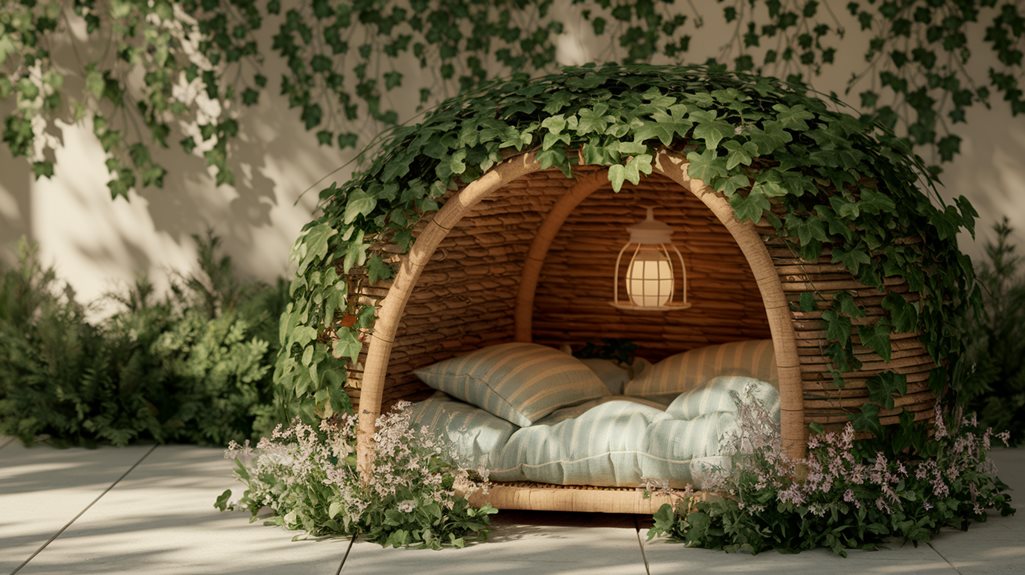
Like migratory birds that seek specific landscapes for rest during long journeys, shy pets need carefully designed outdoor sanctuaries to feel secure. You’ll notice remarkable behavioral changes when you provide your anxious companion with strategically placed hideaways that address their instinctual needs.
A secure outdoor retreat can help a shy pet feel calmer and more confident. The transformation from fearful to curious begins with understanding exactly what elements create safety in your pet’s eyes.
On this page
Understanding Your Pet’s Need for Security
While many pet owners focus primarily on physical needs, psychological security forms the foundation of your pet’s emotional well-being.
Your pet’s need for security stems from evolutionary defense mechanisms—prey animals require escape routes and hiding places, while territorial species need defined boundaries. Signs of security deficits include hypervigilance, excessive grooming, inappropriate elimination, and aggression.
Neuroscience reveals that consistent access to safe spaces triggers parasympathetic nervous system activation, reducing cortisol production and increasing serotonin levels. This biochemical balance promotes calmness and adaptive behaviors. Additionally, incorporating backyard wildlife can enhance your pet’s environment by providing natural stimulation and encouraging their instinctual behaviors.
You’ll need to analyze your specific pet’s temperament; some require multiple hiding options while others benefit from elevated perches offering surveillance opportunities combined with quick retreat access.
Natural Shelter Options With Plants and Shrubs
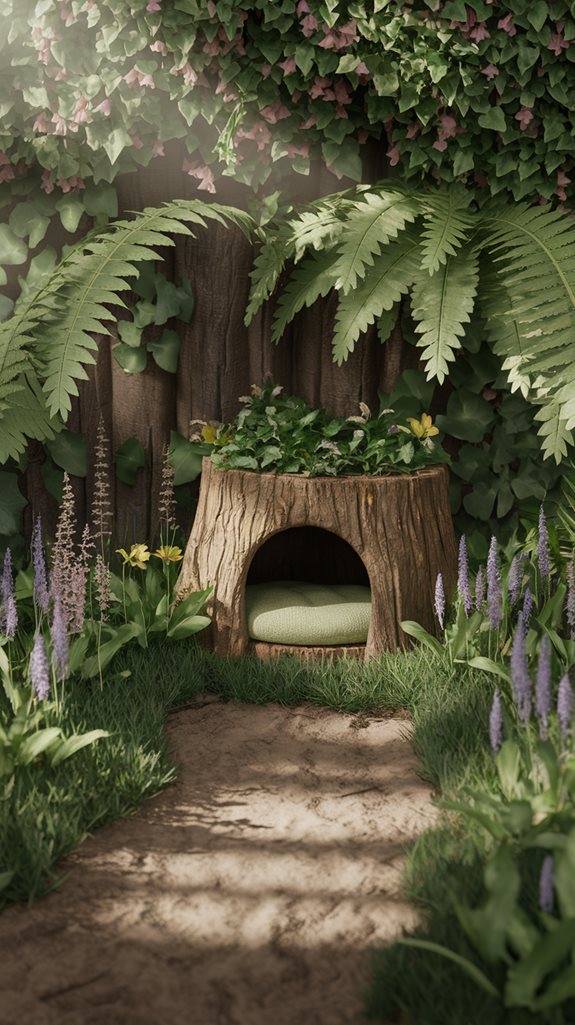
Creating natural shelter zones with strategic plant arrangements provides multiple benefits beyond mere aesthetics for anxious pets. Dense evergreen shrubs like juniper create effective visual barriers that block threatening stimuli while offering physical protection; skip boxwood, which the ASPCA lists as toxic to dogs and cats.
Layered plantings, combining tall grasses, mid-height shrubs and overhanging trees, mimic the natural hiding spots animals look for.
Select plants like valerian; skip chamomile, which the ASPCA lists as toxic to dogs and cats, and keep catnip to a small patch, since the ASPCA lists it as toxic to cats. Position these plants to create corridors that connect to entry points of your home, allowing nervous pets to navigate your yard without feeling exposed.
The dense foliage also softens outside noise that can make an anxious pet jumpy. Additionally, incorporating wildlife-friendly plants can enhance the ecological balance of your landscape, providing a richer environment for both pets and local fauna.
DIY Elevated Hiding Spots for Nervous Pets
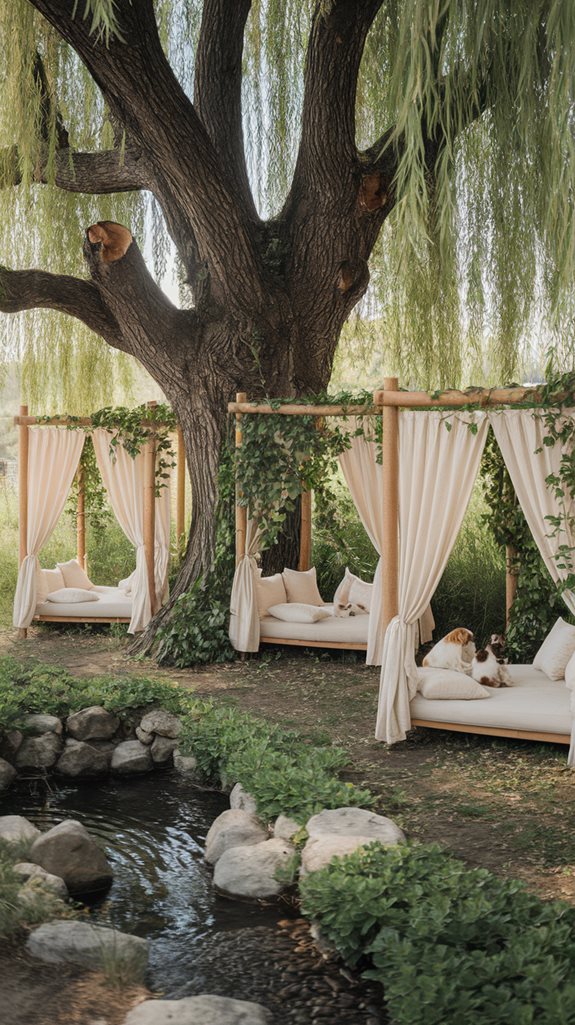
Elevated hiding spots considerably reduce stress levels in anxious pets by engaging their natural instinct to seek high ground when threatened.
You’ll find that constructing height-accessible sanctuaries enhances your pet’s environmental control. Additionally, incorporating pet-friendly plants into your garden can create a more inviting and safe atmosphere for your furry friends.
- Repurpose wooden crates – Mount securely to fences or walls at varying heights, adding cushioning for comfort and traction assistance for elderly pets.
- Construct window-adjacent platforms – Position near windows to combine security with stimulating views, incorporating sun-warmed resting areas.
- Create tree-mounted perches – Utilize existing branches with weatherproof materials that blend with natural surroundings.
- Install covered walkways – Connect multiple elevated spaces using enclosed bridges that provide continuous protected movement pathways.
Weather-Protected Sanctuaries Year-Round
Regardless of seasonal challenges, weather-protected sanctuaries serve as essential microenvironments that maintain physiological homeostasis for outdoor pets throughout the year.
These structures require thermal regulation mechanisms—insulation materials with high R-values for winter protection and reflective surfaces that deflect solar radiation during summer months.
You’ll need to implement proper ventilation systems that prevent condensation while maintaining internal temperature stability.
Consider incorporating phase-change materials that absorb and release heat as needed. Additionally, pet-friendly landscaping options can enhance the overall comfort and safety of these outdoor spaces.
Position these sanctuaries strategically against prevailing winds and utilize natural landscape features as additional weather barriers.
Waterproof entrances with raised thresholds prevent precipitation ingress.
For maximum effectiveness, monitor internal conditions seasonally and adjust protective elements to address specific meteorological challenges in your geographic region.
Tunnel Systems for Safe Pet Travel
While many shy pets hesitate to cross open spaces where they feel exposed to potential threats, interconnected tunnel systems provide essential protected pathways that greatly diminish stress-related behaviors during outdoor movement.
These networks utilize your pet’s natural instincts for seeking covered routes. Good tunnel systems include:
- Multiple entry/exit points strategically positioned near high-comfort zones to prevent feelings of entrapment
- Transparent sections allowing pets to assess outside conditions while remaining protected
- Varied diameters (minimum 1.5× pet width) accommodating different postures during threat responses
- Sound-dampening materials reducing acoustic stimuli that trigger flight responses
Install tunnels at consistent heights with gentle inclines rather than steep angles. This configuration maintains your pet’s proprioceptive confidence while maneuvering between sanctuary spaces, considerably decreasing cortisol levels during outdoor changes. Additionally, incorporating pet-friendly outdoor designs can enhance your space’s overall functionality and charm.
Sensory-Friendly Zones With Calming Elements
Creating sensory-friendly zones requires strategic implementation of multiple environmental elements that work synergistically to reduce stimulation overload for anxious pets.
Incorporate specific noise-dampening features such as dense vegetation barriers, acoustic panels, or water features that produce white noise to mask triggering sounds. Additionally, including plants that attract beneficial insects can help create a balanced ecosystem that contributes to a more peaceful outdoor environment for your pets.
You’ll want to establish visual barriers using natural screens or semi-opaque materials that filter rather than completely block light. This maintains environmental awareness while reducing visual overstimulation.
Include pressure-therapy areas like snug corners with weighted blankets or compression tunnels that activate parasympathetic nervous responses. Temperature-regulated spaces with cooling stones in summer or heat-retaining materials in winter optimize physiological comfort, further diminishing anxiety triggers.
Multi-Level Retreats for Anxious Animals
Multi-level retreats provide essential vertical escape options that fundamentally alter how anxious pets perceive and interact with outdoor spaces. These elevated structures activate natural instincts for height-based security while offering varied environmental conditions to match your pet’s fluctuating anxiety levels.
- Graduated elevation platforms – Allow incremental adaptation to height, supporting systematic desensitization therapy protocols.
- Microclimatic variations – Different levels create distinct temperature, humidity, and air flow zones that pets can self-select based on their stress response.
- Visual barrier optimization – Strategic placement of sight-blocking elements at specific heights interrupts anxiety-inducing visual stimuli.
Sound Barriers for Noise-Sensitive Pets
For noise-sensitive pets, acoustic engineering provides the cornerstone of effective outdoor sanctuary design, transforming potentially distressing environments into therapeutic havens. Implementing tall privacy fencing can further enhance your pet’s outdoor experience by creating a more secluded and peaceful environment.
| Material | Noise Reduction | Durability |
|---|---|---|
| Dense Evergreens | Modest; needs a deep planting | 10+ years |
| Acoustic Fencing | Good if tall and gap-free | 5-7 years |
| Earth Berms | Good, but takes space | 25+ years |
You’ll achieve ideal results by implementing multi-layered approaches: combine vegetation with structural elements positioned perpendicular to primary noise sources. For maximum efficacy, ascertain barriers extend at least 4 feet beyond your pet’s activity zone in each direction, creating acoustic shadow zones where sound waves can’t penetrate effectively.
Strategic Placement of Pet Hideaways
When strategically positioning pet hideaways, location fundamentally determines both usage frequency and therapeutic benefit for shy or anxious animals. The best placement considers both outside threats and your pet’s natural preferences.
- Peripheral vision zones – Position retreats where pets can monitor activities without full exposure; corners offering 90-270° visibility ranges maximize security while reducing stress hormones.
- Elevation gradients – Utilize vertical space for felines and some small mammals; elevated positions trigger confidence-building neurological responses.
- Thermal considerations – Place hideaways in temperature-regulated areas (65-75°F ideal); thermal comfort directly correlates with cortisol reduction.
- Transition buffers – Install retreats between high and low-activity zones, creating gradually decreasing stimulation corridors that facilitate acclimatization to outdoor environments. Additionally, incorporating a sensory garden can enhance the overall experience, providing diverse stimuli that promote relaxation and curiosity.
Enrichment Features for Shy but Curious Companions
Designing effective outdoor retreats for shy pets requires strategic enrichment features that satisfy their contradictory needs for safety and exploration. These elements encourage natural behaviors without overwhelming timid animals.
| Feature Type | Function | Implementation |
|---|---|---|
| Peek Holes | Visual stimulation | Drill 2″ apertures at eye level |
| Scent Stations | Olfactory enrichment | Place herbs or pheromone cloths |
| Textured Paths | Tactile engagement | Vary surfaces (grass, stone, sand) |
| Sound Barriers | Auditory comfort | Install water features or wind chimes |
| Elevated Perches | Security monitoring | Mount platforms at graduated heights |
Multi-sensory enrichment enables shy animals to engage with their environment at their own pace. Additionally, providing a diverse range of stimuli can significantly enhance the overall experience for your shy companions.
Conclusion
By creating outdoor retreats that address your shy pet’s specific needs, you’ll enhance their psychological wellbeing while expanding their comfortable territory.
