
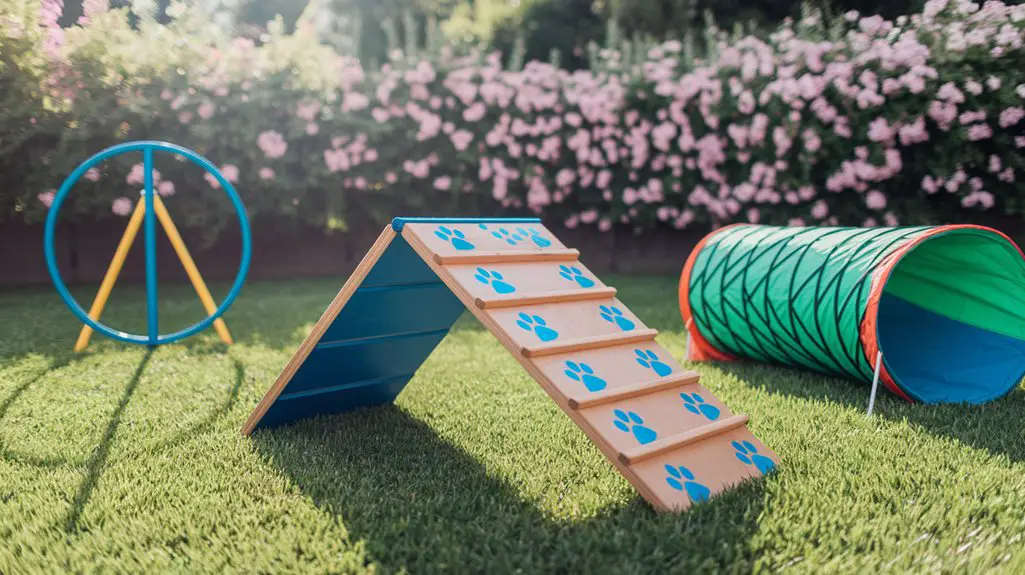
Just as athletes need dedicated training zones to reach their potential, your pets require purposeful agility spaces in your backyard. You’ll find that weave poles, tunnels, A-frames, and adjustable jumps provide both physical exercise and mental stimulation—essential elements for a well-behaved companion.
These structured activities can strengthen your bond while addressing common behavioral issues like digging or excessive barking. The right setup will transform your yard into a positive training ground that adapts to your pet’s evolving skills.
On this page
Essential Agility Equipment for Dogs and Cats
Creating a pet-friendly agility course starts with the right equipment that engages your dog’s or cat’s natural instincts. Focus on versatile elements that accommodate different skill levels while promoting exercise and mental stimulation.
For dogs, incorporate weave poles to develop coordination, adjustable jumps for varying heights, and tunnels that satisfy burrowing instincts. A pause table encourages controlled behaviors, while an A-frame challenges balance and confidence.
Cats benefit from vertical spaces like climbing posts, shelves at staggered heights, and enclosed tunnels that trigger stalking behaviors. Balance beams positioned at lower heights allow cats to practice proprioception safely.
Choose weather-resistant materials like PVC, treated wood, or specialized pet-safe plastics that withstand outdoor conditions. Proper anchoring prevents tipping during enthusiastic play sessions, ensuring both safety and longevity. Additionally, regular seasonal maintenance helps keep the agility elements in top condition, enhancing your pets’ experience.
Creating Safe Training Zones in Limited Spaces
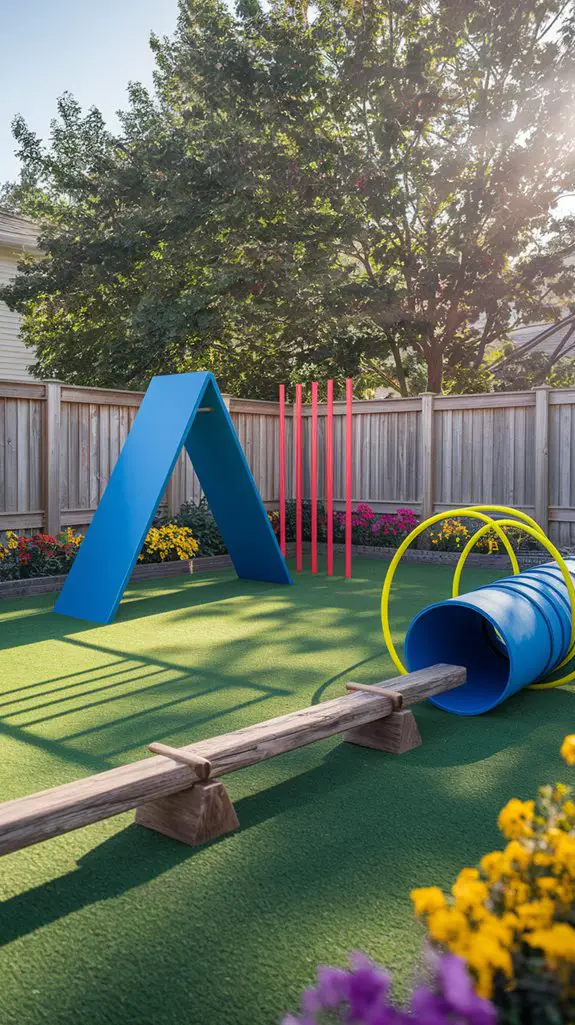
Even with space constraints, you can establish effective training zones that maximize both safety and functionality for your pets. Strategic planning allows for compact yet effective practice areas that maintain essential safety buffers while accommodating various agility exercises.
- Define boundaries – Use visual markers like garden edging or pet-safe tape to clearly delineate training zones from rest areas, preventing your pet from practicing behaviors in inappropriate locations.
- Implement proper flooring – Install impact-absorbing surfaces such as rubber mats or artificial turf to protect joints during repetitive training sessions and reduce injury risk.
- Create transition areas – Designate cool-down spaces between agility zones where your pet can decompress, mentally process training cues, and regulate arousal levels before continuing to the next challenge. Additionally, consider incorporating backyard zones for pet relaxation that complement your agility training, providing a well-rounded environment for your pet.
DIY Obstacle Courses Using Household Materials
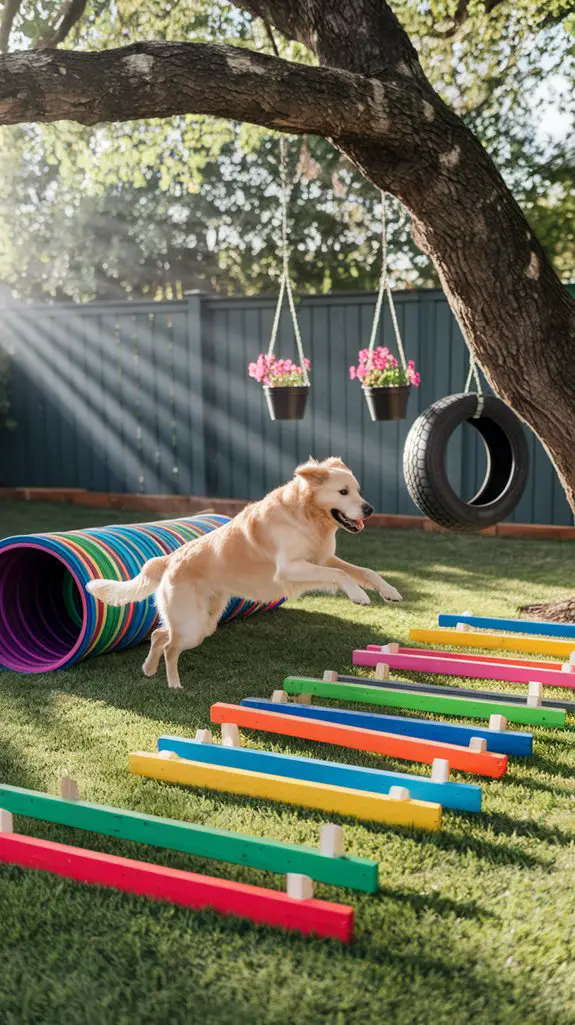
Transform your pet’s backyard training routine using common items found throughout your home, eliminating the need for expensive commercial equipment. PVC pipes can create adjustable jumps, while pool noodles serve as safe, flexible hurdles for beginners.
Arrange sturdy cardboard boxes into tunnels, securing them with duct tape for durability. Repurpose old tires as jumping platforms or weave poles by securing broomsticks vertically in the ground at 24-inch intervals.
Kitchen chairs work well for pause tables—train your dog to “stay” on this elevated surface. Introduce directional cues as your pet navigates between obstacles, reinforcing successful completions with immediate rewards.
Starting with low heights and simple configurations, gradually increasing difficulty as your pet’s confidence grows can help build their skills in backyard play areas. Always prioritize safety by removing sharp edges and securing all structures firmly to prevent tipping.
Weather-Resistant Agility Structures for Year-Round Use
To maintain a functional pet agility area regardless of season, weather-resistant materials and construction techniques become essential for backyard obstacle courses.
You’ll need to select materials that withstand moisture, temperature fluctuations, and UV exposure while remaining safe for your pet’s paws and joints.
- PVC pipe structures – Use UV-resistant PVC for jumps and weave poles, securing with concrete footings to prevent shifting during freeze-thaw cycles.
- Sealed wood equipment – Apply marine-grade sealants to wooden A-frames and seesaws, revitalizing annually to prevent splintering or warping.
- Composite decking platforms – Install low platforms using composite materials that resist rot, provide consistent traction in wet conditions, and don’t absorb odors.
These weather-resistant modifications guarantee consistent training opportunities year-round, maintaining your pet’s fitness routine regardless of seasonal changes. Additionally, incorporating pet-friendly landscaping elements can enhance the overall agility area and create a more inviting space for both pets and their owners.
Multi-Pet Training Stations for Families
Creating designated zones with adjustable equipment serves each animal’s training needs while preventing resource guarding behaviors.
Install modular stations with interchangeable components—jumps with adjustable heights, tunnels of varying diameters, and platforms at different elevations. This adaptability allows your Labrador and Chihuahua to use the same course with appropriate modifications.
Consider implementing rotation schedules with clear visual boundaries to minimize competitive behaviors. Use distinct scent markers or color-coded equipment to help pets identify their designated training areas.
This separation promotes focused skill development while maintaining each animal’s confidence through success-oriented progressions, ultimately strengthening your multi-species pack’s cohesion and communication. Additionally, incorporating pet-friendly agility elements can enhance the overall experience for both pets and owners.
Low-Maintenance Agility Elements for Busy Pet Owners
While juggling work and personal responsibilities, many pet owners struggle to find time for maintaining complex agility setups.
Fortunately, several durable, weather-resistant options require minimal upkeep while still providing excellent enrichment opportunities for your canine companion.
- Tunnel systems with UV-resistant materials – These maintain structural integrity for years with only occasional rinsing, while satisfying your dog’s instinctual burrowing behaviors.
- Composite weave poles – Unlike wooden alternatives, these synthetic options resist rot, repel moisture, and don’t require staining or sealing, while developing your pet’s proprioception skills.
- Rubberized tire jumps – These provide cognitive challenges without the maintenance wooden jumps demand, as they won’t splinter, warp, or fade when exposed to elements. Additionally, it’s important to consider using pet-safe ground cover in your backyard to ensure a safe play environment for your furry friend.
Landscaping Considerations Around Training Areas
Creating the perfect environment around your dog’s agility equipment extends beyond the obstacles themselves. Select shock-absorbing ground covers like wood chips or synthetic turf to cushion landings and reduce joint impact during training sessions.
Avoid invasive or toxic plants near exercise zones—many common ornamentals like azaleas and daffodils can cause serious health issues if ingested.
Establish clear boundaries between training areas and garden spaces using low hedges or decorative fencing. This spatial differentiation helps your dog distinguish between play zones and off-limits areas.
Position equipment to minimize sun glare during peak training hours, incorporating strategic shade trees that won’t interfere with movement paths. Proper drainage is essential—slope the terrain slightly or install French drains to prevent puddles that could create slippery conditions and compromise your dog’s safety. Additionally, consider incorporating DIY pet-friendly backyard projects that enhance both functionality and fun for your furry companions.
Adjustable Components for Growing or Aging Pets
As puppies develop into adults or senior dogs experience mobility changes, your backyard agility course should adapt with them. Modular equipment allows you to modify challenges based on your pet’s physical capabilities and training progression. Height-adjustable components prove particularly valuable for accommodating various stages of development.
- Jump bars – Install with adjustable heights (2-24 inches) that can be lowered for puppies or senior dogs with joint issues, then raised as mobility and confidence improve.
- A-frames – Use hinged designs that allow angle adjustments to decrease steepness for younger or older dogs.
- Tunnel supports – Implement adjustable braces to modify tunnel shapes from straight configurations for beginners to curved challenges for experienced pets.
Smart adjustments prevent injury while maintaining appropriate challenge levels that stimulate cognitive engagement throughout your pet’s life. Incorporating safe play areas can further enhance your backyard’s functionality and enjoyment for pets of all ages.
Conclusion
You don’t need extensive space or expensive equipment to create an effective agility zone. By incorporating adjustable obstacles that adapt to your pet’s skill level, you’ll establish a stimulating environment that reinforces positive behaviors through structured play.
While some worry about maintenance requirements, today’s modular elements require minimal upkeep while providing consistent enrichment opportunities. Start small with targeted obstacles that address your pet’s specific behavioral needs and energy levels.
