
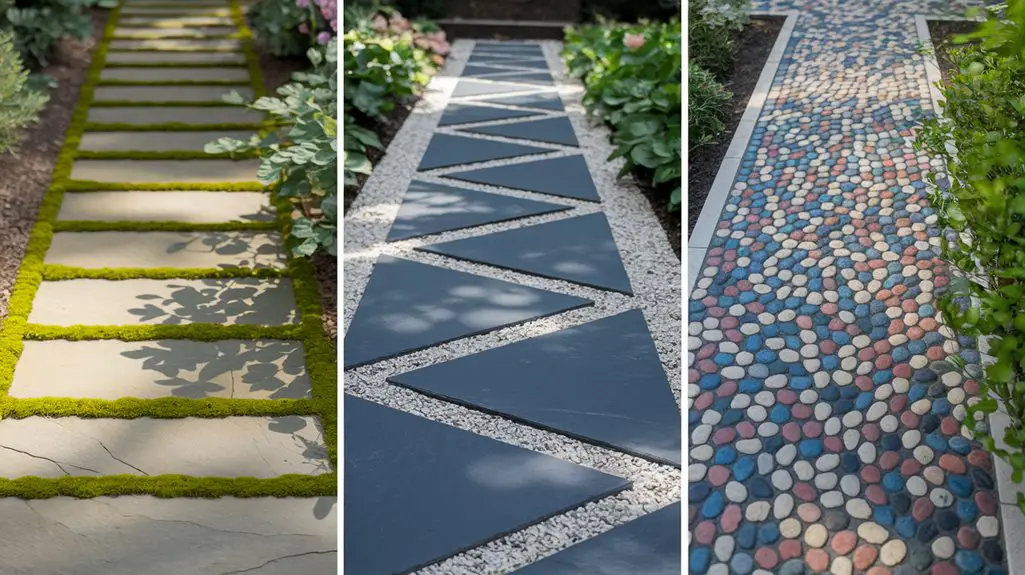
Your garden pathway isn’t just functional—it’s a design statement that guides movement and shapes experiences. When you choose stones for walkways, you’re crafting both a visual journey and a tactile connection to your outdoor space.
Beyond common concrete pavers or standard flagstone layouts, several unique stone designs can transform your garden into an extraordinary landscape. Each style—from Japanese-inspired stepping stones to vibrant Mediterranean mosaics—offers distinct aesthetic and practical benefits worth exploring in your next landscape project.
On this page
Japanese Stepping Stone Paths With Moss Accents
While originating in the Heian period of Japan, stepping stone pathways with moss accents have evolved into one of the most elegant solutions for garden navigation. These paths, known as “tobi-ishi,” create visual rhythm through careful stone placement at comfortable stepping distances.
You’ll want to select flat, weather-resistant stones like granite or slate, positioned slightly above soil level. Space them 16-24 inches apart, accounting for a natural stride length. The gaps between stones aren’t empty spaces but opportunities for moss cultivation.
Choose shade-tolerant varieties like cushion moss (Leucobryum) or sheet moss (Hypnum) to thrive between stones. The moss provides textural contrast, softens the hardscape elements, and reduces erosion.
For authentic Japanese aesthetics, incorporate asymmetrical stone arrangements and occasional directional shifts that prompt mindful walking and contemplation. Additionally, consider the inclusion of sensory elements that engage your pet’s natural curiosity while exploring the garden.
Mediterranean Mosaic Stone Walkways
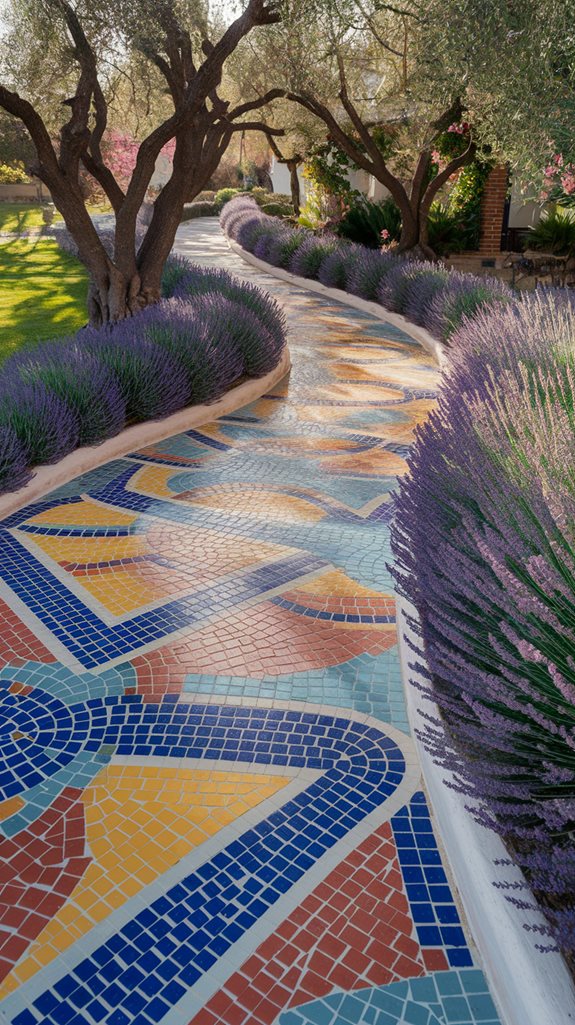
The artistic traditions of Mediterranean mosaic stone pathways sharply contrast with Japanese minimalism, embracing vibrant colors and intricate patterns that reflect the region’s rich cultural heritage.
These walkways feature ceramic fragments, colored glass, and pebbles arranged in geometric or floral motifs.
You’ll need to establish a solid foundation with a 3-inch concrete base before laying your mosaic pieces.
Position larger stones first to create your primary design, then fill gaps with smaller elements.
For authentic Mediterranean appeal, incorporate blues, whites, and terracotta hues that echo seaside villages.
Seal your completed pathway with a clear waterproof coating to prevent moisture damage and preserve color vibrancy.
This technique works best in focal areas like entryways or garden centerpieces where the detailed craftsmanship can be fully appreciated. Additionally, using artistic garden pathway ideas can inspire unique designs that enhance the overall aesthetic of your outdoor space.
Spiral and Curved Natural Stone Pathways
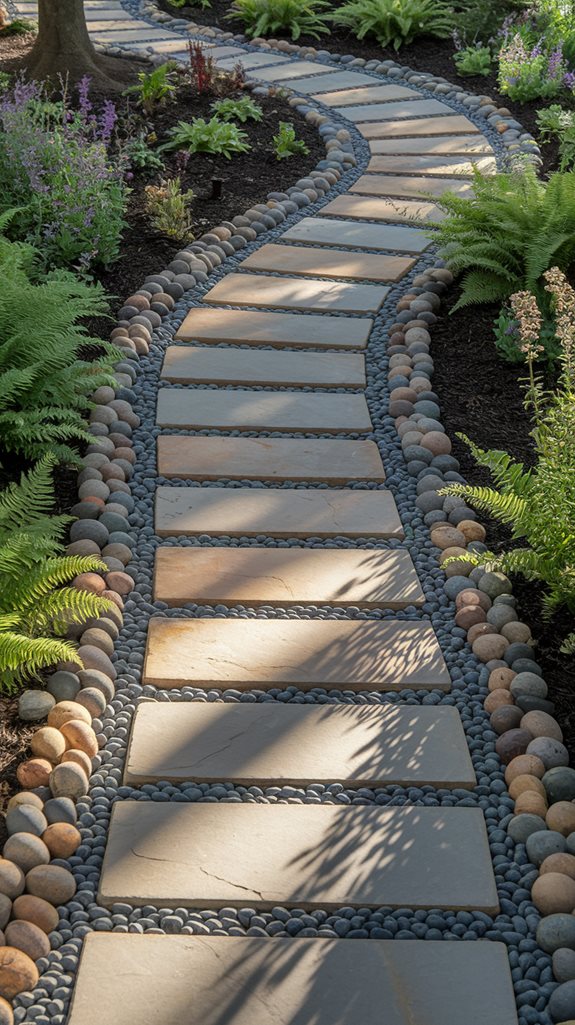
Curved pathways create natural movement through garden spaces, guiding visitors on a journey of discovery rather than presenting all elements at once.
When designing spiral or curved stone pathways, select materials that flex with the contours—flagstone, river rock, or slate pieces work exceptionally well for these organic layouts.
Position larger anchor stones at curve points to establish rhythm and visual waypoints. Maintain consistent spacing between stones—typically 1-2 inches—to guarantee stable footing while allowing low-growing groundcover to thrive between gaps.
For spiral designs, calculate the golden ratio (1:1.618) to achieve aesthetically pleasing proportions that feel intuitively balanced.
Consider gradual grade changes along curved paths to add dimensional interest. Edge your pathway with complementary materials like steel, copper, or timber to prevent stone migration and clearly define the walking surface. Incorporating eco-friendly materials can further enhance the sustainability of your garden path design.
Conclusion
You’ll transform your garden into an extraordinary outdoor sanctuary with these walkway designs. The meticulously placed tobi-ishi stones create impossibly perfect Zen balance, while Mediterranean mosaics deliver infinitely complex visual rhythms that dance beneath your feet.
Spiral pathways don’t merely connect spaces—they revolutionize your garden’s flow, drawing the eye through an exquisitely calibrated journey of curves and shifts. Each design doesn’t just complement your landscape; it fundamentally redefines it.
