
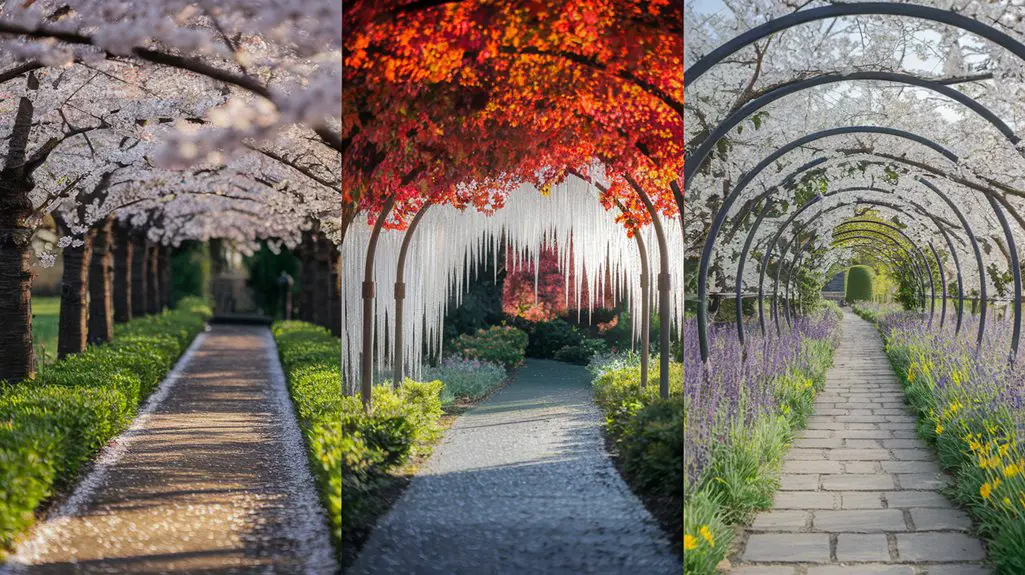
Your garden pathways aren’t merely functional elements—they’re dynamic design opportunities that transform with the seasons. You’ll notice how strategic material choices and thoughtful decorative touches can dramatically enhance your landscape’s visual appeal throughout the year.
From spring’s awakening blooms to winter’s crystalline charm, each season demands specific considerations for ideal pathway aesthetics. What awaits your garden this season depends on how you’ll adapt these essential design principles to your unique outdoor space.
On this page
Spring Pathways: Blooming Borders and Fresh Mulch Designs
As winter recedes and the soil begins to thaw, spring pathways require immediate attention to establish both functionality and visual appeal for the coming growing season.
Begin by clearing winter debris and edging path borders with precision tools to create clean lines between walking surfaces and planting beds.
For ideal spring aesthetics, install low-growing bloomers like creeping phlox, candytuft, or aubrieta along pathway edges—these create cascading color without encroaching on walkways.
When applying fresh mulch, select fine-textured varieties in earth tones that complement your hardscaping materials.
Consider using budget-friendly materials for your pathways to maximize your garden’s beauty without overspending.
Consider alternating mulch colors in a deliberate pattern to enhance visual interest, or create defined borders using contrasting mulch hues against gravel or stone pathways.
This technique visually widens narrow garden corridors while drawing the eye forward.
Summer Garden Paths: Heat-Resistant Materials and Shade Considerations
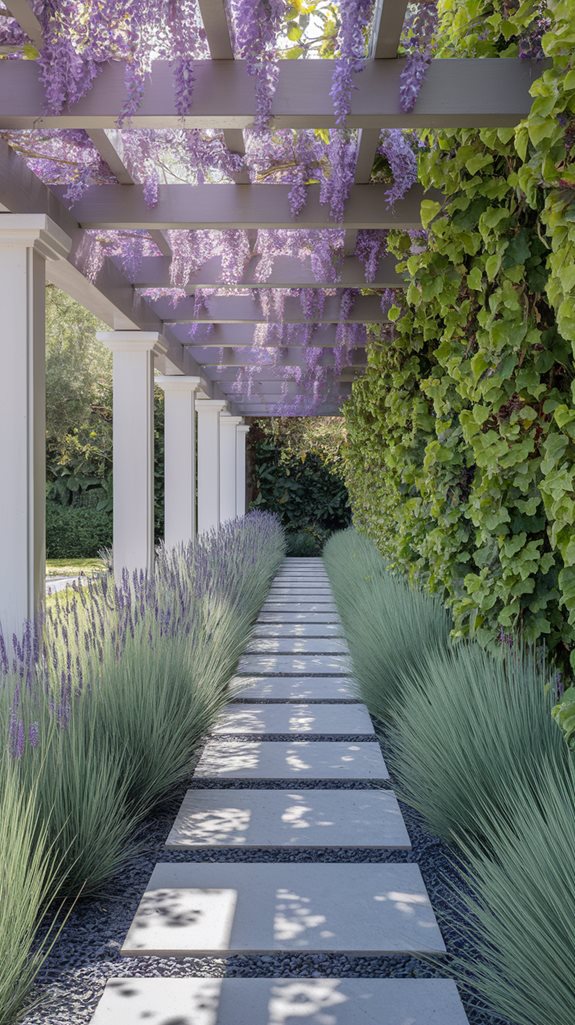
Summer presents unique challenges for garden pathways as temperatures rise and prolonged sun exposure intensifies. Select materials that won’t absorb excessive heat—light-colored concrete pavers reflect sunlight, while travertine and limestone stay cooler underfoot than darker stones.
Consider incorporating strategic shade elements along walkways through pergolas or arbors draped with climbing vines like wisteria or grape. For high-traffic areas, decomposed granite provides a permeable, heat-resistant surface that’s gentle on bare feet.
Intersperse stepping stones with heat-tolerant groundcovers such as creeping thyme or sedum, creating cooling green gaps between pavers. Where possible, position pathways to receive morning sun but afternoon shade from trees or structures. Adding charming garden pathways can enhance both functionality and aesthetics in your outdoor space.
Install subtle lighting along paths to extend garden enjoyment into cooler evening hours when summer gardens truly shine.
Fall Walkway Transformations: Incorporating Seasonal Color Changes
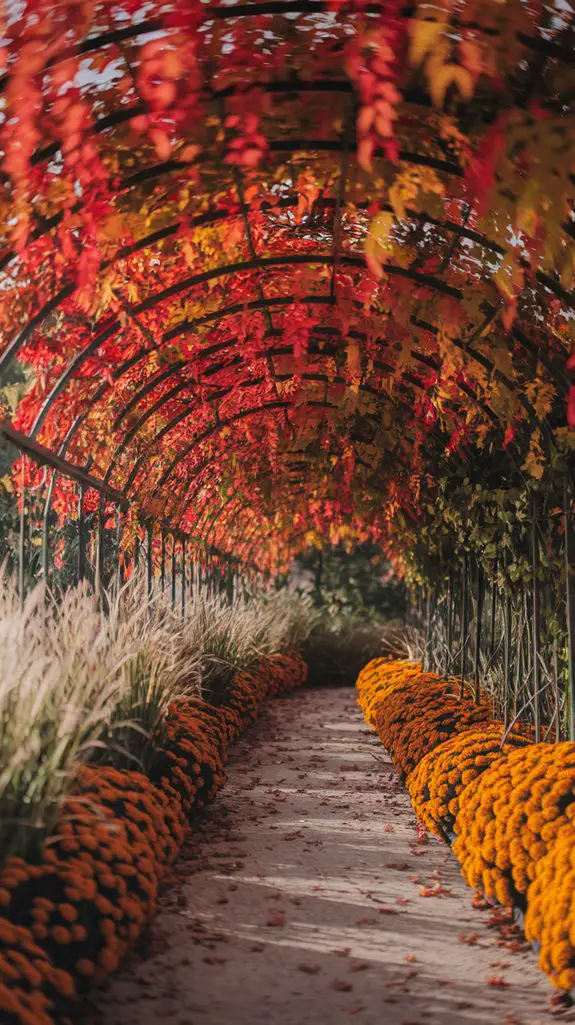
When deciduous trees begin their spectacular transformation, your garden pathways offer ideal opportunities to showcase autumn’s iconic color palette.
Consider integrating rust-colored mulch along borders to echo falling leaves, or install copper-toned path lighting that complements the seasonal shift.
You’ll enhance visual impact by planting late-blooming perennials like asters and chrysanthemums adjacent to walkways.
For temporary displays, position decorative gourds or miniature pumpkins at path intersections.
Rake fallen leaves into deliberate patterns rather than removing them completely—this creates ephemeral artwork that evolves throughout the season.
Incorporate materials with warm undertones; terracotta pavers or amber glass stepping stones reflect autumn’s glow.
Install weatherproof artwork featuring harvest motifs at key sightlines.
Remember that fallen leaves aren’t just debris; they’re design elements that can transform ordinary pathways into seasonal showcases. Additionally, consider using rustic pathway options to create a cohesive aesthetic that enhances the charm of your garden.
Winter Pathway Solutions: Protective Elements and Holiday Decorations
Winter transforms garden pathways into potential hazards while simultaneously offering unique decorative opportunities. Install solar pathway lights to illuminate steps and uneven surfaces while adding festive charm.
Apply permeable anti-slip treatments to stone or concrete paths to prevent ice formation without damaging surrounding vegetation. Additionally, consider incorporating eco-friendly options like gravel or wood chips for a sustainable and attractive pathway solution.
| Protective Element | Function | Seasonal Enhancement |
|---|---|---|
| Cedar Mulch | Insulates plant roots | Natural rustic appearance |
| Heated Mats | Melts snow/ice | Can be concealed with decorative edging |
| Burlap Barriers | Blocks wind/salt spray | Adds textural element |
| Luminaria | Pathway illumination | Creates dramatic shadow patterns |
For holiday decorations, integrate weather-resistant evergreen garlands along railings or natural pathway containers. Consider frost-resistant solar-powered string lights wrapped around dormant shrubs flanking walkways, providing safety illumination while creating magical winter ambiance.
Year-Round Pathway Materials: Adapting Your Garden Aesthetics Seasonally
The foundation of year-round garden appeal begins with selecting pathway materials that maintain both functionality and beauty through changing seasons.
You’ll need to take into account how materials respond to temperature fluctuations, precipitation levels, and changing light conditions throughout the year.
- Composite materials offer durability in moisture-prone areas, resisting warping during humid summers while maintaining structural integrity through freeze-thaw cycles in winter.
- Natural stone pavers develop character with age, providing excellent traction when wet and absorbing solar heat during colder months.
- Permeable gravel systems allow for superior drainage during spring downpours and can be easily refreshed with seasonal color-complementing varieties as your garden palette evolves. Additionally, using recycled materials for your pathways can enhance sustainability while adding unique textures to your garden.
Conclusion
As you adapt your pathways through the seasons, remember that each transformation builds upon the previous one. Will your spring’s flowering borders shift smoothly into summer’s heat-resistant surfaces?
Can fall’s rust-colored mulch withstand winter’s protective elements? By strategically selecting composite materials and natural stones as foundational elements, you’ll create a garden infrastructure that not only withstands seasonal shifts but enhances them through deliberate aesthetic evolution.
