
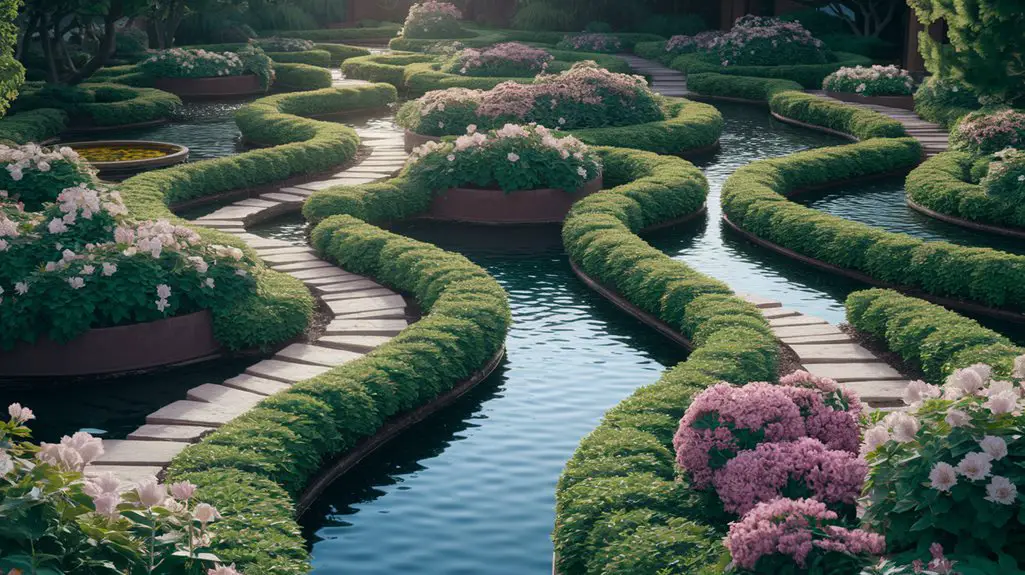
You’ll discover remarkable harmony when water features intersect with thoughtfully designed garden paths. Water creates a multisensory experience—the gentle splash against stones, reflective surfaces catching sunlight, and the cooling effect on surrounding air.
Whether you’re planning a complete landscape renovation or seeking to enhance an existing garden, these seven path designs combine functionality with natural beauty. Each approach offers unique solutions for different spaces, budgets, and maintenance preferences.
On this page
Stone Pathways Alongside Bubbling Brooks
Water’s gentle melody accompanies stone pathways alongside bubbling brooks, creating nature’s perfect harmony in your garden.
You’ll find that flat, natural stone slabs like slate or bluestone offer secure footing while complementing the water’s organic flow.
When installing these paths, position larger anchor stones at curves and connections, embedding them firmly into compacted gravel.
You’ll need a slight crown (1-2% grade) to prevent water pooling during rain.
Consider placement carefully—situate the path where you’ll hear the brook’s pleasant sounds while maintaining a safe distance to prevent erosion.
Strategically place small footbridges at crossing points, adding visual interest and practical functionality.
For enhanced appeal, incorporate moisture-loving plants like ferns and hostas along the margins where path meets waterway, bridging these two distinct garden elements. Adding unique water features can elevate the overall aesthetic and create a more tranquil environment.
Wooden Boardwalks Over Tranquil Ponds
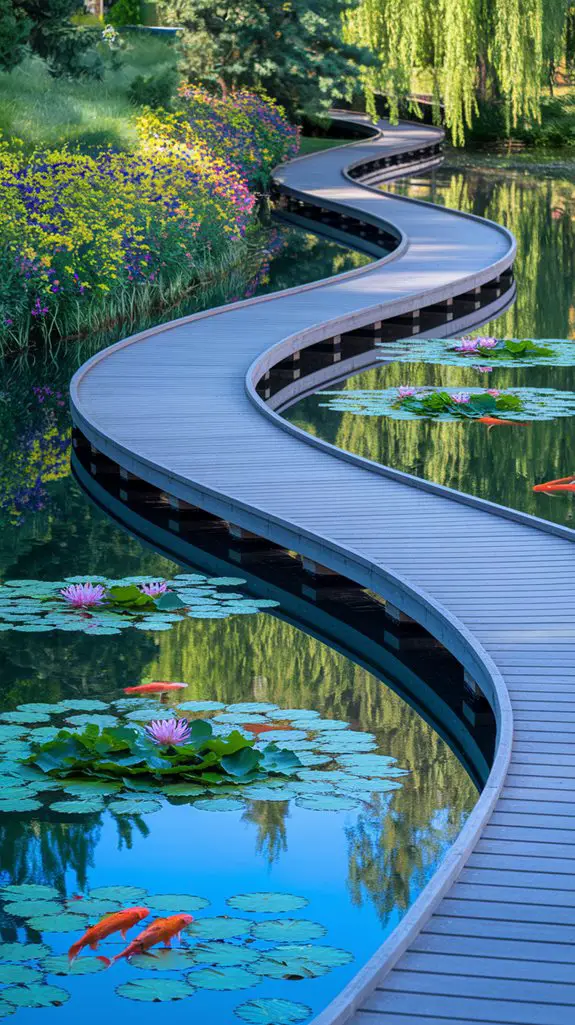
Across the mirrored surface of garden ponds, wooden boardwalks create intimate connections with aquatic environments while providing safe passage over water features.
You’ll find cedar, redwood, and treated pine offer excellent durability against constant moisture exposure. These elevated pathways let you observe aquatic plants and fish from a privileged vantage point without disturbing the ecosystem below.
For maximum longevity, you should seal your boardwalk annually and install it 18-24 inches above the water’s surface.
Incorporate subtle railings that don’t obstruct views but enhance safety. Consider adding built-in benches at strategic points where pond views are most striking.
Lighting mounted beneath handrails creates magical reflections after sunset, doubling the visual impact as illumination bounces off the water’s surface. Additionally, water features contribute to a serene atmosphere, promoting relaxation and tranquility in your backyard space.
Stepping Stones Through Cascading Waterfalls
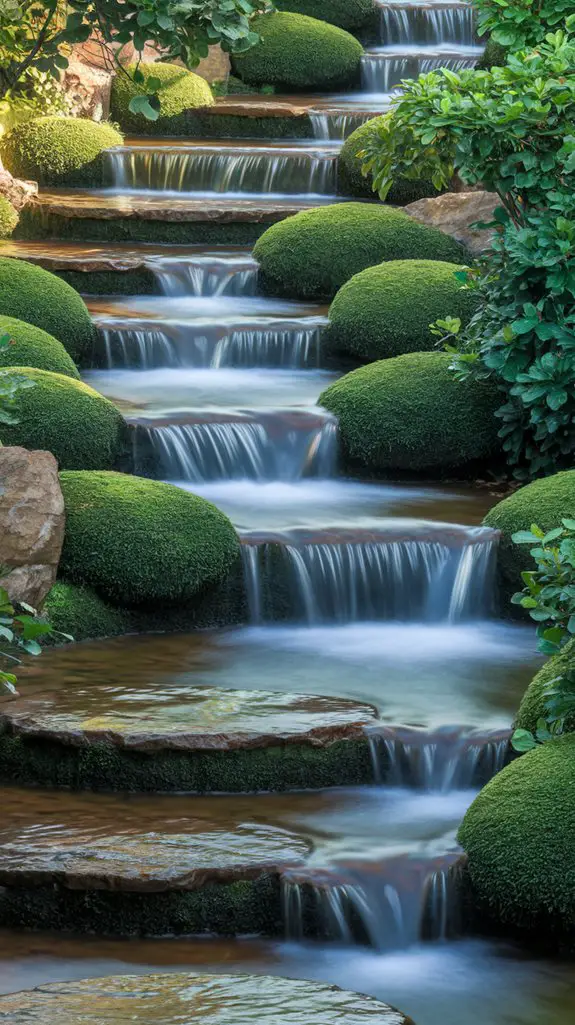
Stepping stones set within cascading waterfalls transform garden paths into exhilarating sensory experiences, elevating the tranquil pond atmosphere to one of dynamic energy and movement.
You’ll need to anchor these stones securely within concrete foundations to withstand water pressure and prevent shifting.
Select flat, non-slip stones with textured surfaces like basalt or granite that provide secure footing when wet. Space them at comfortable stepping distances—typically 18-22 inches apart—following the natural contour of your waterfall’s descent.
For safety, install subtle LED lighting beneath the water’s surface to illuminate each stone at night. Consider installing discreet handrails for steeper sections.
The sound of water rushing around these carefully positioned stones creates an acoustic backdrop that masks ambient noise, completing the immersive journey through your garden’s most dramatic water feature. Additionally, incorporating budget-friendly water features can enhance the overall aesthetic without breaking the bank.
Gravel Trails With Integrated Stream Crossings
Meandering through naturalistic landscapes, gravel trails with integrated stream crossings blend functionality with aesthetic appeal while providing sustainable drainage solutions for your garden pathways.
These thoughtfully designed crossings utilize flat stone steppers or wooden boardwalks positioned just above water level, creating dramatic visual pauses along your journey.
You’ll find that 3/8-inch angular gravel offers ideal stability while allowing proper water infiltration. Position geotextile fabric beneath to prevent weed growth and maintain path integrity. For stream crossings, consider installing buried drainage pipes beneath larger accent stones to manage water flow during heavy rainfall.
Enhance these changes with moisture-loving plants like Japanese irises or sedges that soften edges while signaling the approach to water features. Incorporating decorative gravel alongside water elements not only enhances visual interest but also improves the overall sustainability of your garden paths.
Subtle lighting along crossings transforms these functional elements into magical nighttime focal points.
Brick Walkways Framed By Fountain Displays
Elegant and enduring, brick walkways framed by fountain displays create sophisticated changeover spaces that balance formal structure with dynamic water elements.
You’ll find herringbone patterns provide superior load distribution, while running bond layouts offer simplified installation for curved paths.
Position wall fountains along straight sections to create visual punctuation points, or install tiered displays at intersections where they’ll capture attention from multiple angles.
Choose recirculating systems with variable flow controls to adjust water sounds seasonally. Additionally, incorporating DIY backyard pond water feature ideas can enhance the overall aesthetic and functionality of your outdoor space.
For nighttime appeal, integrate low-voltage lighting beneath fountain basins. The interplay of illuminated water across brick surfaces transforms ordinary walkways into sensory experiences.
Select frost-resistant bricks and seal them annually to prevent water damage and efflorescence.
Ascertain proper drainage slopes (1/4″ per foot) away from foundations to maintain structural integrity while showcasing your fountain elements.
Mosaic Paths With Channel Water Features
Mosaic pathways incorporating slender channel water features offer a refined alternative to traditional fountain-framed brick walkways.
These designs combine artistic tilework with the soothing movement of water flowing alongside your garden journey.
You’ll find these channels, often called rills, can be installed flush with the path’s surface or slightly recessed. The water moves quietly through these narrow conduits, creating gentle rippling sounds as you stroll.
Select mosaic tiles that complement your garden palette—glass pieces reflect sunlight, while ceramic options provide earthy tones.
For maximum visual impact, consider lighting your water channel with submersible LEDs. This illuminates the mosaic details while creating dramatic reflections after sunset.
The combination of textured pathway and flowing water appeals to multiple senses, transforming a simple garden walk into an immersive experience. Additionally, unique garden water features can enhance the overall aesthetic and tranquility of your outdoor space.
Natural Flagstone Routes With Koi Ponds
Natural flagstone pathways that border serene koi ponds create a harmonious shift between structured and organic garden elements.
You’ll find these combinations particularly effective in Japanese-inspired landscapes where the interplay of stone, water, and living creatures embodies tranquility.
When designing your flagstone-koi pond integration, consider:
- Select irregular flagstones with 2-3 inch thickness for durability and natural appearance
- Position stones 1-2 inches apart, filling gaps with moss or creeping thyme
- Install gentle slopes (maximum 1:20 ratio) toward pond edges for drainage
- Incorporate viewing platforms where pathway widens to 4-5 feet
The warm earth tones of flagstone complement the flash of colorful koi beneath the water’s surface.
This creates contemplative spaces where you’ll pause naturally during garden strolls. Additionally, adding water features such as fountains or waterfalls can enhance the appeal and attract various wildlife to your oasis.
Conclusion
By incorporating these seven water-integrated pathways, you’ll transform your garden into a dynamic sensory experience. Each design offers unique aesthetic and functional benefits, creating spaces where beauty meets practicality.
Whether you’re working with expansive grounds or a compact retreat, these water-pathway combinations deliver both visual impact and structural integrity. The marriage of flowing water and thoughtful hardscaping will turn your ordinary garden into a diamond in the rough.
