
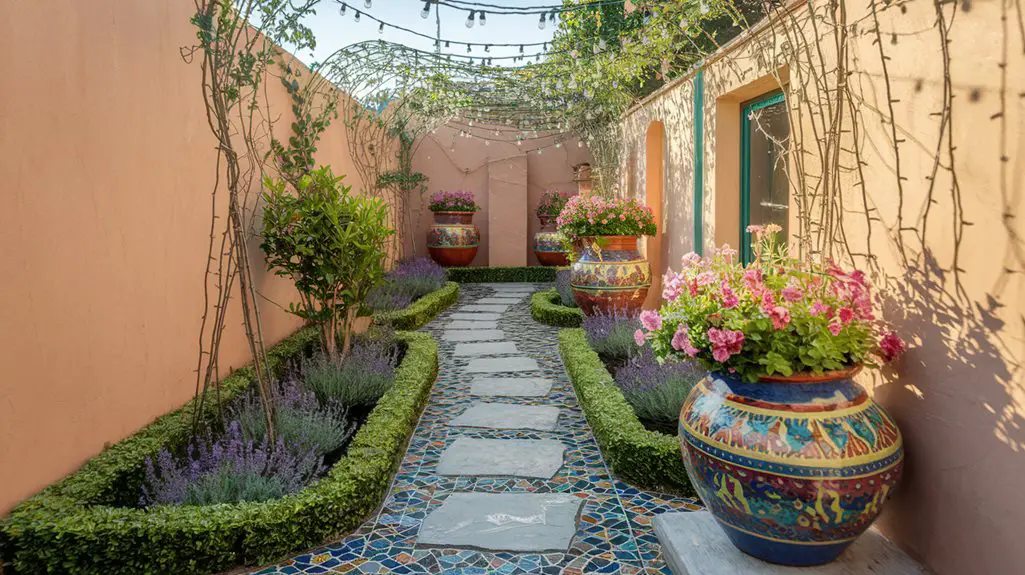
In a compact garden, you’ll find your pathway choices are more than mere afterthoughts—they’re essential design elements that define your space. Mix textured materials like smooth pebbles alongside rough-cut flagstone to create visual interest where square footage is limited.
Your narrow side yard can transform into a sensory journey with the right path design, while adaptable solutions like removable stepping stones offer flexibility as your garden evolves. What unexpected materials might become your garden’s signature pathway feature?
On this page
Stepping Stone Mosaics for Narrow Garden Routes
When creating a pathway in a narrow garden space, stepping stone mosaics offer both functionality and artistic flair. You’ll maximize limited square footage while adding visual interest through thoughtfully placed stones.
Position larger, flat stones where you naturally step, leaving 18-24 inches between centers for comfortable walking rhythm.
Mix materials for textural contrast—combine smooth river rocks with angular slate or concrete pavers with pebble infill. The negative space between stones creates breathing room and allows ground covers like creeping thyme or moss to flourish.
Your stepping stone path can easily navigate around existing features, following the garden’s natural contours. For tight corners, arrange smaller stones in a fan pattern to guide movement.
During installation, press stones firmly into compacted soil or sand to prevent wobbling and guarantee lasting stability. Additionally, choosing eco-friendly materials for your path can further enhance the sustainability of your garden design.
Vertical Herb Borders Along Mini Pathways
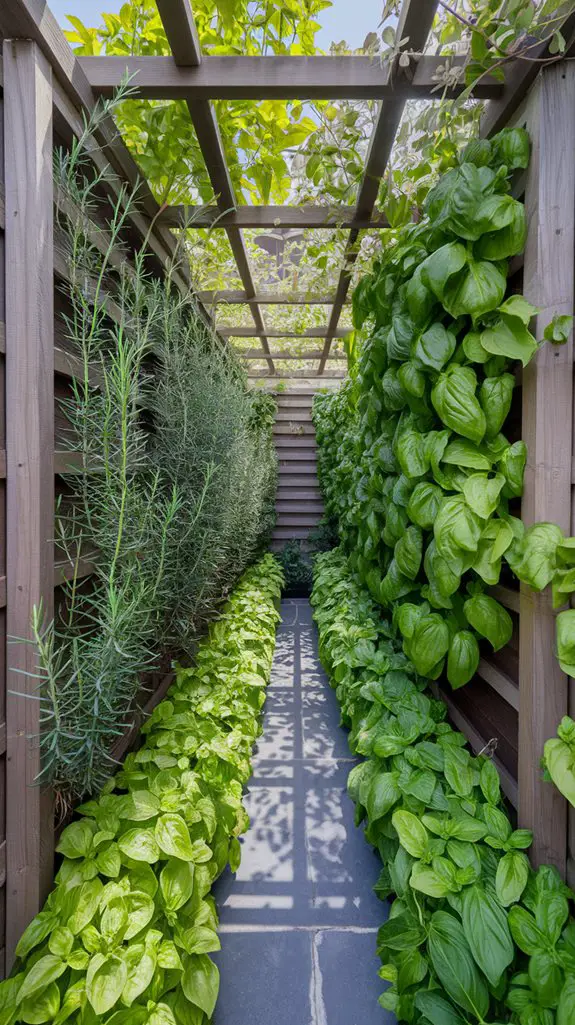
Beyond stepping stones, your compact garden’s pathways gain both function and fragrance through vertical herb borders.
Install narrow planters or pocket systems along path edges to maximize growing area without sacrificing walking space. Position taller herbs like rosemary and sage at the back, with cascading thyme and oregano spilling forward toward the path.
You’ll create sensory depth when you layer textures – woody lavender stems contrast with feathery dill fronds.
Consider height relationships carefully; place mint in contained pockets to prevent spreading while allowing its aromatic leaves to brush against visitors.
For tight corners, mount tiered herb planters that conform to curved pathways.
These adaptable systems let you swap herbs seasonally while maintaining the border structure. The vertical approach transforms ordinary paths into interactive spaces where every step releases herbal essences. Additionally, using vertical herb garden design can enhance your garden’s aesthetics while optimizing space.
Repurposed Material Walkways for Tiny Gardens
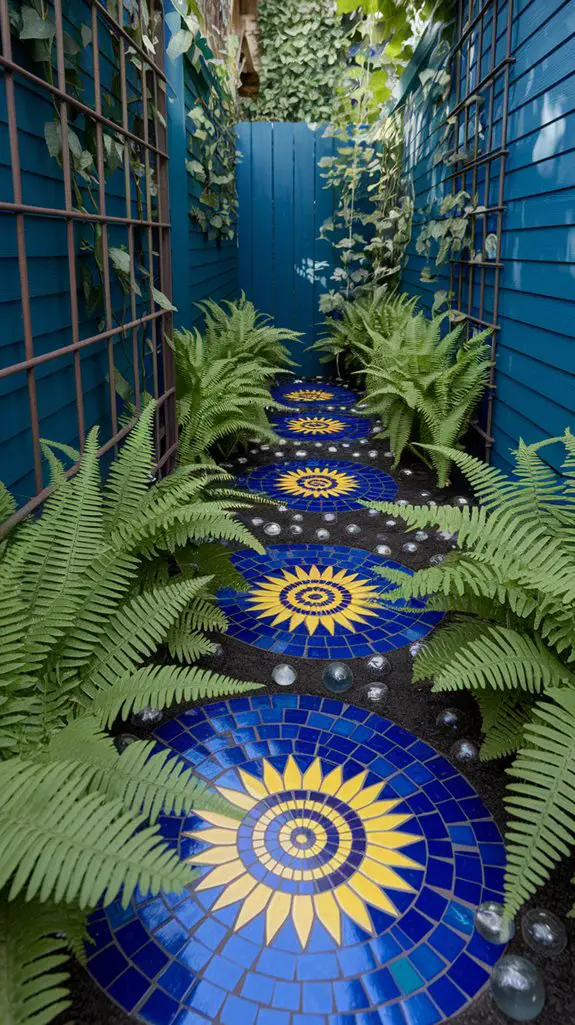
Transforming ordinary objects into extraordinary pathway materials offers tiny garden owners budget-friendly solutions with distinctive character.
When space is limited, you’ll find that reclaimed elements create visual interest while maximizing every square inch of your outdoor area.
Position these repurposed materials strategically to define changes between garden zones:
- Vintage bricks arranged in herringbone patterns create textural contrast against surrounding plants
- Mosaic pathways from broken ceramic plates or tiles introduce artistic elements while providing firm footing
- Wine bottle bottoms set in concrete form shimmering circular stepping pads that reflect sunlight
You’ll discover these adaptable solutions can conform to awkward corners and narrow passages where conventional pavers won’t fit.
The uneven, weathered surfaces also encourage slower movement, allowing you to appreciate your compact garden’s details. Additionally, using recycled materials not only enhances aesthetics but also promotes sustainability in your garden design.
Japanese-Inspired Miniature Gravel Paths
Japanese zen aesthetics translate beautifully to compact gardens through miniature gravel paths that maximize limited space while creating an illusion of expansiveness.
Position these narrow trails—just 18 to 24 inches wide—to meander rather than cut straight through your garden. This simple curve tricks the eye into perceiving greater depth.
Choose fine gravel in pale tones like white, cream, or light gray to reflect light and contrast with surrounding greenery. Edge your path with flat stones or bamboo to prevent gravel migration and create distinct boundaries.
You’ll find these paths particularly practical in shady spots where grass struggles to grow. Additionally, integrating budget-friendly materials can enhance the pathway’s charm without straining your finances.
For authentic zen appeal, incorporate stepping stones at irregular intervals within the gravel, inviting mindful walking.
These low-maintenance paths require only occasional raking to maintain their pristine appearance, perfect for busy urban gardeners.
Space-Saving Spiral and Curved Designs
Spiral and curved pathways wind elegantly through compact gardens, creating visual intrigue while maximizing every inch of available space.
You’ll find these sinuous designs naturally draw the eye around corners, making your garden feel larger while guiding visitors on a journey of discovery.
For maximum impact in tight spaces, consider:
- Contrasting materials like smooth pebbles against rough-edged pavers to define curves
- Planting low-growing herbs between stepping stones to soften changes
- Using varied heights of border plants to enhance the three-dimensional quality
Curved paths work beautifully around existing features—whether it’s a prized tree or utility access point.
The gentle bends accommodate awkward corners and odd-shaped plots, transforming spatial challenges into design opportunities that feel intentional rather than compromised. Additionally, these pathways are an excellent solution for low-maintenance designs, allowing busy homeowners to enjoy their gardens without extensive upkeep.
Multi-Functional Pathway Lighting Solutions
When the sun sets on your curved garden paths, thoughtful lighting transforms them from daytime navigational features into nighttime focal points. Consider solar-powered stake lights with dual functions—illumination plus insect repellent or WiFi extension capabilities.
Position lights at varying heights to create depth perception in tight spaces. Low, recessed pathway markers eliminate trip hazards while washing textured paving with subtle uplighting. Meanwhile, lantern-style fixtures mounted at knee height cast broader illumination across surrounding plants.
Look for weather-resistant fixtures that adapt to multiple surfaces—stone, wood, or gravel. Solar-charging options eliminate the need for complex wiring in compact gardens. Incorporating solar-powered lighting not only enhances aesthetics but also promotes sustainability in your outdoor space.
Motion-activated lights conserve energy and surprise visitors as they navigate your space. For truly multi-functional solutions, choose fixtures with USB charging ports or Bluetooth speakers to maximize your garden’s utility beyond mere illumination.
Container Gardens That Double as Path Borders
While traditional garden borders require permanent installations, strategically placed containers can define your pathway’s edges without sacrificing precious square footage.
Position varying heights of pots to create visual rhythm as you move through the space, ensuring taller elements don’t obstruct sightlines or pathway access.
- Mix textural elements—pair smooth glazed ceramics with rustic terracotta or woven baskets for sensory contrast
- Choose mobile planters with casters for flexible arrangements that adapt to seasonal needs or entertaining purposes
- Layer plants with cascading habits alongside upright specimens to soften edges and maximize vertical interest
You’ll appreciate how container borders allow for experimentation with soil types and moisture levels impossible in ground-level plantings. This approach can also incorporate charming pathway ideas that enhance both functionality and aesthetics while maintaining clear boundaries that guide movement through your compact garden space.
This approach delivers microclimates for diverse plant collections while maintaining clear boundaries that guide movement through your compact garden space.
Weather-Resistant Pathway Options for Year-Round Enjoyment
Beyond container borders, the foundation of your compact garden deserves materials that withstand seasonal challenges while maintaining their aesthetic appeal.
Consider porcelain pavers that resist frost and fading, offering wood-like warmth without maintenance headaches. For texture variation, integrate smooth river rock sections between stepping stones—they’ll provide drainage while creating visual rhythm.
In tight corners, permeable resin-bound gravel prevents puddles and ice formation while accommodating curved pathways. Complement these hardscapes with compact evergreen ground covers like creeping thyme between joints—they’ll soften edges without overtaking your walkway.
For budget-conscious solutions, recycled rubber pavers absorb impact and resist cracking through temperature extremes. Their flexibility conforms to uneven terrain, ideal for retrofit installations where root systems may create undulations in your garden’s topography. Additionally, incorporating eco-friendly options can further enhance the sustainability of your garden pathways.
Conclusion
Your garden path serves as both journey and destination in your compact sanctuary. As you weave between textured stones and aromatic herb borders, you’re traversing a tapestry of contrast—soft moss against rough ceramics, smooth gravel embracing curved edges.
These adaptable pathways transform with seasons and needs, expanding your space vertically and visually. In every careful step, you’re experiencing the symbolic bridge between function and beauty in your personal Eden.
