
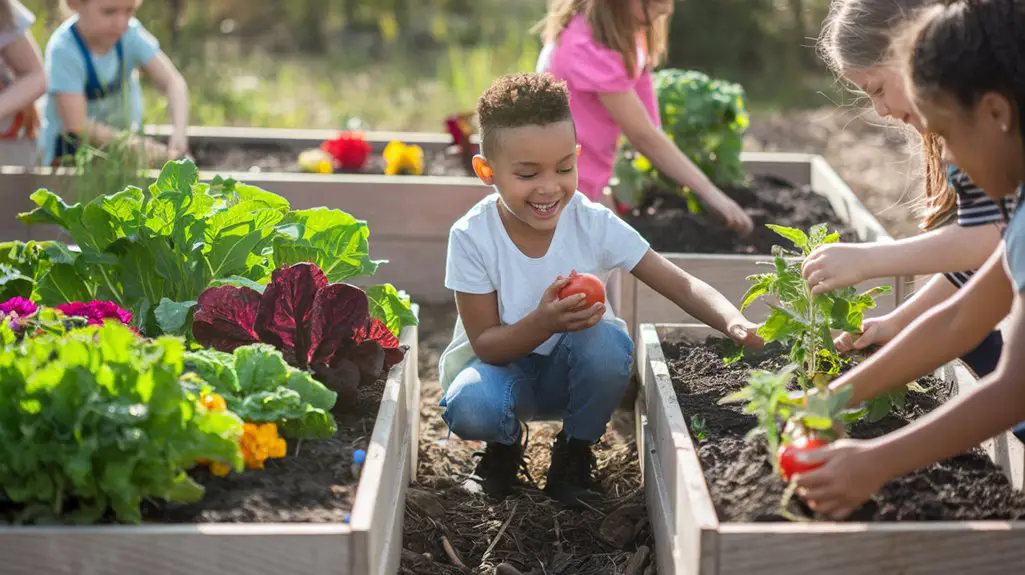
Imagine a child standing proudly beside a raised garden bed, their hands dirty from digging in the soil, eyes sparkling with excitement as they discover the wonders of nature. Raised garden beds can transform gardening into an engaging, accessible activity for kids, nurturing not just plants but essential life skills.
What if you could create an environment that encourages healthy habits and fosters responsibility, all while having fun outdoors? Let's explore the remarkable benefits that await.
On this page
Enhanced Accessibility for Young Gardeners
When you create raised garden beds, you make gardening accessible and enjoyable for young hands. These elevated beds allow kids to reach their plants without straining or bending over, making it easier for them to dig, plant, and water.
You'll notice their excitement as they take an active role in nurturing their garden, fostering a sense of ownership and responsibility. Plus, the defined borders of raised beds keep the garden tidy, helping children learn organization and care for their environment.
With the soil at a comfortable height, they can engage fully in the gardening experience, building confidence as they watch their plants grow. Additionally, raised beds can improve soil drainage and promote healthier plant growth, providing an even more rewarding experience for young gardeners.
Improved Soil Quality and Drainage
While gardening can be a rewarding activity, the quality of soil often makes a significant difference in how well plants thrive, especially for kids who are just starting out. Raised garden beds can greatly enhance soil quality and drainage, creating an inviting environment for young gardeners. Additionally, raised garden beds can also help protect young plants from excessive compaction and erosion caused by foot traffic.
| Benefit | Description |
|---|---|
| Improved Soil Quality | You can control the soil mix, ensuring it's rich in nutrients. |
| Enhanced Drainage | Raised beds prevent waterlogging, allowing roots to breathe. |
| Pests and Weeds | Elevated beds help reduce pests and make weed management easier. |
Encouragement of Healthy Eating Habits
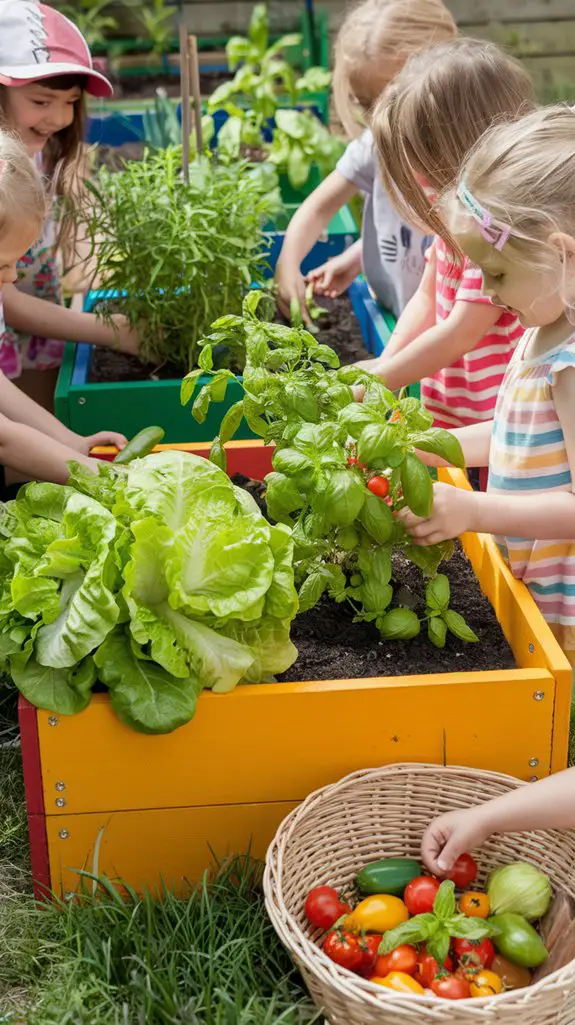
Gardening can spark a lifelong appreciation for fresh produce, especially when kids see firsthand how their efforts lead to delicious fruits and vegetables.
When you encourage them to plant, tend, and harvest their own crops, they're more likely to try new foods and develop healthy eating habits. Kids who grow their own veggies often find excitement in tasting what they've nurtured, turning them into more adventurous eaters.
Plus, the colors and textures of homegrown produce can make meals more appealing. By creating a connection between gardening and nutrition, you help them understand the importance of fresh, wholesome foods and inspire a positive relationship with eating healthy. Engaging in creative raised garden beds can further enhance their gardening experience, making it more enjoyable and educational.
It's a fun way to cultivate both their garden and their palate!
Engagement in Hands-On Learning Experiences
Not only do raised garden beds provide a space for kids to grow plants, but they also offer invaluable hands-on learning experiences. When kids dig their hands into the soil, they engage with nature in a way that's both fun and educational.
They can learn about plant biology, ecosystems, and the importance of pollinators while observing the growth process firsthand. Measuring soil depth, counting seeds, or tracking plant growth fosters critical thinking and problem-solving skills.
Additionally, these activities encourage curiosity and ignite a passion for learning. As kids explore the garden, they discover the joy of nurturing life, making science come alive beyond the classroom walls.
Engaging in this hands-on experience enriches their understanding and connection to the environment. Furthermore, raised garden beds can support vertical growth which maximizes space and allows for a diverse range of plants to be cultivated.
Development of Responsibility and Care
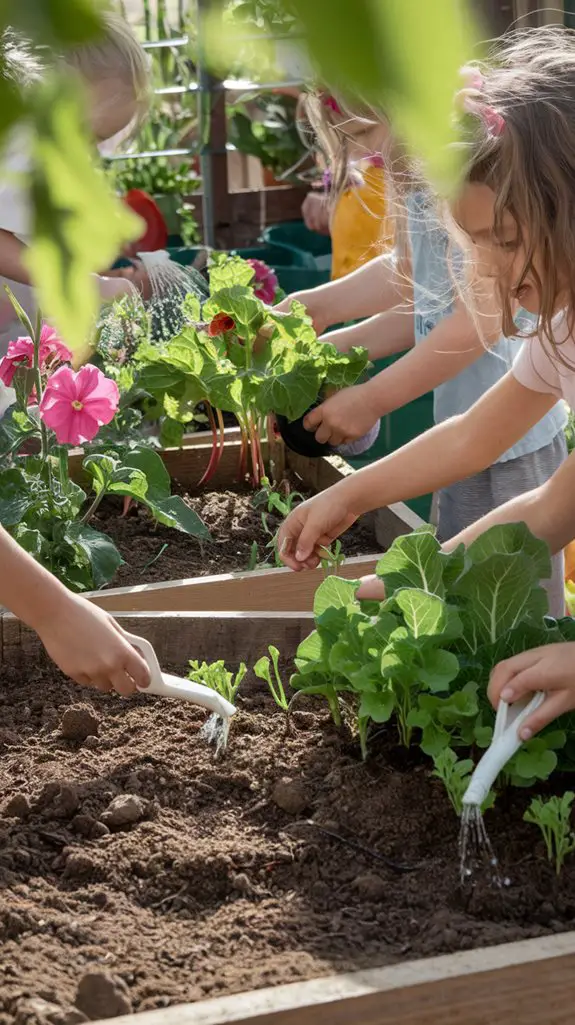
As kids immerse themselves in the joys of gardening, they naturally begin to take on responsibilities that foster a sense of care. By tending to their raised garden beds, they learn the importance of daily tasks like watering, weeding, and monitoring plant growth.
These responsibilities teach them accountability; after all, the plants depend on their attention and effort.
As they witness the fruits of their labor, it cultivates a sense of pride and achievement. You'll see them develop empathy as they understand the needs of living things, learning that care leads to growth.
This hands-on experience not only nurtures their plants but also instills valuable life skills, helping them become more responsible individuals in other areas of life. Additionally, the use of raised garden beds with built-in seating encourages them to engage comfortably while working in the garden.
Promotion of Physical Activity
Raised garden beds encourage physical engagement, allowing children to stretch, squat, and lift as they tend to their plants. They're not just planting seeds; they're also digging deep into the earth, which helps build strength and coordination.
As kids water, weed, and harvest, they're developing a sense of accomplishment and joy in their work. The outdoor environment adds an extra layer of excitement, transforming gardening into a fun, hands-on workout.
Additionally, utilizing effective pest control methods for your raised garden beds can ensure a healthy and thriving environment for their plants, fostering a love for gardening. Plus, you'll notice they'll be less inclined to spend hours in front of screens, opting instead for fresh air and the thrill of nature. Gardening truly becomes a delightful way to stay fit!
Opportunities for Creative Expression
When kids engage with raised garden beds, they open countless opportunities for creative expression.
These vibrant spaces allow them to design their own layouts, choosing which plants to grow and where to place them. They can experiment with colors, textures, and even unique plant combinations, turning gardening into a canvas for their imagination.
Kids can also personalize their beds with decorations like painted rocks or garden signs, giving each space a unique touch that reflects their personality. Additionally, incorporating creative flower bed ideas can inspire them to think beyond traditional gardening and explore innovative designs.
As they nurture their plants, they'll learn to appreciate the beauty of growth and change. This creative outlet not only fosters self-expression but also boosts their confidence as they see their ideas come to life in the garden.
Strengthening Family Bonds Through Gardening
Gardening can be a wonderful way for families to connect and strengthen their bonds. When you work together to plant seeds, tend to the garden, and eventually harvest the fruits of your labor, you create shared memories that last a lifetime. Here's how gardening fosters connection:
| Activity | Benefit |
|---|---|
| Planting Together | Encourages teamwork |
| Watering the Plants | Builds responsibility |
| Weeding as a Team | Promotes communication |
| Harvesting Together | Celebrates achievements |
Additionally, the use of raised garden beds can maximize small spaces, making it easier for families to engage in gardening activities together.
Introduction to Environmental Stewardship
Understanding the importance of environmental stewardship is essential for nurturing a sense of responsibility in children. Teaching them to care for the environment not only helps the planet but also fosters their personal growth.
Here are three key benefits of instilling this mindset:
- Connection to Nature: Kids learn to appreciate the beauty and complexity of the natural world, fostering a lifelong love for it.
- Sense of Accomplishment: Caring for a garden gives children tangible results, boosting their confidence and encouraging them to take initiative.
- Teamwork Skills: Working together in the garden teaches kids how to collaborate and communicate effectively, building essential social skills. Additionally, incorporating native plant landscaping can enhance biodiversity in their surroundings, providing a richer experience in their gardening efforts.
Safe and Controlled Gardening Environment
Creating a safe and controlled gardening environment not only protects children but also enhances their learning experience.
Raised garden beds elevate the planting area, reducing the risk of pests and harmful weeds while keeping kids away from ground-level hazards. You can easily monitor what goes into the soil, ensuring it's free from harmful chemicals.
Plus, the defined space encourages kids to focus on their gardening tasks, minimizing distractions. Additionally, organic gardening in raised beds promotes sustainability and teaches children the importance of caring for the environment.
Conclusion
In a world where nature's wonders await just outside your door, raised garden beds become an enchanting gateway for kids. They not only cultivate plants but also nurture life skills, from responsibility to creativity.
As your little gardeners dig their hands into the soil, they'll blossom with newfound knowledge and a love for healthy eating. So, let them sow seeds of curiosity and watch as they flourish, fostering connections with nature and with each other in this vibrant tapestry of growth.
